
.webp)
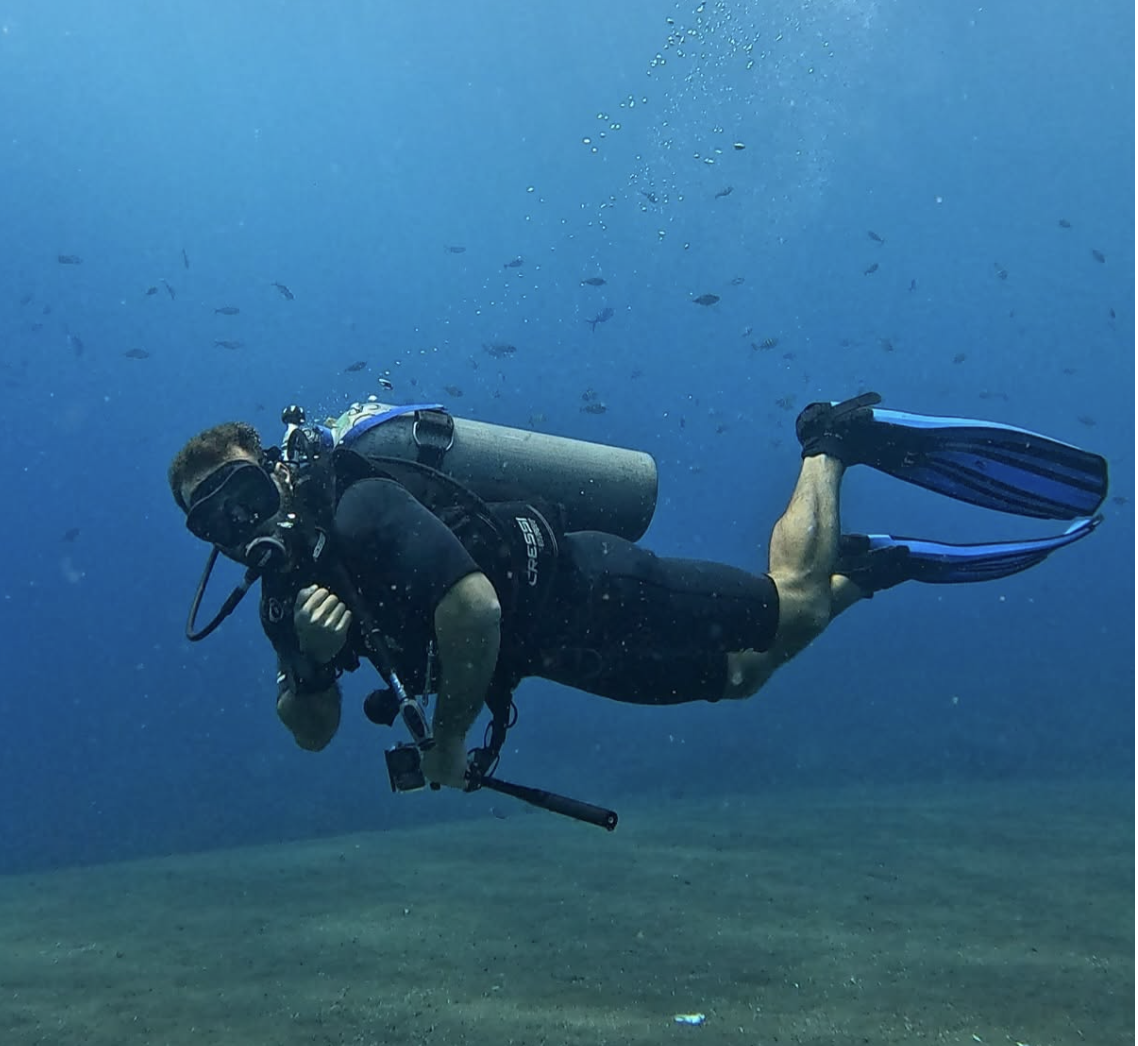
This year, I spent 10 days diving the best sites in Roatan, and it's easily one of my top three Caribbean scuba diving destinations.
Located in the Bay Islands of Honduras to the east of Utila, Roatan sits on the Mesoamerican Barrier Reef, the second largest reef system in the world.
The island has dramatic wall diving, world-class shipwrecks, and enough sites and biodiversity to keep you busy for weeks.
In this guide I'll cover the best dive sites, which operators to use, where to stay, and everything else you need to plan a scuba diving trip to Roatan.
Best Time to Dive Roatan
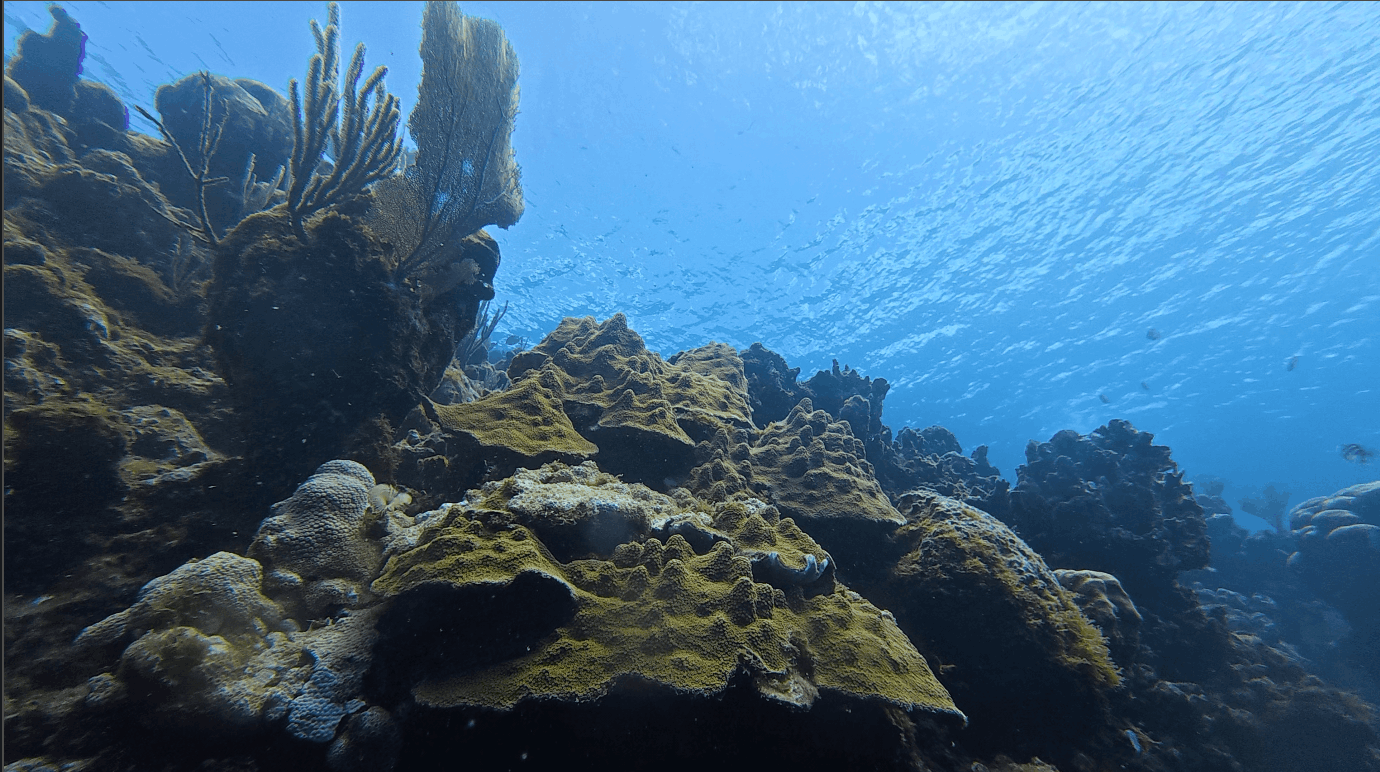
The best time to dive Roatan is the dry season, March through September, when you get the calmest seas and the clearest visibility. Diving runs year round, so an off-season trip still works, but if you can choose your dates, aim inside that window.
The Best Dive Sites in Roatan
Next, I'm going to cover all the best dive sites that I did in Roatan during my time there. After covering the sites I visited myself, I'll include a couple of recommendations that I didn't dive but heard great things about.
Best Overall Dive: Mary's Place
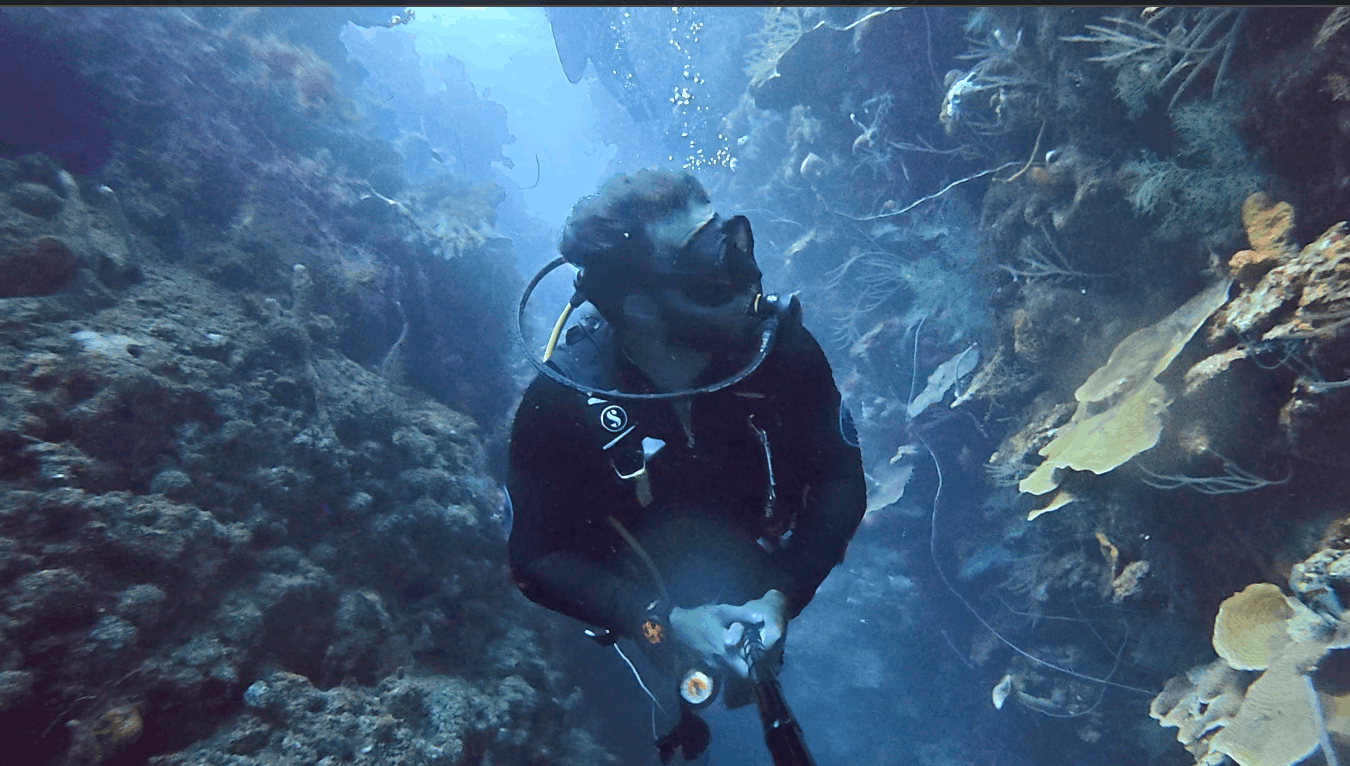
Mary's Place is Roatan's most famous dive site and it definitely lived up to the hype.
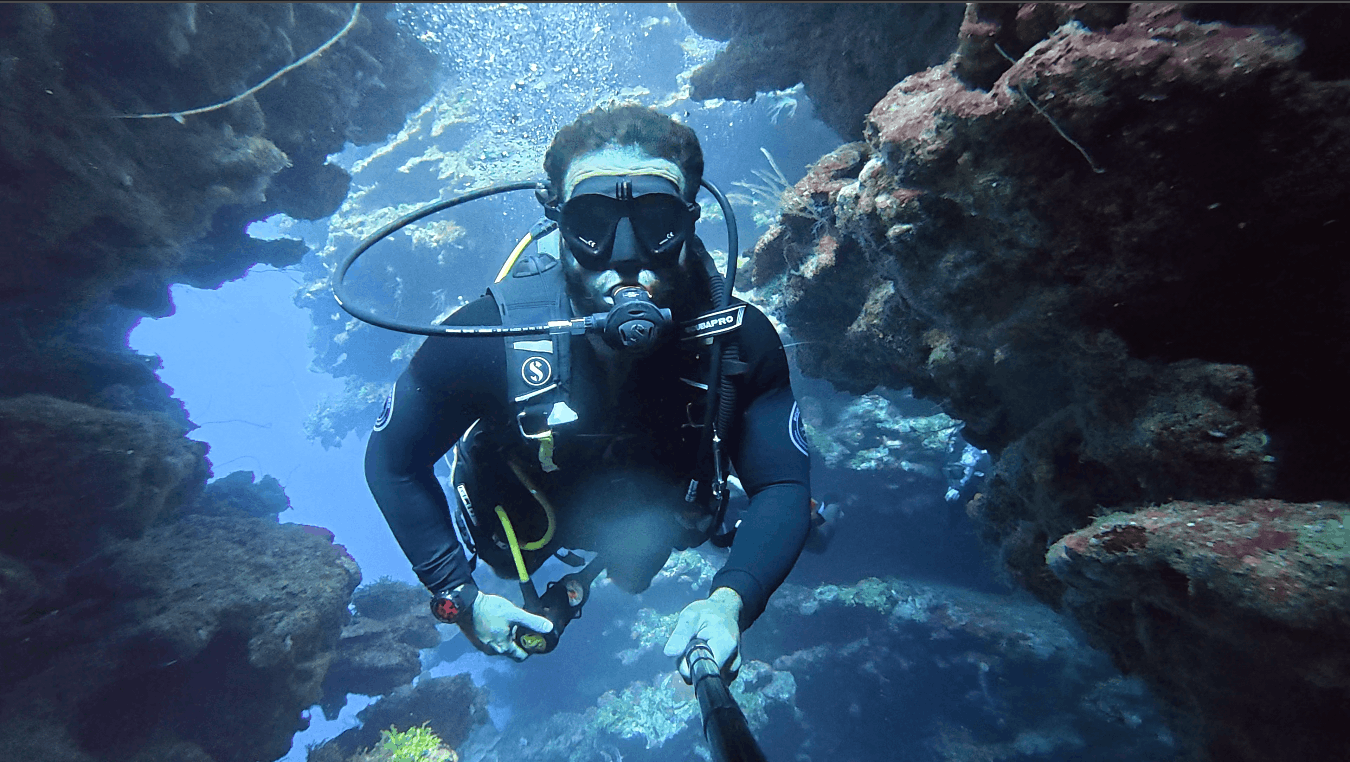
Located on the south side of the island near Coxen Hole, the top of the site sits at around 20 feet (6 m) with a beautiful coral patch, but once you reach the drop-off the real dive begins.
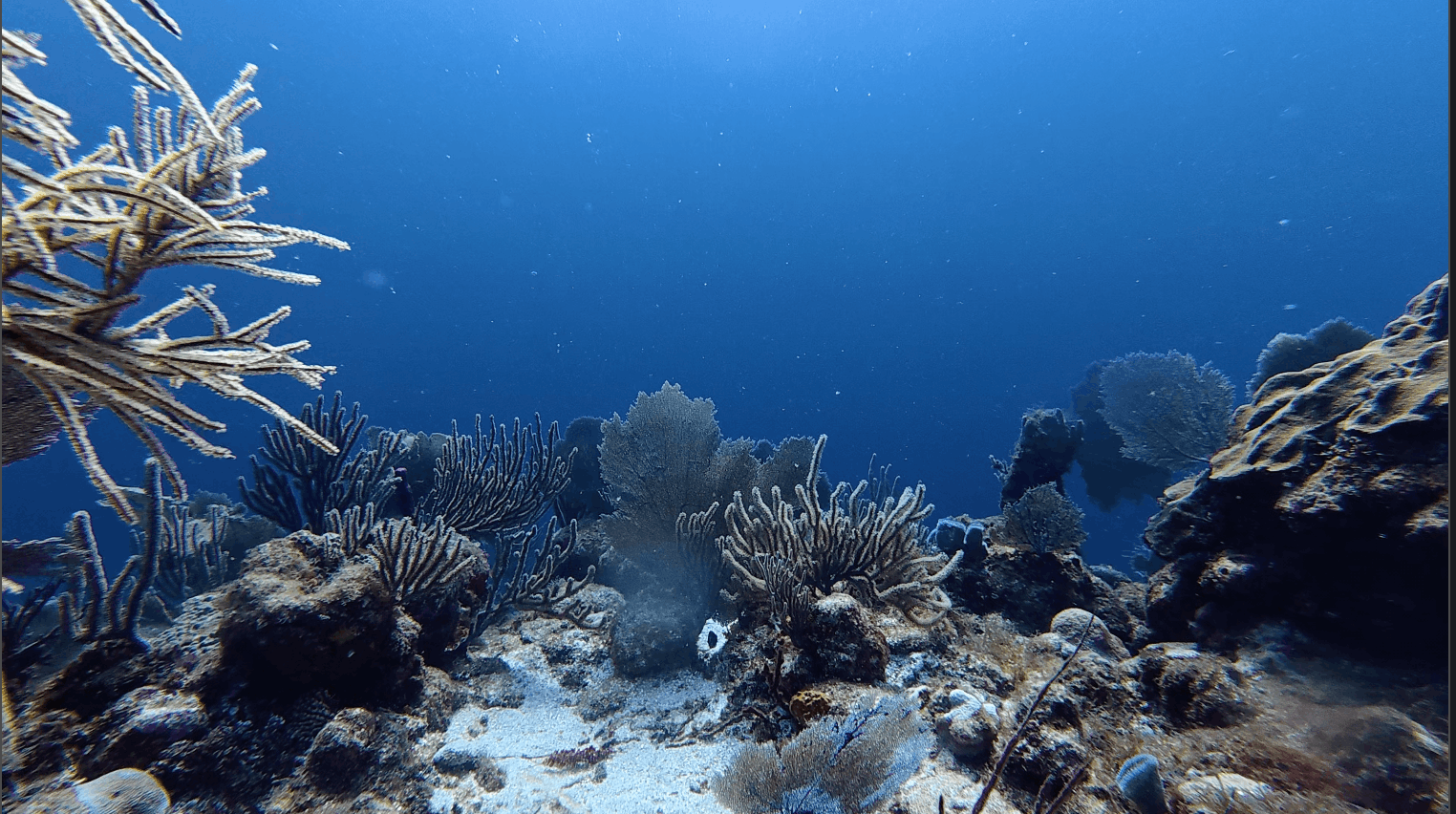
The site's signature feature is a series of deep fissures and swim-throughs formed by tectonic activity.
What was once a single massive coral head split apart through repeated earthquakes over centuries, creating the dramatic cracks you navigate today.
This same geological history is why Roatan has so many wall dives. Tectonic activity allows extreme depth very close to shore, which makes the island popular with tech divers.

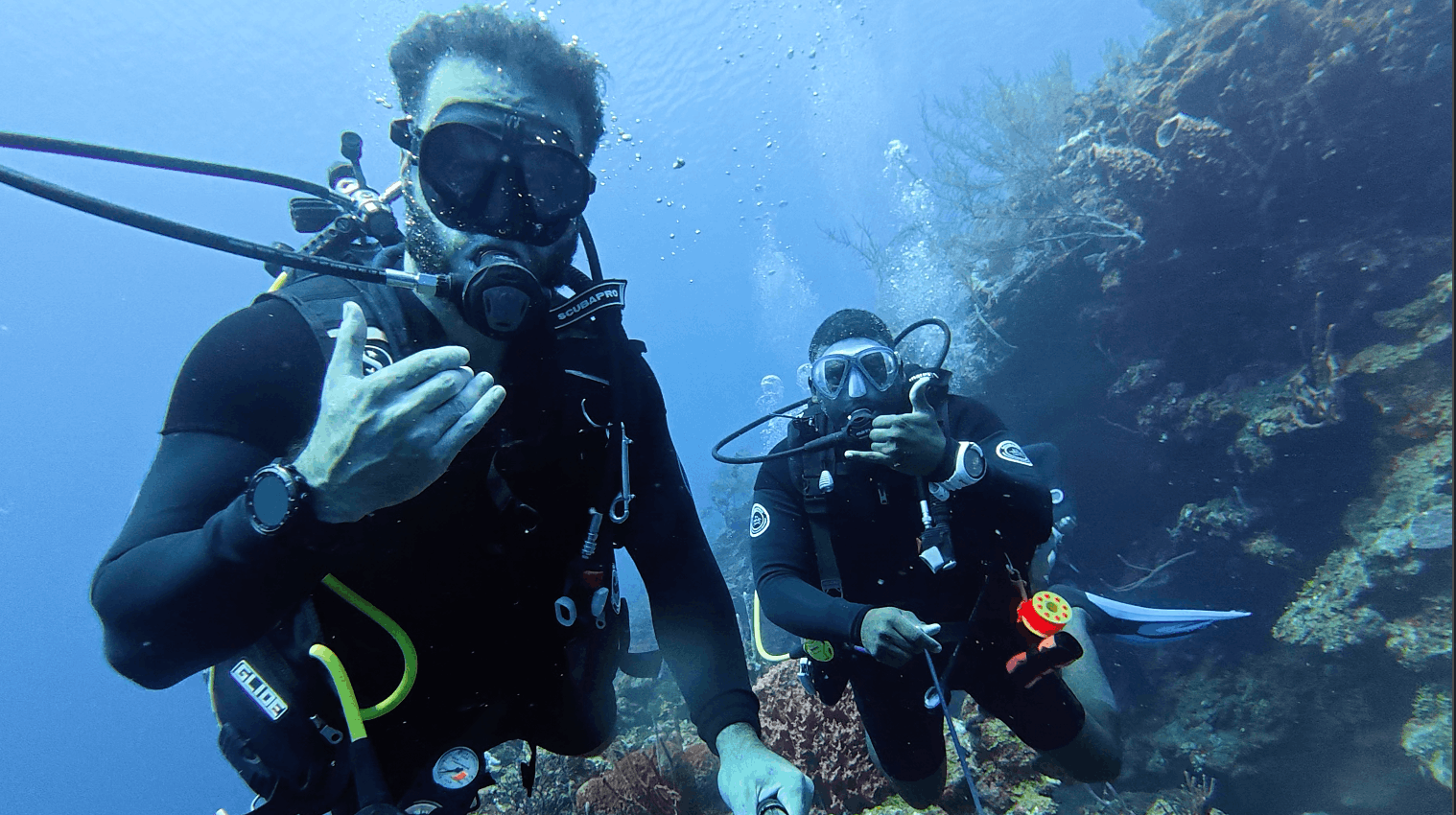
On my dive we went through three separate swim-throughs, then the guide took us back through them from different angles and depths.
Best Wreck Dive: The Odyssey
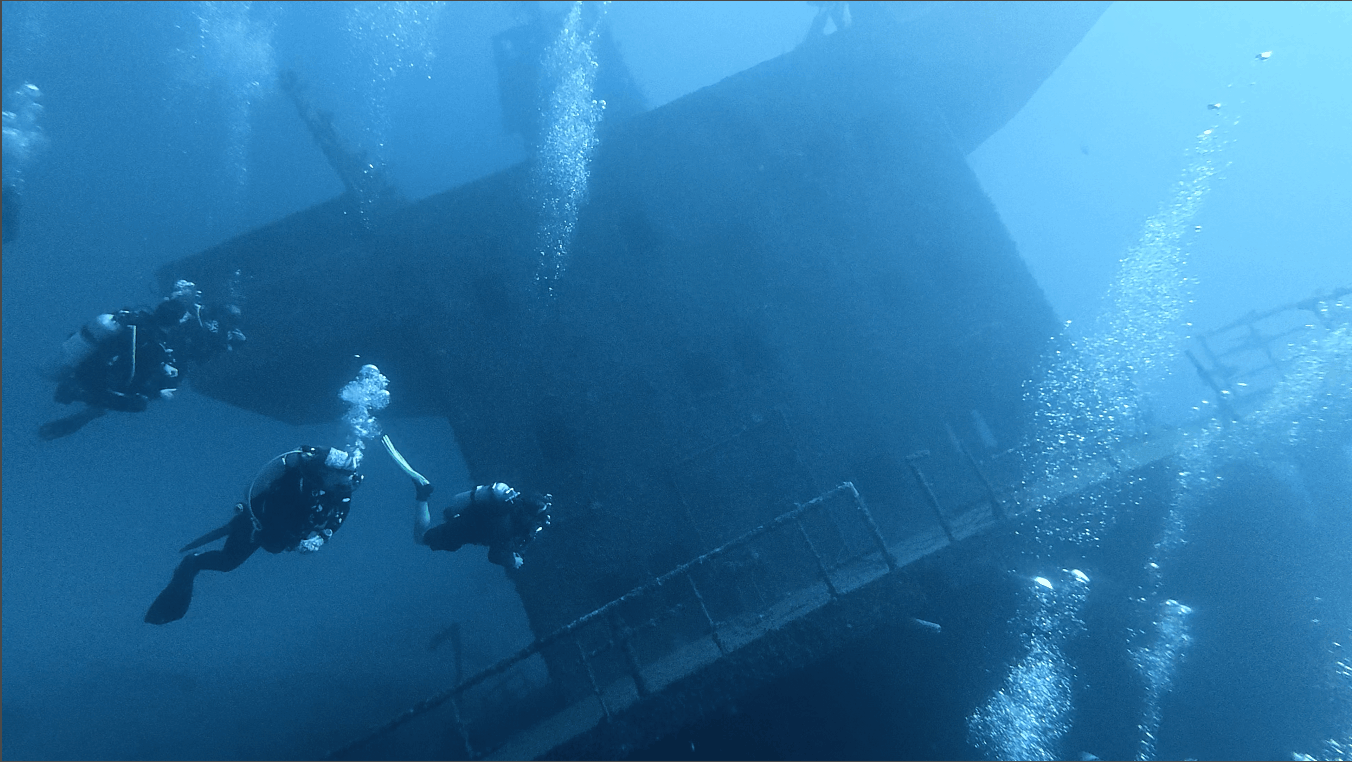
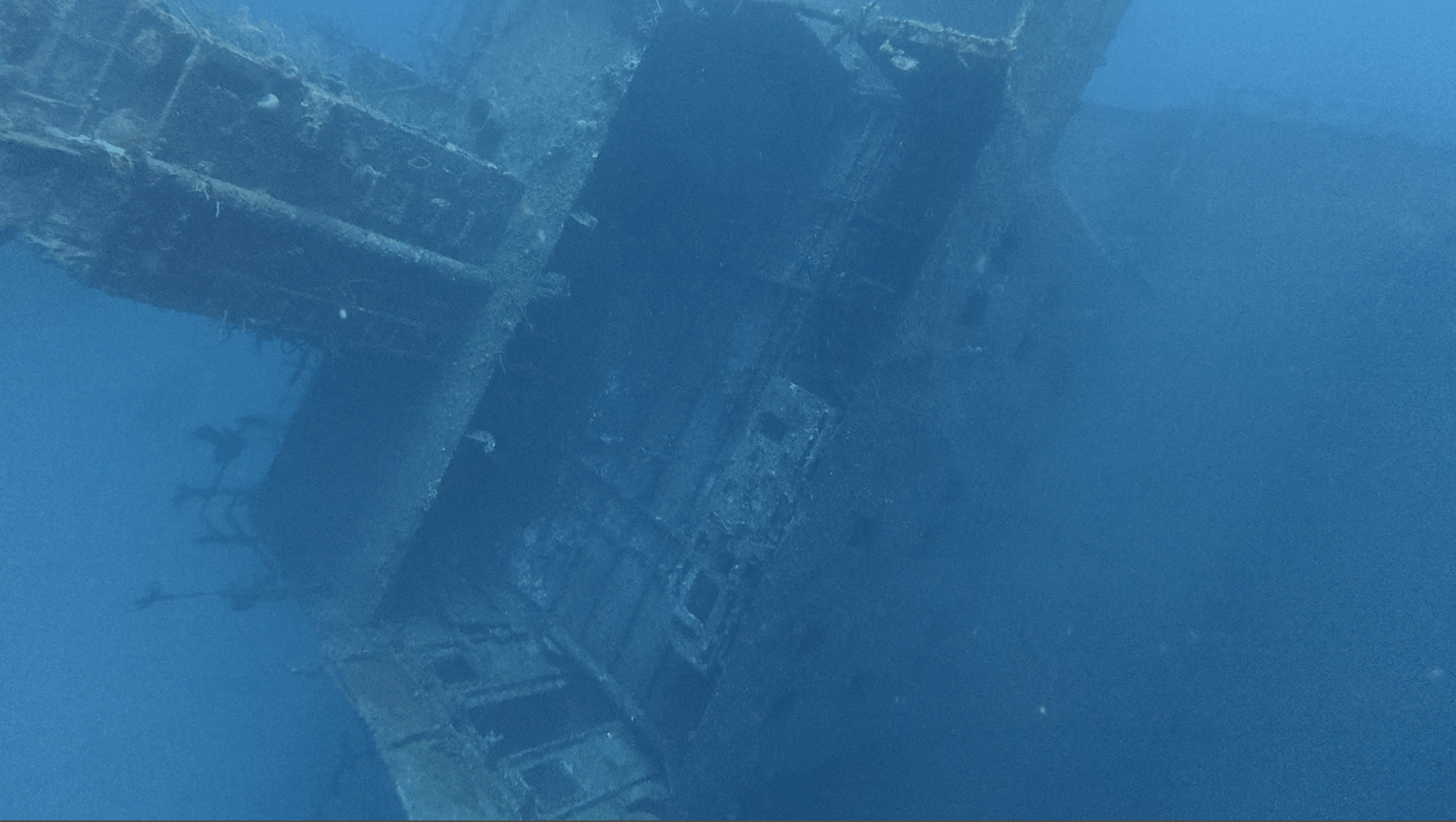
The Odyssey is the largest shipwreck in the Caribbean and one of the best advanced dives in the region.
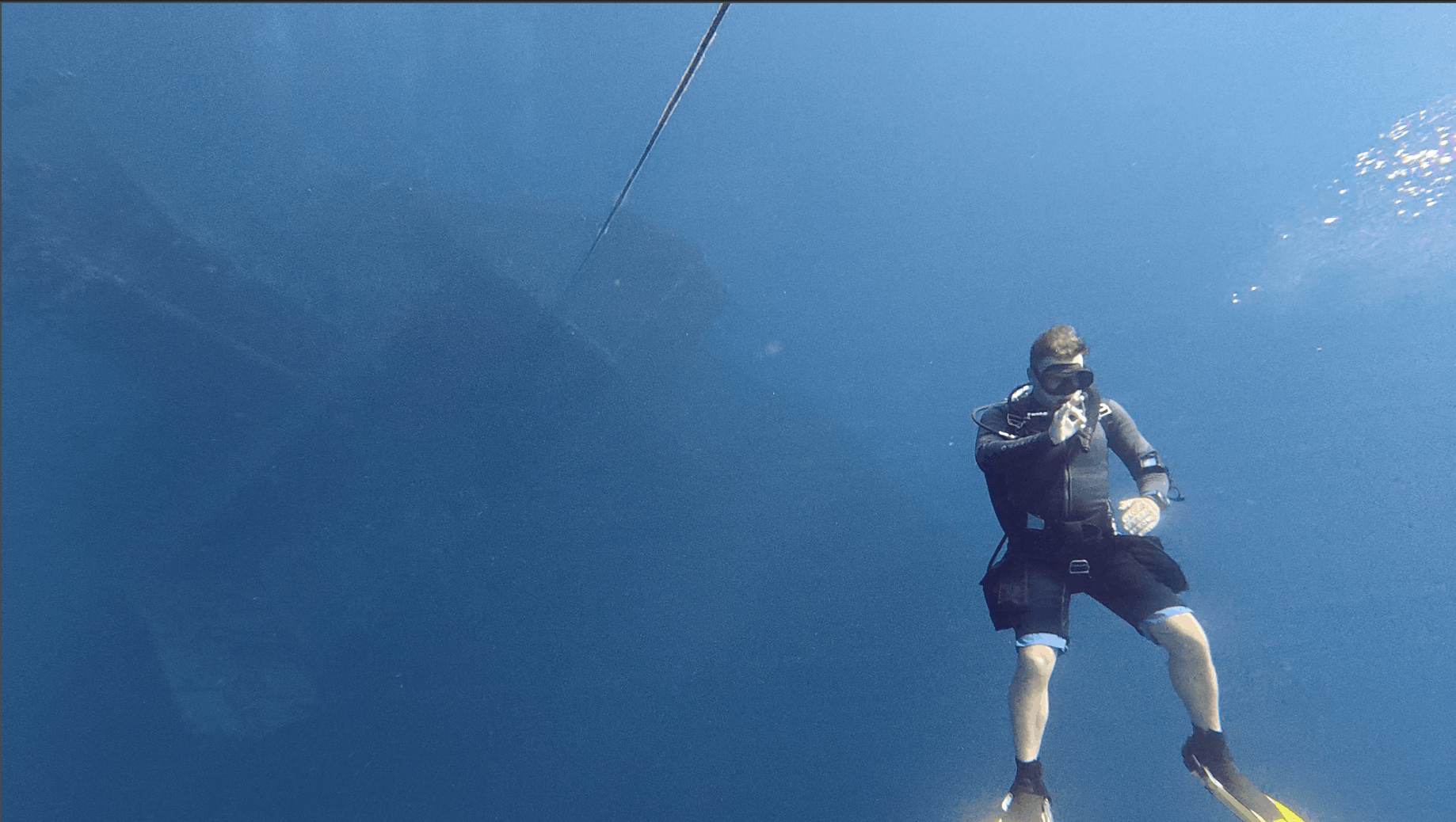
At 300 feet (91 m) long, 50 feet (15 m) wide, and 85 feet (26 m) tall, the Odyssey sits 110 feet (34 m) deep, making it one of the largest wreck dives in the Caribbean.
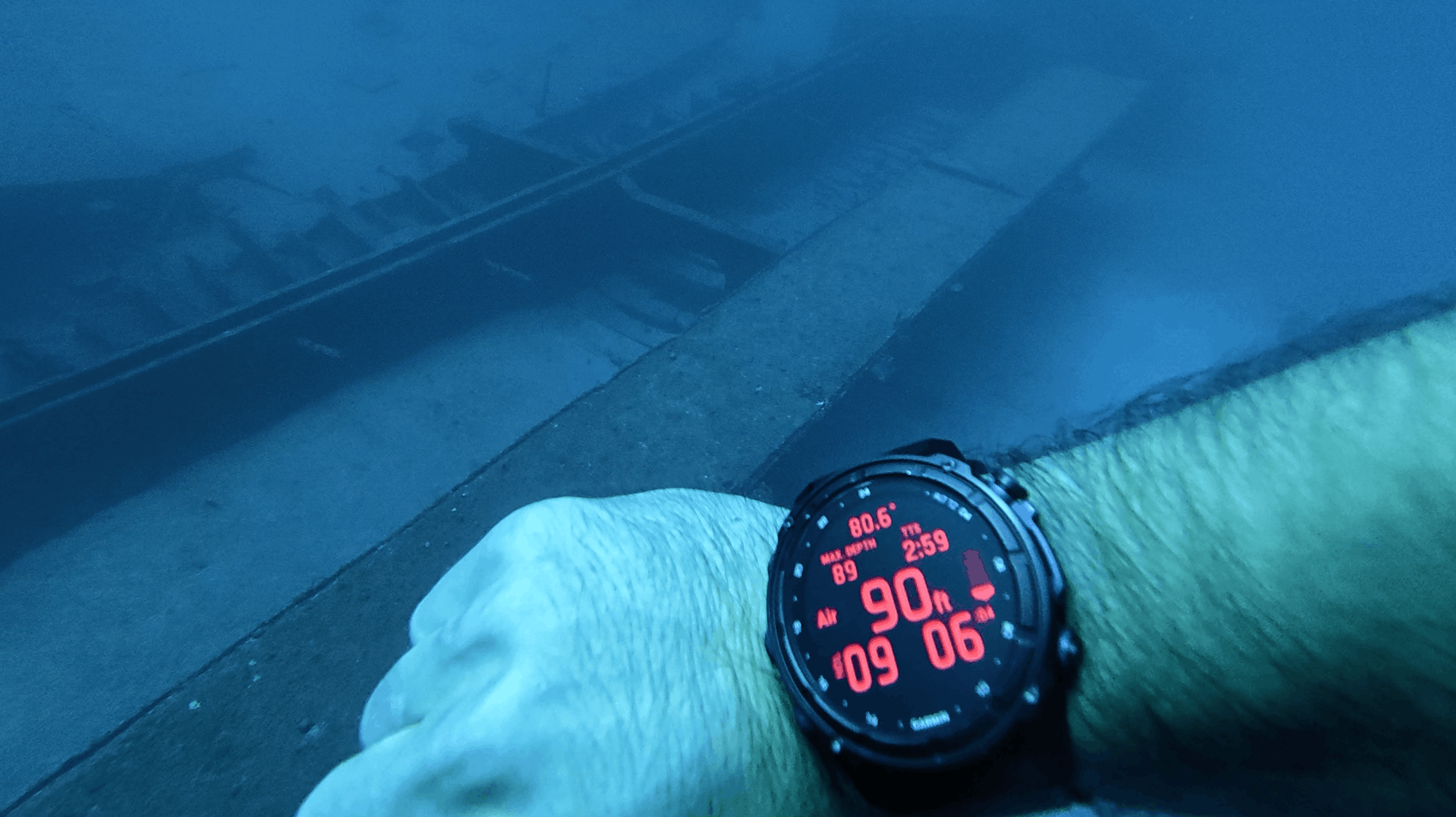
I was close to my NDLs before I got to see everything I wanted. I had my Garmin Descent MK3i conservatism set to high, which I changed for future dives to medium.
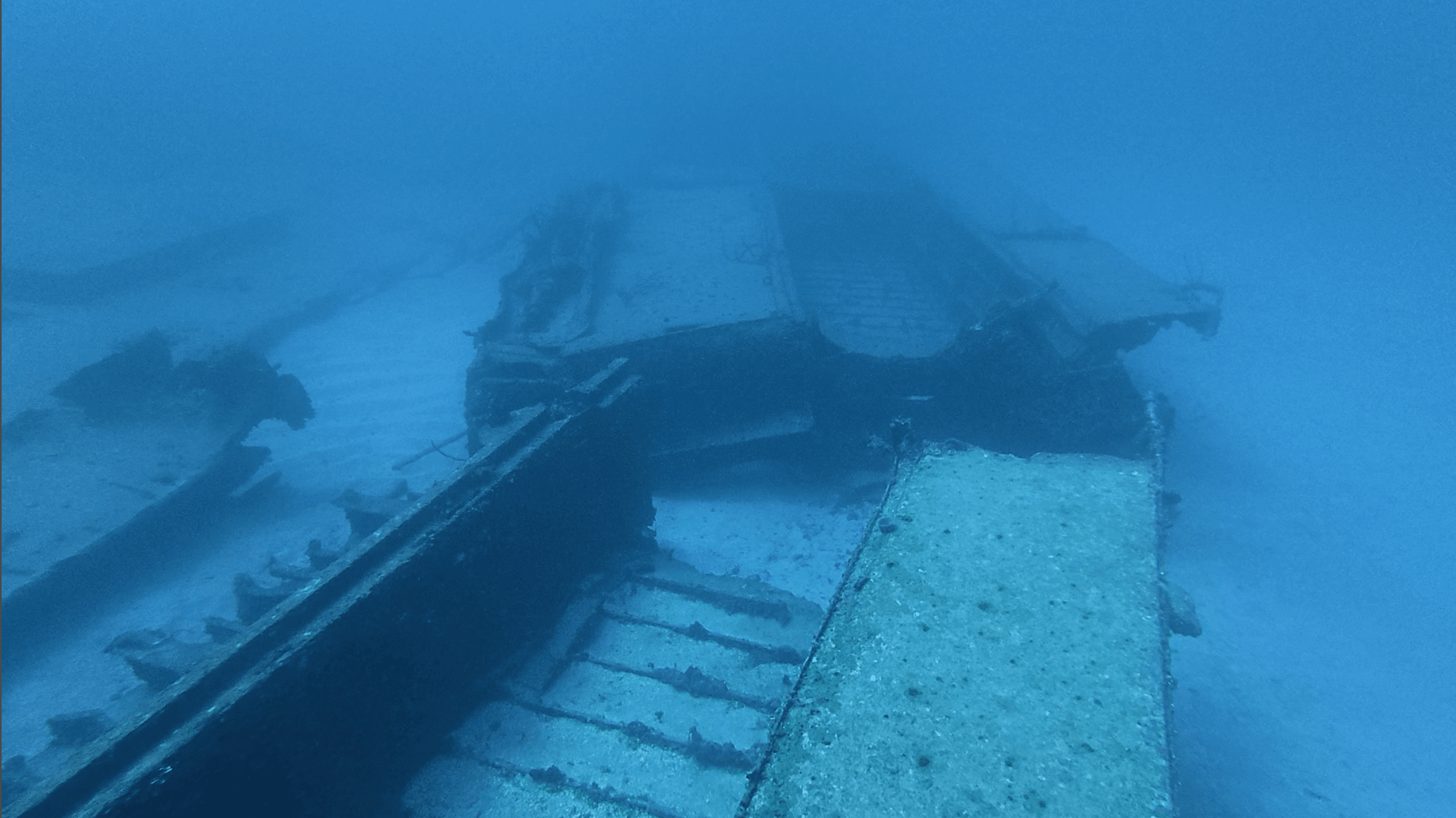
Roatan Divers didn't allow divers inside without a Wreck Diver certification, so I couldn't go in, but I've heard the interior is incredible.
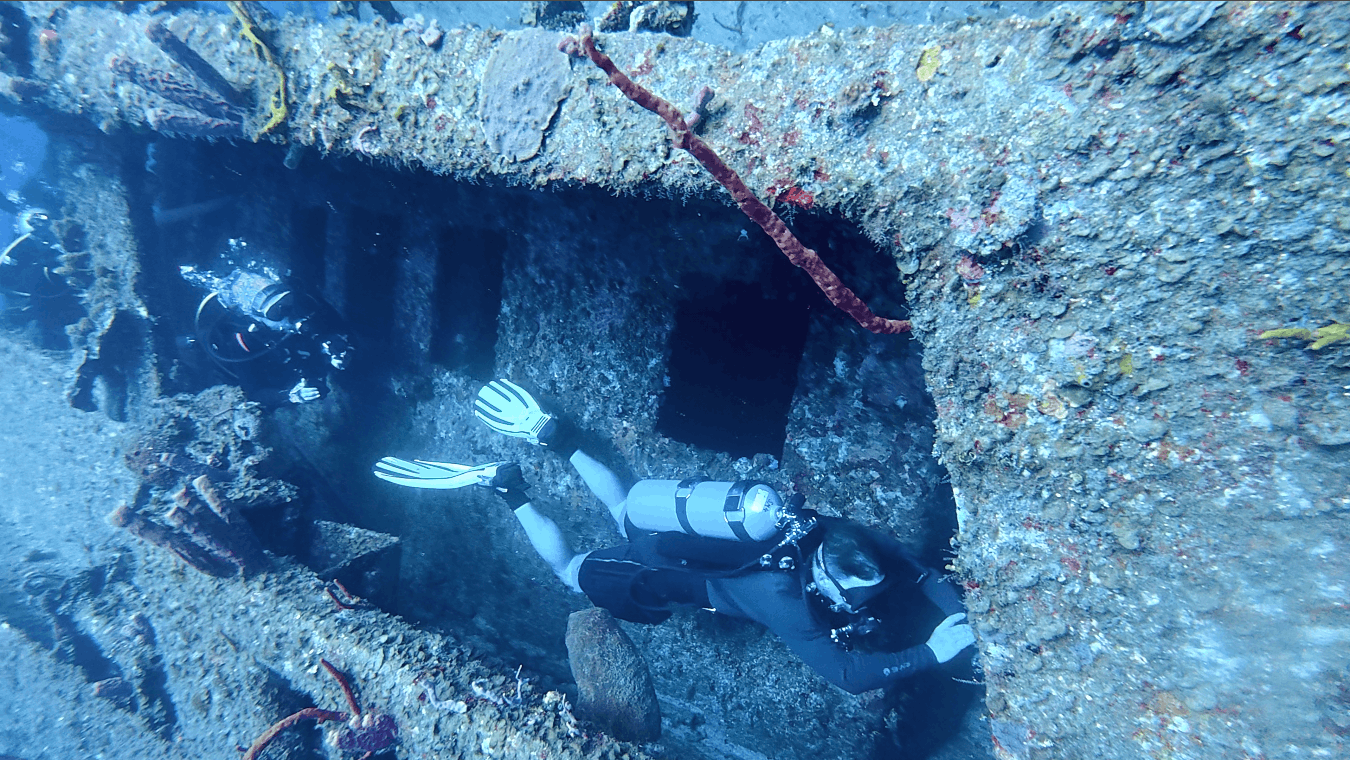
I'd recommend starting off deep first along the hull, then shallow up to the surrounding reef as you approach your NDL.
There's tons of marine life on the reef around the wreck, especially in the shallows, and this approach easily stretches the dive to nearly an hour.
Best Wall Dive: Vern's Drop-Off
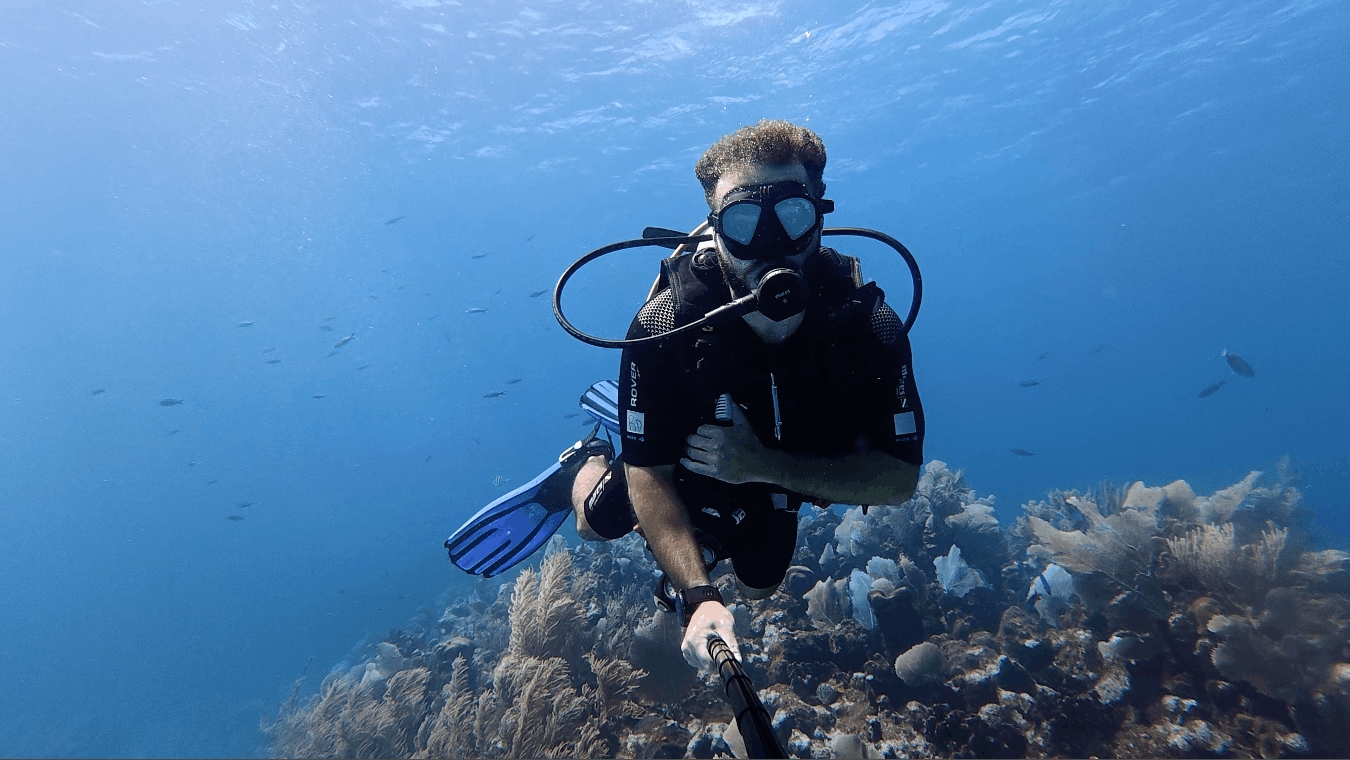
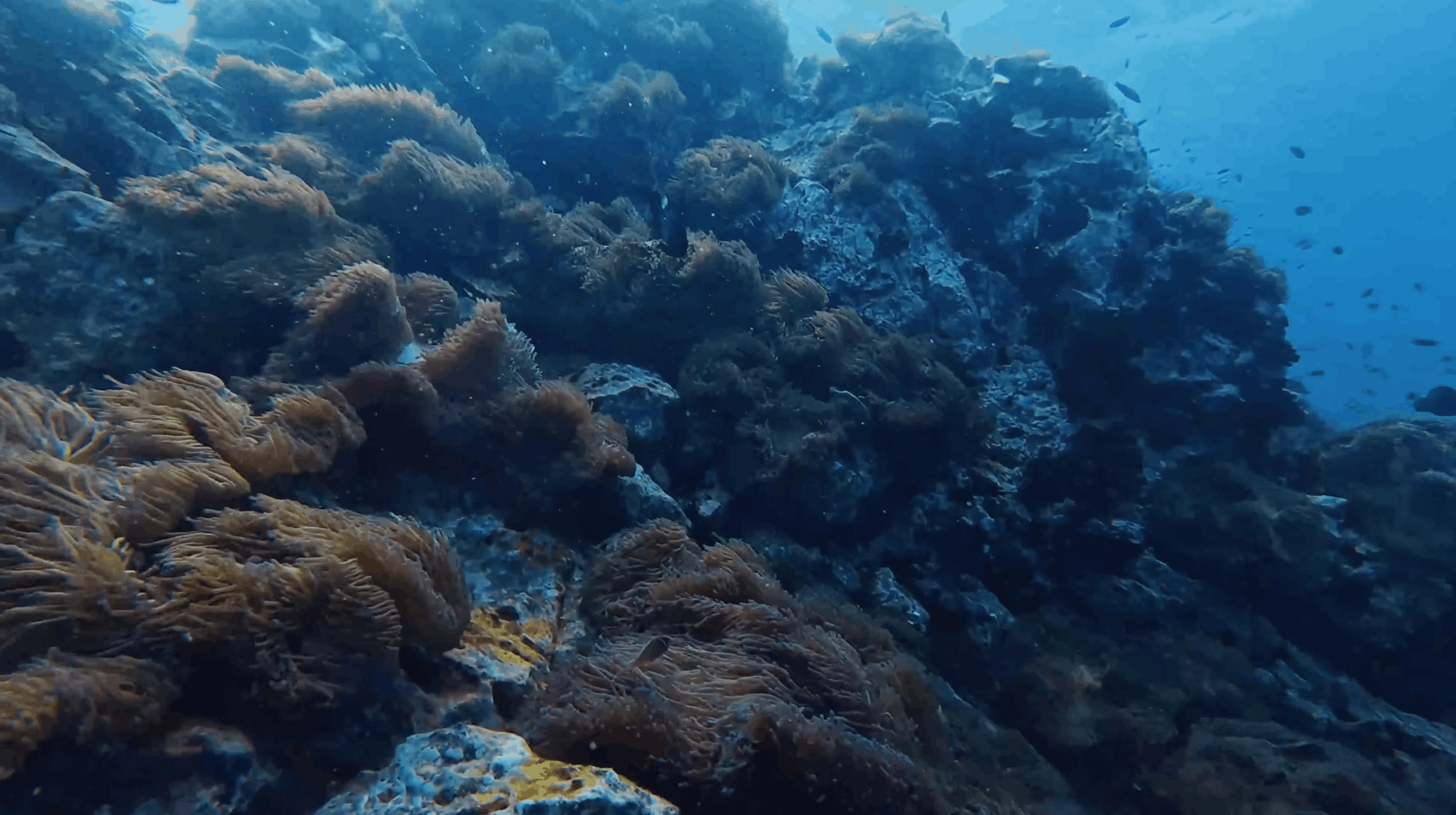
Vern's Drop-Off was my first dive in Roatan, and it immediately set the tone for the trip. The wall diving here is a completely different world from Florida, where there's essentially no vertical reef.
I stayed shallower than usual since I was paired with a diver on a refresher course, but even then the biodiversity was exceptional.
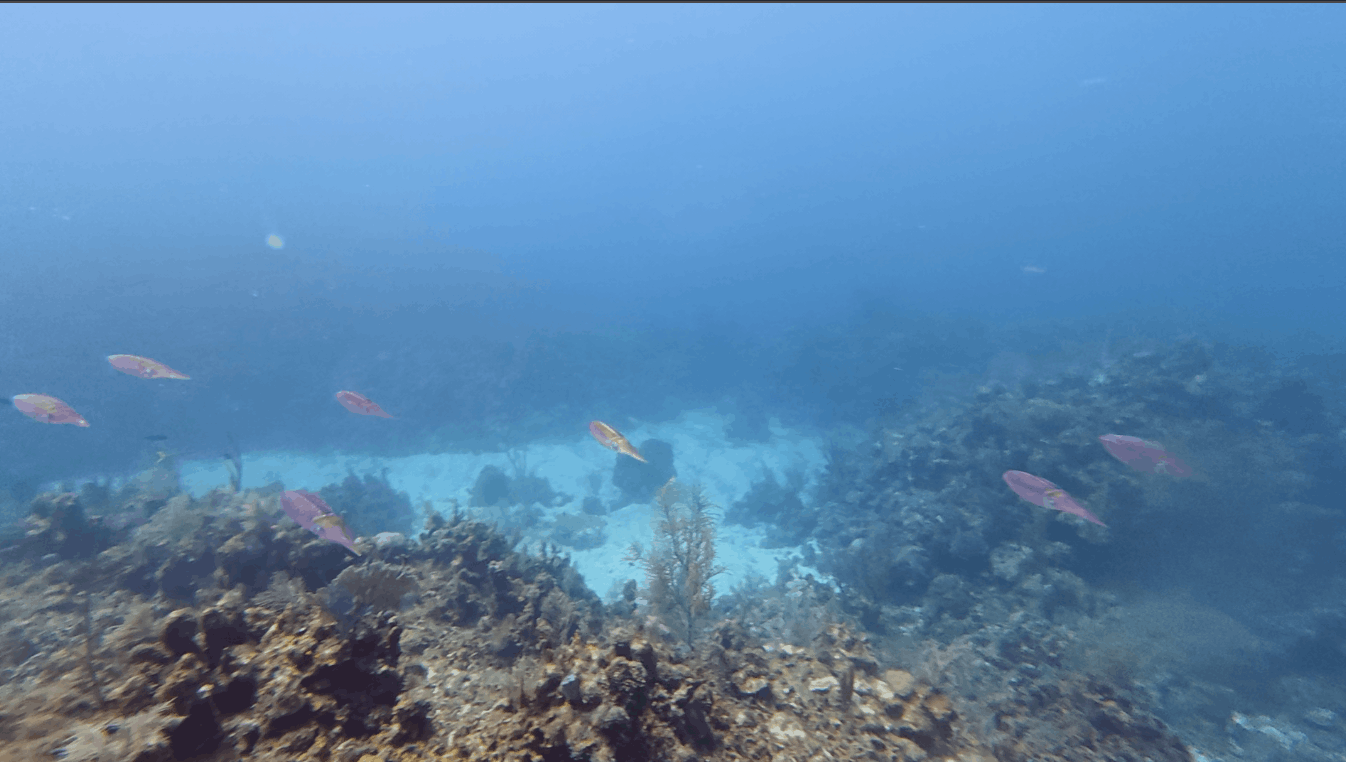
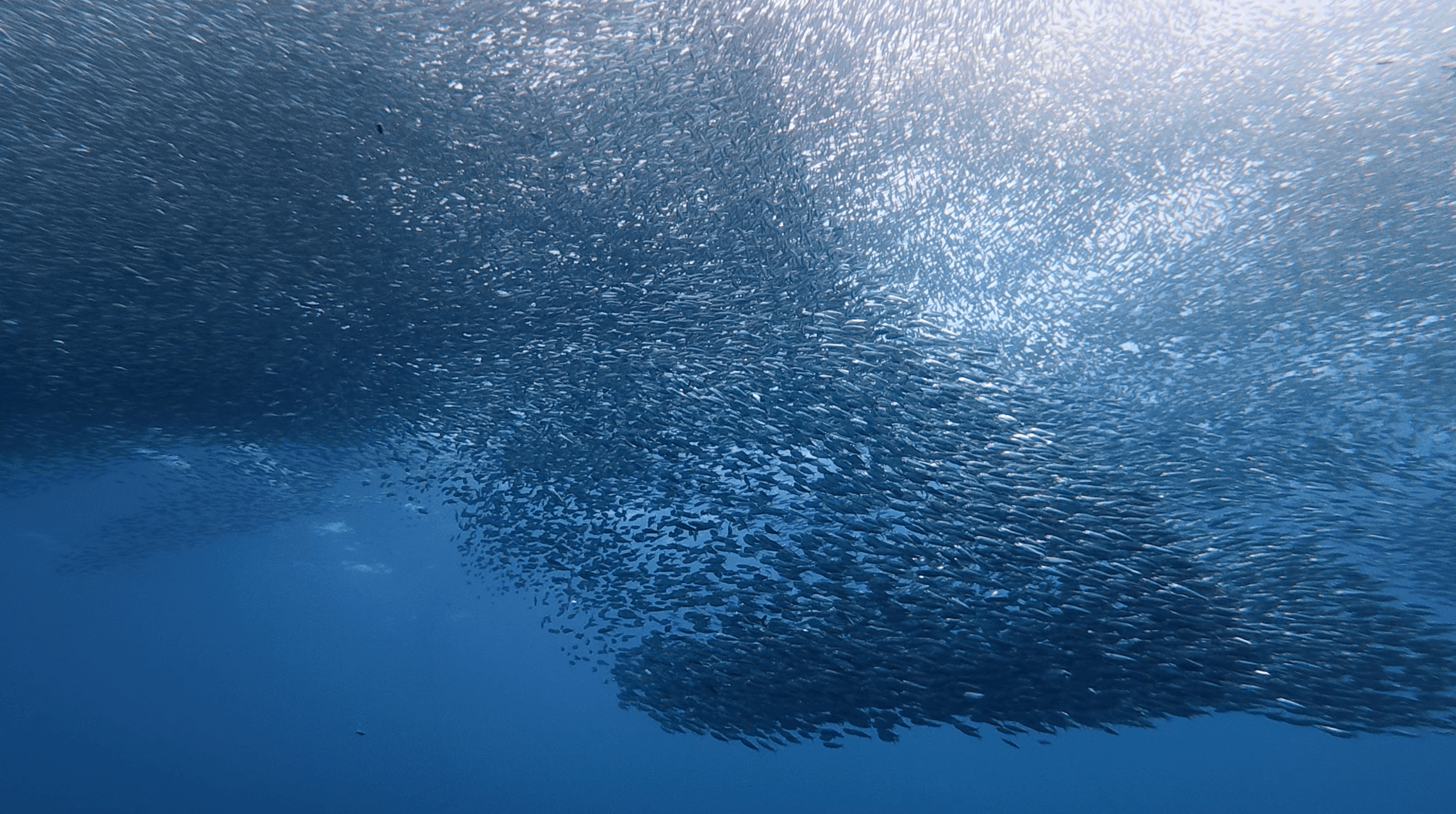
I got to use the Lefeet P1 DPV for some of these clips. If you've ever wondered how fast squid are, I had it on maximum speed and was barely keeping pace.
Best Marine Life Dive: Howard's Happy Place

A massive wall drop-off on the south side, close to the shores of Barefoot Cay Resort.
We dove this as the second dive of a two-tank trip after Mary's Place.
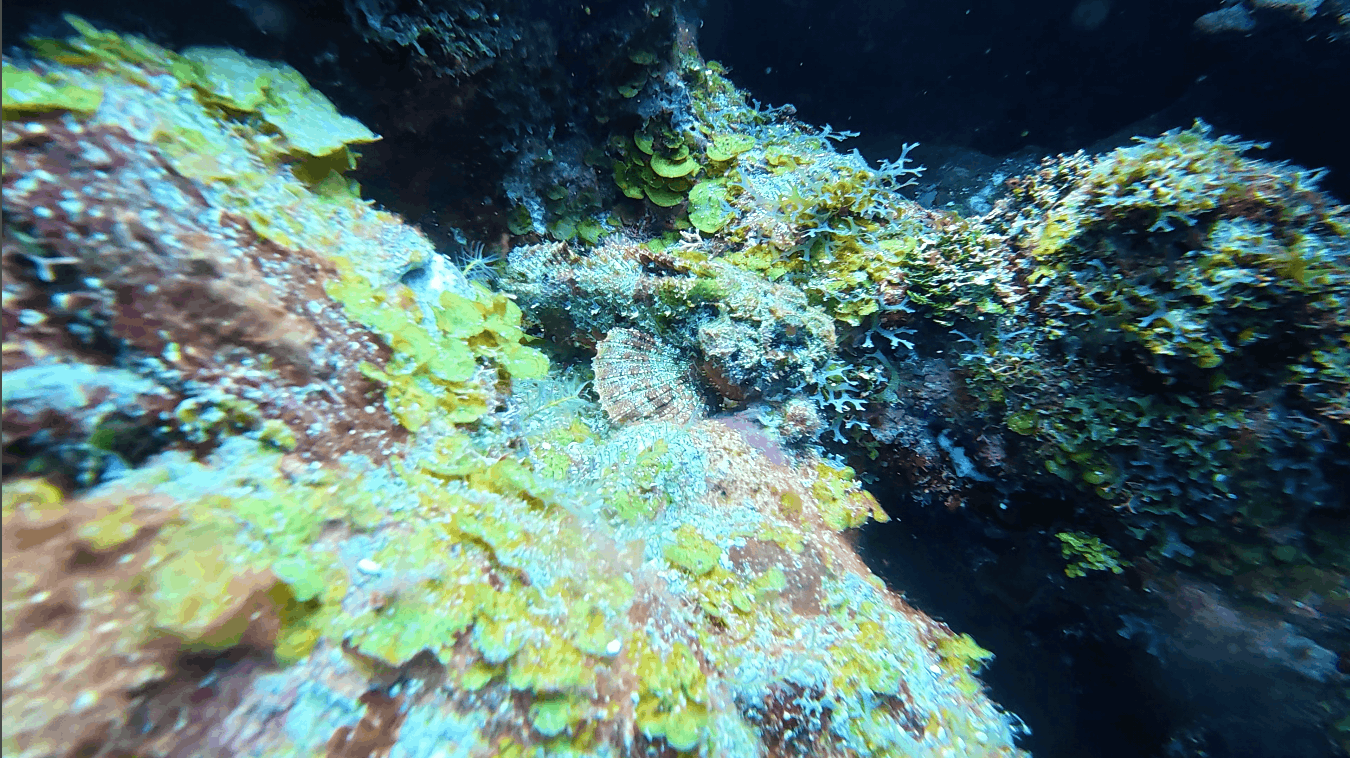
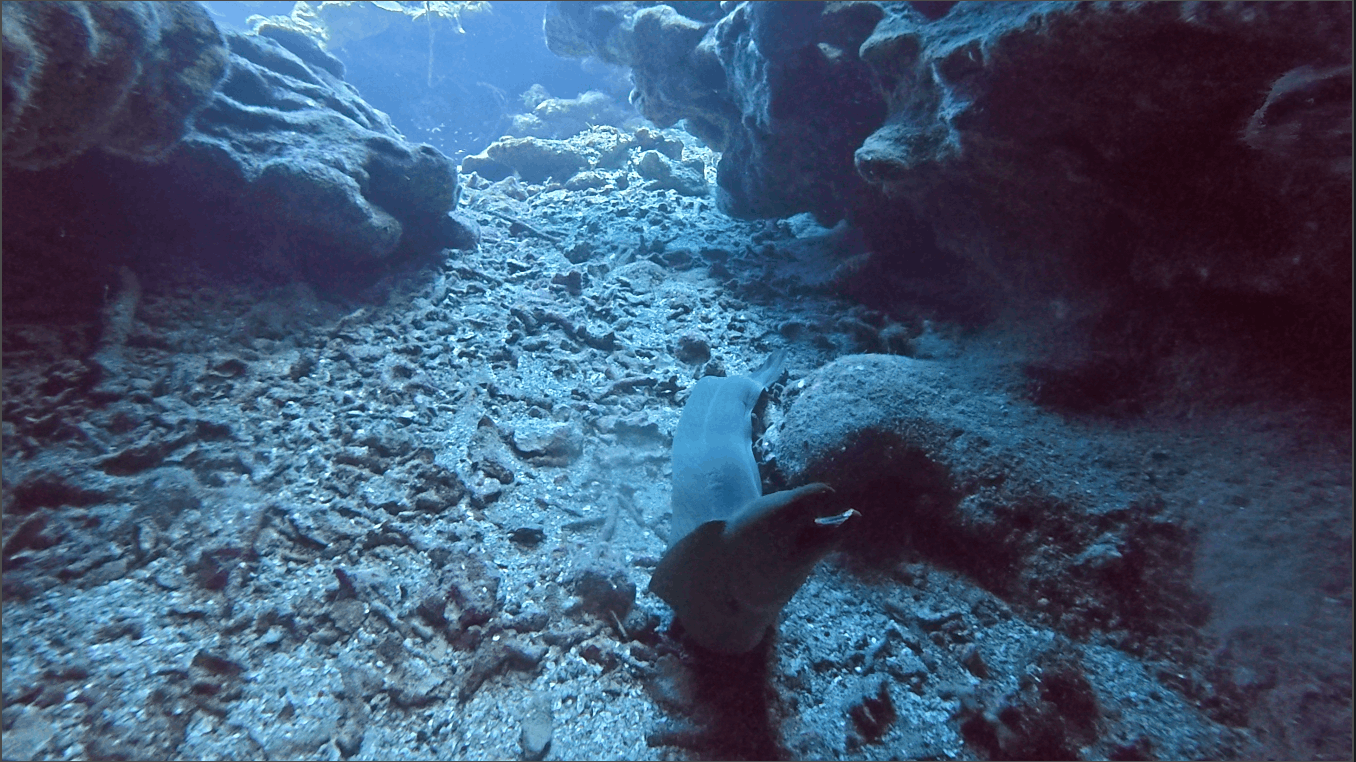
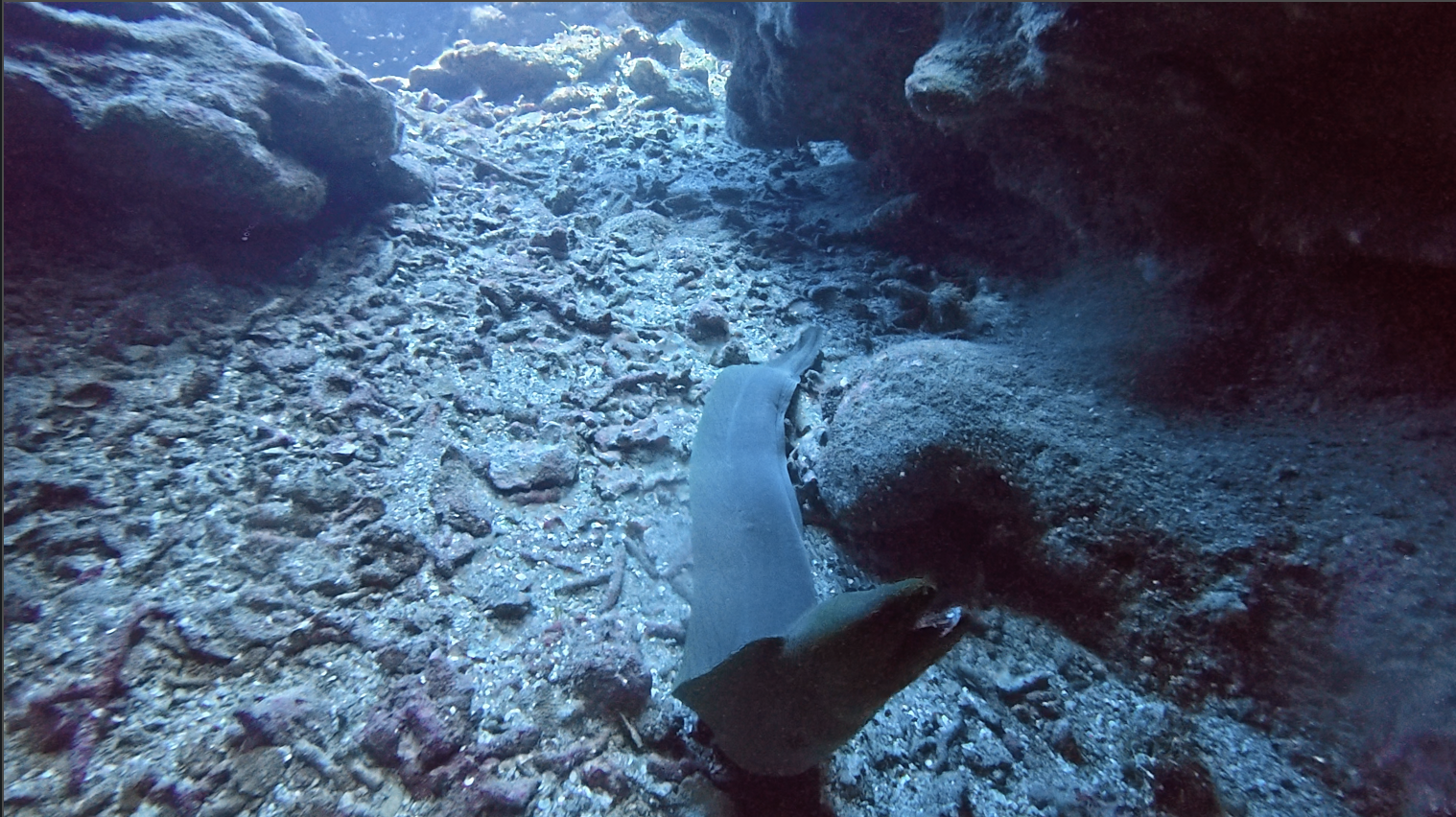
On this dive there were scorpion fish everywhere, multiple seahorses clinging to the wall, and some of the boldest green moray behavior I've seen.
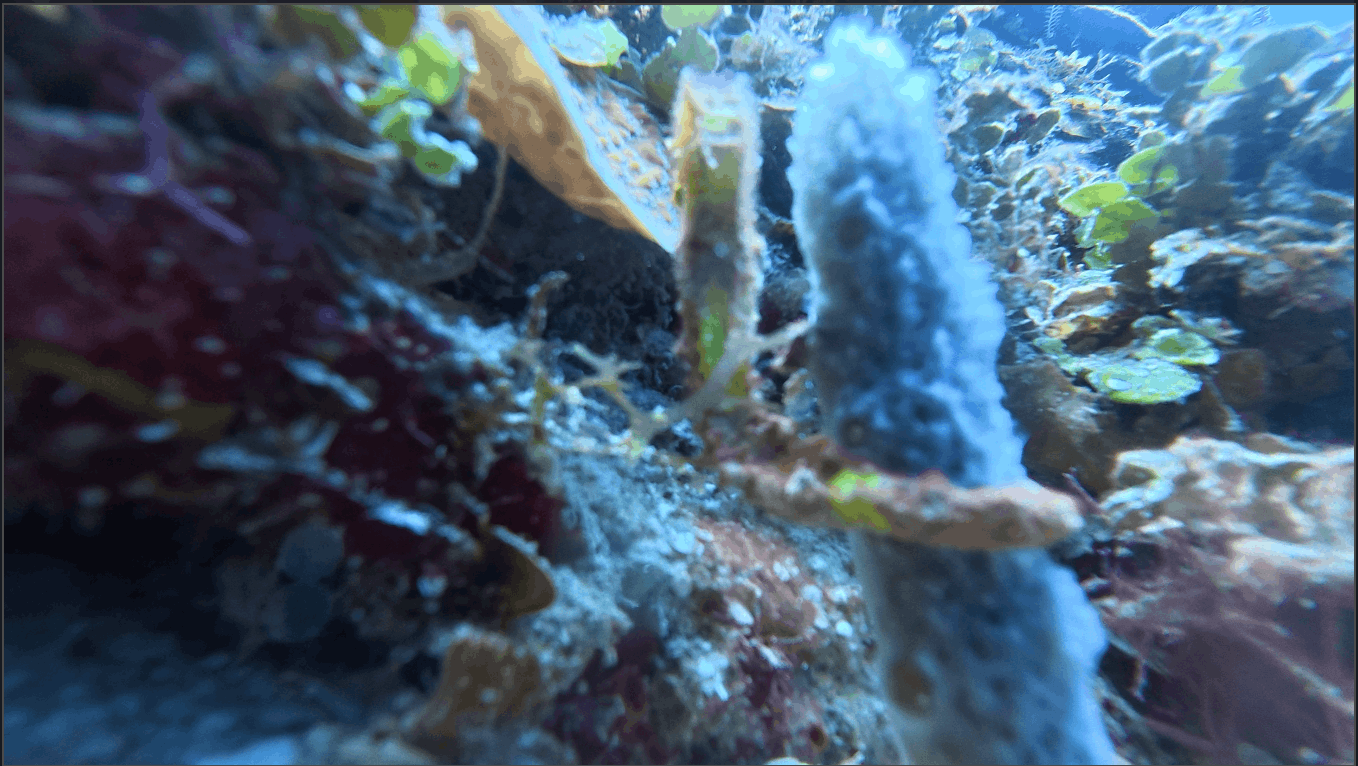
In most places morays stay tucked in crevices. Here they were out in the open, and one came directly at me.
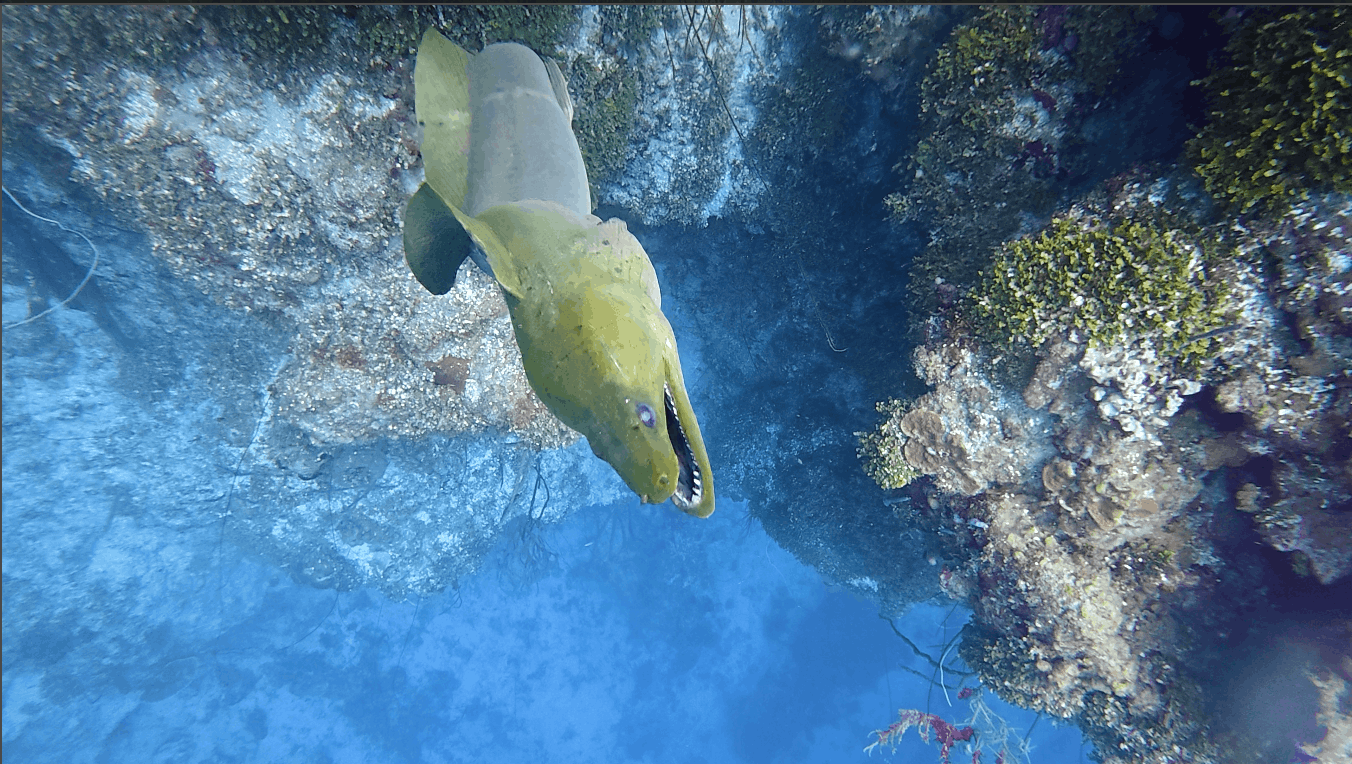
Apparently dive operators sometimes feed the morays lionfish, so they associate divers with an easy meal. There was a genuine moment where I thought I was going to get bitten.
Best Coral Restoration Dive: Queen Bee & Deep Seaquest
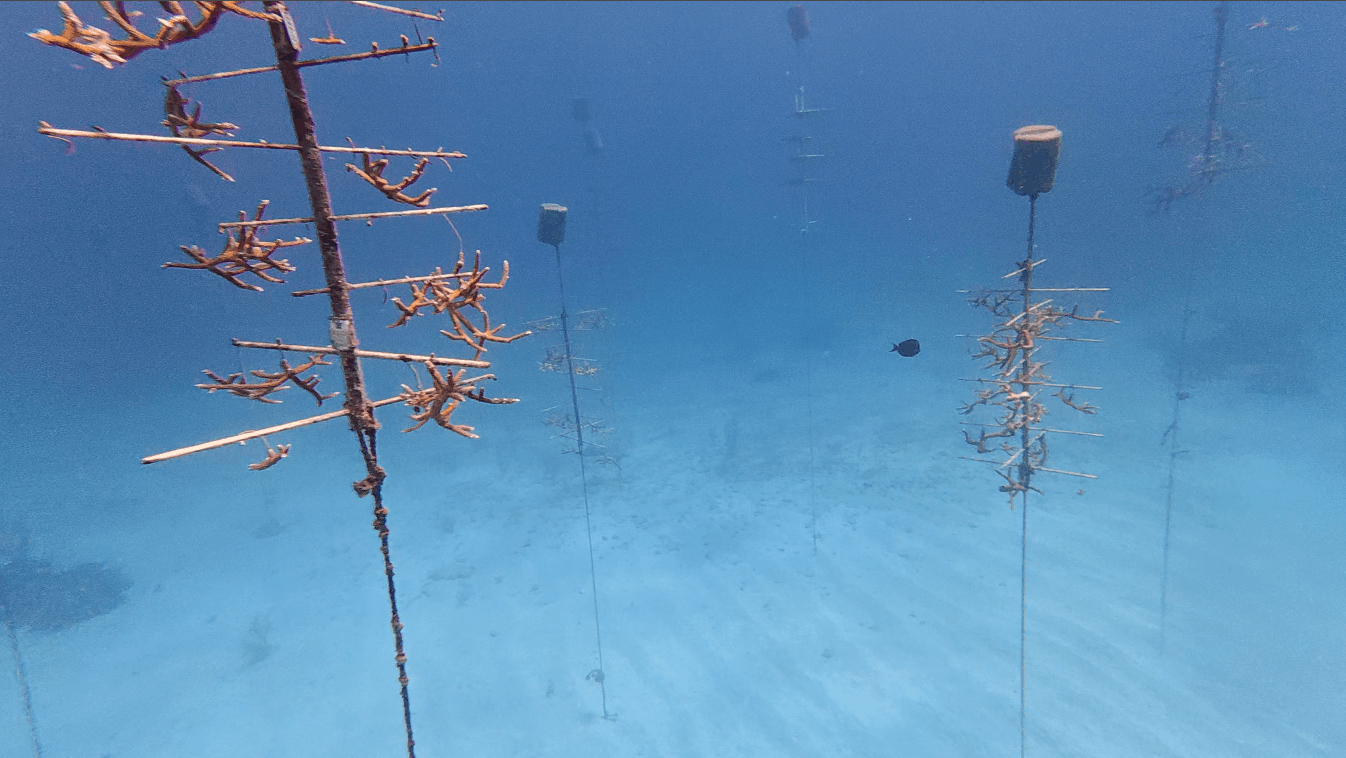
The last dives of the trip. Minimal current, excellent visibility, typical Roatan.
There are several swim-throughs here but they're tighter than at Mary's Place, so solid buoyancy control matters.
The standout is the coral nursery at Seaquest, where the team grows hard corals in a protected area and transplants them back into Roatan's reef system once they reach sufficient size.
Sites I Didn't Dive
Two sites came up repeatedly that I wasn't able to hit: the El Aguila Shipwreck and West End Wall.
Both are on the list for next time.
Dive Operators in Roatan
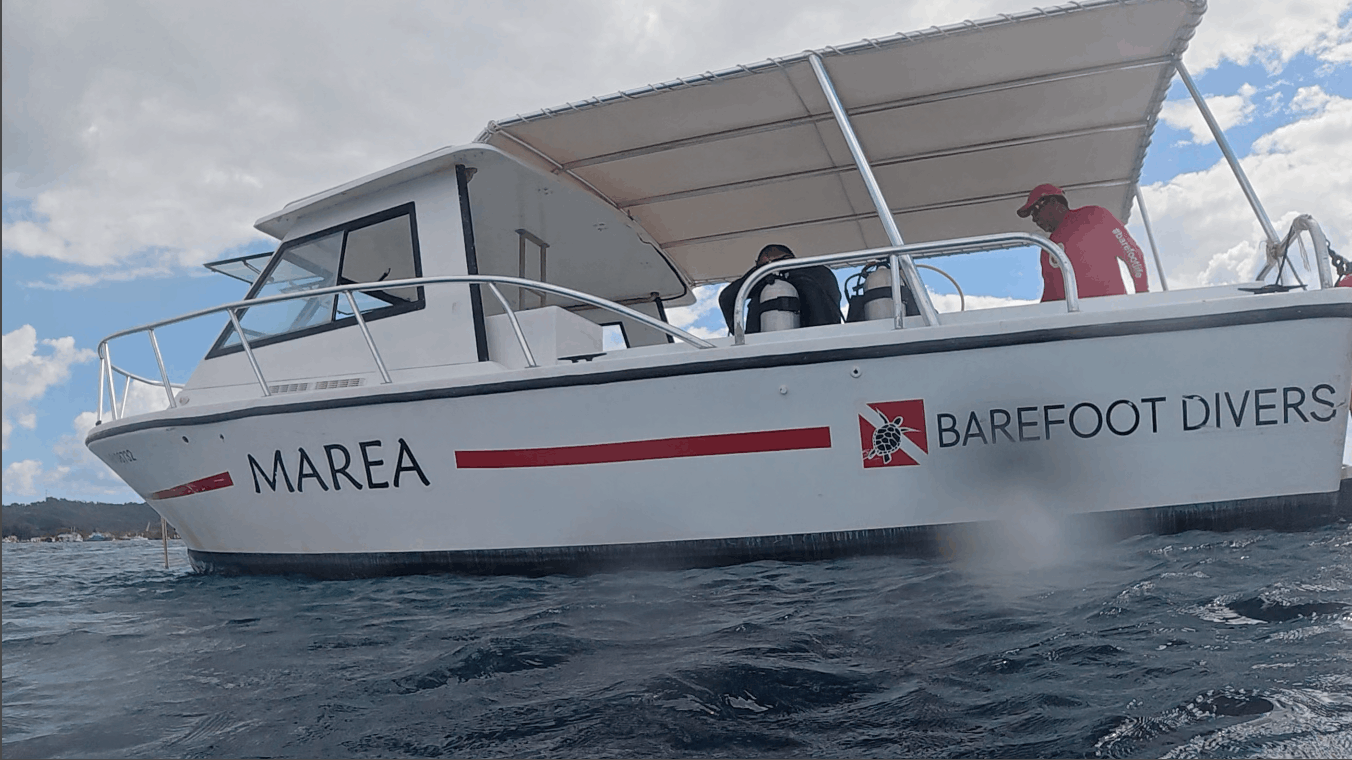
I dove with two operators on this trip.
Barefoot Divers operates out of the Coxen Hole area alongside Barefoot Cay Resort, where I stayed one night. They're your best option for south-side sites.
If Mary's Place is on your list, reach out to them directly via WhatsApp or Instagram before booking and ask which days they're running south-side trips and plan around that.
Roatan Divers is based in West End and primarily runs north-side dives.
They'll do south-side trips when north-side conditions deteriorate from wind, but it's not their default.
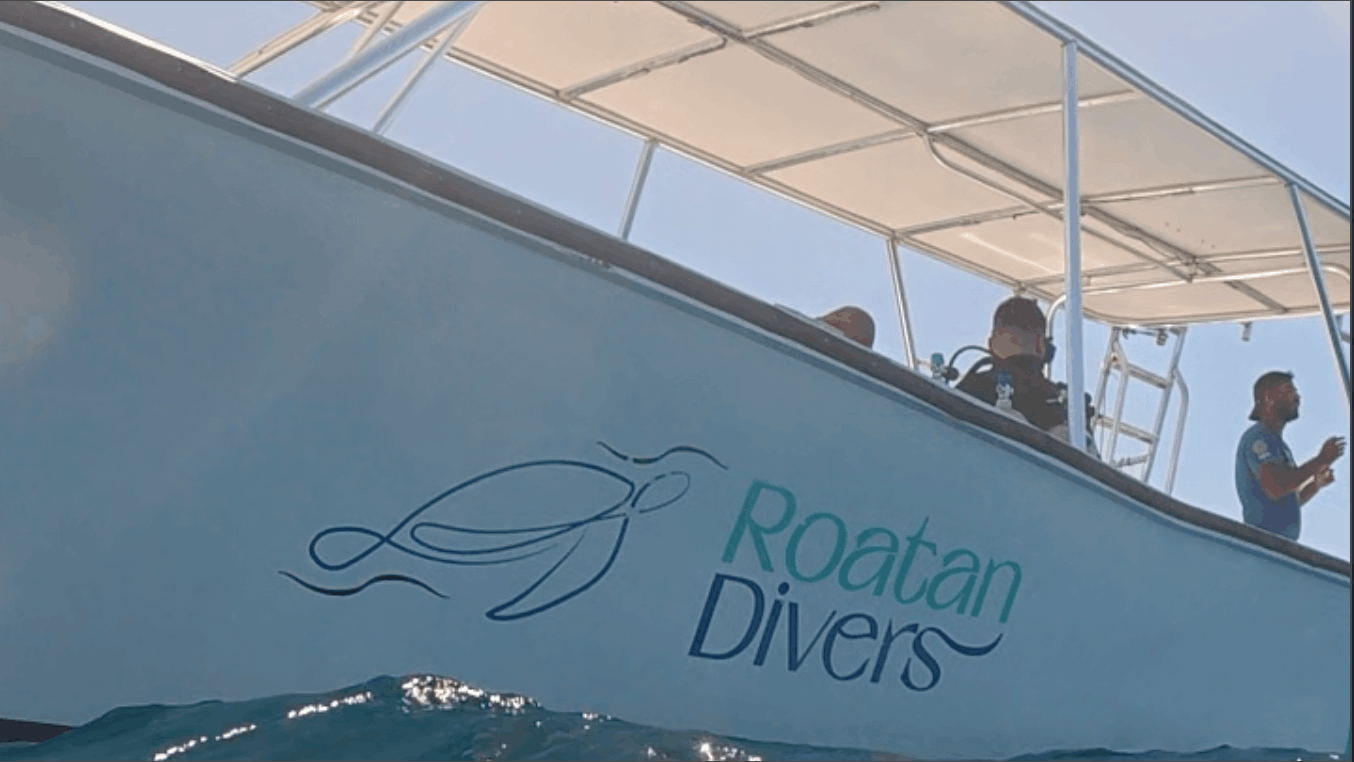
Important note for both operators: you cannot request specific dive sites. The captain decides based on conditions, mooring ball availability, and what courses are being run.
If a particular site is non-negotiable, communicate that upfront or speak to multiple charters.
What Diving Roatan Costs
I dove with two operators and they price differently, so it is worth knowing which structure suits your trip.
Roatan Divers sells dive packages:
- 1 dive: $60
- 2 dives: $110
- 5 dives: $265
- 10 dives: $500
- 20 dives: $800
Barefoot Divers charges per dive on a sliding scale:
- $45 per dive for 1 to 4 dives
- $40 per dive for 5 to 10 dives
- $35 per dive for 11 or more dives
Either way the price per dive drops the more you do, so it is worth deciding roughly how many dives you want before you book rather than paying as you go.

Water Conditions & What to Wear
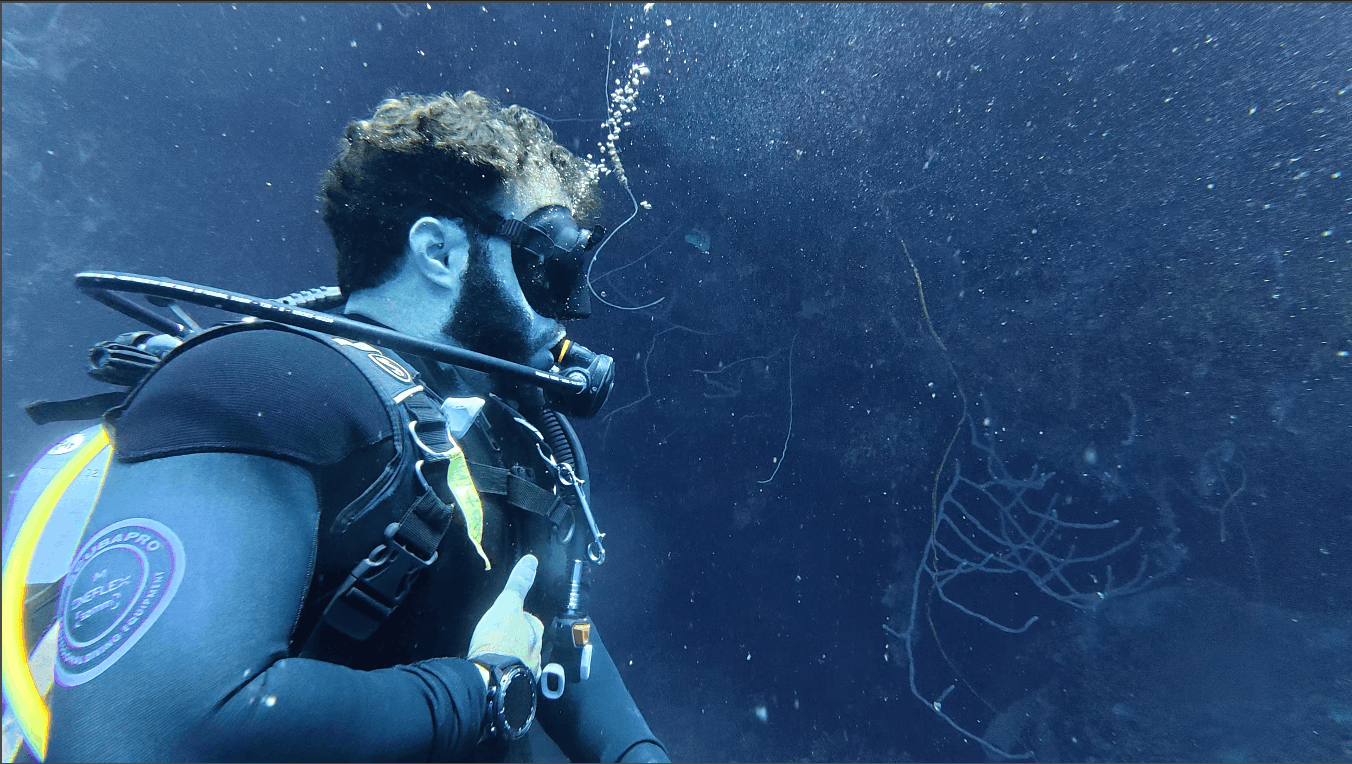
Water temperature sits at a consistent 80°F / 27°C year-round. I dove in a 3mm while some divers went with just a rash guard.
Visibility regularly hit 60 to 100 feet (18 to 30 m) on both sides of the island. Currents were minimal throughout my trip; almost every dive was an out-and-back along the wall.

Roatan has wet and dry seasons but diving runs year-round.
Where to Stay in Roatan
There are three main areas most divers will consider: West End, West Bay, and Coxen Hole.
West End is the diving hub. Most operators are based here, the vibe is relaxed and diver-focused, and everything you need is within walking distance. If diving is the primary reason you're here, this is your base.
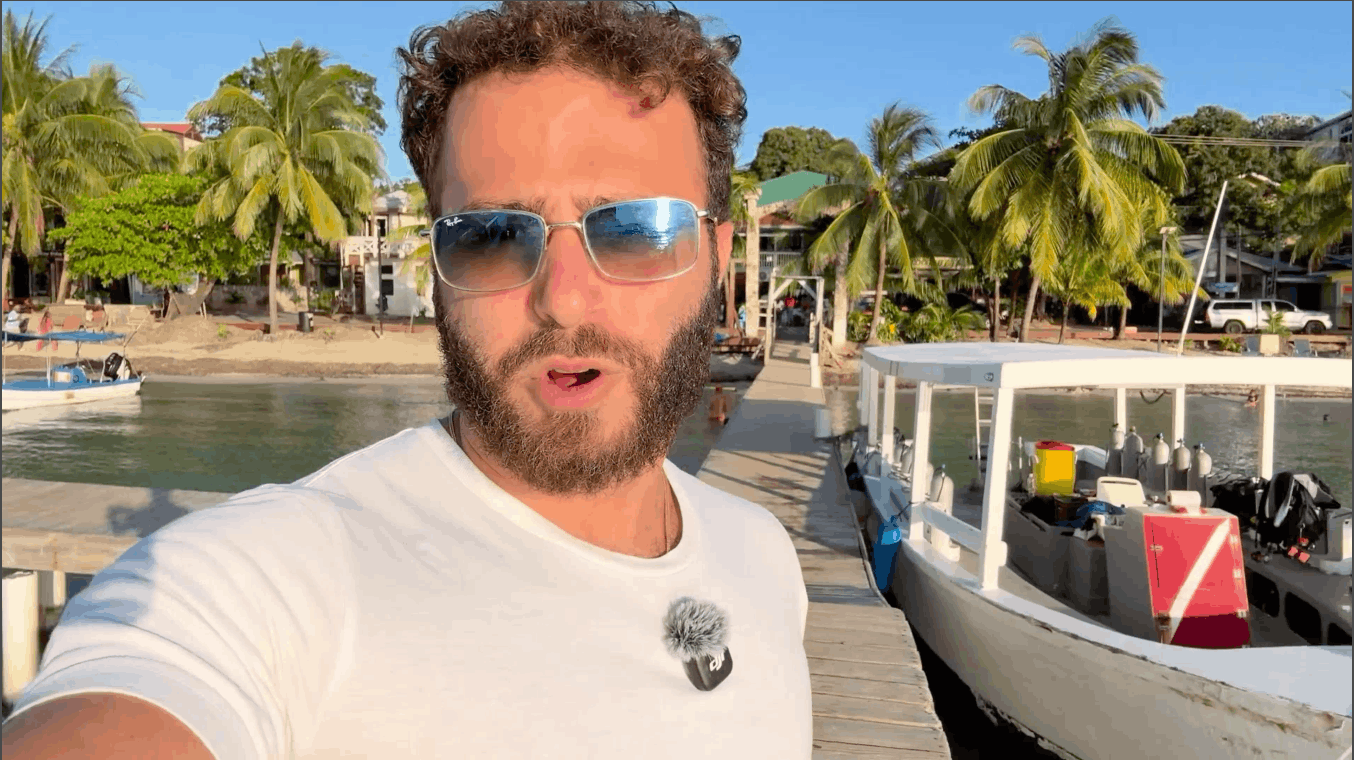
West Bay is more resort and beach-oriented. Good if you're traveling as a couple or want a proper beach vacation with diving on the side, but it's not where the dive community lives.
Coxen Hole is the main port town, less touristy, more local. Your best base for accessing south-side sites like Mary's Place and Howard's Happy Place. Worth spending at least a few nights here if those sites are on your list.
For most divers, splitting time between West End and Coxen Hole covers all the bases. One thing to keep in mind: Roatan is a cruise ship destination. On port days you'll notice a significant influx of day visitors in West End. It doesn't ruin the experience but it does change the energy.
I stayed at Barefoot Cay Resort near Coxen Hole on this trip. I wrote a full review of Barefoot Cay Resort covering the loft, the private island, and what the diving costs.

Getting to Roatan
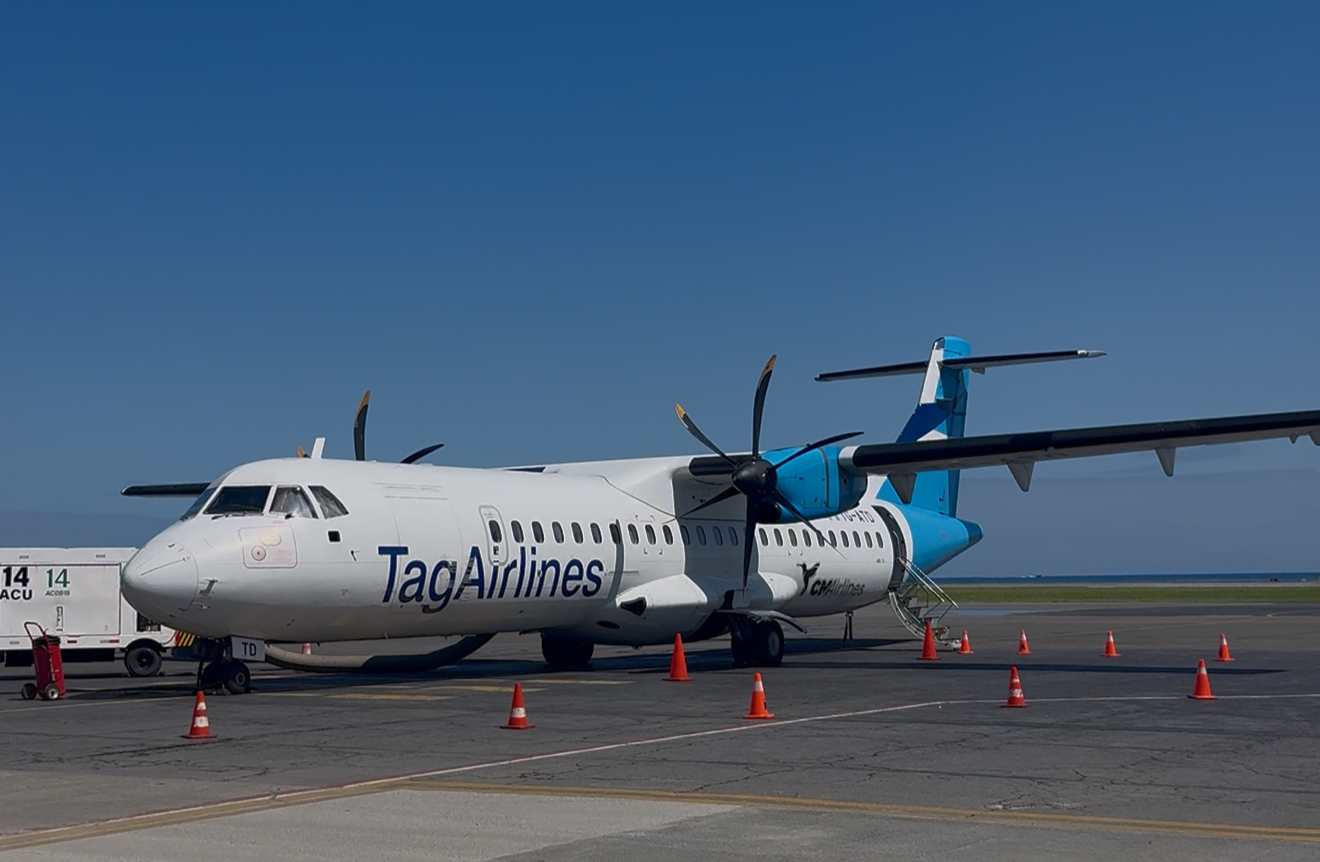
Several major cities have direct flights to Roatan (RTB): Miami, Dallas, Atlanta, Toronto, and Montreal.
Most other routes connect through San Pedro Sula on the Honduran mainland, the closest major city to the Bay Islands.
Cards are widely accepted in West End and across most of the island. If you're carrying USD cash, bills need to be in pristine condition. Tears, heavy creasing, or marks and businesses may refuse them. ATMs dispense Lempira, the local currency, which is accepted everywhere.
English is widely spoken across Roatan. The Bay Islands were British-colonized until 1859 and by the time the British left, English and a local Creole dialect were already embedded in island culture. You'll have no trouble getting around without Spanish.

When is the best time to dive Roatan?
March through September, the dry season, when you get the calmest seas and the clearest visibility. Diving runs year round, so an off-season trip still works.
How much does diving in Roatan cost?
It depends on the operator. Roatan Divers sells packages, from $60 for a single dive up to $800 for twenty. Barefoot Divers charges per dive on a sliding scale, $45 for one to four dives, $40 for five to ten, and $35 once you pass eleven. Either way the per-dive price drops the more you book.
Can you request specific dive sites in Roatan?
No, and this catches people out. The captain picks the sites based on conditions, mooring ball availability, and what courses are running that day. If a particular site is non-negotiable for you, say so upfront when you book or speak to more than one charter.
Do you need a certification to dive inside the Odyssey wreck?
Yes. Roatan Divers would not take divers inside without a Wreck Diver certification, so I dove the exterior only. The wreck sits at 110 feet (34 m) and my own max depth on it was 96 feet (29 m), so it is an advanced dive either way.
Where should you stay in Roatan for diving?
West End if diving is the point of the trip. Most operators are based there, it is walkable, and the whole area is diver-focused. West Bay is more resort and beach oriented. Coxen Hole is the main port town and your best base for south-side sites like Mary's Place and Howard's Happy Place. Splitting time between West End and Coxen Hole covers everything.
What is visibility like in Roatan?
Regularly 60 to 100 feet (18 to 30 m) on both sides of the island.
What wetsuit do you need in Roatan?
Not much. Water sits at a consistent 80°F / 27°C year round. I dove a 3mm and some divers in my group went with just a rash guard.
Is there strong current in Roatan?
Not in my experience. Current was minimal across my ten days and almost every dive was an out-and-back along the wall rather than a drift.
Let's Dive Together
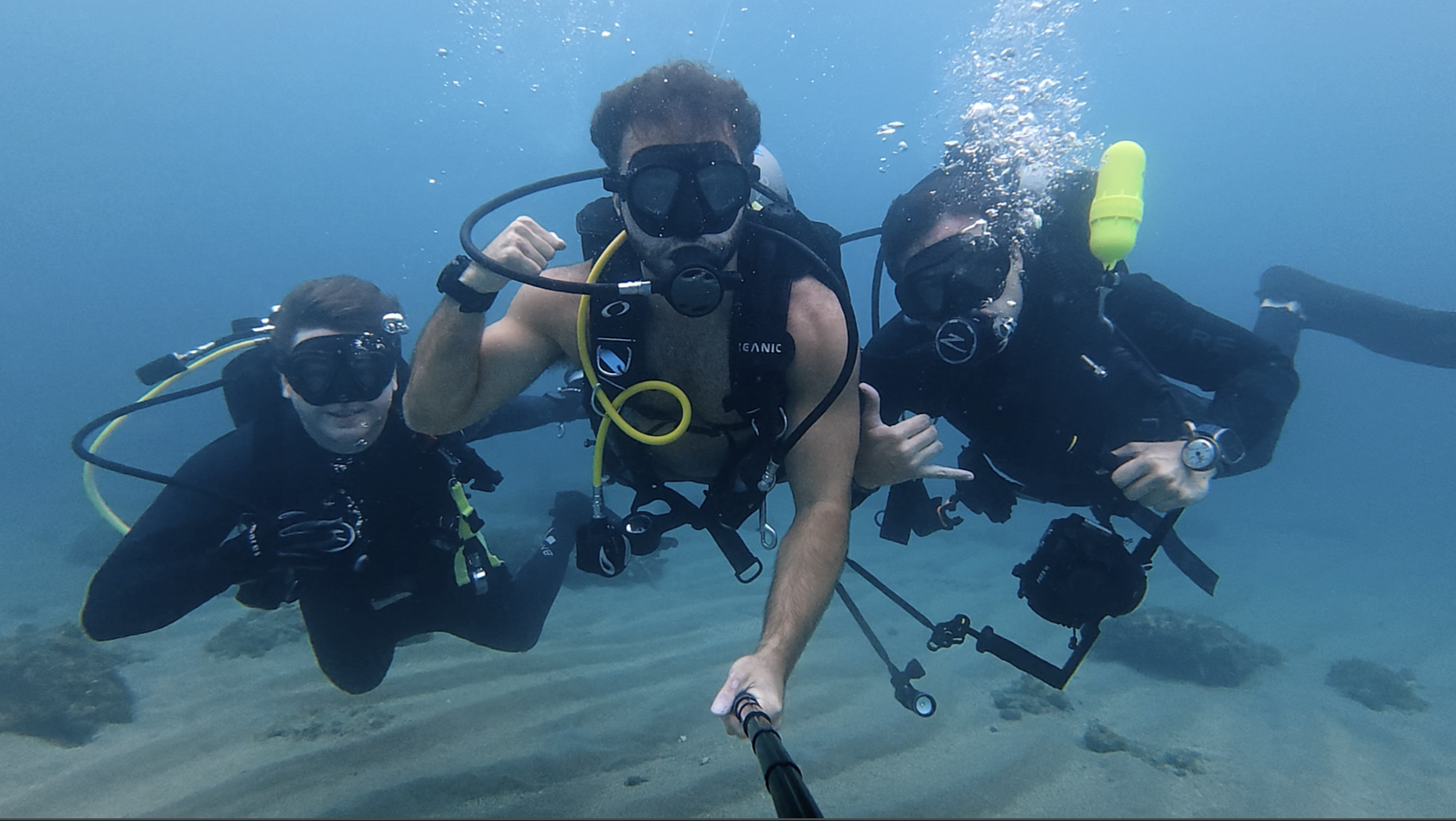
👋 It's Divemaster Austin
I'm inviting you to Dive Club, my global scuba diving community.
What you’ll find inside:
🤿 Dive meetups & group trips
🌍 Top dive sites shared by community members
⚙️ Gear tips & technique discussions
🤝 Diver's who’ve already linked up IRL
See you there!

.webp)
.webp)


%20(1).png)