
.webp)
Dive boots are most often used with open heel fins, providing stability, protection, and comfort before during, and after a dive.
Depending on your gear setup and the type of diving you're doing, investing in a pair of dive boots (aka booties) is a no-brainer.
Do You Need Dive Boots?
I think every diver should wear dive boots, as they come at such a low cost, and really only provide advantages.
The only exception to this I can think of, is if you’re wearing closed-heel fins and diving in warm tropical waters.
Even then, I'd prefer to size up my closed-heel fin and wear a dive boot under, or at least a neoprene sock.
Benefits of Dive Boots
🌡️ They Keep You Warm
Dive boots are made from neoprene and work like a wetsuit, trapping warm water against your skin. They range from 1mm for warm tropical water up to 7mm for cold water diving.
🦶 They Protect Your Feet
Open-heel fins are designed to be worn with boots. Without them you'll get blisters, chaff marks, and a less efficient kick.
😌 They're More Comfortable
Boots protect you from hot sand, sharp rocks, and coral on shore entries. The rubber sole also gives you grip on wet rocks and dive ladders, reducing the chance of a fall.
My Dive Boots: Tilos Trufit

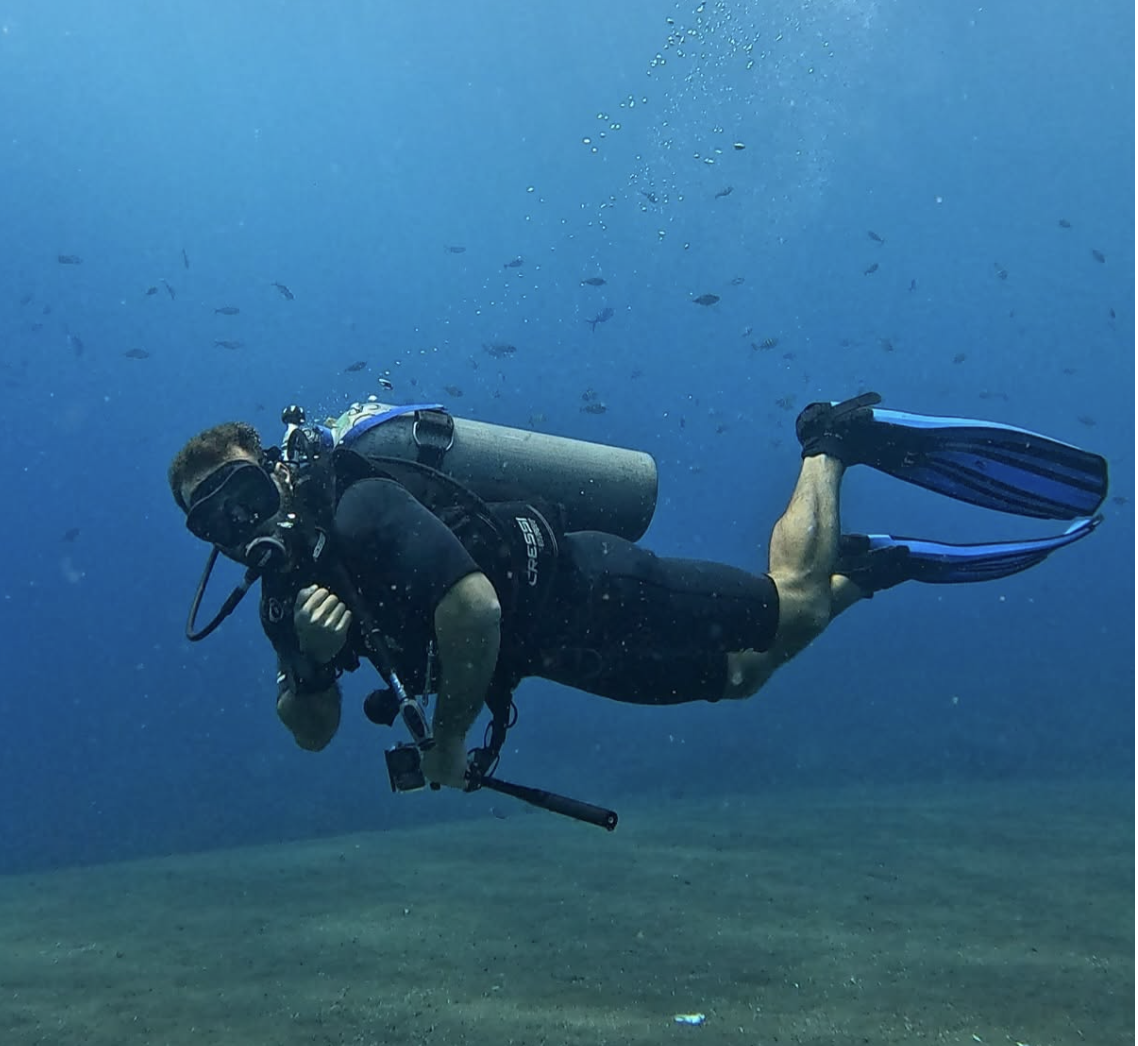
The Tilos TruFit are my dive boots when diving at home in Florida or other warm water destinations.
They're low-volume so don't store a lot of water, and the Thermoflare lining keeps your feet warm.
The slim fit slides easily into my open-heel fins.
I do a lot of shore diving, and with the soles being puncture-resistant, I can walk over hot, uneven, and sharp terrain without issue.
Most dive boats won't let you wear shoes, so having dive boots on makes walking around boats and piers more comfortable.
Tilos also makes these in 3 thicknesses (3-7mm) and short or tall cuts, so you can buy one to fit your typical dive conditions and preferences.
Pros
Cons
Best for Cold Water: Bare Ultrawarmth 7mm
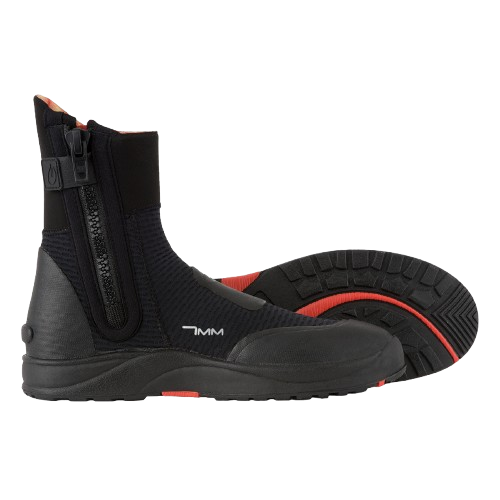
I haven't personally used these boots, but the Bare Ultrawarmth 7mm seem like the pick for cold water divers.
They have an Omnired Infrared Technology that uses thermo-reactive minerals to reflect body heat back to your feet.
The ankle is reinforced with Elastek full-stretch neoprene making them easier to get on than most 7mm boots.
They also have a heavy-duty sole to hold up on wet boat decks and tough entries.
If you're diving below 60°F (16°C) regularly, these are the ones to get.
Pros
Cons
Best for Rocky Shore Diving Entries: Mares Flexa DS
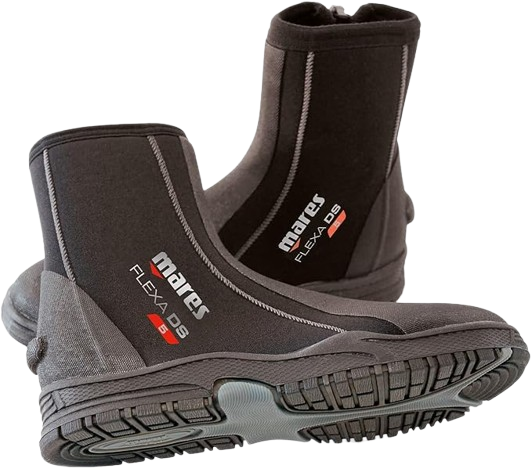
The Mares Flexa DS is my pick for shore diving over rocky terrain. They have a hard rubber sole to handle sharp rocks and coral. The DS drainage system stops the boot from suctioning to your fin pocket.
These should last you a long time, as seams are glued and blind-stitched, and toe and heel are reinforced.
If most of your dives involve a walk over rough ground to the entry point, these are built for that.
Pros
Cons
Dive Boots Buying Guide
🌡 Temperature
Match your boot thickness to your primary dive conditions:
Dive Boot Thickness Guide
| Water Temp | Thickness |
|---|---|
| Above 80°F / 27°C | Socks or None |
| 70–80°F / 21–27°C | 3mm |
| 60–70°F / 15–21°C | 5mm |
| Below 60°F / 15°C | 7mm |
Don't try and cater your dive boot selection to vacation conditions that are needed 5% of the time.
Just rent the right ones for the job in that scenario.
🏖️ Entry Method
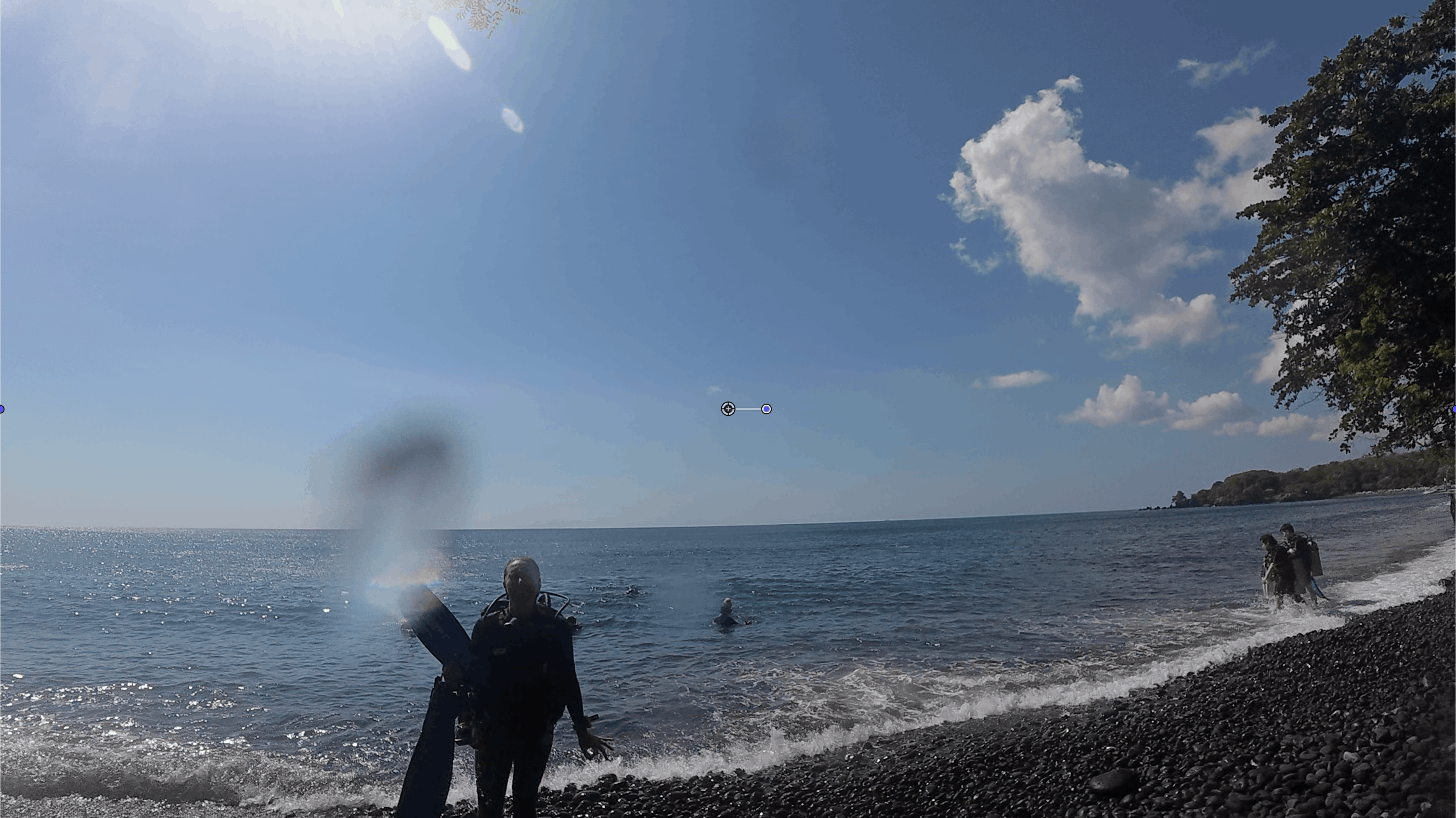
Boat divers can get away with a thinner, lighter boot as you're stepping onto a platform, piers, and ladders.
Shore divers need a reinforced sole.
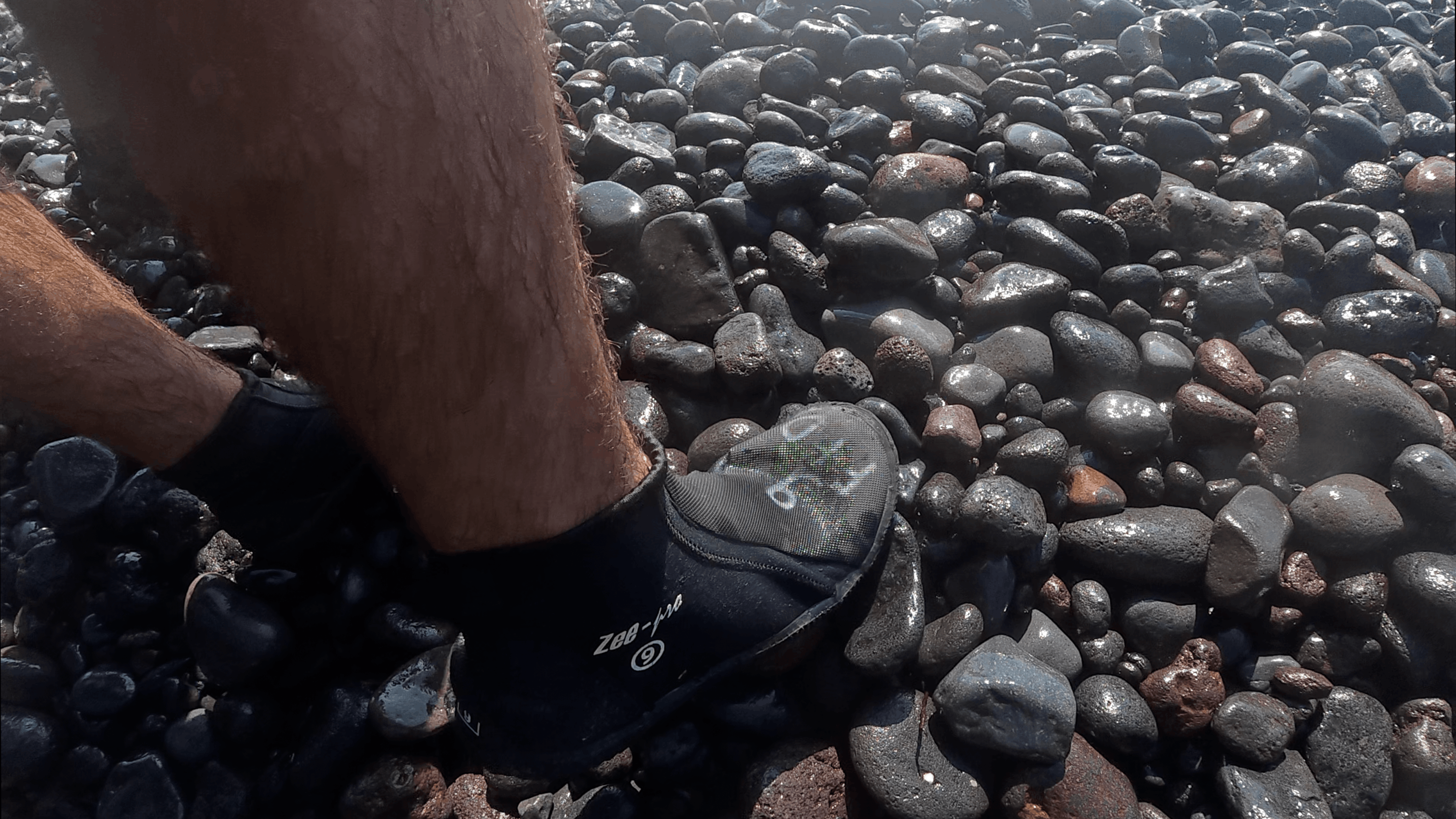
If your entries involve rocks, coral, or volcanic terrain, prioritize sole thickness and puncture resistance.
💰 Budget
Dive boots generally run between $20 and $80, though a premium cold-water boot like the Bare Ultrawarmth 7mm runs higher, closer to $130. I wouldn't overspend as these aren't meant to last forever.
Like shoes, expect 2–3 years of solid use and replace them when the sole starts separating or the neoprene breaks down from repeated compression.
👟 Fit
Dive boots should be snug but not too tight.
If they're too loose they'll flood with water.
Too tight and they restrict circulation and just aren't comfortable.
Generally speaking, get dive boots true to your shoe size.
Fit also directly affects your fin choice.
Dive boots add bulk to your foot, so if you already own open-heel fins, try them on with the boots before buying.
A boot that's too thick can make your fins feel locked in and restrict ankle movement.
Too thin and your foot slides, hurting trim and reducing kick efficiency.
🔒 Closure Type
Zippers: easiest on/off, best fit, but cheap ones break and flood.
Velcro: more durable hardware, slightly weaker seal.
Slip-on: no hardware to fail, best for narrow feet, harder to get on.
Frequently Asked Questions
Do you actually need dive boots, or can you dive without them?
You can dive without them if you're using closed-heel fins in warm water, but I still wouldn't recommend it. Boots protect your feet on shore entries and boat decks, and they're cheap enough that there's not much reason to skip them. If you're diving open-heel fins, boots aren't optional. The fins are built to be worn with them.
What size dive boots should I get?
Dive boots fit close to your regular shoe size, so start there. They only come in whole sizes, so if you're a half size, round up rather than down. If a boot ends up slightly loose, a thin neoprene sock underneath tightens the fit and adds a bit of extra warmth.
Do dive boots work with any fins, or only open-heel?
Open-heel fins are designed around wearing a boot, that's the whole point of the strap and heel pocket. Closed-heel (full-foot) fins are sized to go directly over a bare foot, so a boot usually won't fit underneath unless you size the fins up specifically to accommodate one.
How long do dive boots last before I need to replace them?
I get about 2 to 3 years of regular use out of a pair before the sole starts separating or the neoprene breaks down from repeated compression. Rinsing them in fresh water after every dive and letting them dry out of direct sun helps them last toward the longer end of that range.
Should my boot thickness match my wetsuit thickness?
That's a reasonable starting point, but it's not a hard rule. What actually matters is water temperature. Match the boot to the conditions using the thickness guide above, and if you're between two thicknesses, I'd size up rather than down since cold feet end a dive faster than almost anything else.
Let's Dive Together
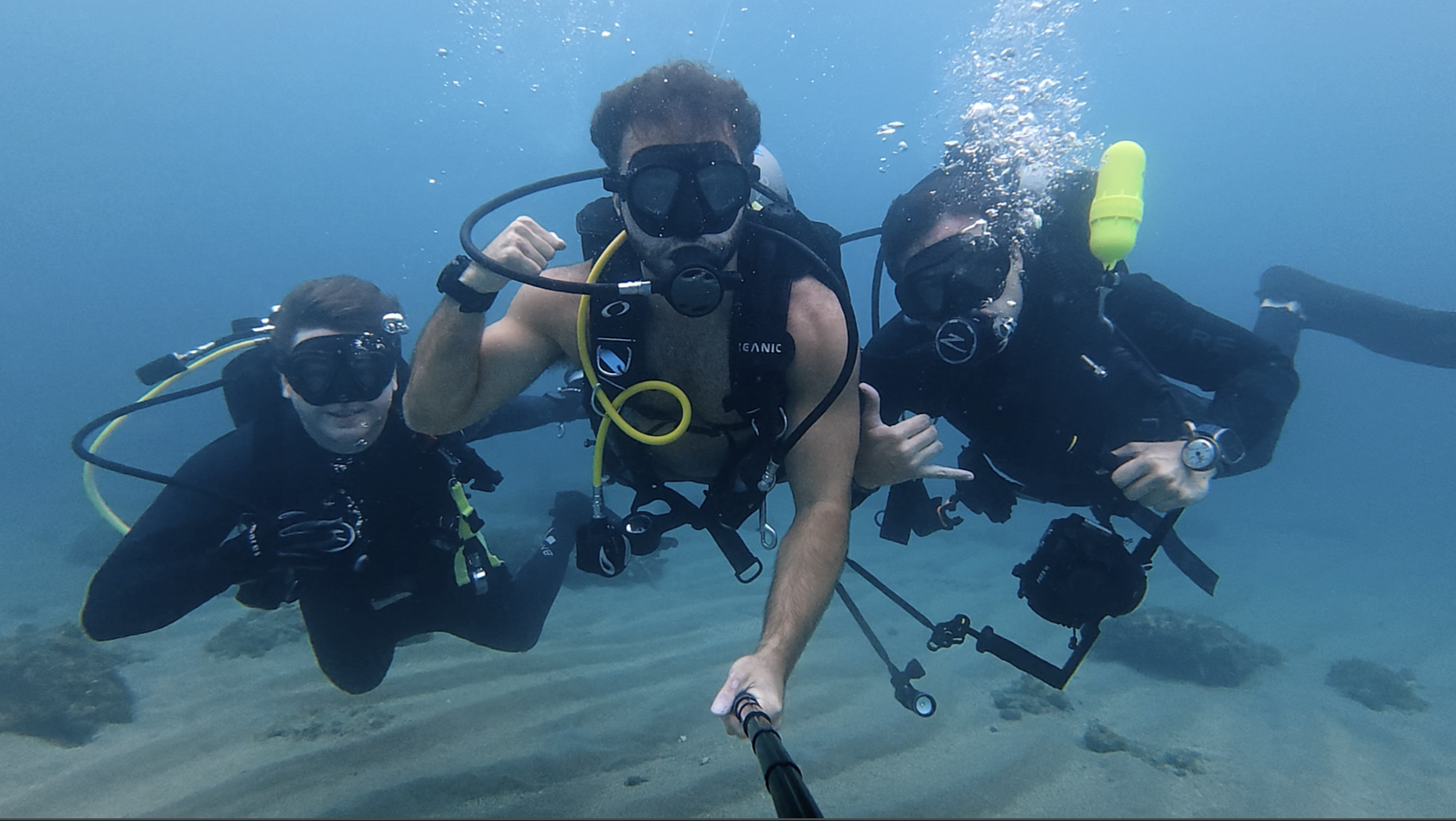
👋 It's Divemaster Austin
I'm inviting you to Dive Club, my global scuba diving community.
What you’ll find inside:
🤿 Dive meetups & group trips
🌍 Top dive sites shared by community members
⚙️ Gear tips & technique discussions
🤝 Diver's who’ve already linked up IRL
See you there!
Join my scuba diving community.

I'm Austin, a PADI Divemaster with over a decade of diving experience under my belt.
I created a free scuba diving community, where divers can connect, learn, and share their dives.
See you inside!
Join my Diving Community

.webp)
.webp)


.png)
.png)