
.webp)
There are a handful of toxic ingredients in most sunscreens that are extremely harmful to reefs and other marine life.
Certain countries like Australia and states like Hawaii have taken extreme measures to prevent tourists from entering the water with unapproved sunscreens.
If they're harmful to corals and marine life, what do you think they do to you?
In this article, I'll share my list of reef safe sunscreens that I would personally use.
My Top Pick: Stream2Sea

Stream2Sea is my top pick for reef-safe sunscreen. I've personally hopped on calls with their team, and their passion for the ocean and science-based testing is evident.
You only need a dab of it, and it goes a long way.
Stream2Sea also comes in a biodegradable bottle with microplastic free options.
Product specs from Stream2Sea:
Popular Stick Alternative: Coral Safe
.png)
If you're mostly worried about your face getting burned, I've found this SPF 50 Coral Safe sunscreen to work great, and it also has the lowest price point out of all the other ones on this list.
The formula does not have nanoparticles and is made for those with sensitive skin.
It's a bit thicker to put on (as with most natural sunscreens) so I had to rub it in for a while.
Other specs on the product from the website are that it is:
Best Reef Safe Spray: Sun Bum SPF 50
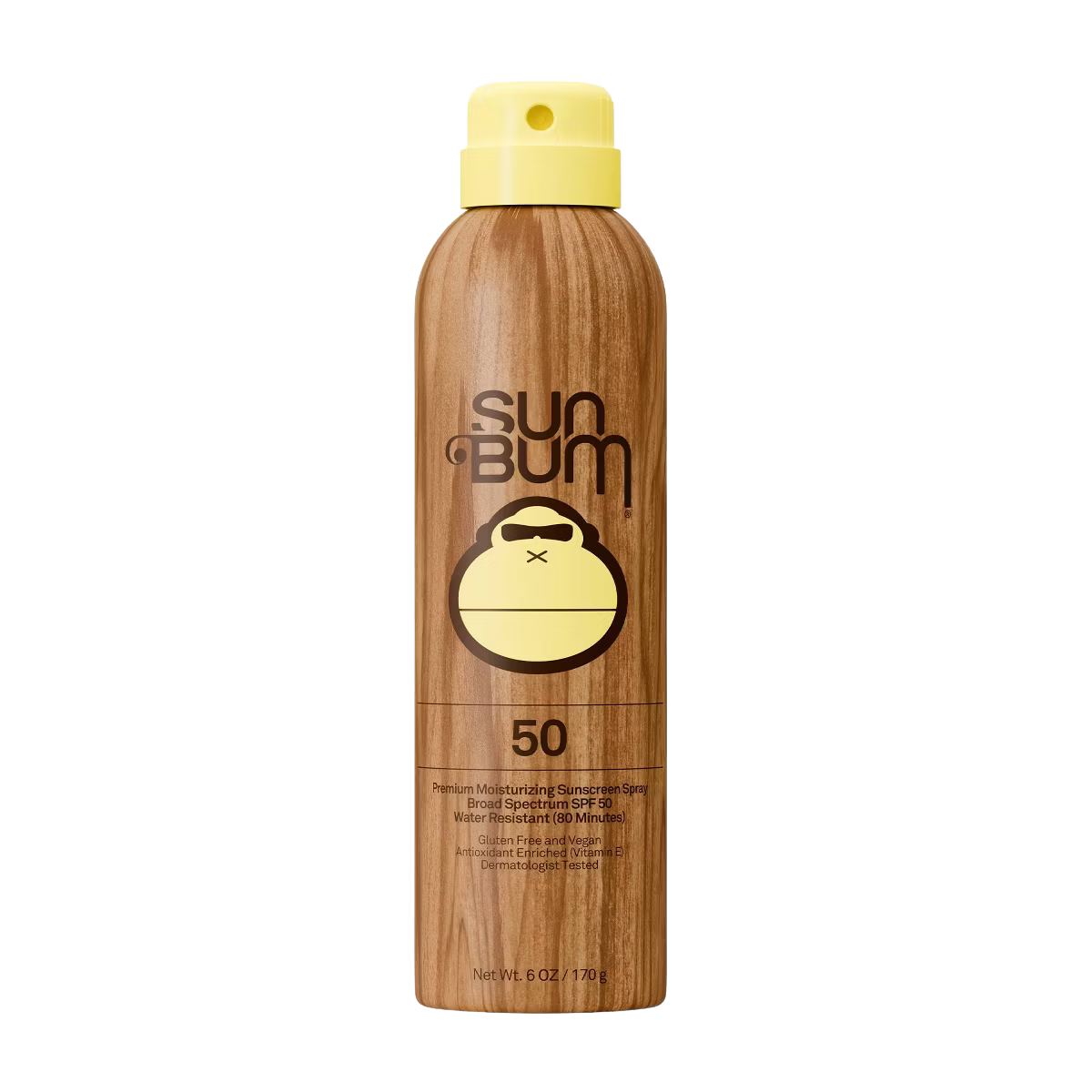
If you prefer spray sunscreen, then I'd recommend SunBum SPF 50. It's cooling to put on and in a lightweight bottle.
It is very easy to apply which is hard to find with eco-friendly products. It dries very quickly (within 15 minutes).
It's also vegan and reef safe and can be used in Hawaii which has the highest standards of sunscreen in the country.
What is the Difference Between Mineral and Chemical Based Sunscreen?
According to dermatologist Dhaval Bhanusali, MD.
Mineral is what we call physical sunscreens that deflect UV and UVB rays.
Chemical sunscreens absorb them and use heat to break them up.
Physical sunscreens use zinc/titanium oxide
Nanoparticles are not perfect, even if natural like zinc/ titanium dioxide. “Nanoparticles still pose an increased toxicological risk because, just like in humans, they can be absorbed into the bloodstream of humans and marine life,”. The impacts are still being studied.
All this information is from a Healthline Article from multiple studies and doctors, you can read the whole thing here if you would like to learn more. Physical vs Chemical Sunscreen
Harmful Ingredients
First off if the list of ingredients says any of these below do not buy it (this list is from the HEL list that Protects Land + Sea)
What about shampoos, lotions, and other products I wear to the beach?
Like sunscreen, all products you wear on your skin and enter the ocean with will eventually leech into the ocean.
If you’re on a liveaboard or staying at a hotel near the shoreline the odds are that it will get dumped into the ocean one way or another.
Companies like Stream2Sea have a line of coral-conscious body lotions, leave-in conditioners, body washes, and a lot more.
Check out these products because the products you put on your body could leak chemicals into the ocean, which can have devastating effects on our coral reefs.
Let's Dive Together
👋 It's Divemaster Austin
I'm inviting you to Dive Club, my global scuba diving community.
What you’ll find inside:
🤿 Dive meetups & group trips
🌍 Top dive sites shared by community members
⚙️ Gear tips & technique discussions
🤝 Diver's who’ve already linked up IRL
See you there!
Join my scuba diving community.

I'm Austin, a PADI Divemaster with over a decade of diving experience under my belt.
I created a free scuba diving community, where divers can connect, learn, and share their dives.
See you inside!
Join my Diving Community

.webp)
.webp)



.png)