
.webp)
An SMB, or surface marker buoy, is a scuba diving accessory that allows divers to prominently mark their location in bodies of water so boats are aware of their position.
No responsible ocean diver should ever dive without one.
When deployed with a reel from depth, it's often called a dSMB.
You should know the dive flag rules for every location you dive.
While a dive charter should always carry extra SMBs, a self-reliant diver should own one.
In this guide I'll walk you through the different types of dSMBs so you can buy the right one for your type of diving.
What is an SMB?
.png)
An SMB (Surface Marker Buoy) is inflated at the surface once you've ascended, since a basic SMB has no reel to deploy it earlier.
It marks your position once you're up, for boat traffic or surface support. These are best for spearfishing or drift dives where you surface at an unpredictable spot.
What is a dSMB?
.png)
A DSMB is carried underwater and deployed during your ascent, typically from your safety stop at 15ft (4.6 m).
The markey buoy signals your position to boats before you surface, making it essential for drift diving, or any situation where you surface away from your entry point.
Shape, Color & Size
Shape: Pick a long, tube shape that will stand tall on the surface. These SMBs can also be easily rolled up and clipped to your gear.
Color: It's vital that your SMB stands out against the water. Orange or red provides the highest contrast. Pink or yellow can work well.
Size: Your SMB should be at least 3ft (1 m) in length. If you're diving in calm waters with little waves, a smaller SMB can suffice.
Why You Need a Reel With Your DSMB
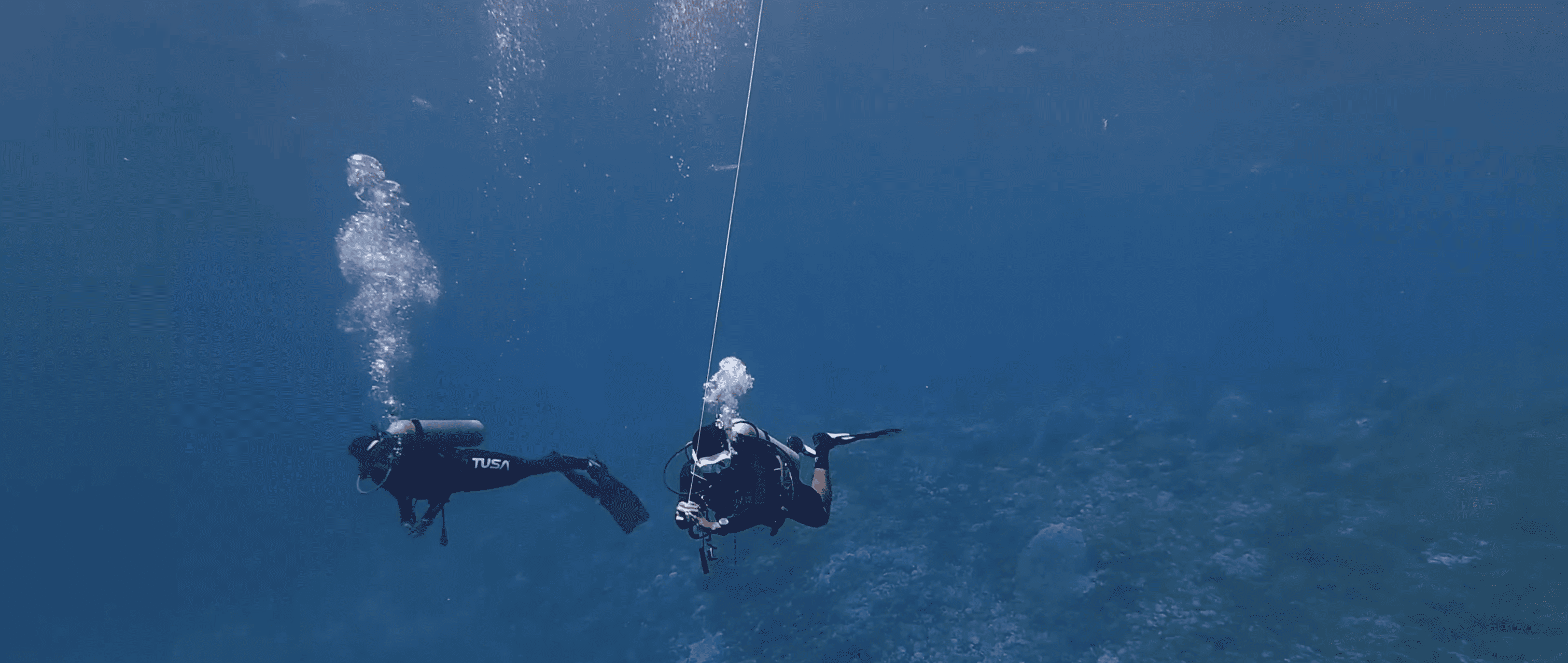
While some SMBs come with wrapped lines, most divers prefer using a reel.
A reel safely stores the line, greatly reduces entanglement risk, and allows you to deploy your DSMB from depth.
Deploying from 15-20ft during your safety stop is the most common use case.
Carrying a longer reel is recommended for deployment from a greater depth in the case of an emergency.
The simpler the reel mechanism, the less there is to go wrong.
A double-ended snap is used for attaching the DSMB to your gear and preventing the line from unraveling.
How To Inflate An SMB At The Surface
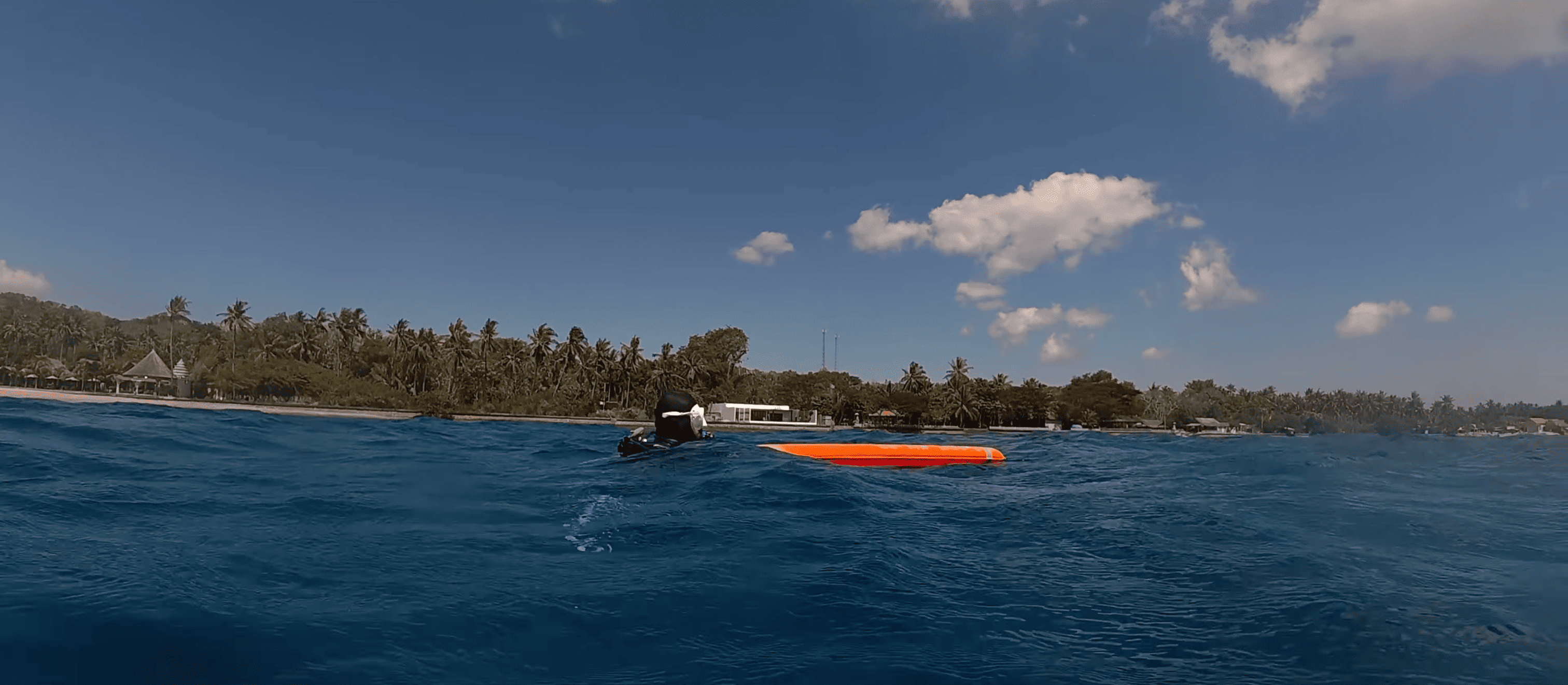
How to Deploy an SMB at the Surface
Method 1: Oral Inflation (Recommended)
Hold the SMB opening to your mouth
Take a breath and exhale fully into the SMB
Repeat 2-3 times until the SMB is mostly full
Pull down on the line to make it stand upright
Method 2: Using Your Alternate Air Source (if you need it)
Place the mouthpiece of your alternate air source just inside the open end of the SMB
Turn the alternate air source upside down and pull the open end of the SMB slightly under the surface
Push the purge button briefly while holding the open end of the SMB
Pull the end of SMB down slightly in the water to make it stand upright
How To Inflate An SMB Underwater
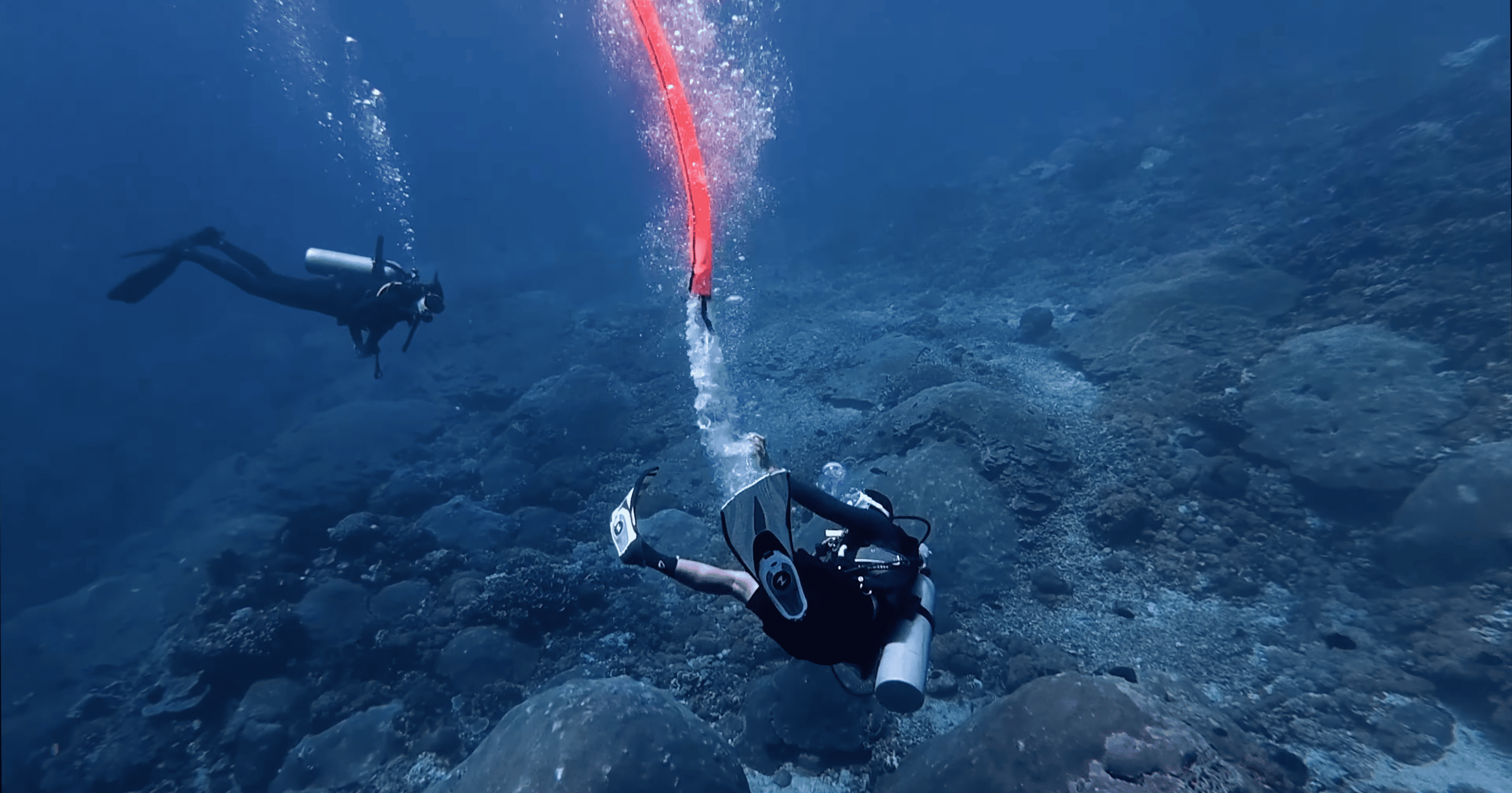
- Make sure that you are neutrally buoyant at around 5m or deeper and check there are no obstructions above or around you.
- Hold the reel so that it can freely spin on an axis created by your finger, or finger and thumb.
- Inflate the SMB using 2-3 full exhales or a short blast from your alternate air source.
- Let go of the SMB and allow the reel to spin. Watch your dive computer to maintain your depth.
- Once the SMB is at the surface you can wind the line tight around the reel and hold onto the reel until your safety stop is finished.
- Wind the line around the reel as you ascend slowly.
Where to Store Your DSMB
Your DSMB should be easily accessible but secured so it doesn't drag or come undone.
Most divers clip their DSMB to a D-ring on their BCD using a double-ended bolt snap.
If you have a BCD with pockets, you can store a DSMB inside. For divers that use tech pants or shorts, they often come with pockets for storage, this is where I like to keep my SMB.
Do I Really Need My Own SMB?
Yes.
While your divemaster or guide should carry an SMB, relying on someone else's safety equipment is a bad habit.
I've been on plenty of dives where the group splits up, buddies get separated, or someone has to ascend early.
If you don't have your own DSMB, you're putting yourself at serious risk.
Losing the group isn't necessarily an emergency, but without a DSMB, you have no way to alert boat traffic as you surface. You're nearly invisible to the boat captain scanning the water for your marker.
Even if your buddy carries one, what if you lose your buddy too? It happens more often than you'd think, especially in poor visibility or strong current.
A DSMB costs $30-60 and weighs almost nothing. It clips to your BCD and you'll barely notice it's there.
Every diver should carry their own DSMB.
It's one of the cheapest, lightest pieces of safety equipment you can own, and it could save your life.
Best Overall: JZLiner SMB
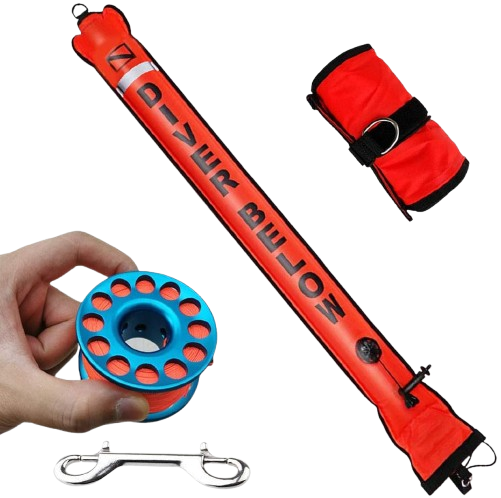
JZLiner's SMB is one of the best options on the market at the moment.
It's very affordable and comes with a 4ft (1.2 m) open-bottom DSMB and a 100ft (30 m) finger spool reel in one set.
A finger spool reel allows you to deploy it from great depths, before your safety stop. It also includes a double ended snap which are always nice to have when scuba diving.
The only downside is that 4ft (1.2 m) of SMB may not be ideal in high seas. For most readers, this will be plenty.
Best for Rough Seas: Mares Diver Marker Buoy

This is the DSMB I personally use, but I would have purchased the JZLiner SMB had I known of it before.
It's nearly double the price, but you get 6ft (1.8 m) of bright orange tube with reflective "Diver Below" writing and a 2-inch SOLAS reflective band.
It inflates quickly with 2-3 exhales or a short burst from your octopus, and rolls up small enough to clip to a D-ring without noticing it. This one is better in high seas, and if you already have a reel.
Best Float and Flag Combo: JZLiner Float + Flag
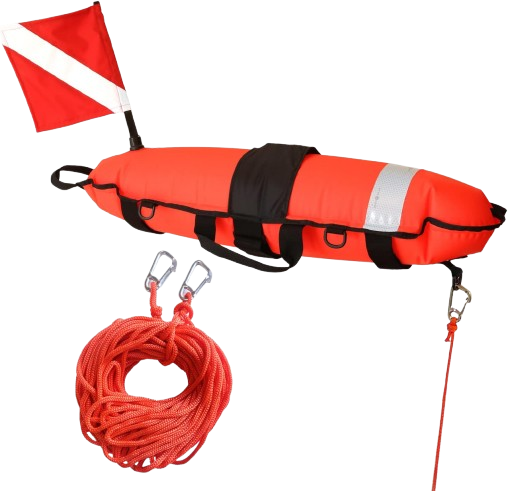
This SMB acts as both a dive flag and a surface marker buoy.
The float sits on the surface above you from the moment you get in, carrying a diver-down flag that boat traffic can see, and you tow it on a line as you go. It can also be use when freediving, in order to have something to rest on post dive.
You'd use something like this on a shore dive, as on a boat dive, the boat should carry the flag for you.
The nylon line stretches 72ft or 22 meters, so if you're diving deeper than that, you'd need to attach more line, or use something else.
Are Dive Flags and SMBs the Same Thing?
.png)
Unlike a dive flag, assuming a reel is attached, an SMB can be deployed from underwater, giving divers the freedom to not tow a flag for the entire dive.
Let's Dive Together
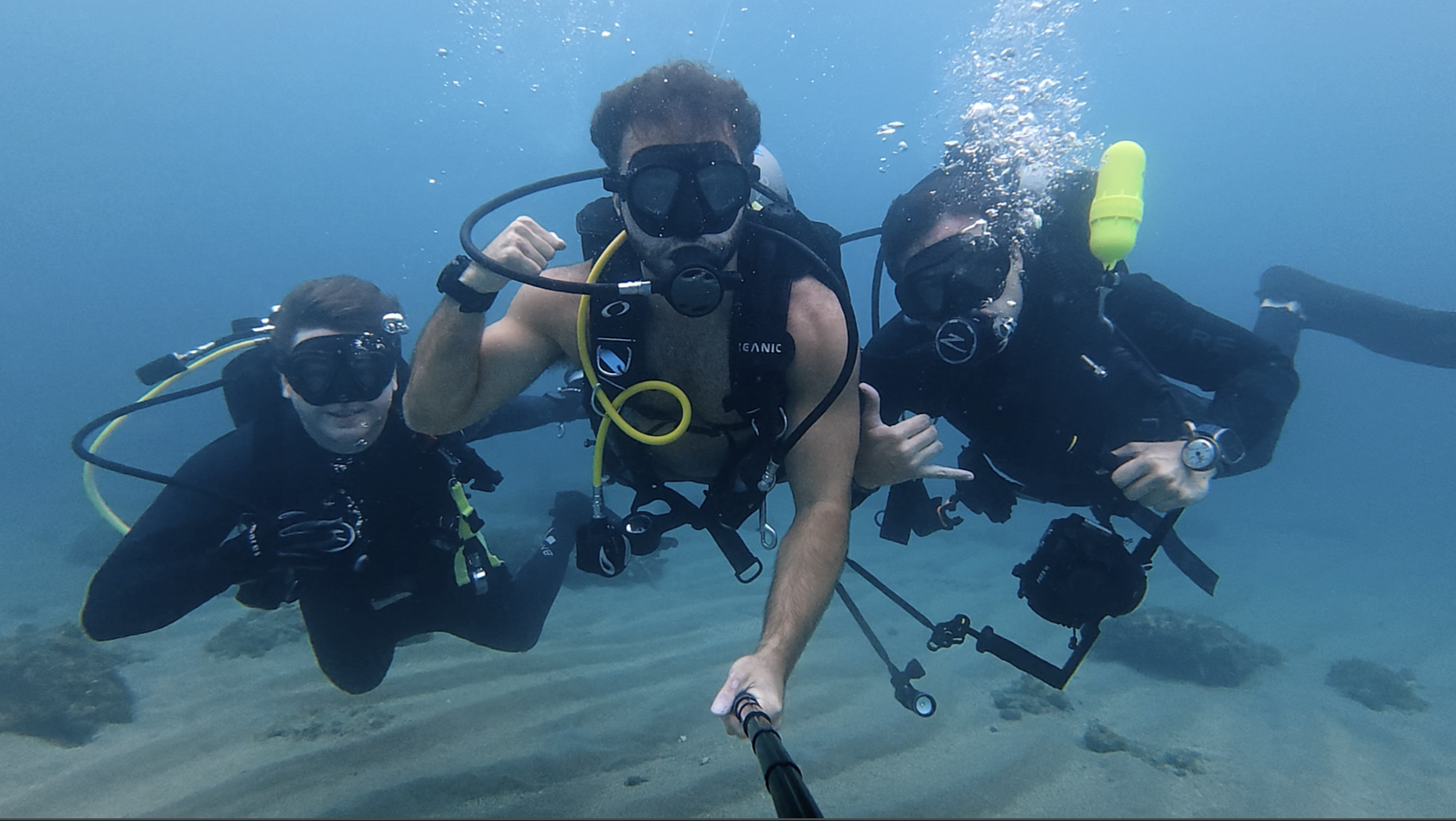
👋 It's Divemaster Austin
I'm inviting you to Dive Club, my global scuba diving community.
What you’ll find inside:
🤿 Dive meetups & group trips
🌍 Top dive sites shared by community members
⚙️ Gear tips & technique discussions
🤝 Diver's who’ve already linked up IRL
See you there!
Join my scuba diving community.
I'm Austin, a PADI Divemaster with over a decade of diving experience under my belt.
I created a free scuba diving community, where divers can connect, learn, and share their dives.
See you inside!
Join my Diving Community

.webp)
.webp)


.png)