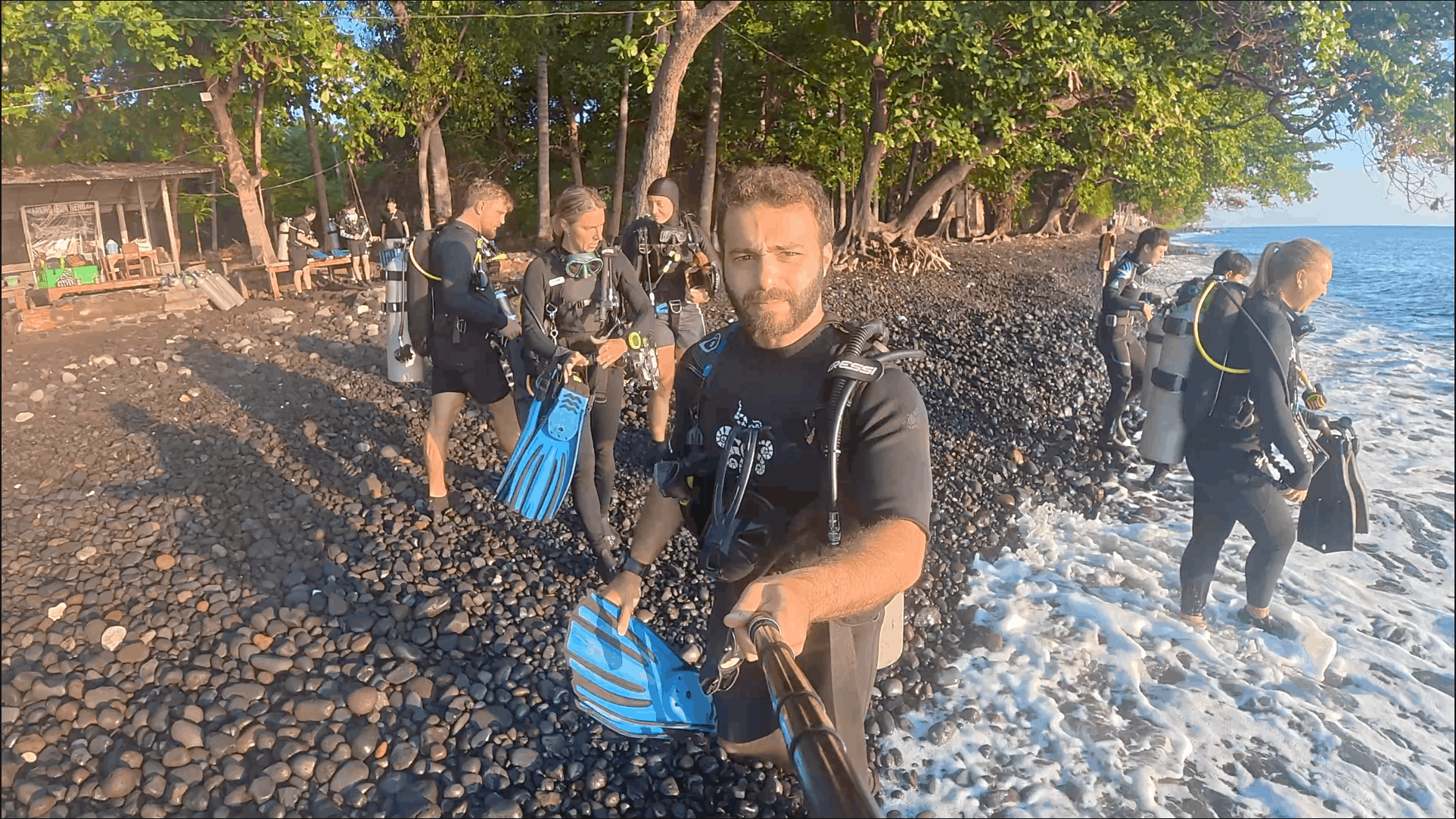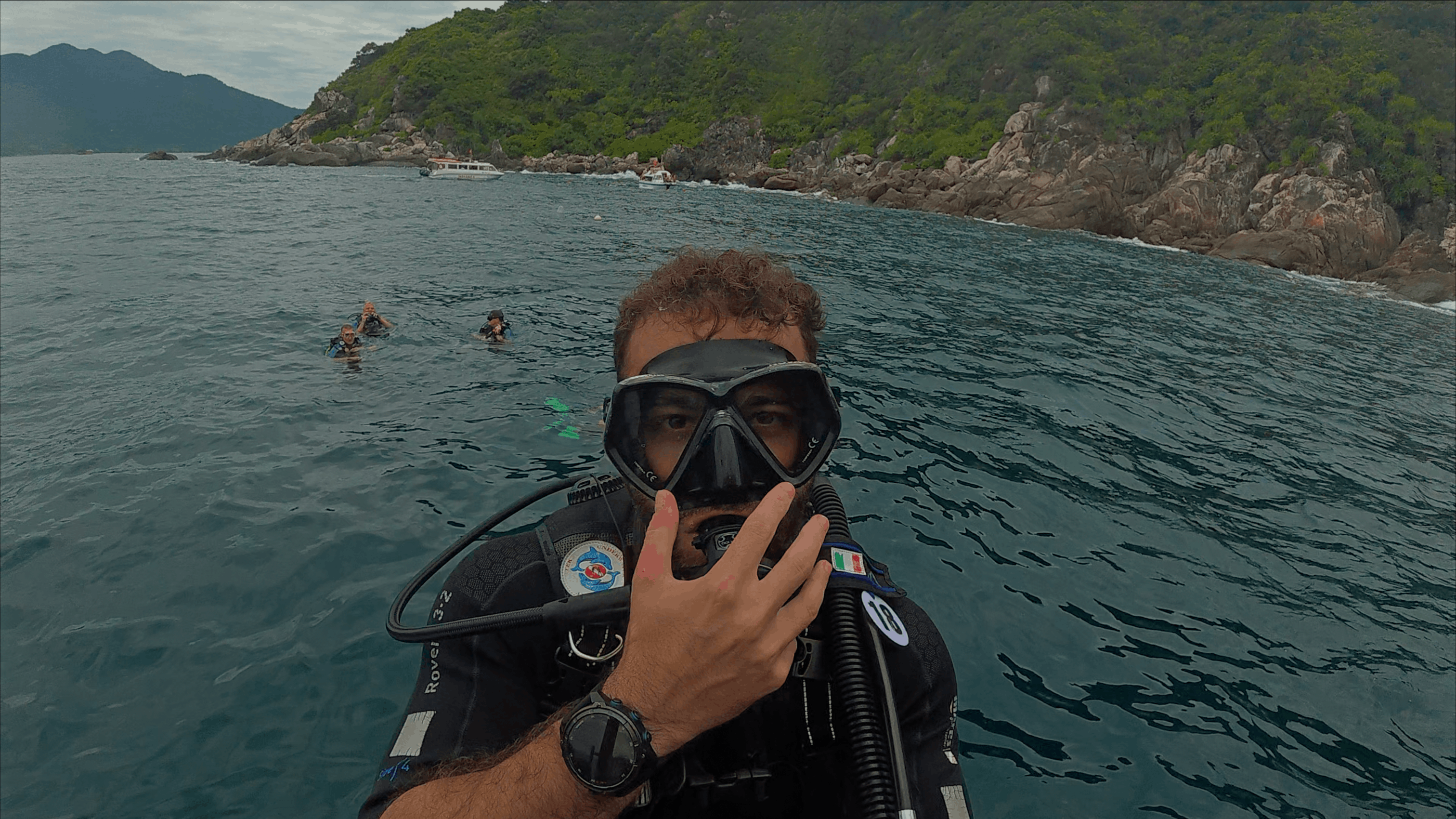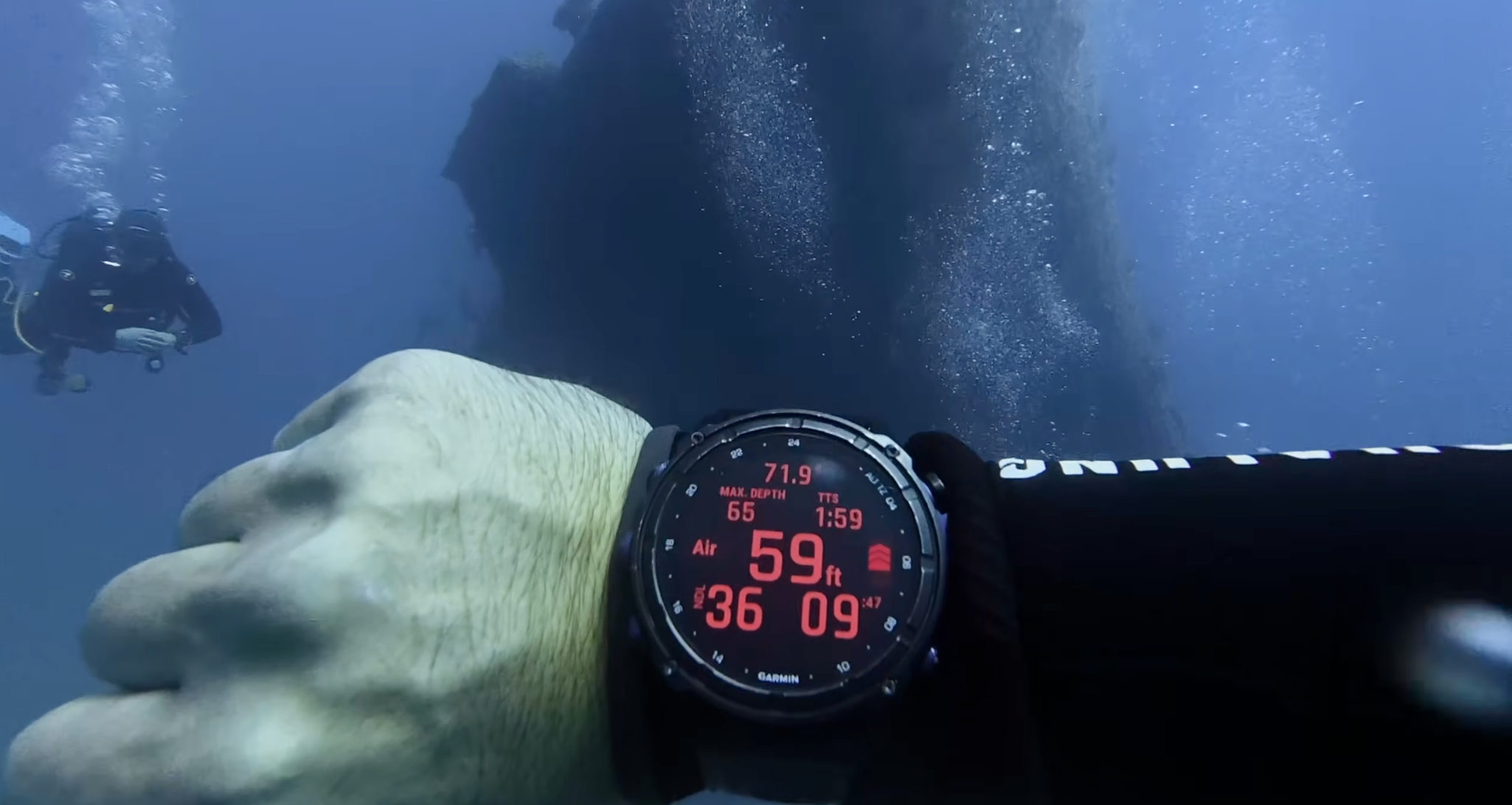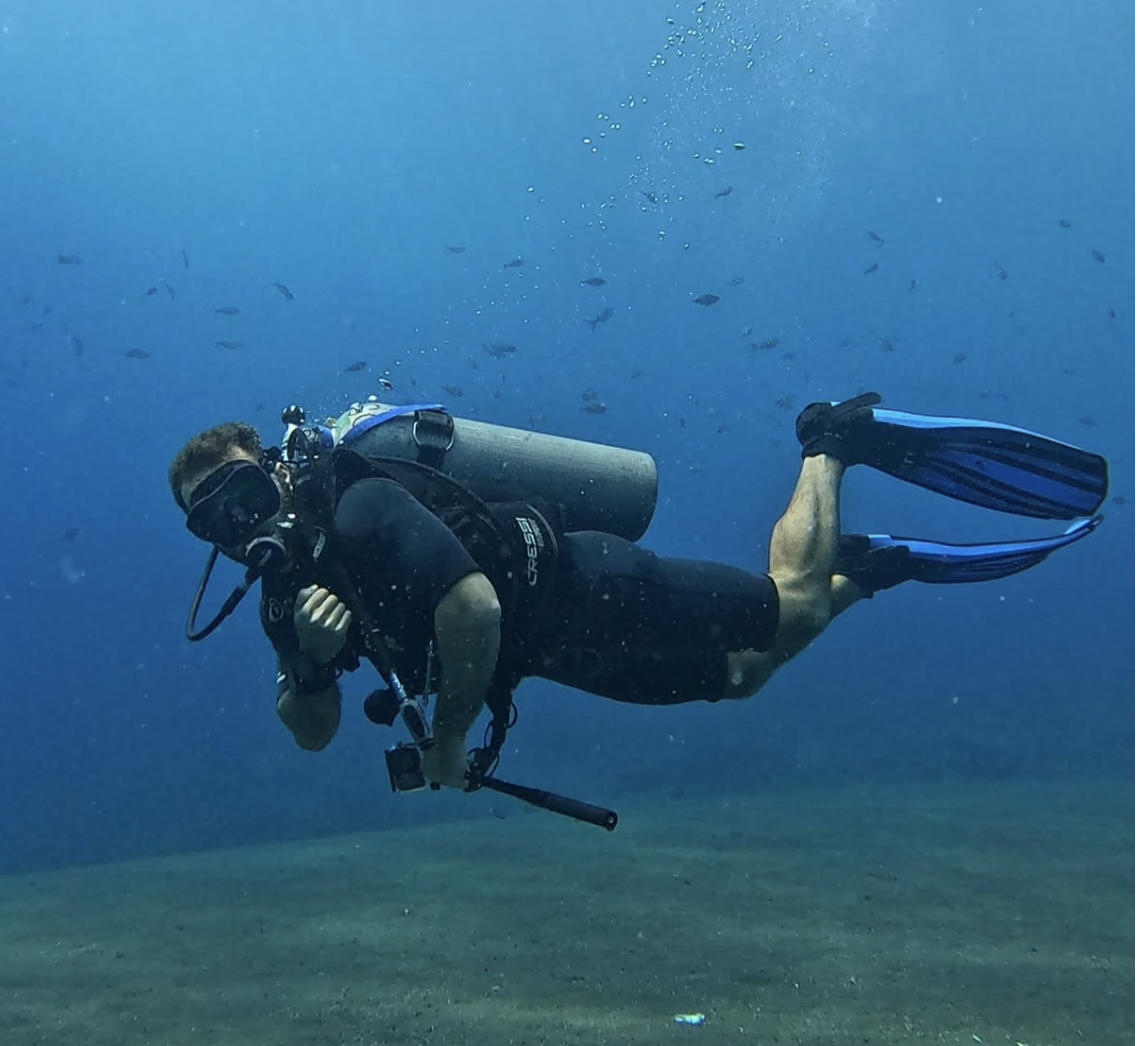


In October 2026 I took a day trip from Dauin out to Apo Island, Philippines, with Critter Republic and did three dives.
Apo Island is a small volcanic island off the southeast coast of Negros, and the whole reef around it is a protected marine sanctuary.
On these three dives I saw banded sea kraits, hawksbill turtles, a huge school of jackfish and volcanic gas bubbles pouring out of the seafloor. As somebody who has dove over 500 times across 20 different states and countries, Apo Island might have some of the best reefs I've seen so far.
The Best Dive Sites on Apo Island

Apo Island has been a protected marine sanctuary and no-fishing zone since 1982. The island was extremely overfished before that, and today the reefs are packed with fish. That's the fishing ban at work.
Unlike the volcanic sand and muck diving along the Dauin coast, Apo is natural reef: hard coral, walls and drop-offs.
Best Overall Dive: Cogon

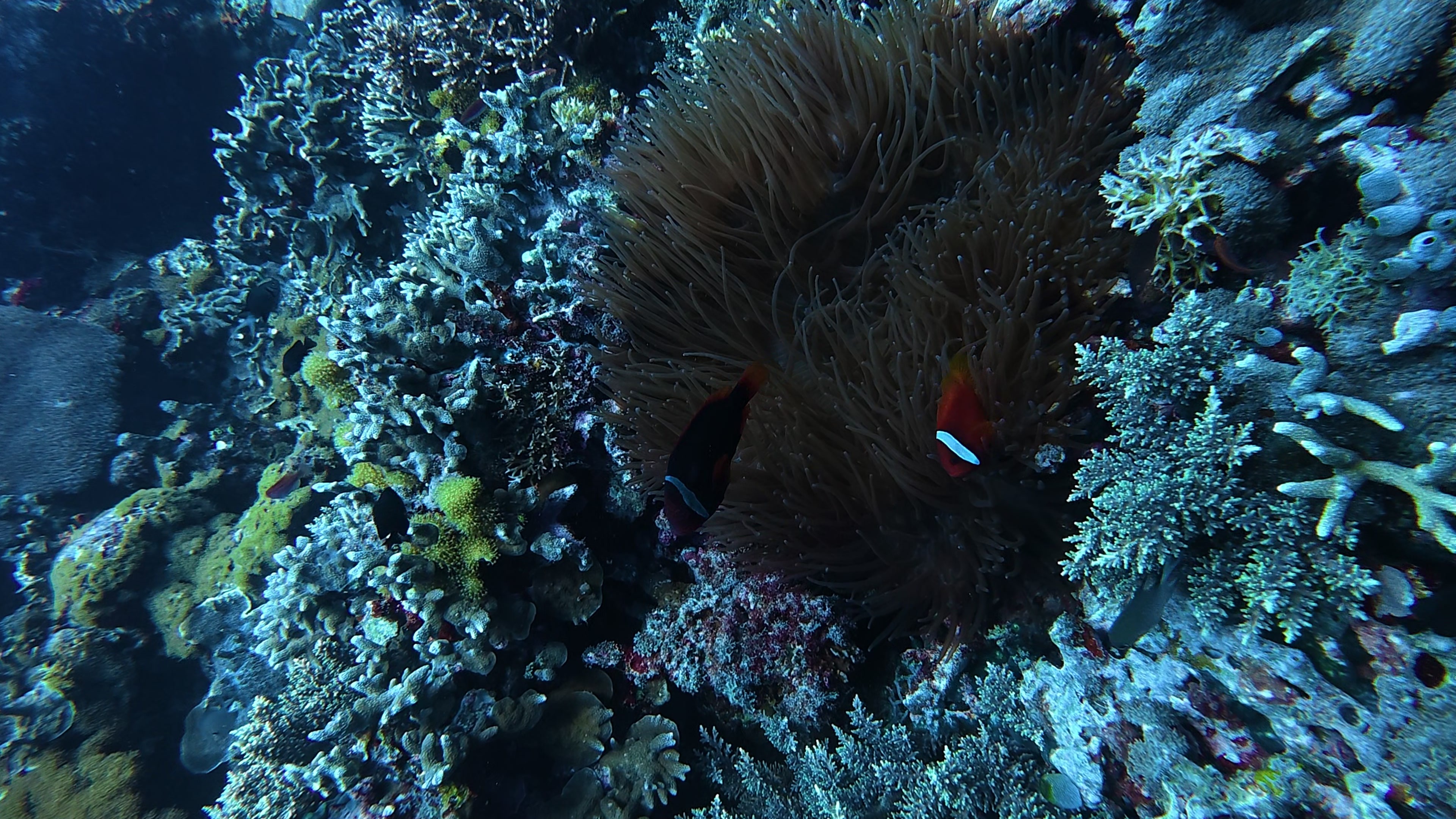
Cogon is a natural reef inside the marine sanctuary, and it was my favorite dive of the trip.
There's coral everywhere, and every so often it opens up onto patches of bright white sand. The main reef sits at around 45 to 50 feet (14 to 15 m).
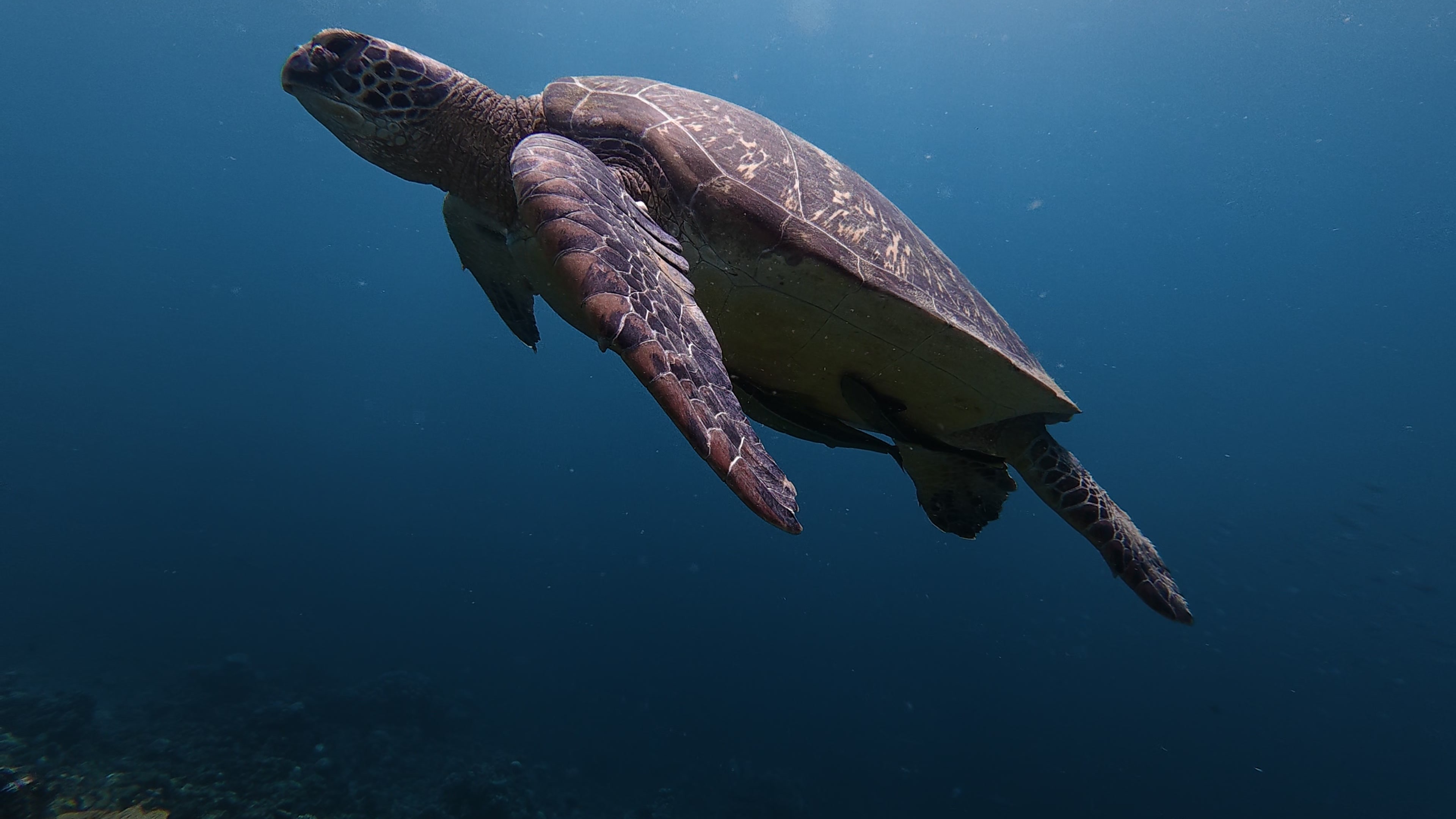
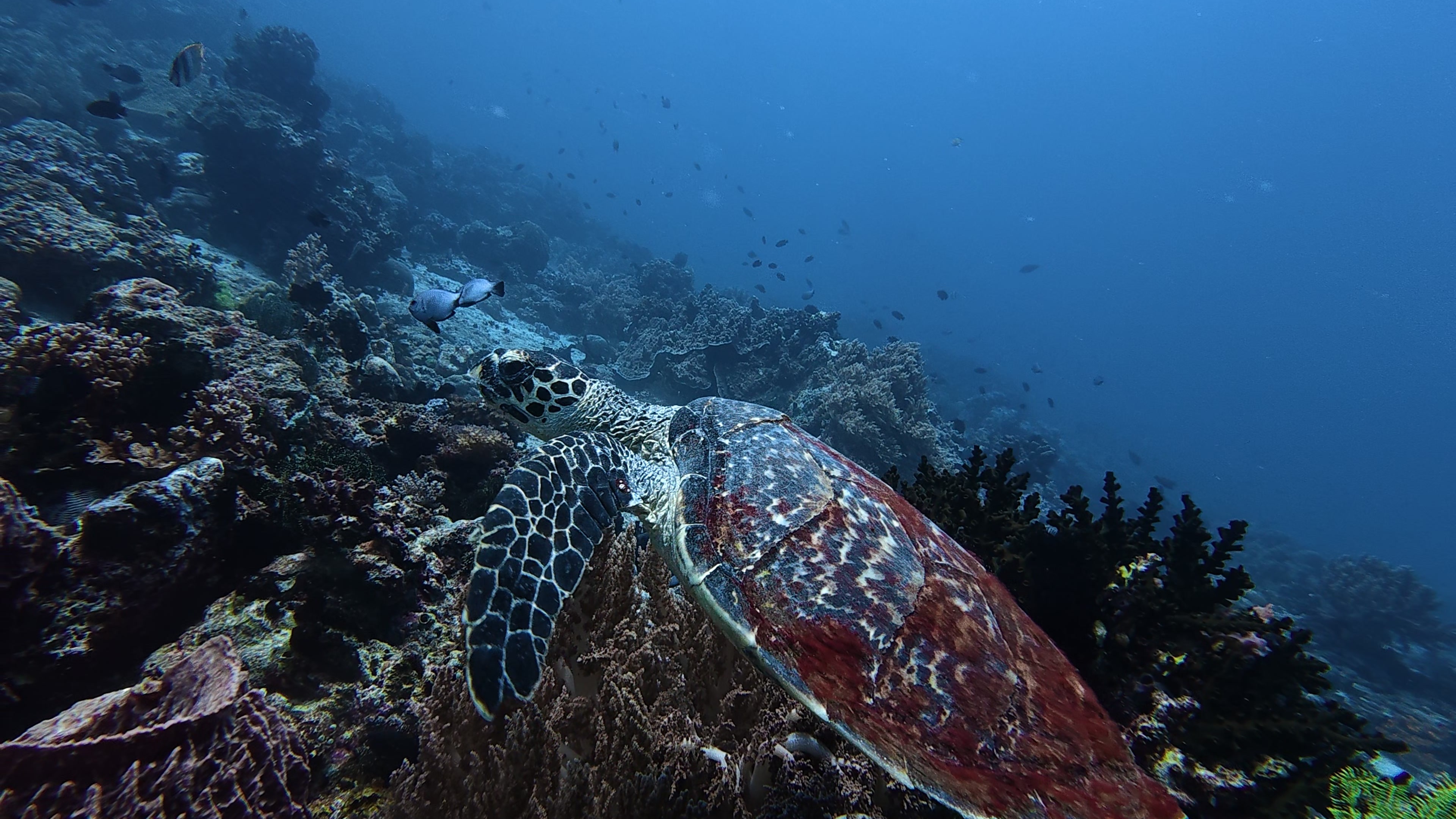
It didn't take long before we found our first sea turtle, a hawksbill. Then we started finding banded sea kraits, several of them on this one dive.
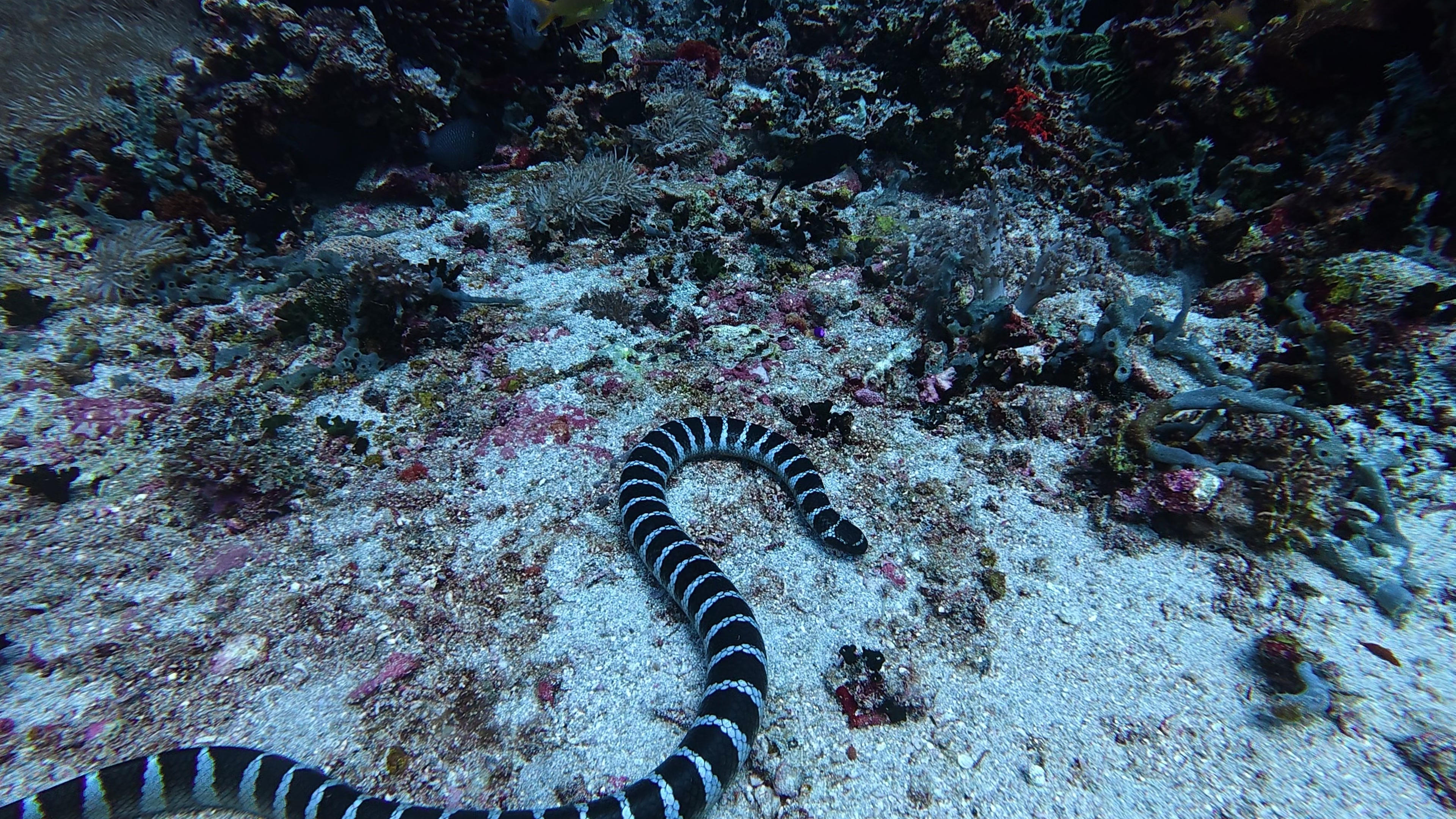
Sea kraits are one of the most venomous snakes in the world, but they're docile around humans. Most recorded bites happen when someone handles one or steps on it. Still, in a couple of my clips the snake turns right at me, and it definitely made me question my life choices.
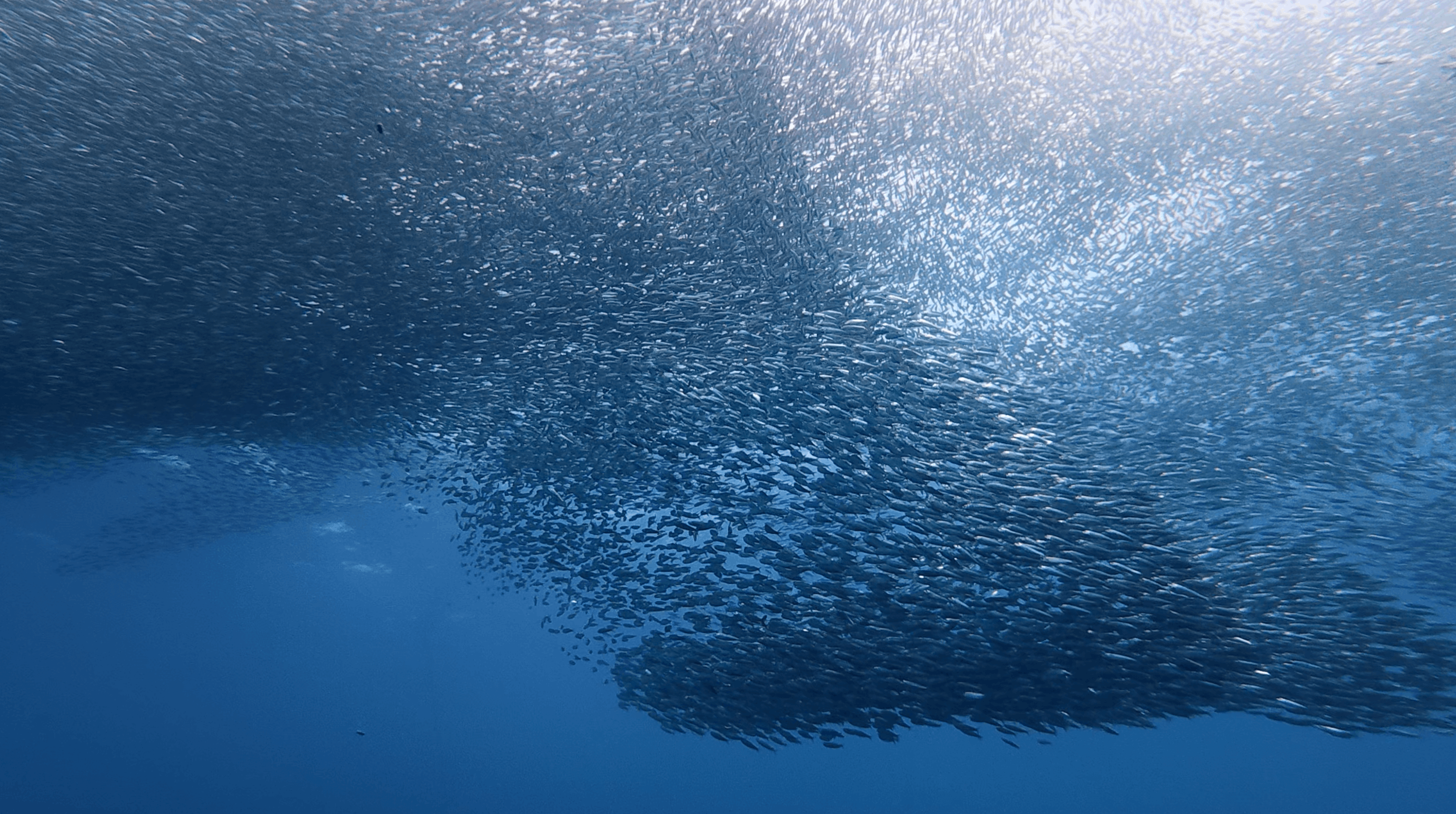
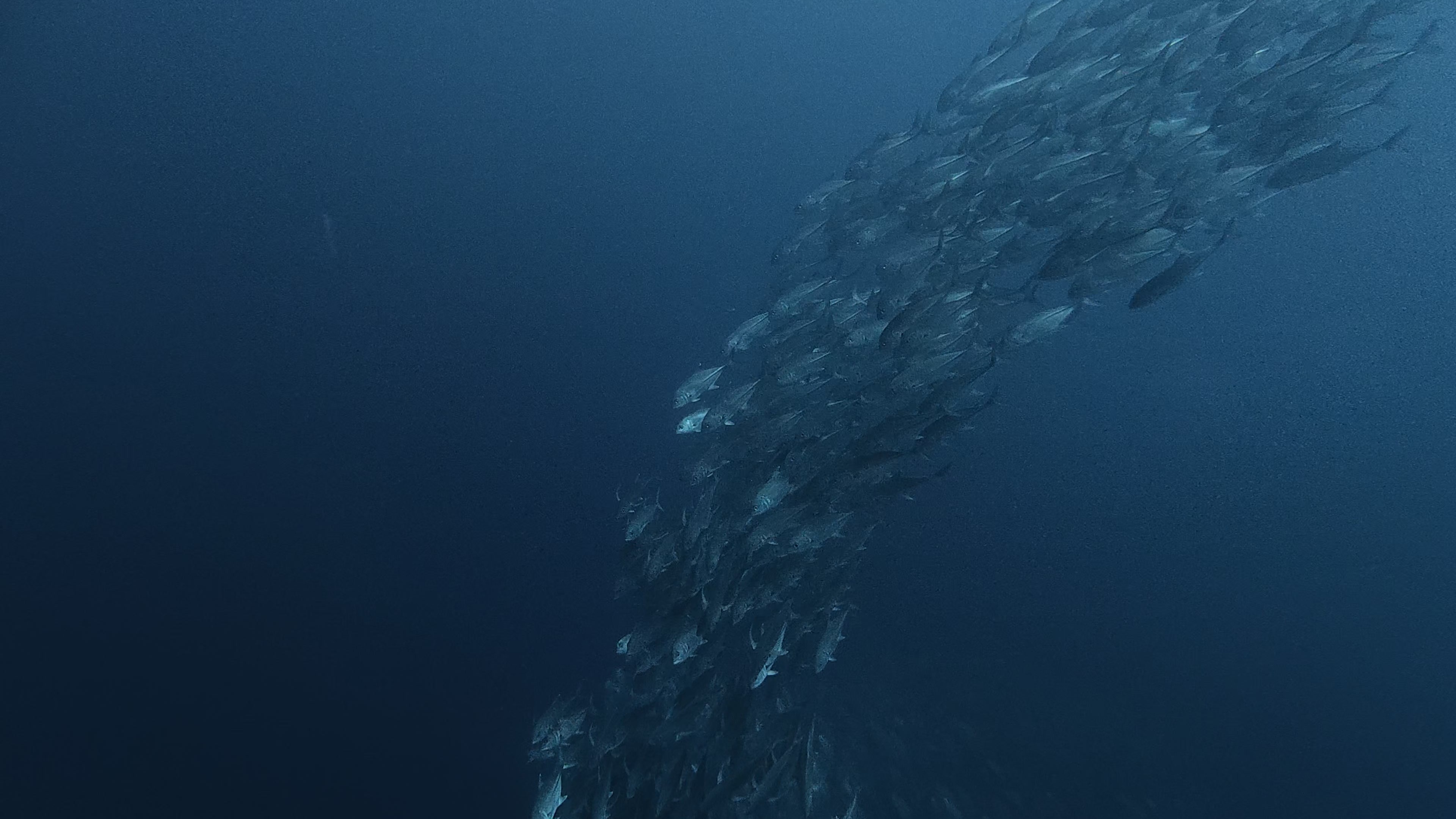
Then a huge school of jackfish came cruising right through the dive.
Best Wall Dive: Chapel
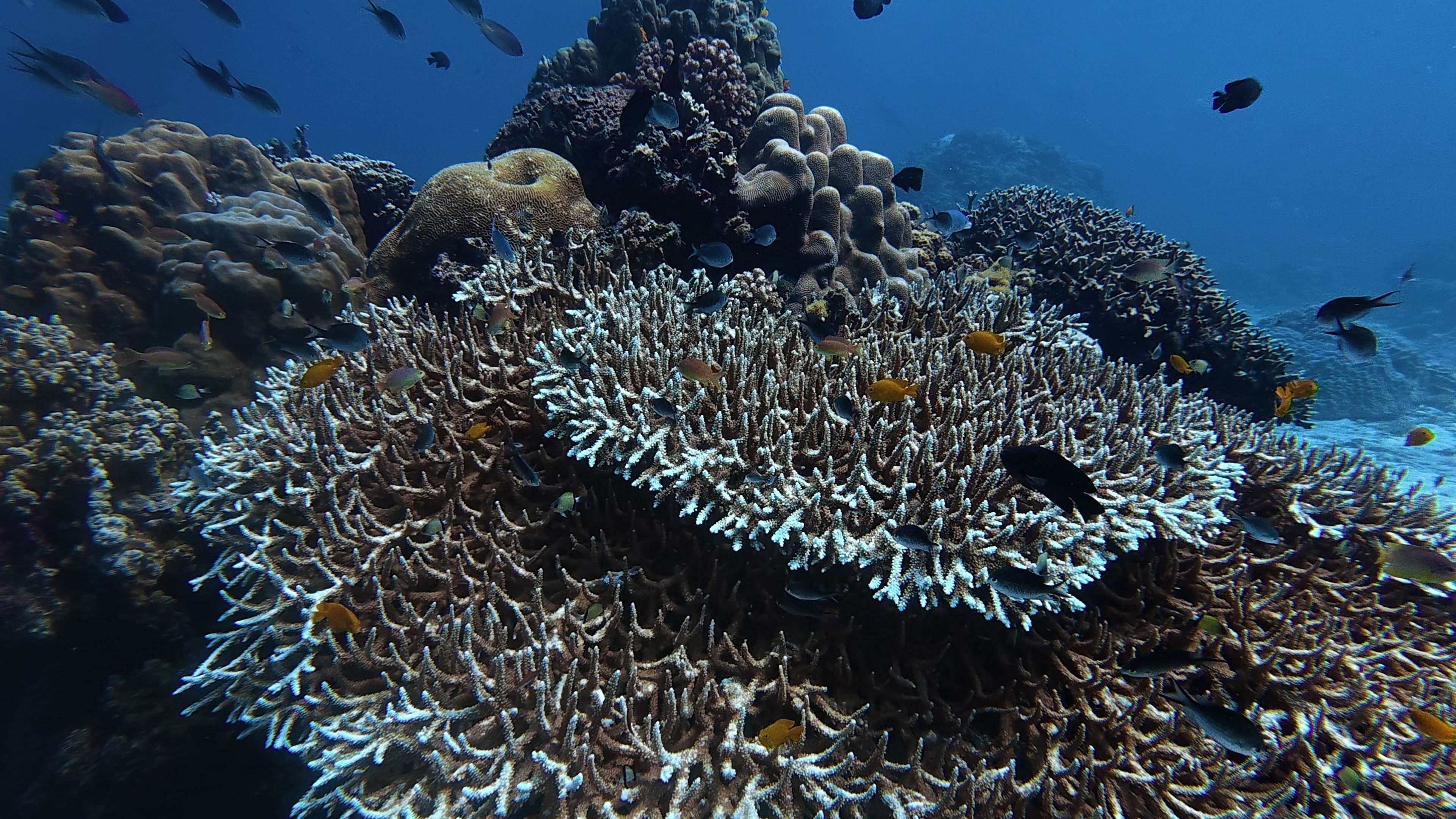
Chapel gets its name from the church on Apo Island, directly across from the dive site.
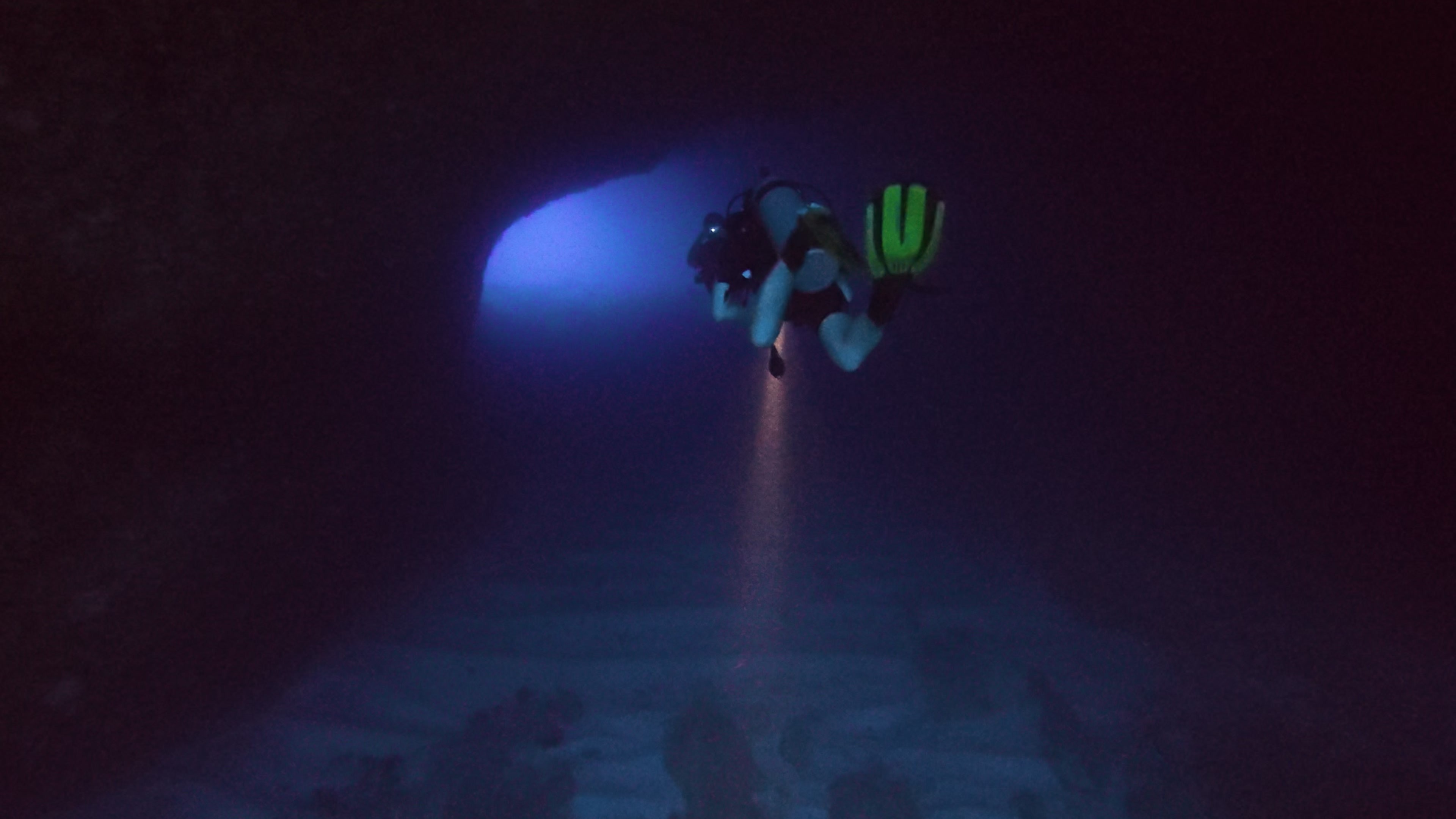
It's a wall with caves and caverns, topped by a shallow reef. We started deep on the wall, at around 80 feet (24 m), where it's pretty dark, and the guides used their lights to show us what was hiding inside the caves.
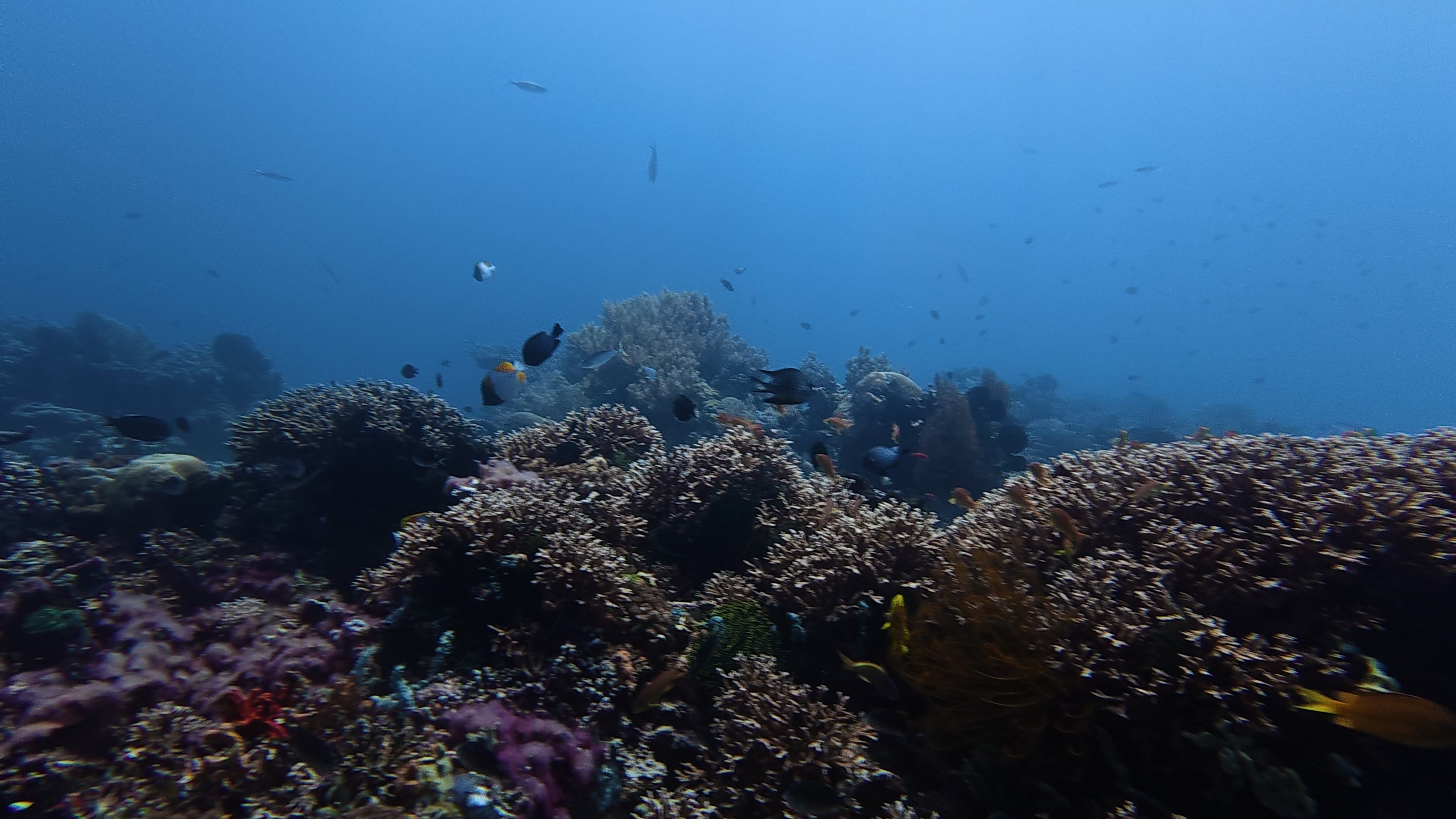
The real magic is on top of the wall. The main reef sits at around 30 feet (9 m), it's covered in hard coral, and that's where it really comes alive.
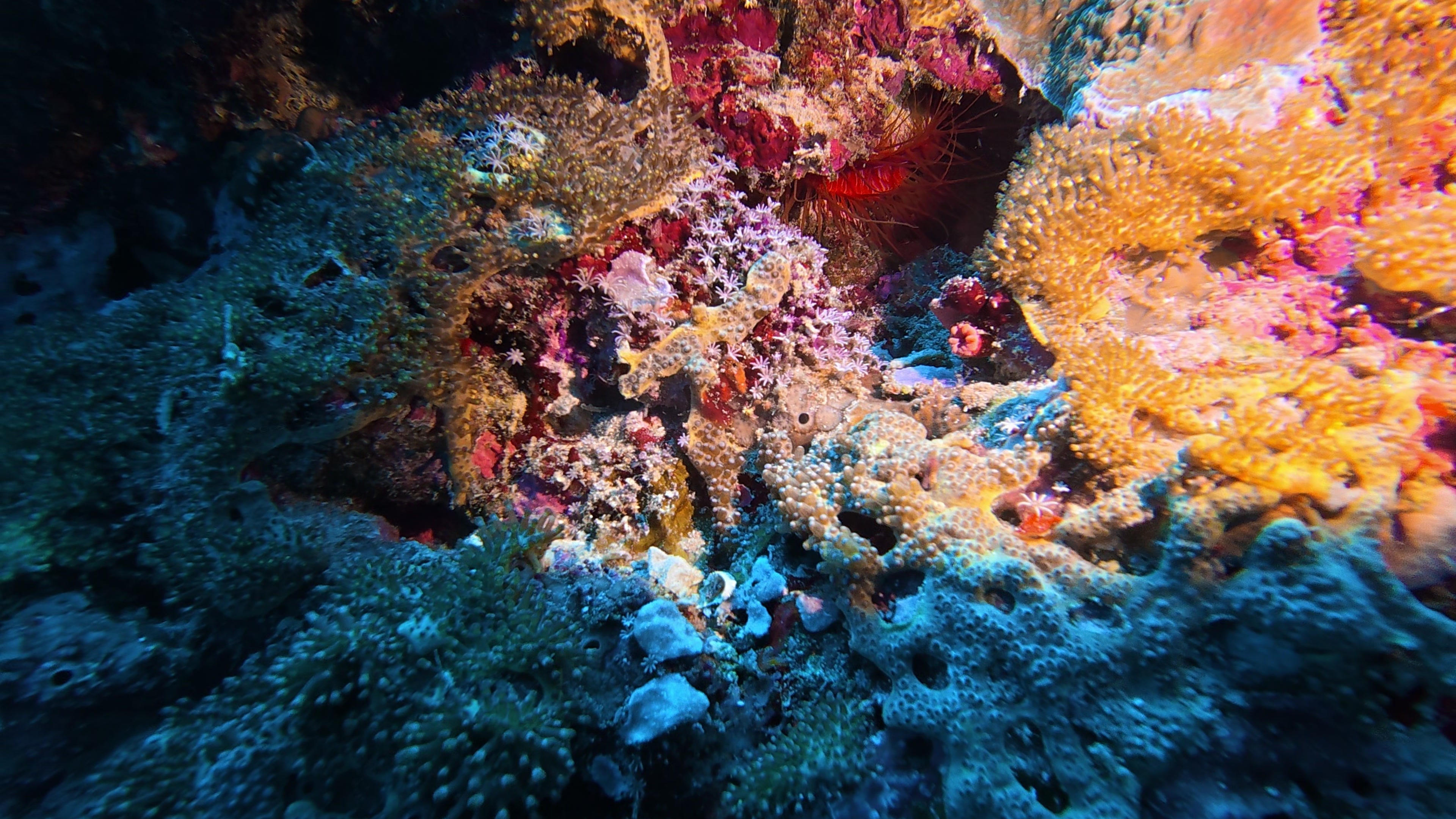

If you start at the bottom of the wall, it's an advanced dive. If you stay on the reef top, it's very beginner-friendly.
At our safety stop, I found out my dive guide, Magai, was actually an airbender. His bubble rings were some of the cleanest I've seen.
Most Unique Dive: Largahan
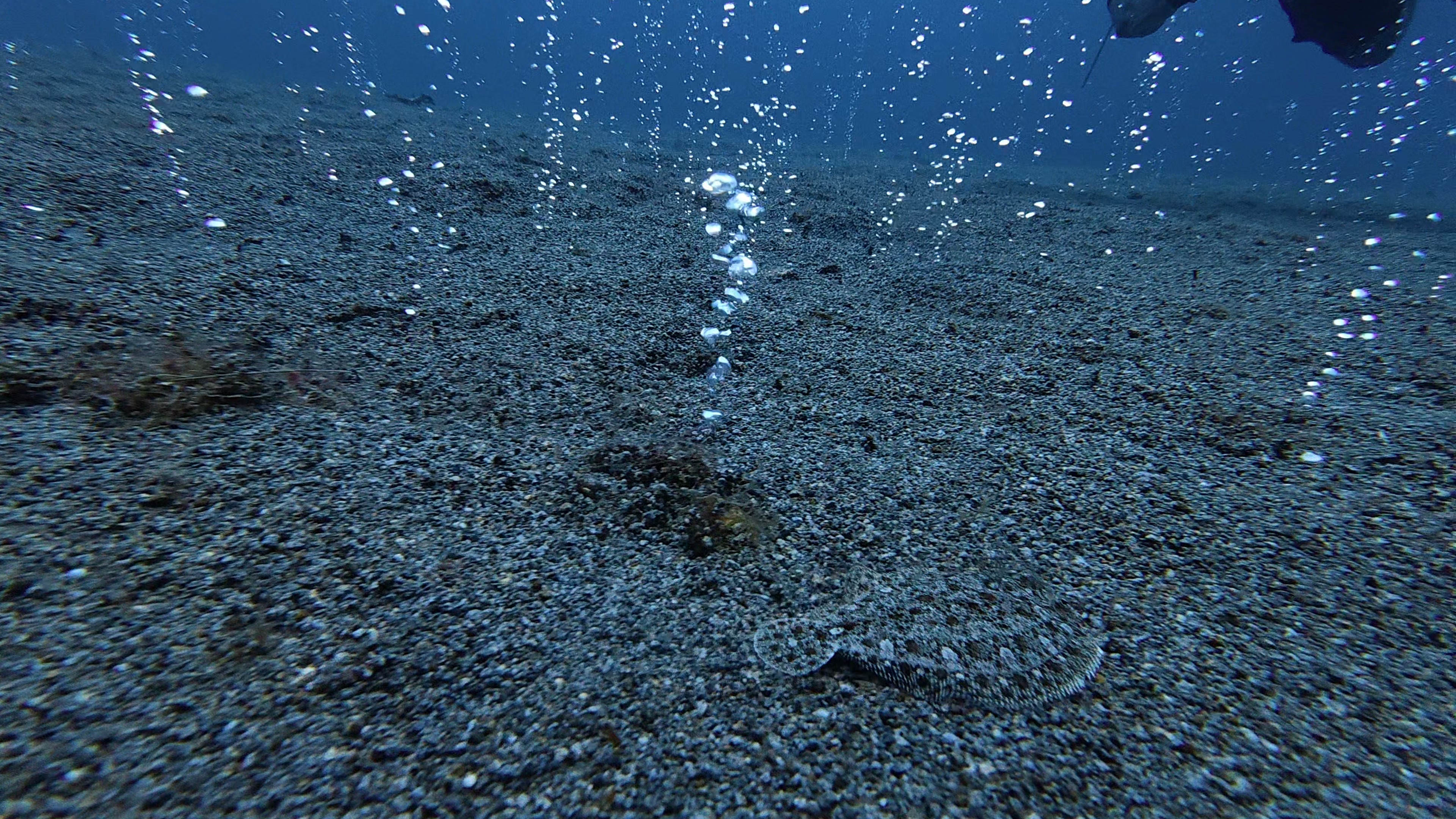
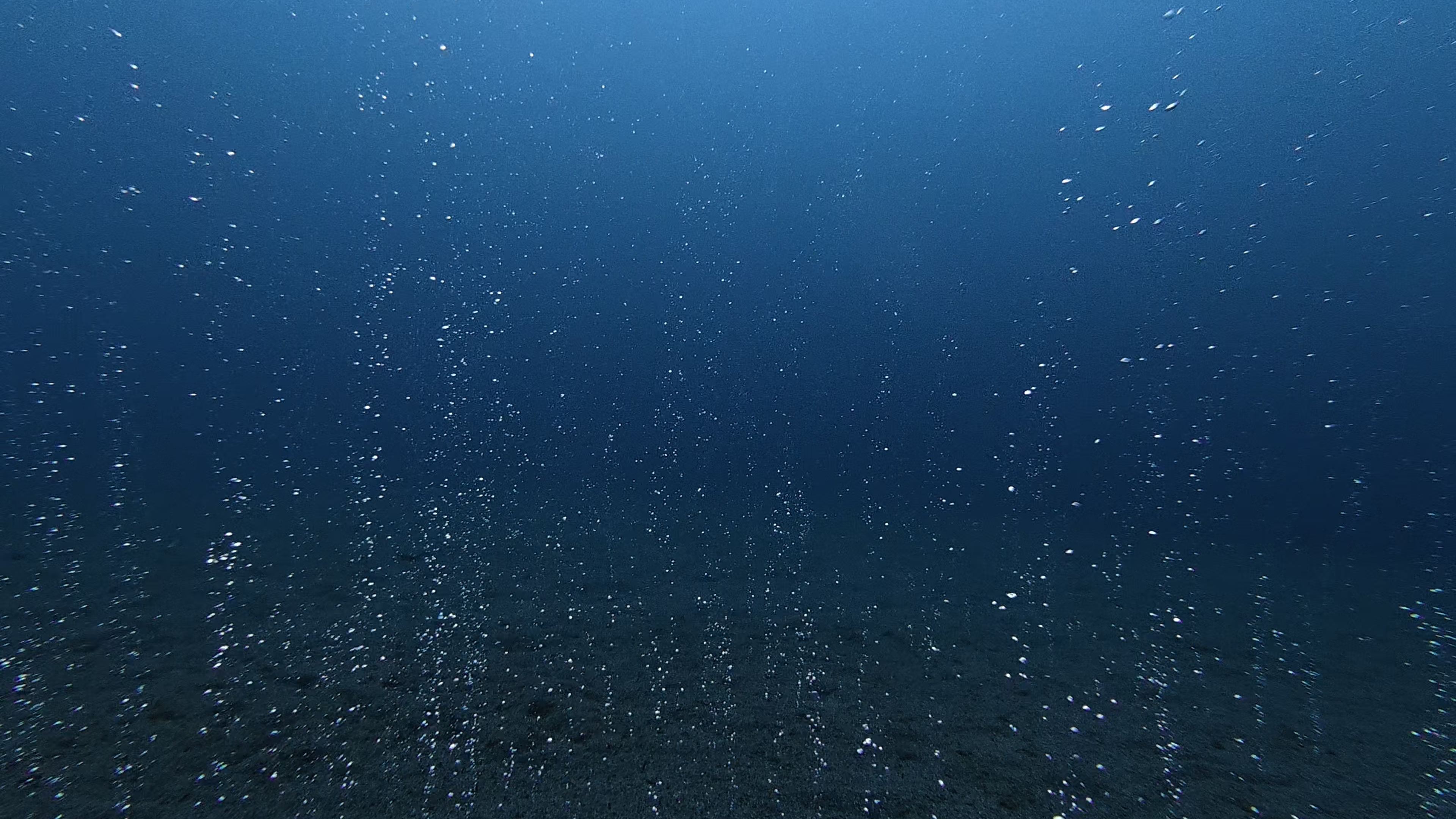
Largahan has volcanic gas bubbles coming out of the seafloor.
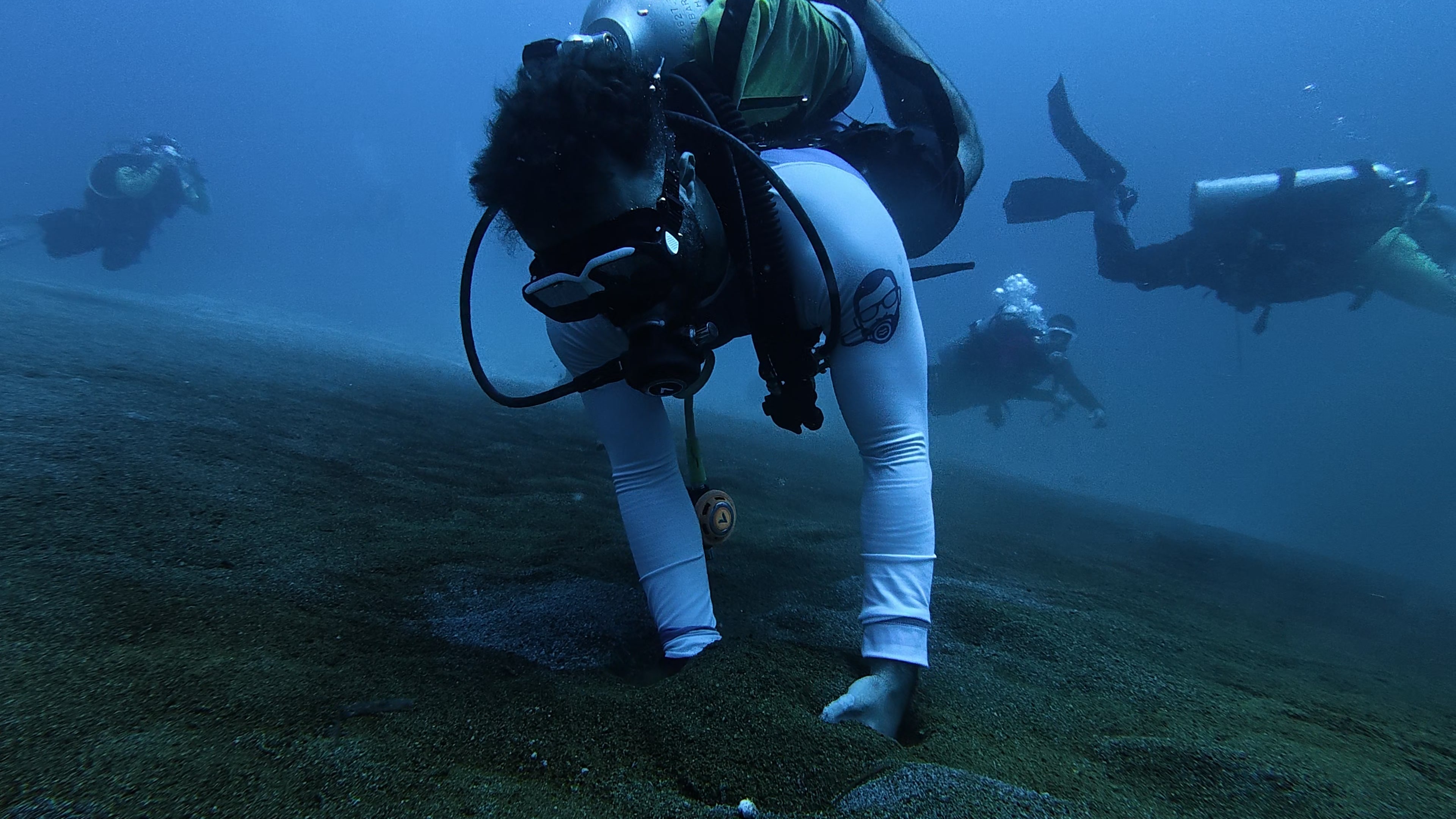
Apo Island was formed by volcanic activity, and there's still geothermal activity going on. Streams of gas bubbles pour up out of a sandy slope, and my guide showed me that some patches of sand are a different color and very warm to the touch, noticeably warmer than the water around it.
Largahan is a Filipino word that means to let go or to release, so my guess is it has something to do with the volcanic activity going on here.
Away from the bubbles, the reef is covered in hard coral and drops off steeply in places, which is why it's rated as an advanced dive.
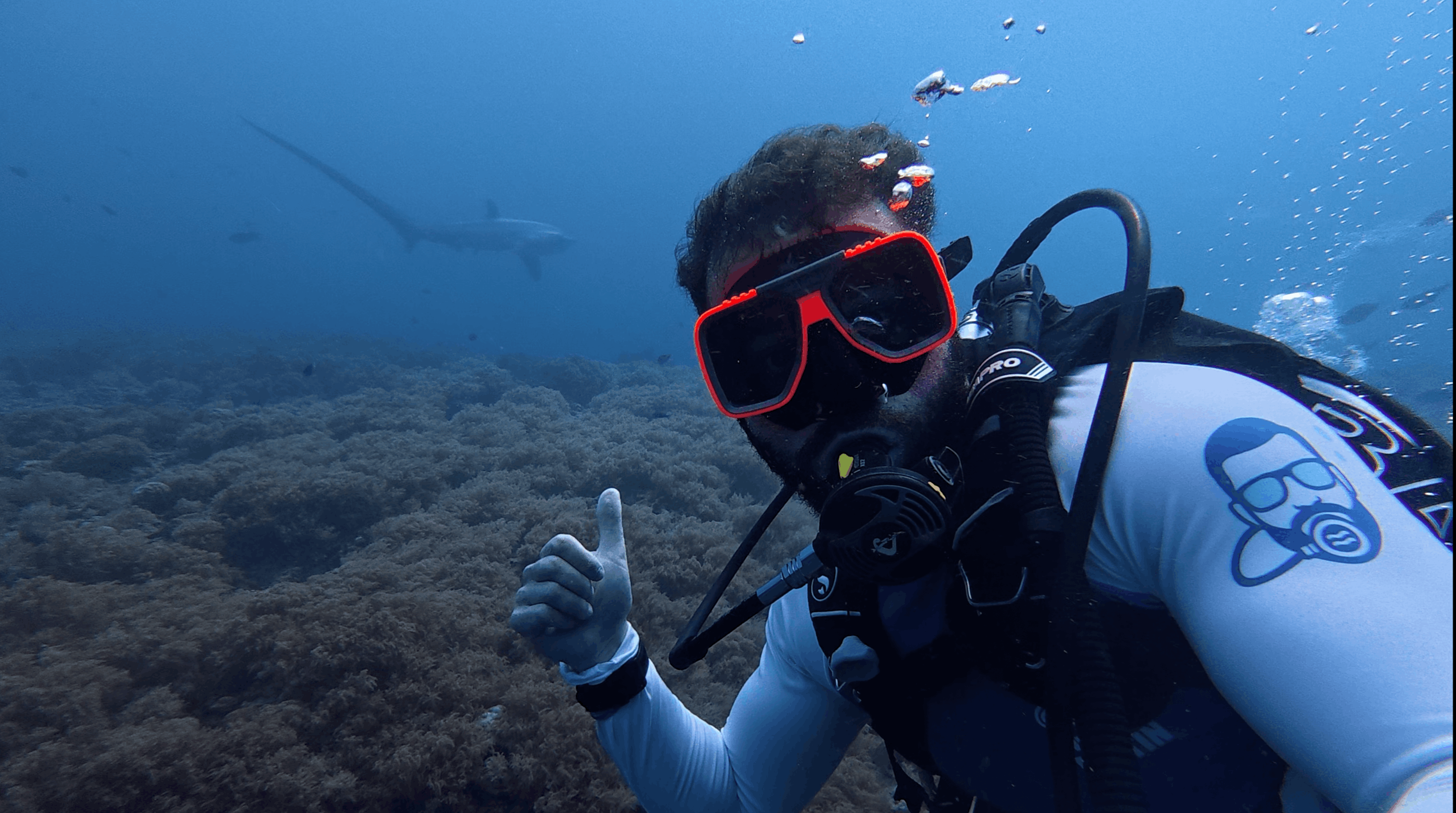
A local on Apo Island also told me that on one side of the island, down in the deep, there are schooling hammerheads. I didn't see any, and I have no way of confirming it.
Best Time to Dive Apo Island
The best time to dive Apo Island is the dry season, which runs from November to May. It's the most popular time of the year, so expect more boats at the sites.
June to October is the wet season and can have rougher seas, which matters more here than on the mainland, because every dive starts with a boat ride.
I went at the start of October, at the tail end of the wet season, and visibility was around 90 feet (27 m) on all three dives.
Who I Dove With and What It Cost
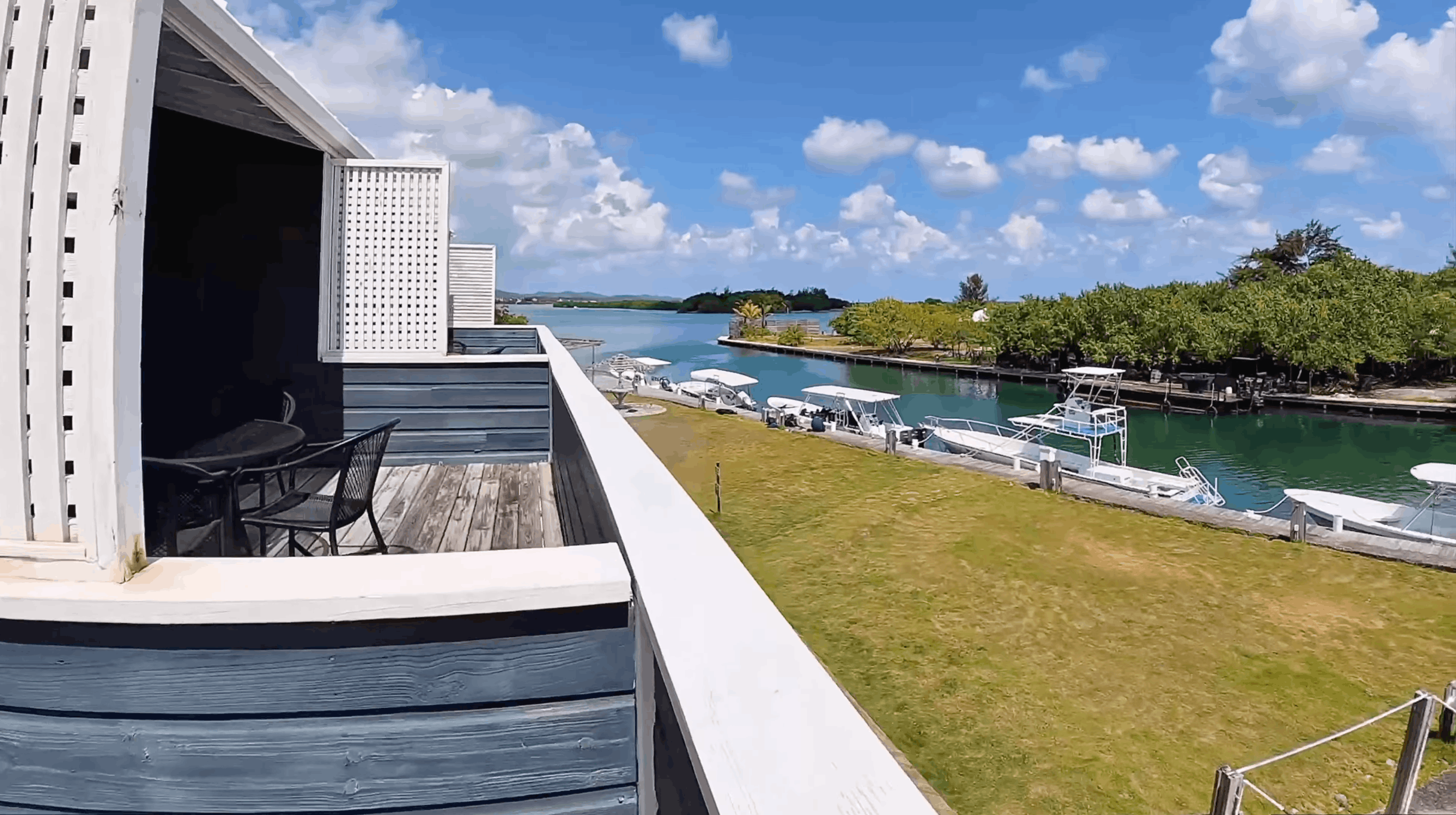
I did my Apo Island dives on a day trip with Critter Republic, the resort I stayed at in Dauin. I wrote a full review of my stay.
My divemasters were Magai and Bboy. They know exactly where to look at every single site, and they set up your gear and point out where everything is.
- Apo Island day trip with Critter Republic: 7,500 pesos, about 125 US dollars, for three dives, a guide, rental gear and a lunch cooked on board
Critter Republic gave me a discount on my stay and my diving, so that's their regular rate, not what I paid.
I tipped the divemasters. They work really hard.
Water Conditions and What to Wear
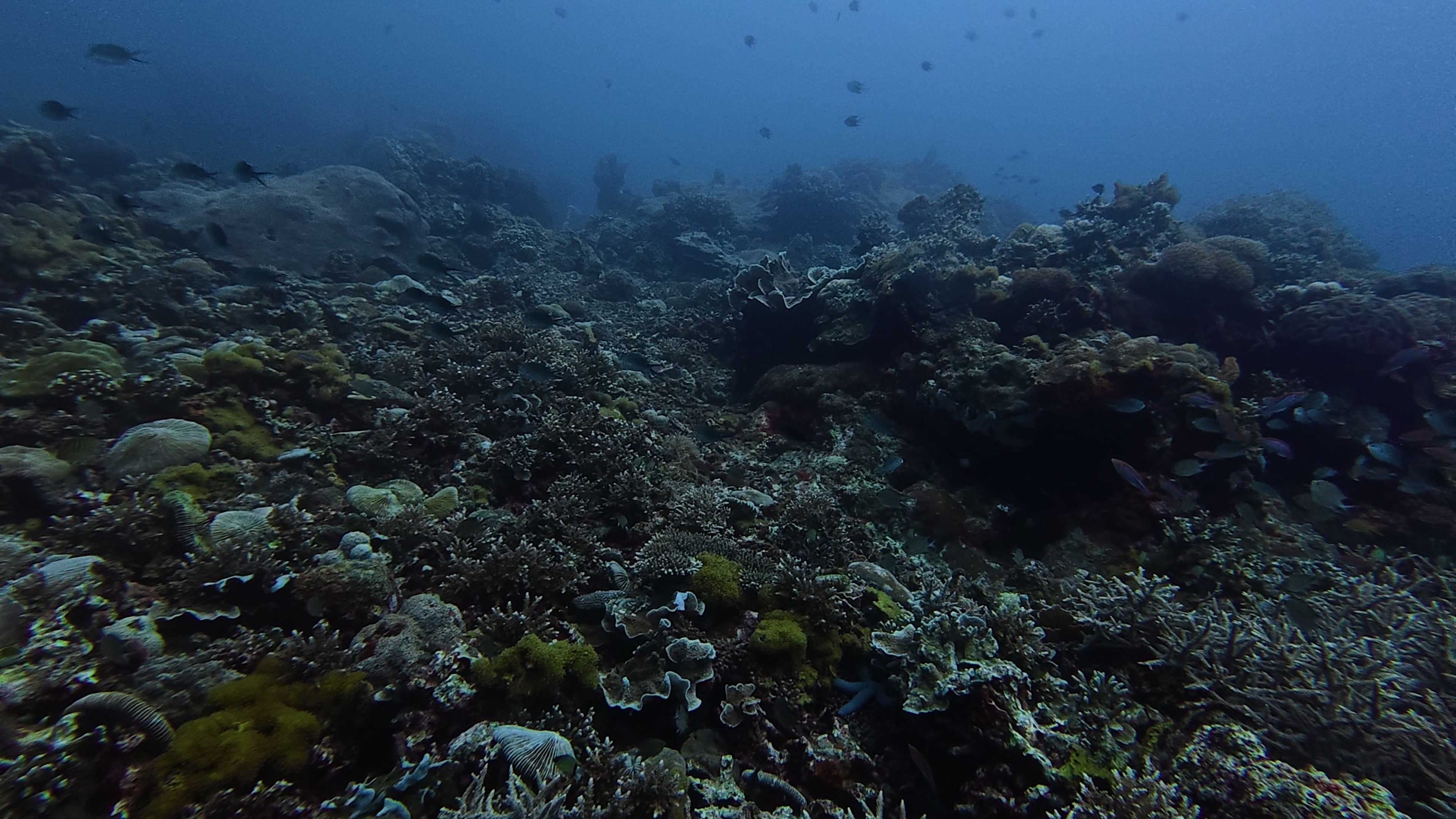
The water was 86°F (30°C) on all three dives, so I wore just a rash guard, while most other divers wore wetsuits.
Visibility was around 90 feet (27 m) on every dive.
Apo works for most divers. The reef tops are shallow and beginner-friendly, while the deep end of the Chapel wall and the drop-offs at Largahan are better for advanced divers.
Getting to Apo Island
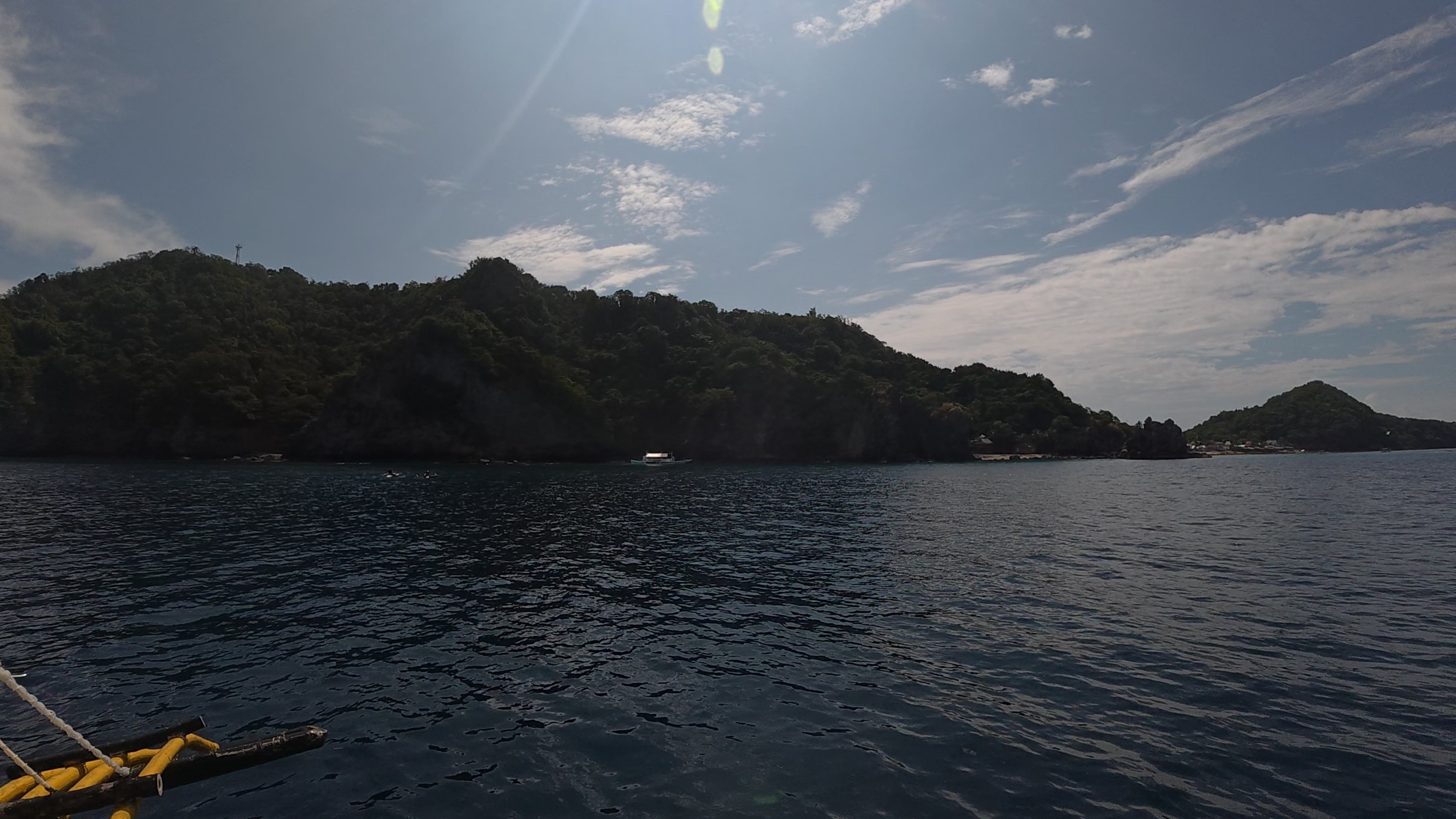
Most people dive Apo Island as a day trip from Dauin, on the mainland of Negros. It's about a 45 minute boat ride, and Critter Republic runs full day trips out to it.
To get to Dauin, fly into Dumaguete, usually through Cebu City, then take a trike about 45 minutes south or have your resort arrange a pickup. My Dauin guide has the full route, plus the mainland dive sites I dove that week.
The questions I get asked most about diving here.
Is Apo Island worth it?
Yes. It has some of the best reefs I've seen anywhere. Out of the places I've dived, the only ones I'd put up there with it are Egypt and Nusa Penida.
When is the best time to dive Apo Island?
The dry season, November to May, is the most popular time. June to October is the wet season with rougher seas. I went in early October and still had around 90 feet (27 m) of visibility.
How much does it cost to dive Apo Island?
Critter Republic charges 7,500 pesos, about 125 US dollars, for a day trip with three dives, a guide, rental gear and lunch on board.
Is Apo Island good for beginners?
Yes. Cogon and the reef top at Chapel are beginner-friendly. The deep part of the Chapel wall and Largahan are rated Advanced.
Can you see sea turtles at Apo Island?
Yes. I saw a hawksbill turtle at Cogon, along with several banded sea kraits.
How do you get to Apo Island?
Most divers go on a day trip by boat from Dauin. Fly into Dumaguete, usually through Cebu City, then take a trike about 45 minutes south to Dauin.
ABOUT THE AUTHOR
Austin Tuwiner
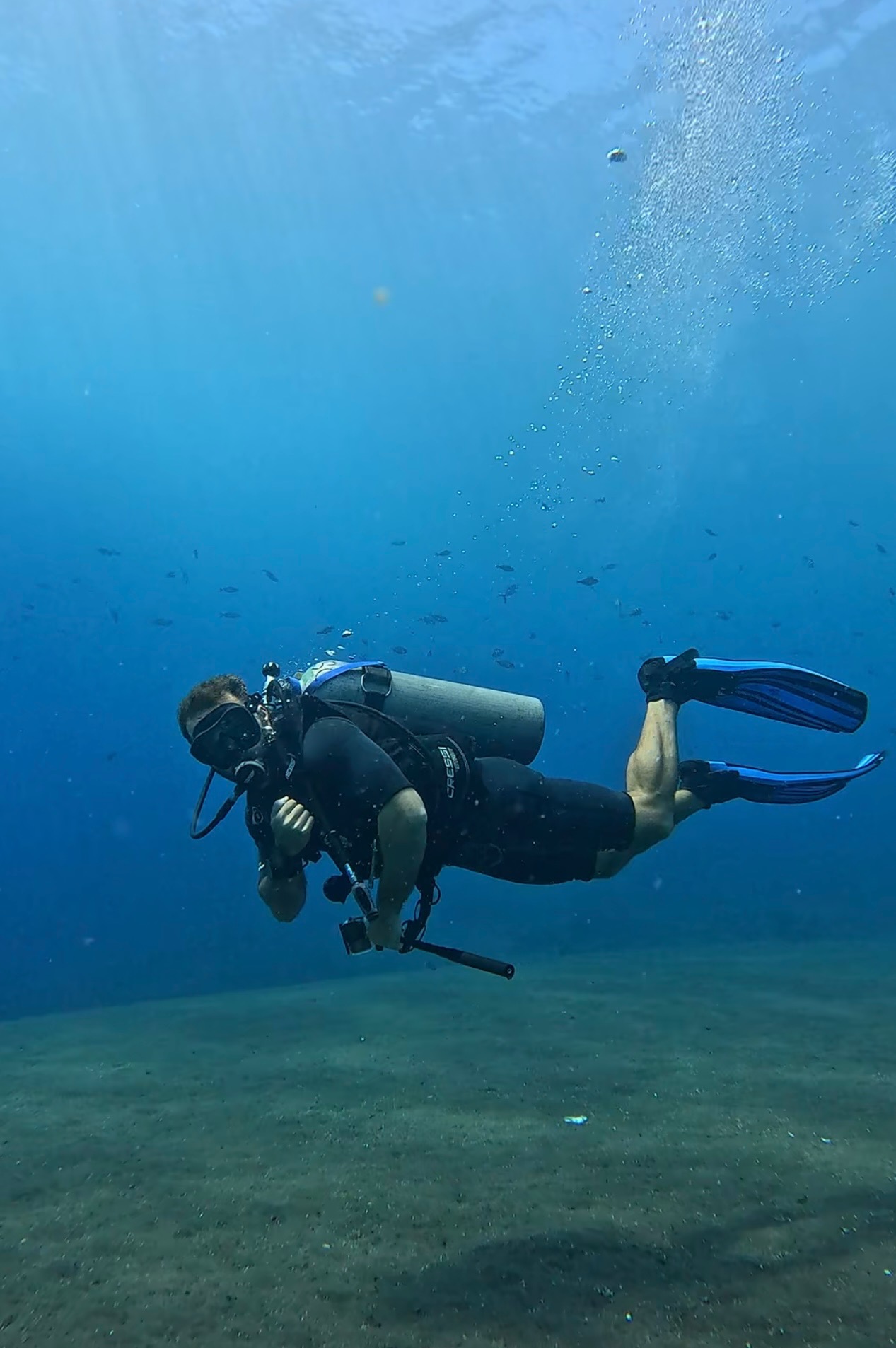
Hey I'm Austin, a PADI Divemaster based in South Florida .
I initially got certified at 16 at a scuba camp in Kona, Hawaii, did my Advanced Open Water on Koh Tao, my deep and nitrox on Gili Trawangan, and my Rescue and Divemaster in Miami.
Since then I've logged 500+ dives across 20 countries and states. I write about the gear I dive with, the sites I've dived, and the trips I've taken.


Let's Dive Together
👋 It's Divemaster Austin
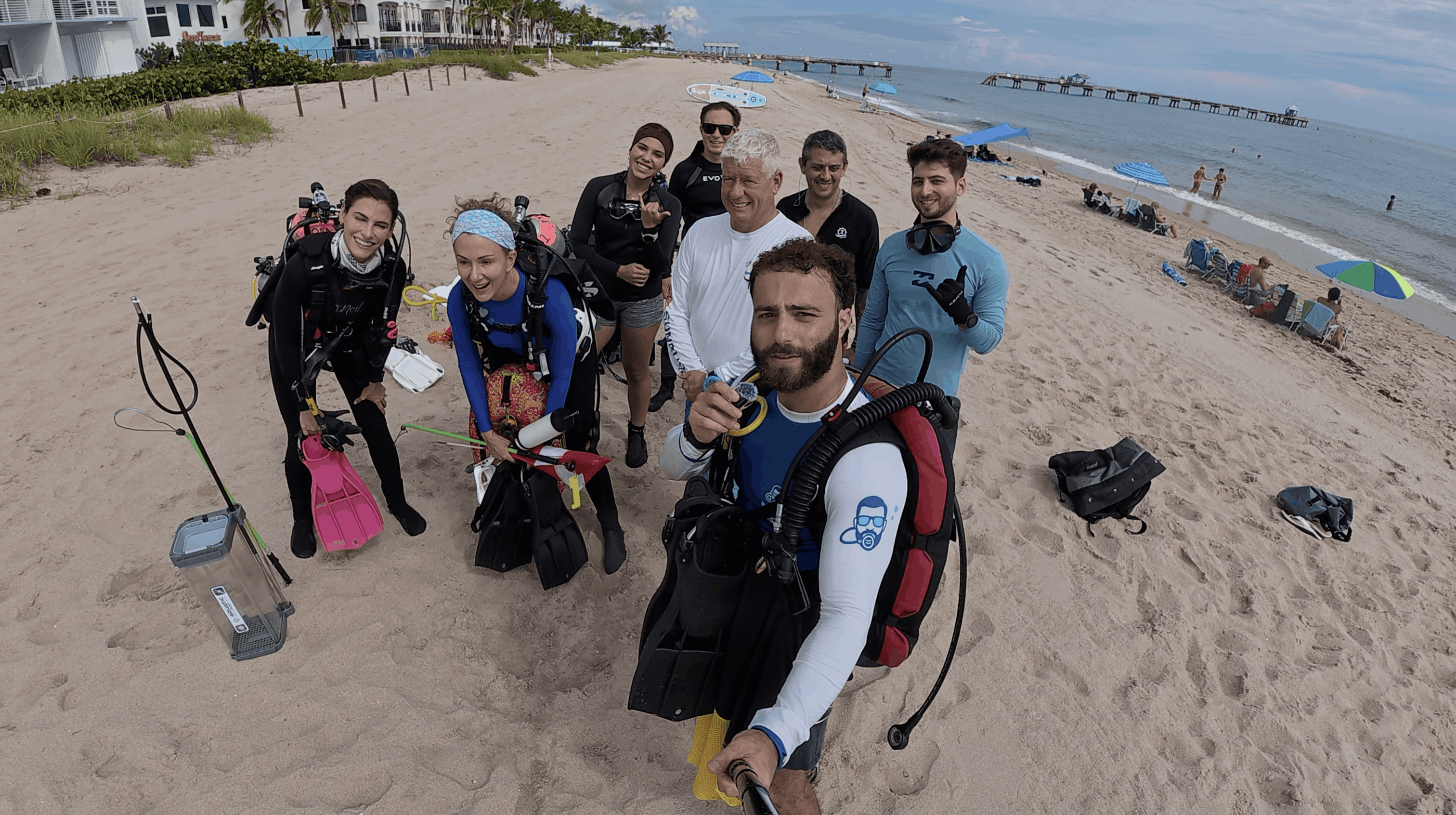
I'm inviting you to Dive Club, my global scuba diving community.
What you’ll find inside:
🤿 Dive meetups & group trips
🌍 Top dive sites shared by community members
⚙️ Gear tips & technique discussions
🤝 Diver's who’ve already linked up IRL
See you there!