

.webp)
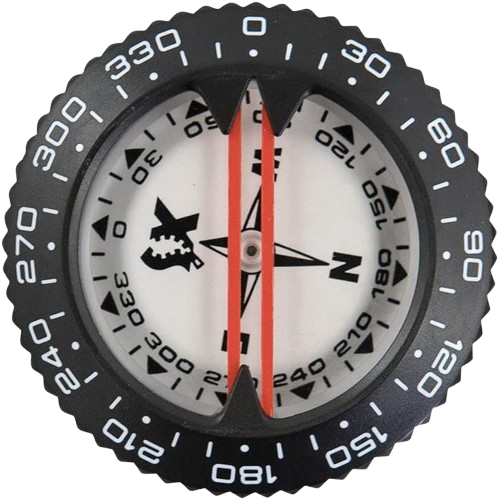
I remember during my Advanced Open Water course, where I first learned to use a compass for navigation, I found them very confusing.
Once I took the time to understand them, and started using a compass during my unguided dives, a lot changed for me underwater.
Diving off charter boats, where the captain would tell us which way the reef was before we jumped in, and having the confidence to find it underwater.
Following a heading matters even more in low-visibility conditions.
The use case that comes up most for me now is shore diving in South Florida.
On the east coast, heading east takes me further out to sea, and heading west brings me back toward shore.
If I'm trying to move north or south underwater to hit a pier or some other target, knowing my heading makes that possible without surfacing.
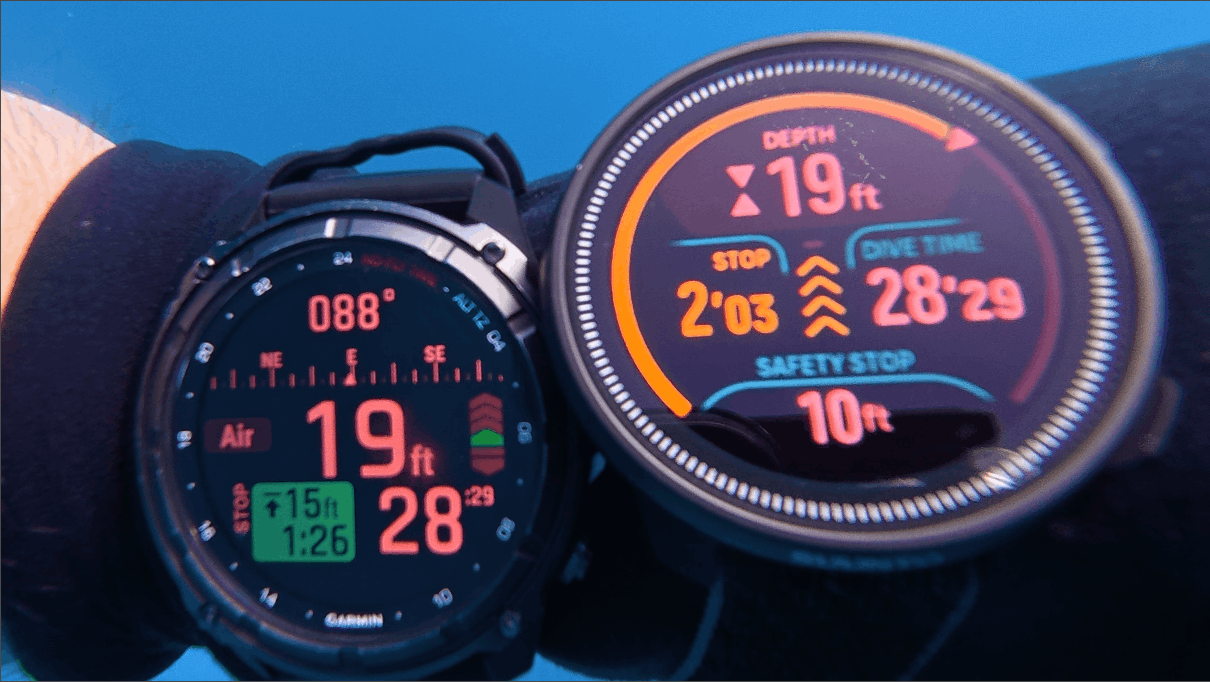
Right now, I use the digital compass on my Garmin Descent Mk3i, but if I didn't these are the compasses I would buy and use!
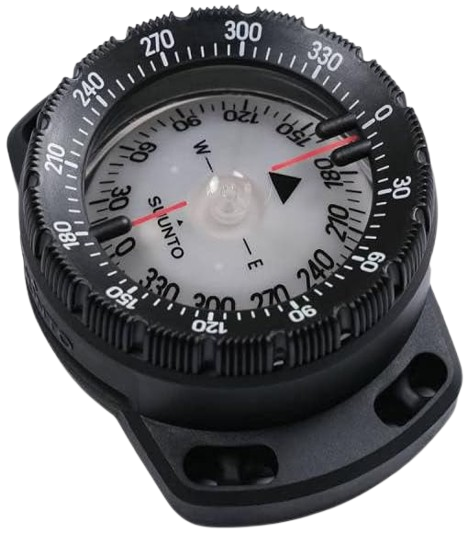
Best Overall: SUUNTO SK-8
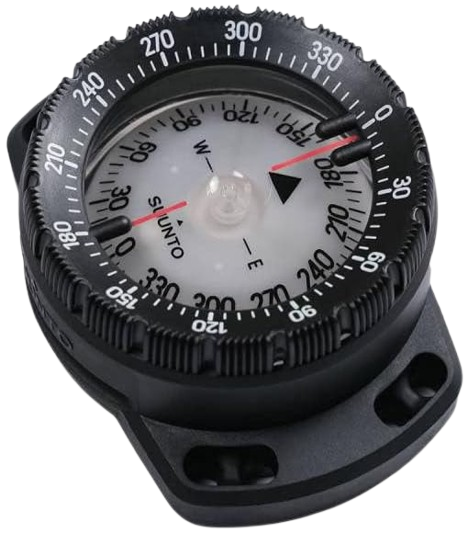
The SK-8 is designed to be worn on the wrist with a bungee strap or a retractable BCD clip.
It's the most capable compass on this list with a tilt tolerance of +/-30°, about three times more forgiving than most competitors.
The magnet is balanced to work in both hemispheres, which matters if you dive on both sides of the equator, and the phosphorescent card stays legible in low light.
Best Digital Compass: Garmin Descent Mk3i
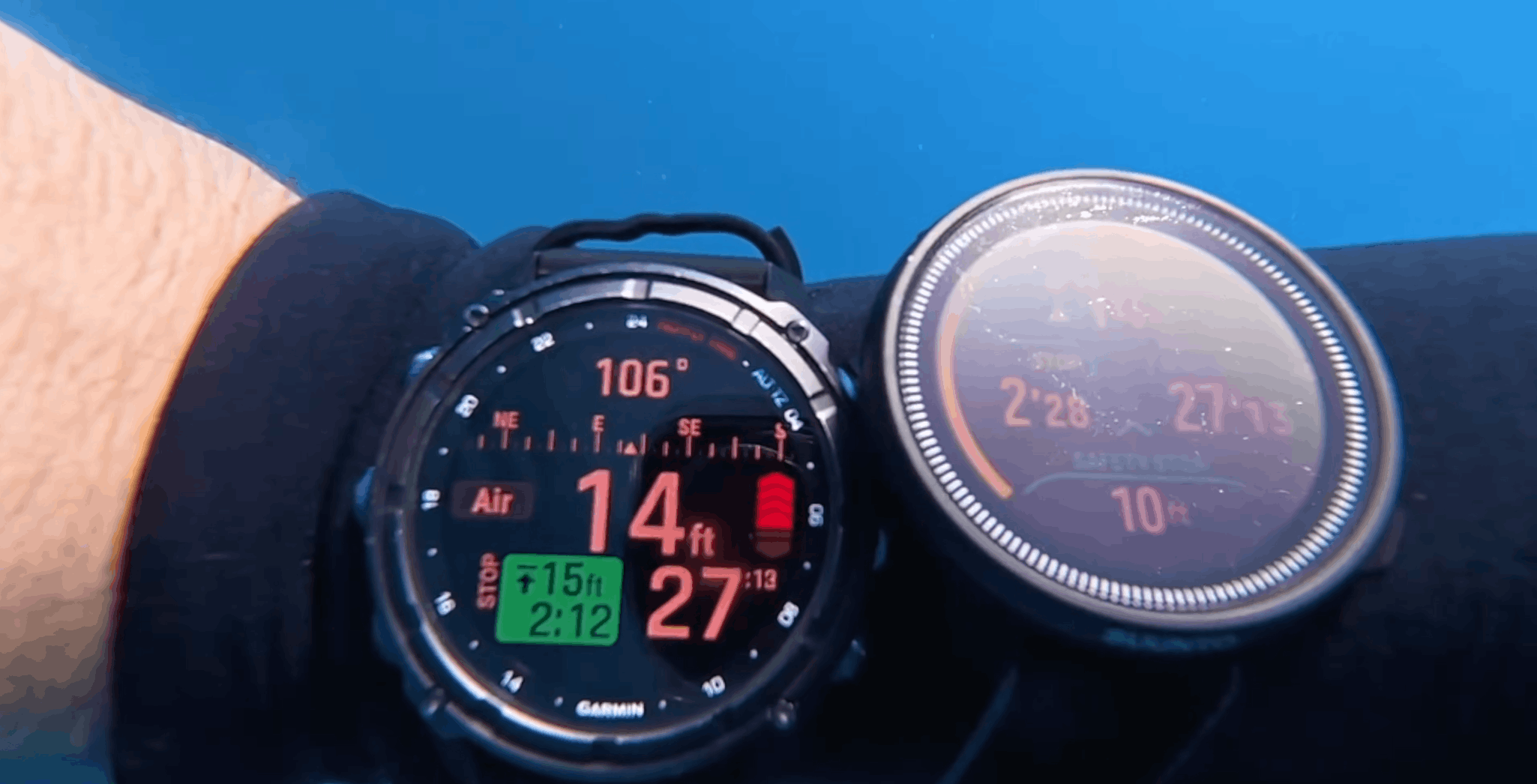
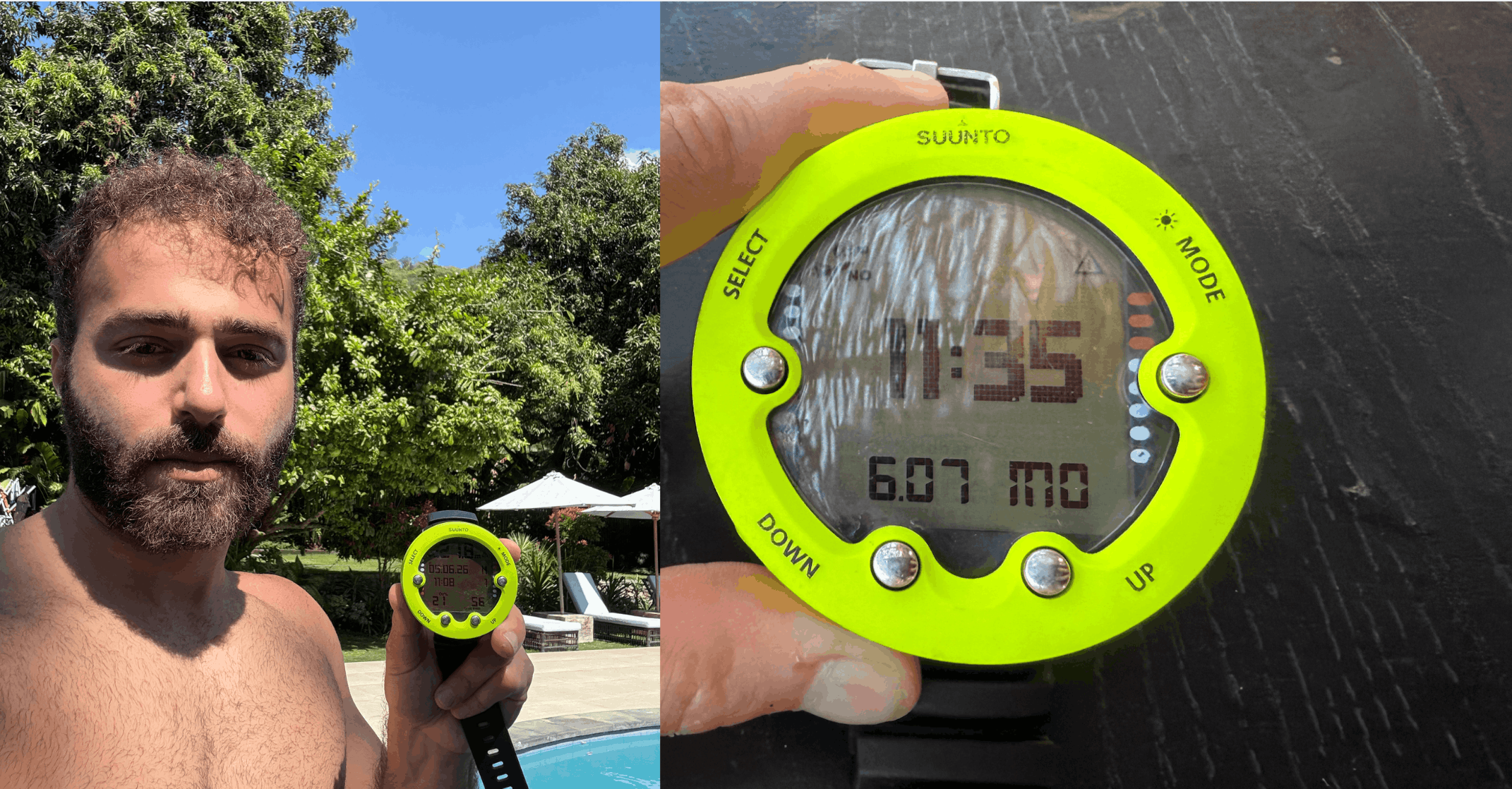
In 2026, many major dive computer manufacturers like Garmin, Suunto, and Shearwater have digital compasses built into them.
If you're already using with a dive computer with this feature, you don't need a separate compass at all. The built-in digital compass is one of the features I actually use on nearly every unguided dive.
if I was doing a little bit more advanced diving, like cave diving or deep diving or wreck diving, where digital compasses maybe aren't as proven, then that's maybe a scenario where I would have a backup analog compass, like one of the other options on this list.
For basic shore diving and charter reef dives, I feel confident with the digital compass, and I've never had it lead me astray
.png)
It's a much bigger investment than a standalone compass since you're buying a full dive computer, not just a navigation tool.
But if you're already in the market for one, it removes a separate piece of gear from your setup entirely.
Best Retractable Mount: Sherwood Genesis Compass
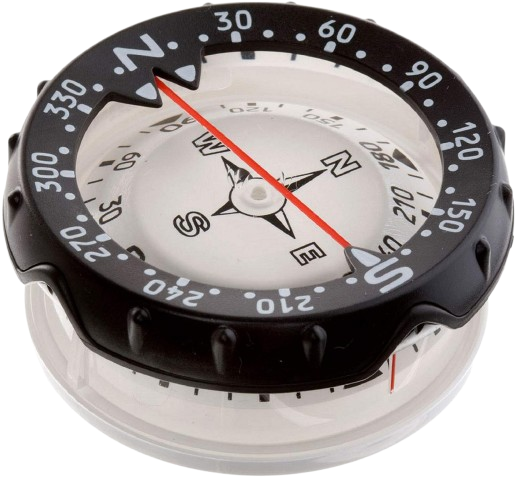
The Genesis retractable compass mount is a spring-loaded, auto-retractable mount that clips to your BCD. if you wanted to insert this into an SVG console boot, then you would need to make sure that it fits.
It has a double lubber line adds contrast that makes it easy to hold a straight bearing at a glance, and high-strength magnets keep it responsive even with the max tilt action engaged.
No wrist-mount option is included, so budget separately if you'd rather wear it like a watch.
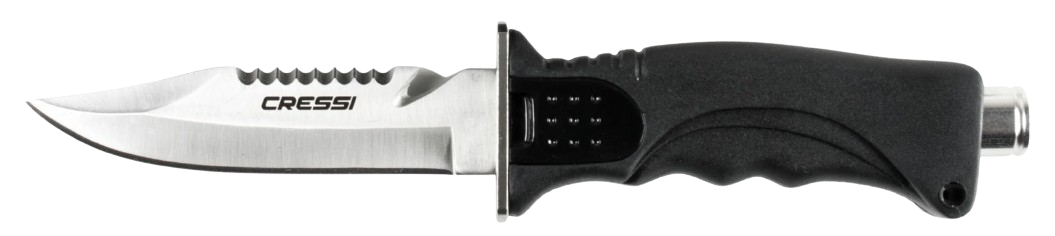
Budget Pick: Cressi Compass w/Strap and Hose Mount
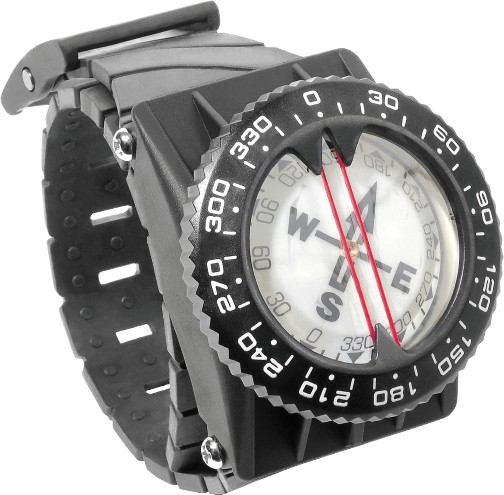
This Cressi compass is the cheapest compass on the list, and the only one that ships with both a wrist strap and a hose mount included, so you're not stuck buying a mount separately like a couple of the pricier picks. It also works in both hemispheres despite the low price, which isn't a given at this end of the market.
It needs to be held flat for an accurate reading and isn't as responsive to movement as the pricier options, but for a beginner learning to navigate on a budget, that's a fair tradeoff.
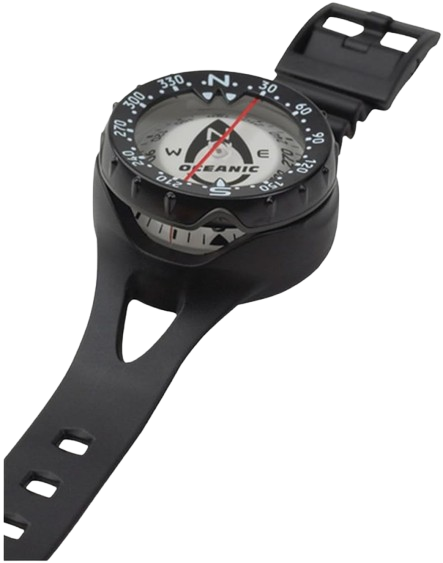
Best for Low Visibility: Oceanic Wrist Mount Compass
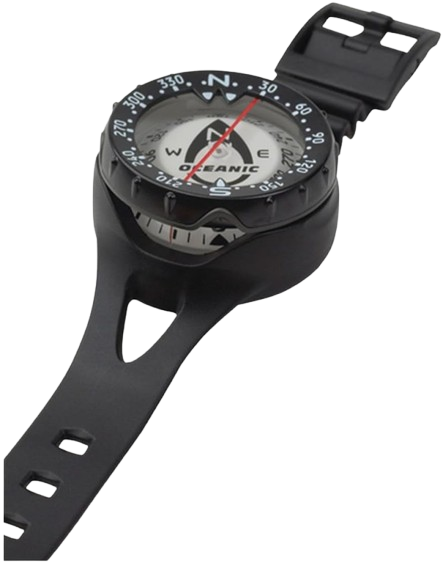
The OceanGlo card on this one absorbs roughly seven times more light than standard luminescent materials, which is why it's the compass I'd point a low-visibility diver toward. The lubber line and bearing indicators stay easy to read even when things get murky.
It's only calibrated for one hemisphere and runs a little bulky on the wrist, but the low-light readability more than makes up for it.
Dive Compass Buying Guide
Readability
High-contrast, simple designs with large markings and luminescent materials are the easiest to use. The compass card and markings should glow once charged with a dive light, and a large bezel makes it easier to see exactly where the arrow is pointing, especially in low light.
Tilt Compensation
Most compasses need to be held level for an accurate reading, which isn't always easy while managing buoyancy, watching a buddy, and avoiding obstacles. A compass with good tilt tolerance still reads accurately when held at an angle.
Hemisphere Calibration
Look for a strong magnet system, and make sure you're buying a compass calibrated for the right hemisphere. Most are only accurate in one, because of how the earth's magnetic field shifts. A few, including Suunto, build a balanced magnet system that reads accurately in both, which is worth it if you dive on both sides of the equator.
Durability
A high depth rating means the compass can handle the pressure, and a well-sealed bezel holds up to knocks while keeping sand and grit out.
Mounting Options
The module is the actual compass, and the mount is what holds it in place. The best one comes down to preference:
- A wrist mount is worn like a watch, quick to check but a little bulkier.
- A retractable mount clips onto a BCD, so you pull it out when needed and stow it out of the way otherwise.
- A console mount sits alongside a pressure gauge or dive computer, keeping everything in one place.
Price
A reliable dive compass doesn't have to be expensive. It just needs to be readable, durable, and calibrated for where you dive.
Do I need a dive compass?
It's not mandatory on every dive, but I'd recommend it at any experience level. Even divers who know a site well and navigate by landmarks benefit from having one on hand in case reduced visibility or a strong current throws them off course. If you're newer to diving or exploring a site for the first time, a compass (and knowing how to use it) makes it easier to fully explore and still find your way back to the exit point.
What happens if I use a compass calibrated for the wrong hemisphere?
The compass needle card is weighted to counteract magnetic dip, the vertical pull of the earth's magnetic field, which points downward in the Northern Hemisphere and upward in the Southern Hemisphere. A card balanced for the wrong hemisphere drags or sticks against the housing instead of spinning freely, giving you a sluggish or inaccurate reading instead of an outright wrong one. If you're buying one compass to use in both hemispheres, look for a balanced or universal model like the SUUNTO SK-8.
Let's Dive Together
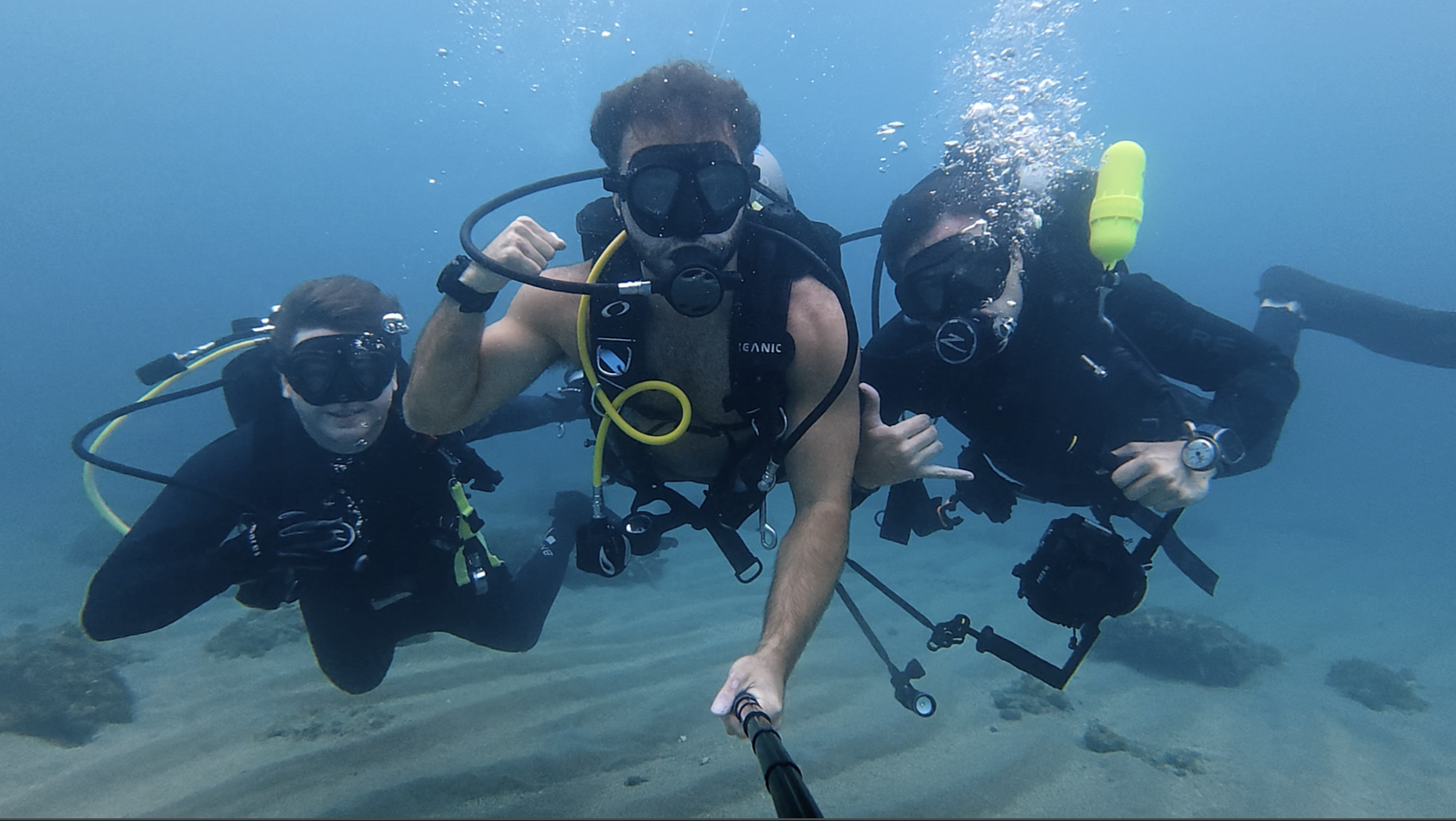
👋 It's Divemaster Austin
I'm inviting you to Dive Club, my global scuba diving community.
What you’ll find inside:
🤿 Dive meetups & group trips
🌍 Top dive sites shared by community members
⚙️ Gear tips & technique discussions
🤝 Diver's who’ve already linked up IRL
See you there!
Join my scuba diving community.

I'm Austin, a PADI Divemaster with over a decade of diving experience under my belt.
I created a free scuba diving community, where divers can connect, learn, and share their dives.
See you inside!
Join my Diving Community

.webp)
.webp)



.png)