


.webp)
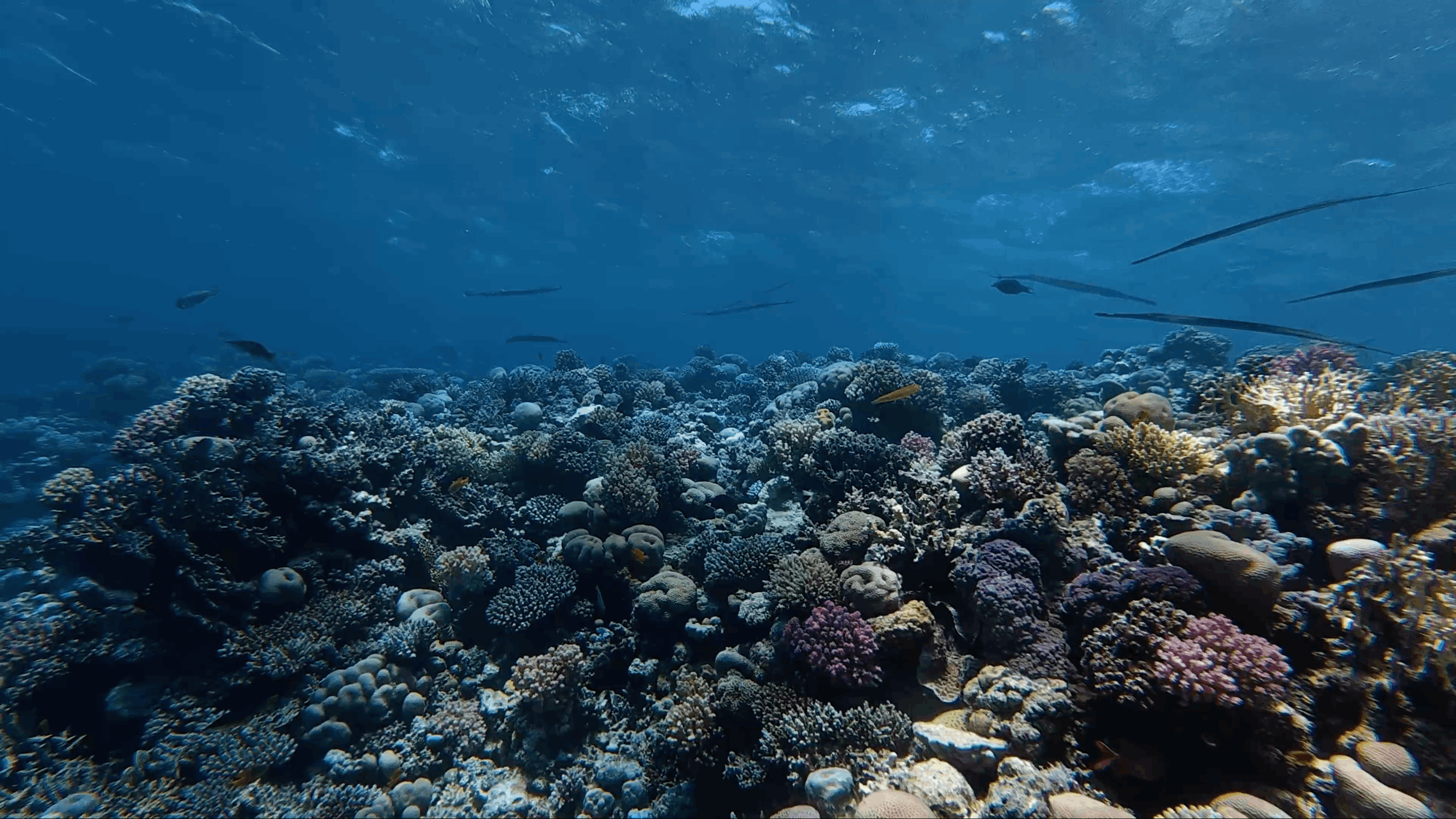
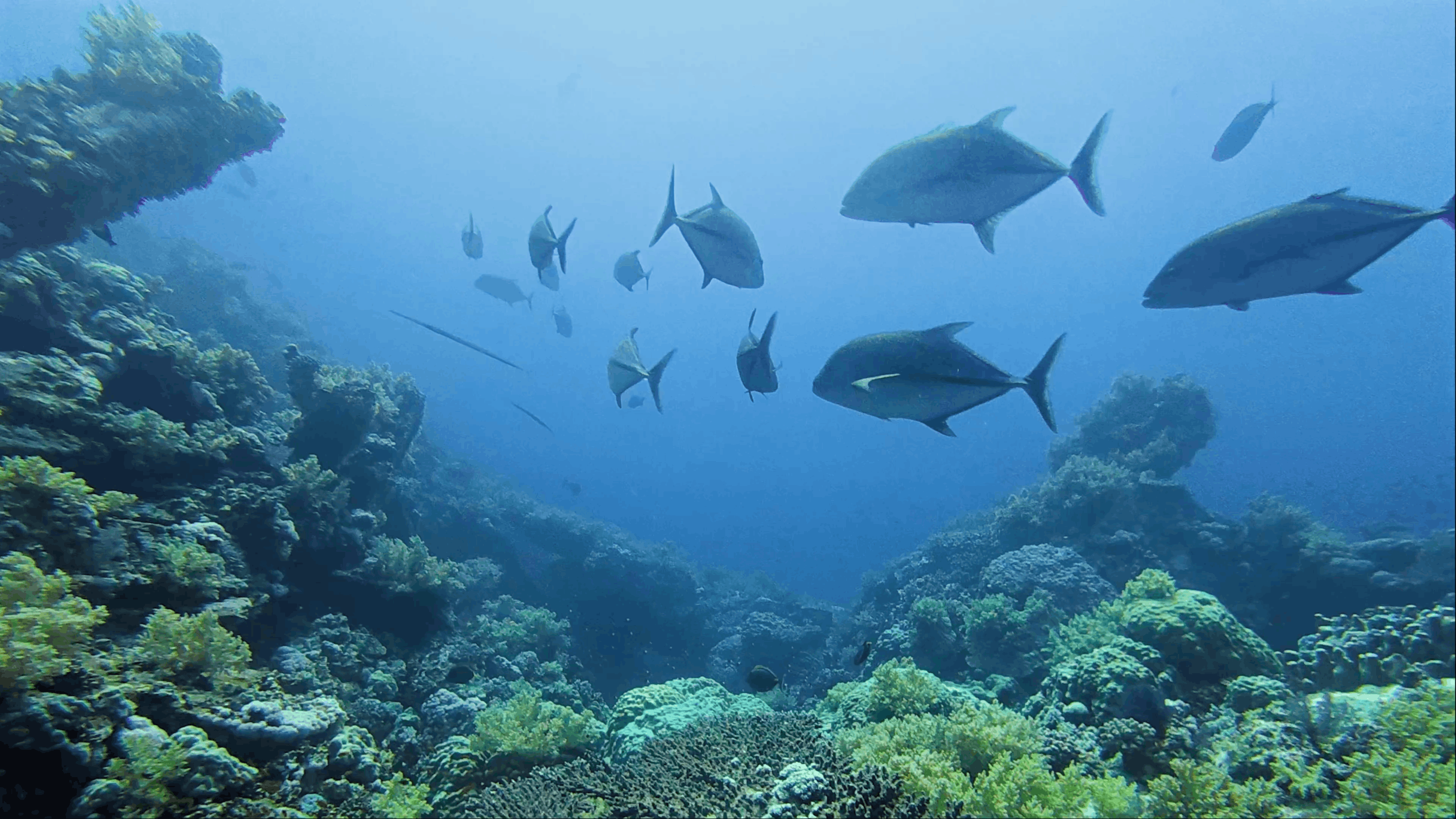
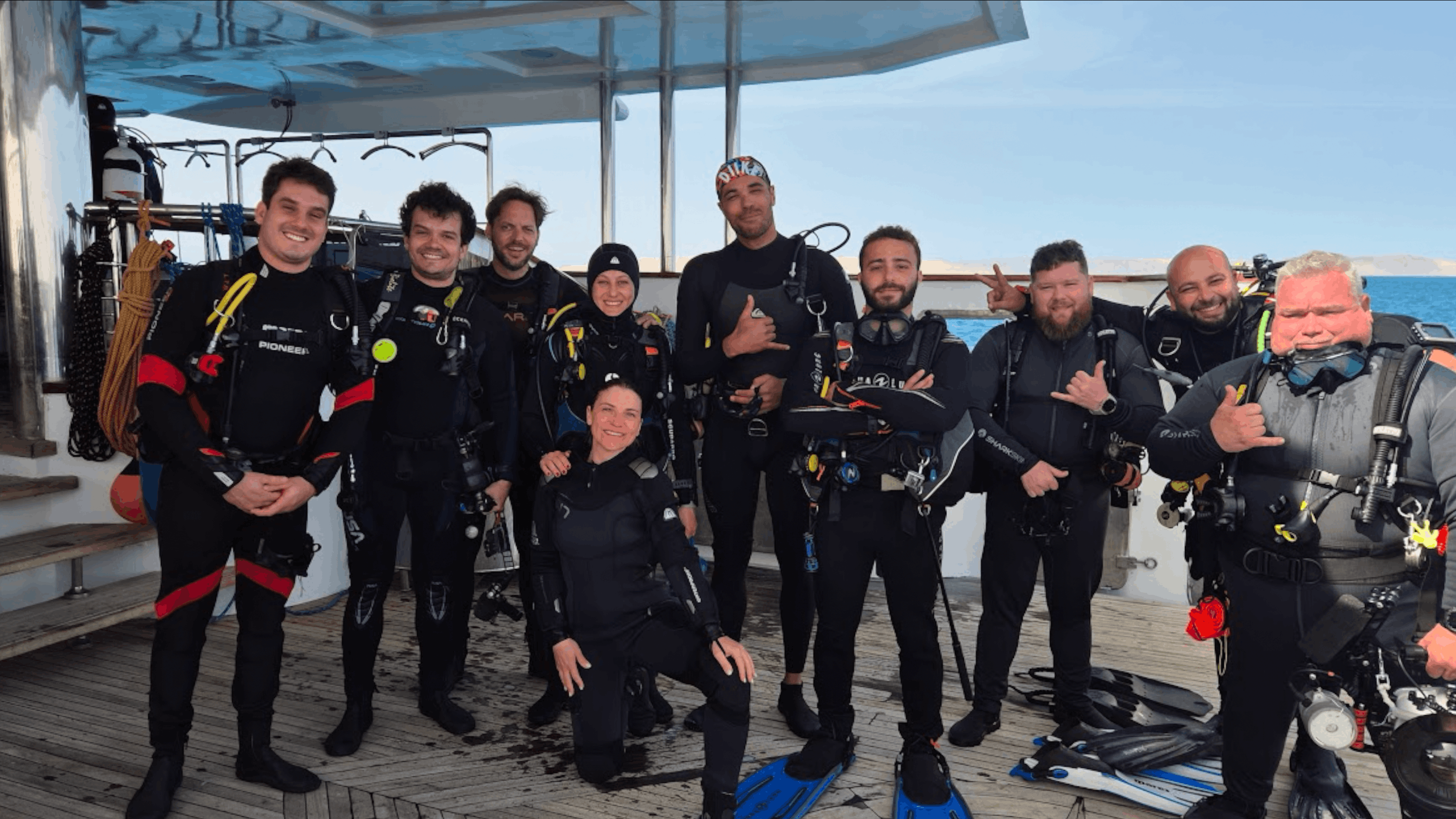
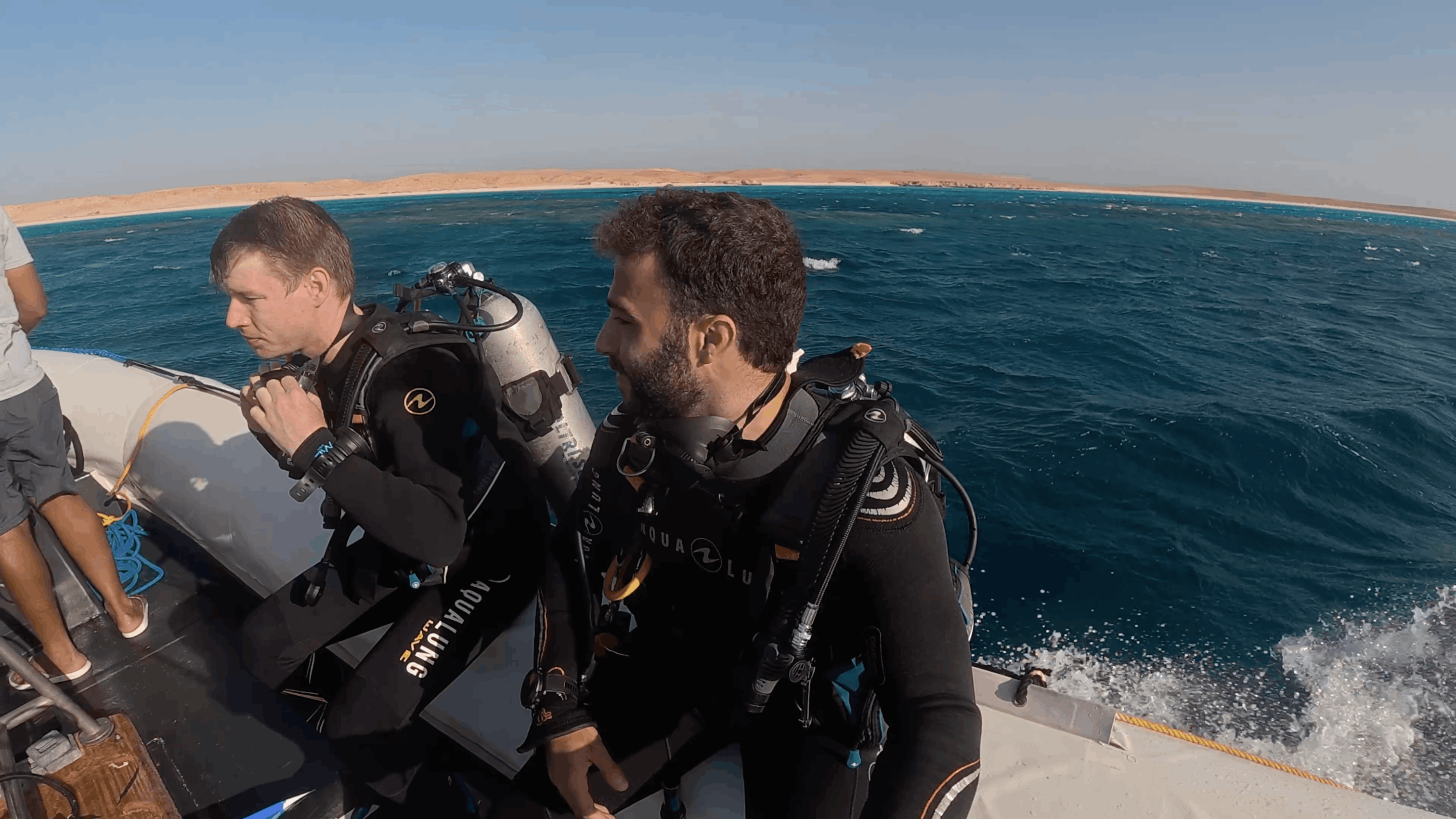
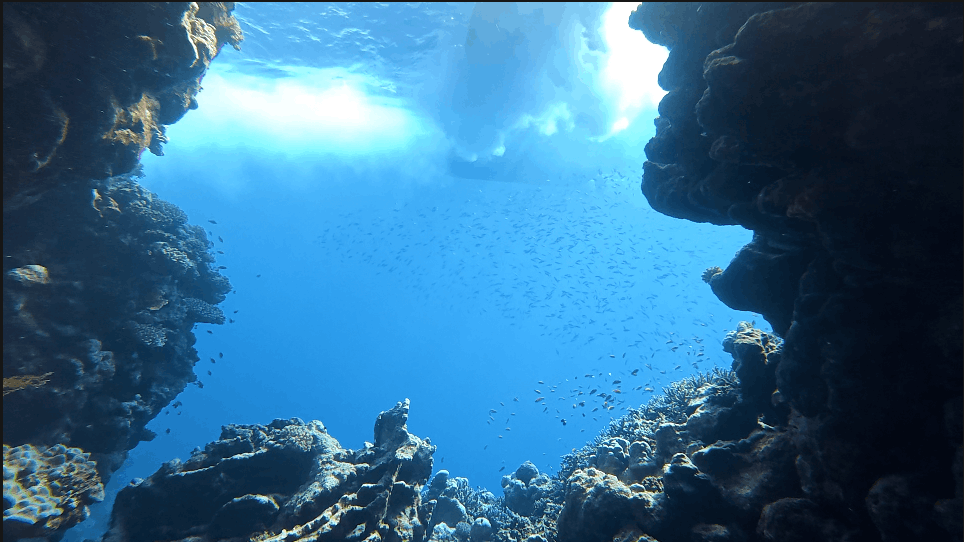
Other than Indonesia, the Red Sea is the best diving I've done anywhere in the world.
The visibility, the marine life, the people, it delivers world-class diving that's still this accessible and this affordable.
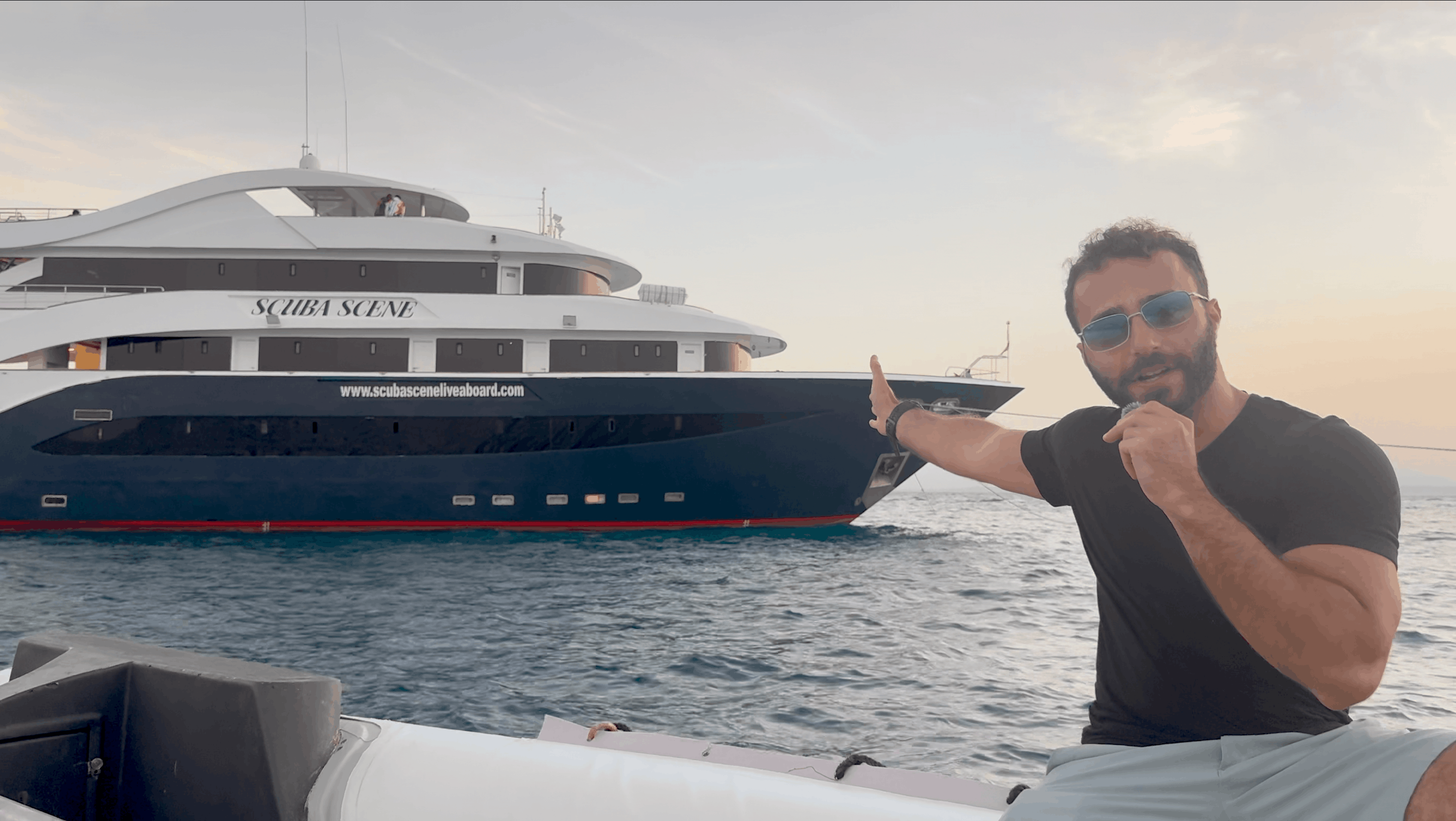
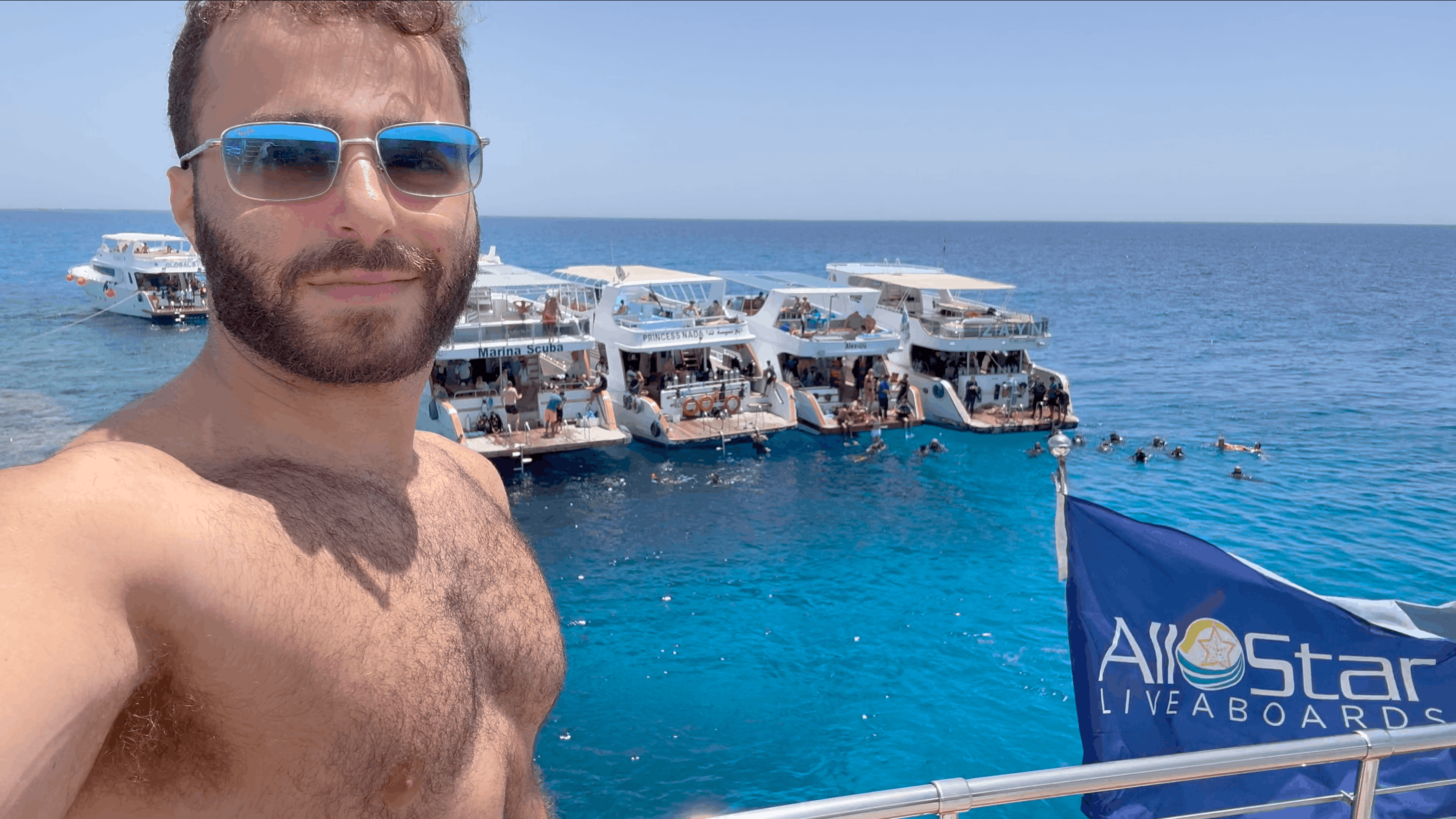
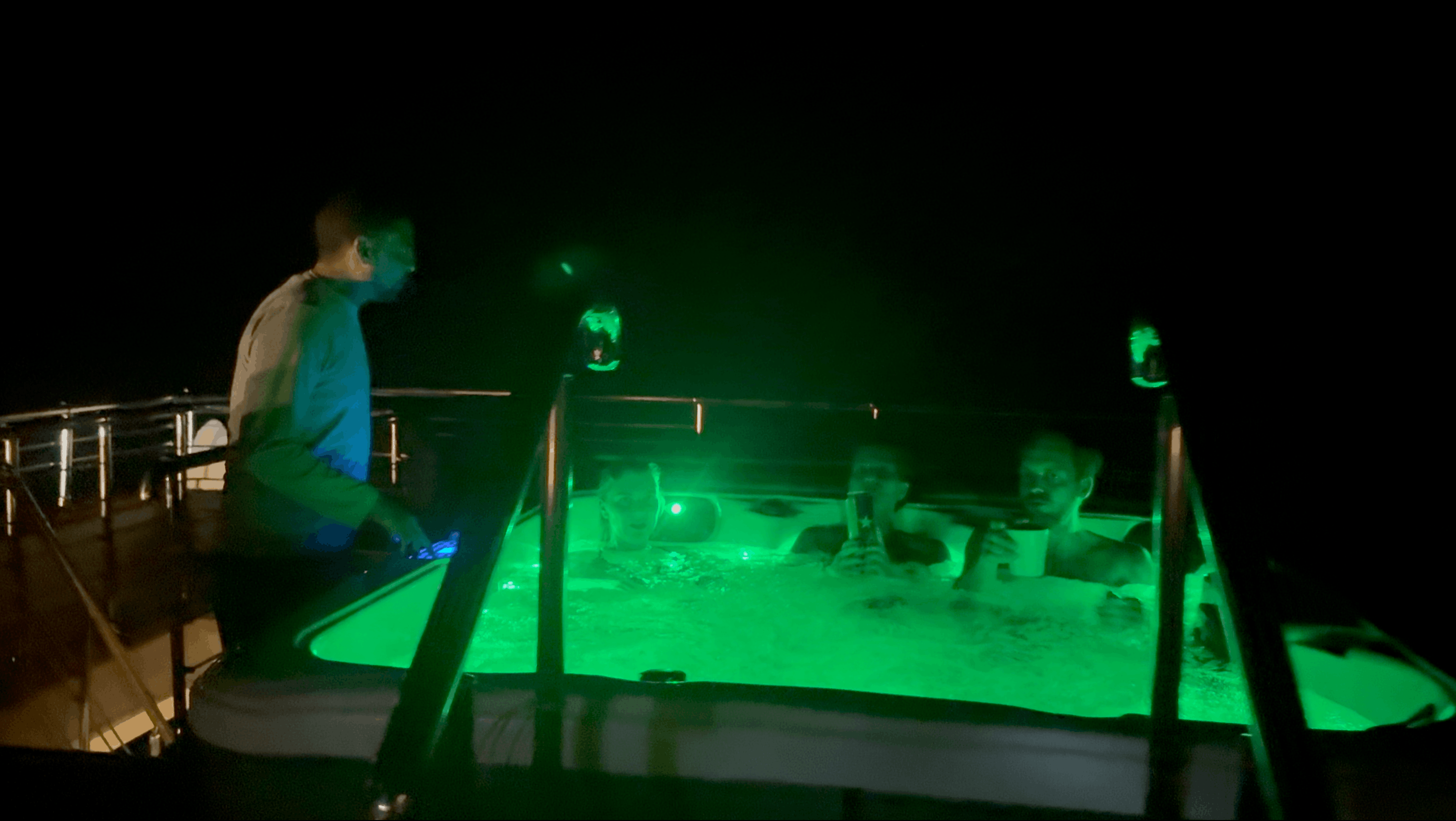
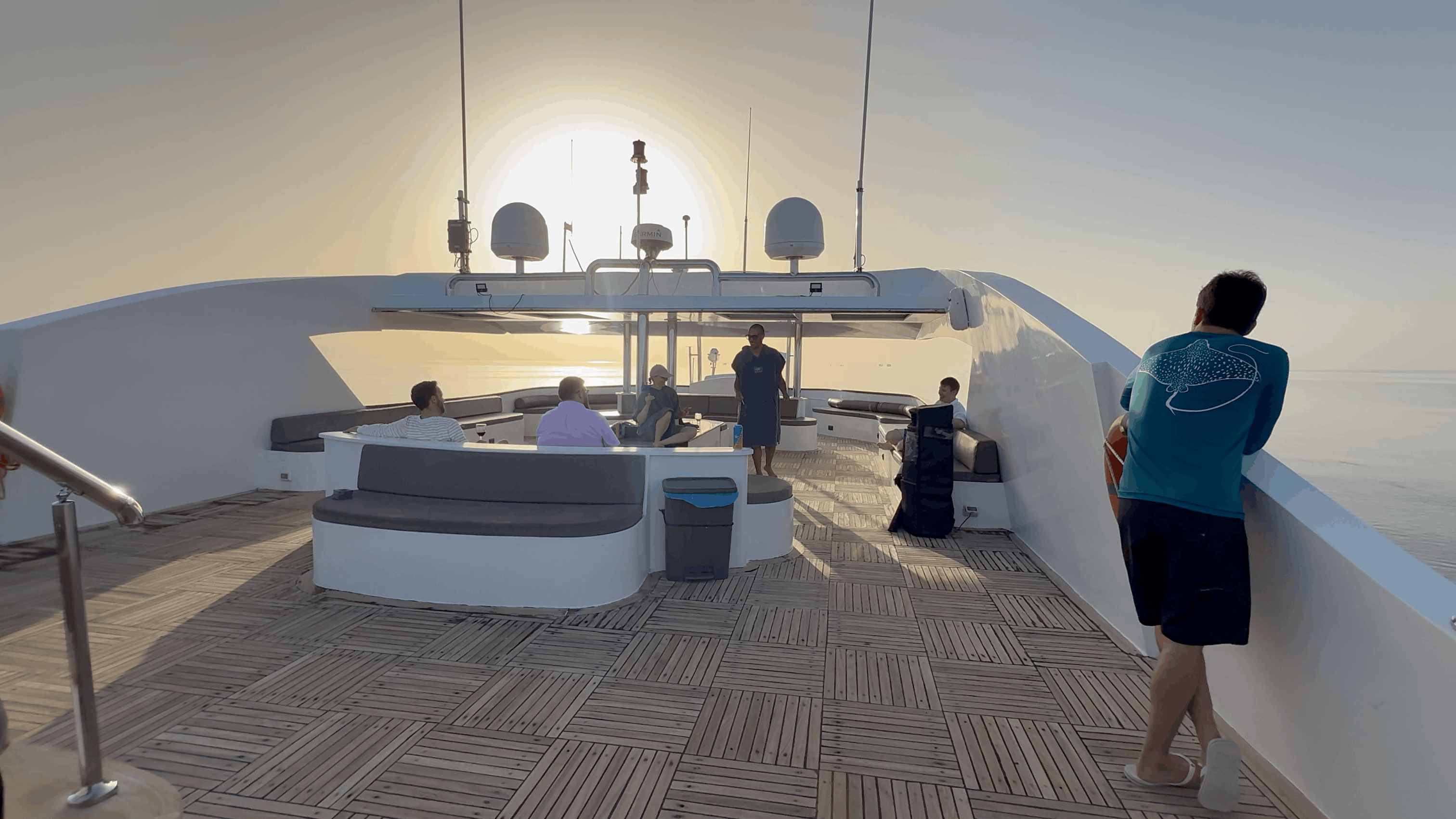
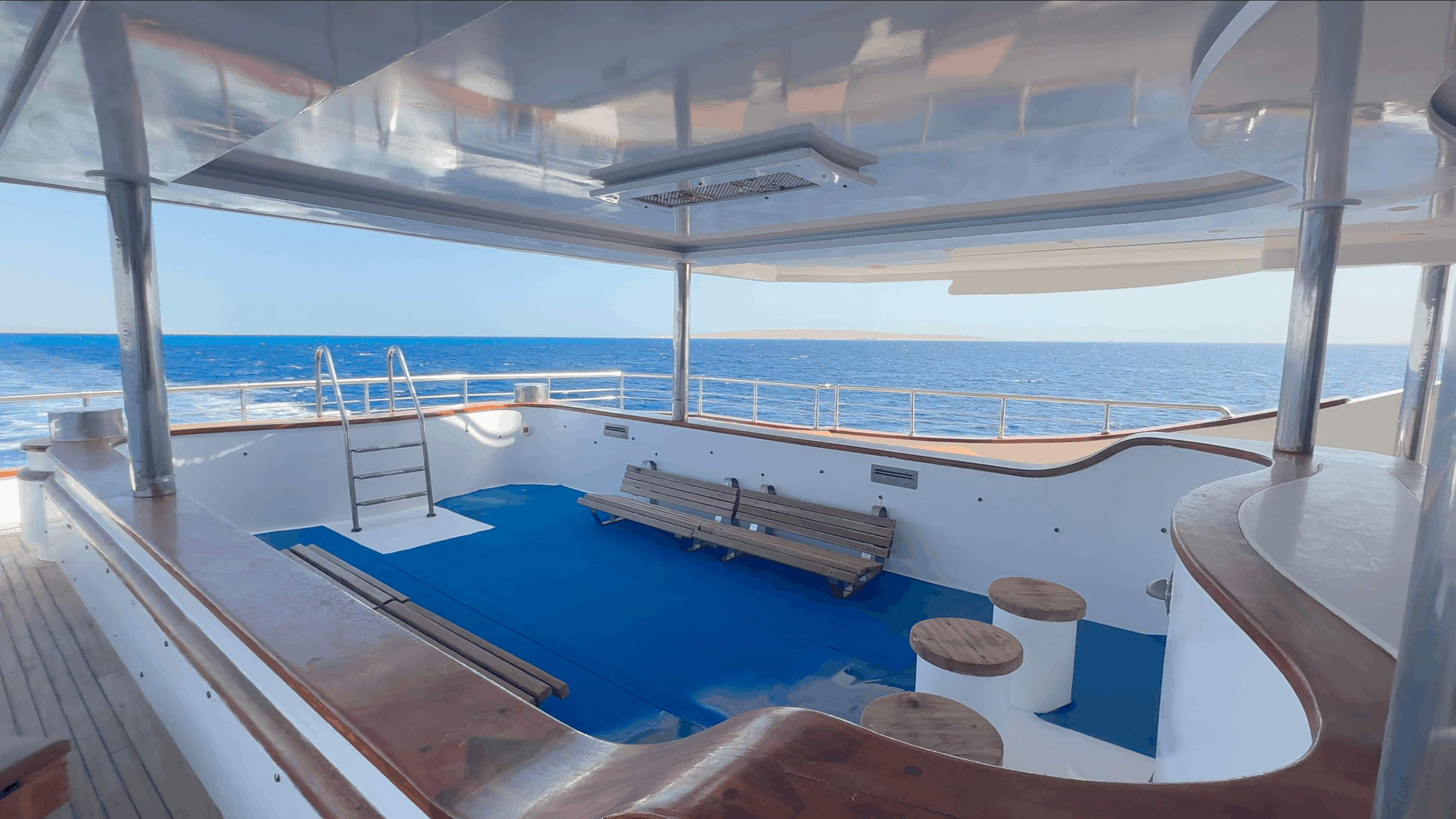
My only liveaboard experience in Egypt was in May 2026, aboard the All Star Scuba Scene. It's the best liveaboard I've ever been on, and it's what taught me what to actually look for in a Red Sea liveaboard.
I haven't personally sailed the other boats below, but I can compare them against the Scuba Scene and walk you through the different routing each one runs.
Best Overall: AllStar Scuba Scene
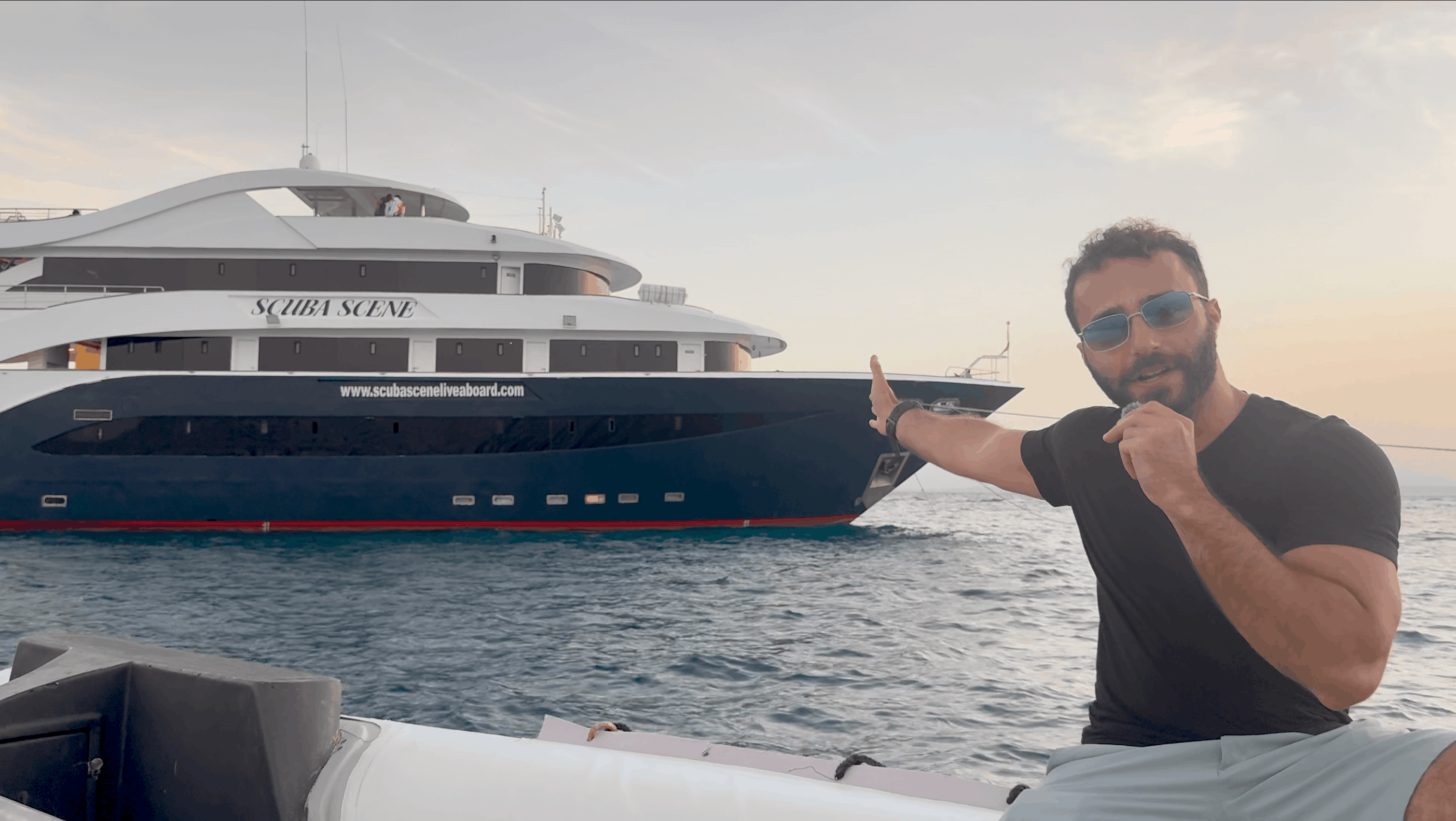
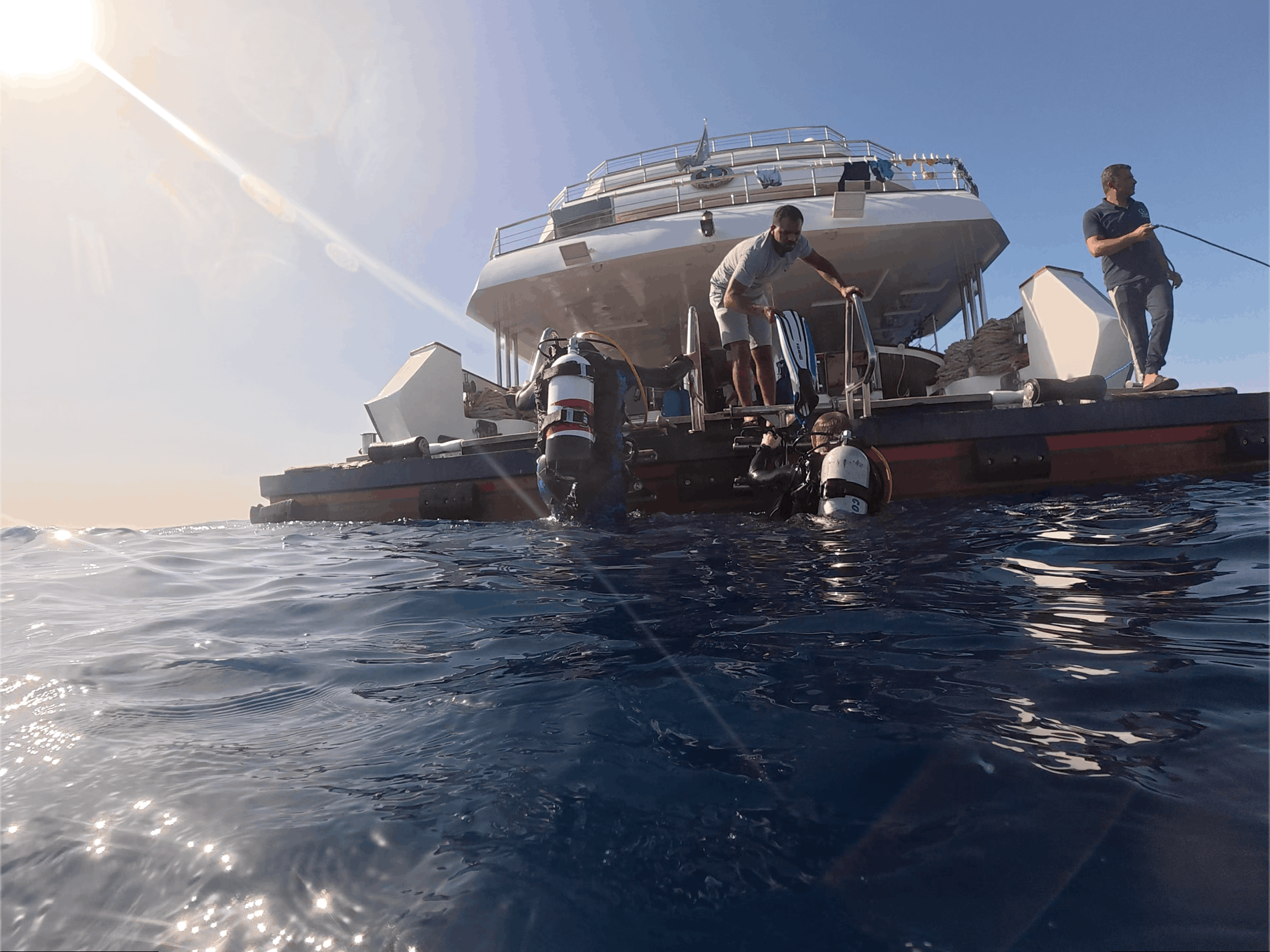
The All Star Scuba Scene is the best liveaboard I've ever been on. My trip was the North and Brothers itinerary in May 2026 out of Hurghada, 7 nights and 17 dives.
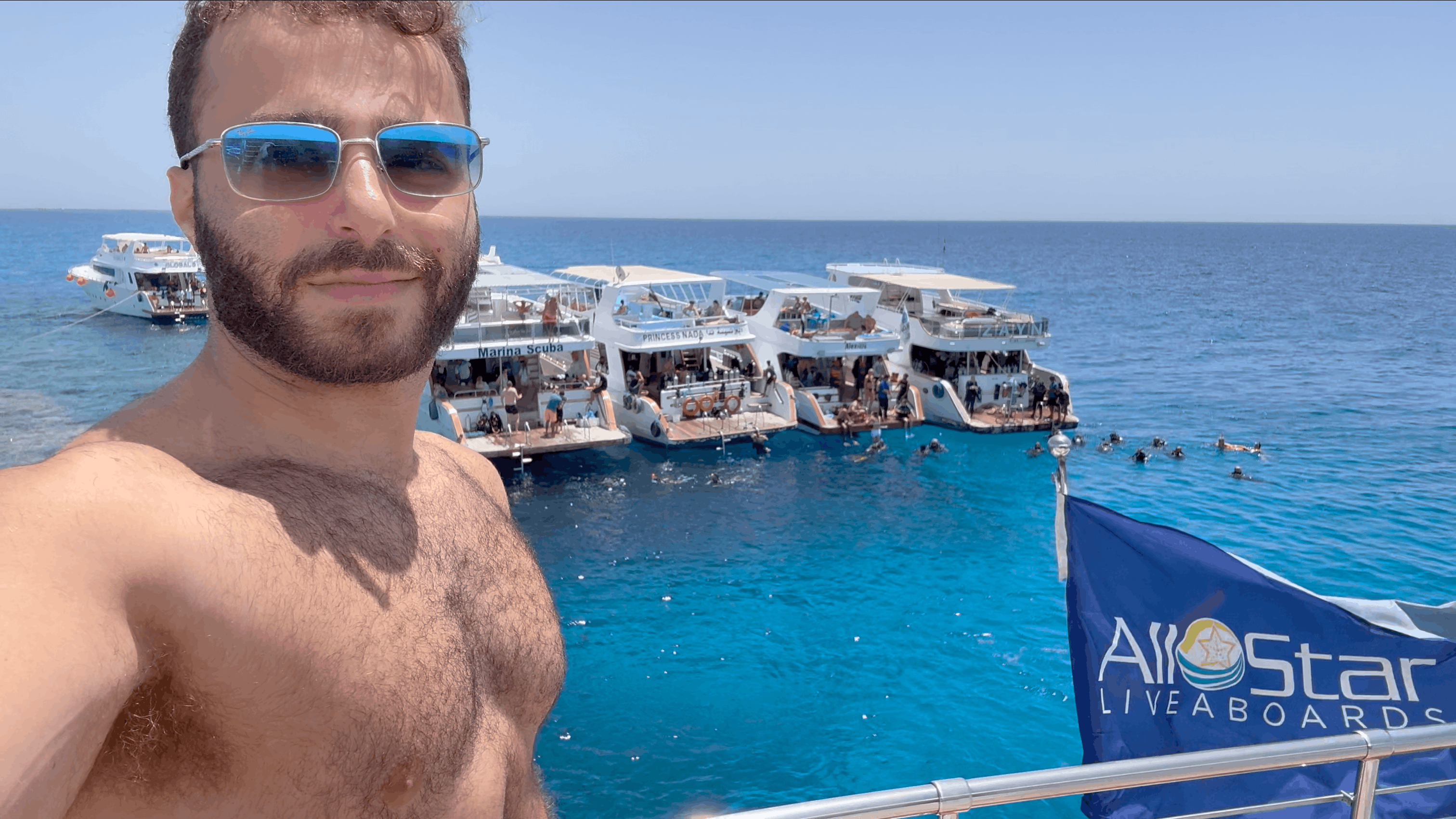
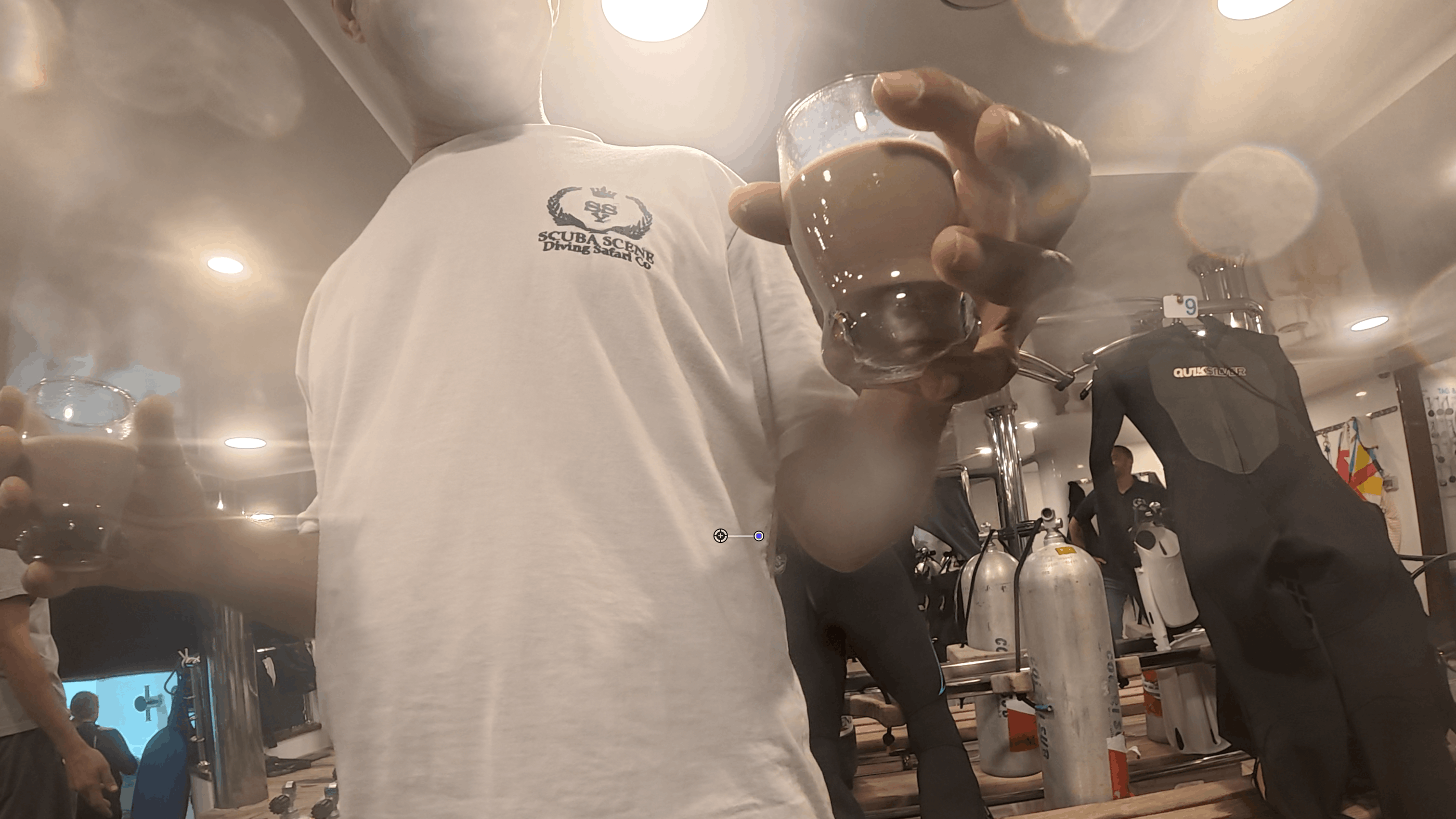
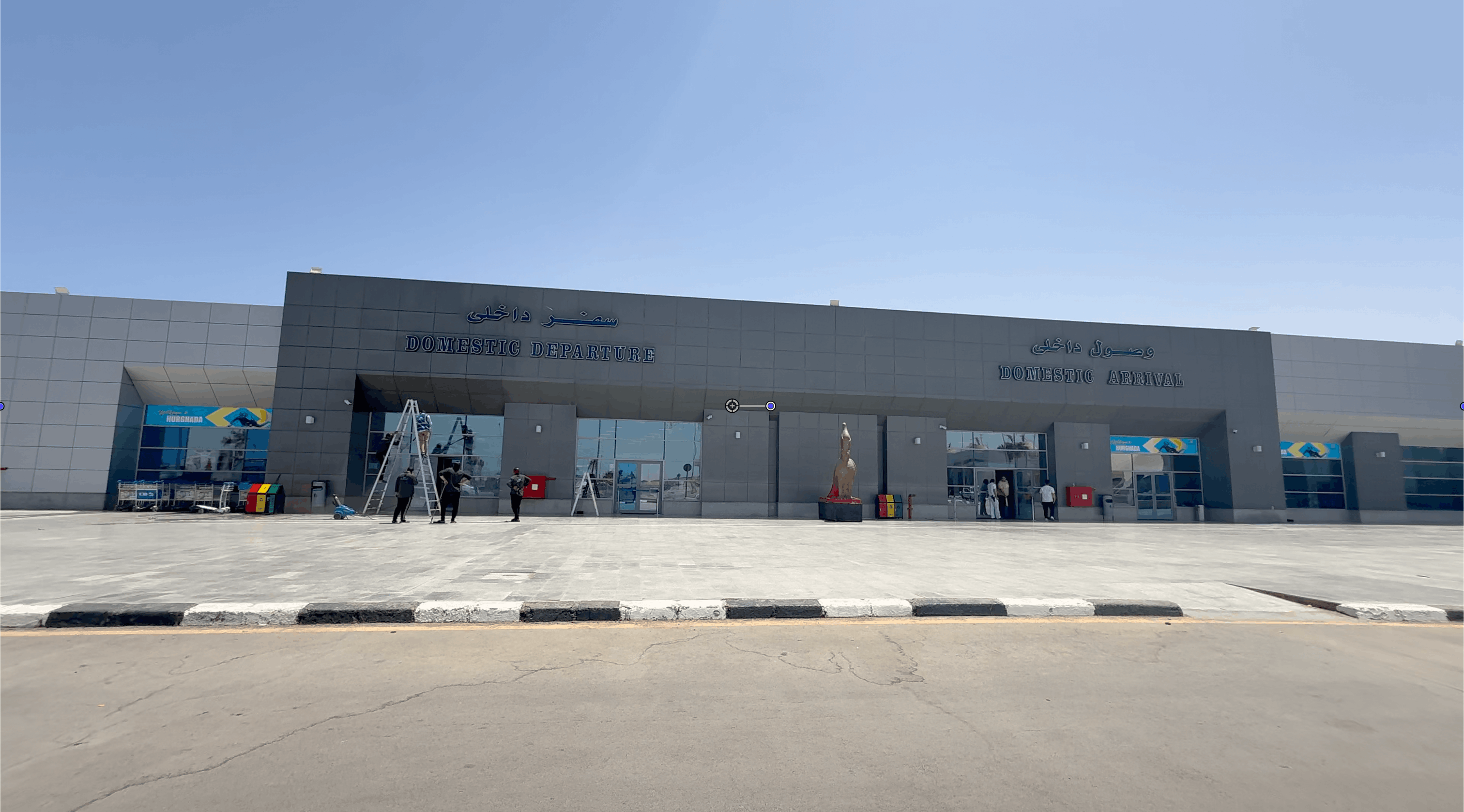
After every dive there were towels, hot cocoa, and fresh juice waiting on deck. Sherif handled all the logistics from the moment I landed, including airport pickup and a pre-boarding night at the Marriott.
Cabin
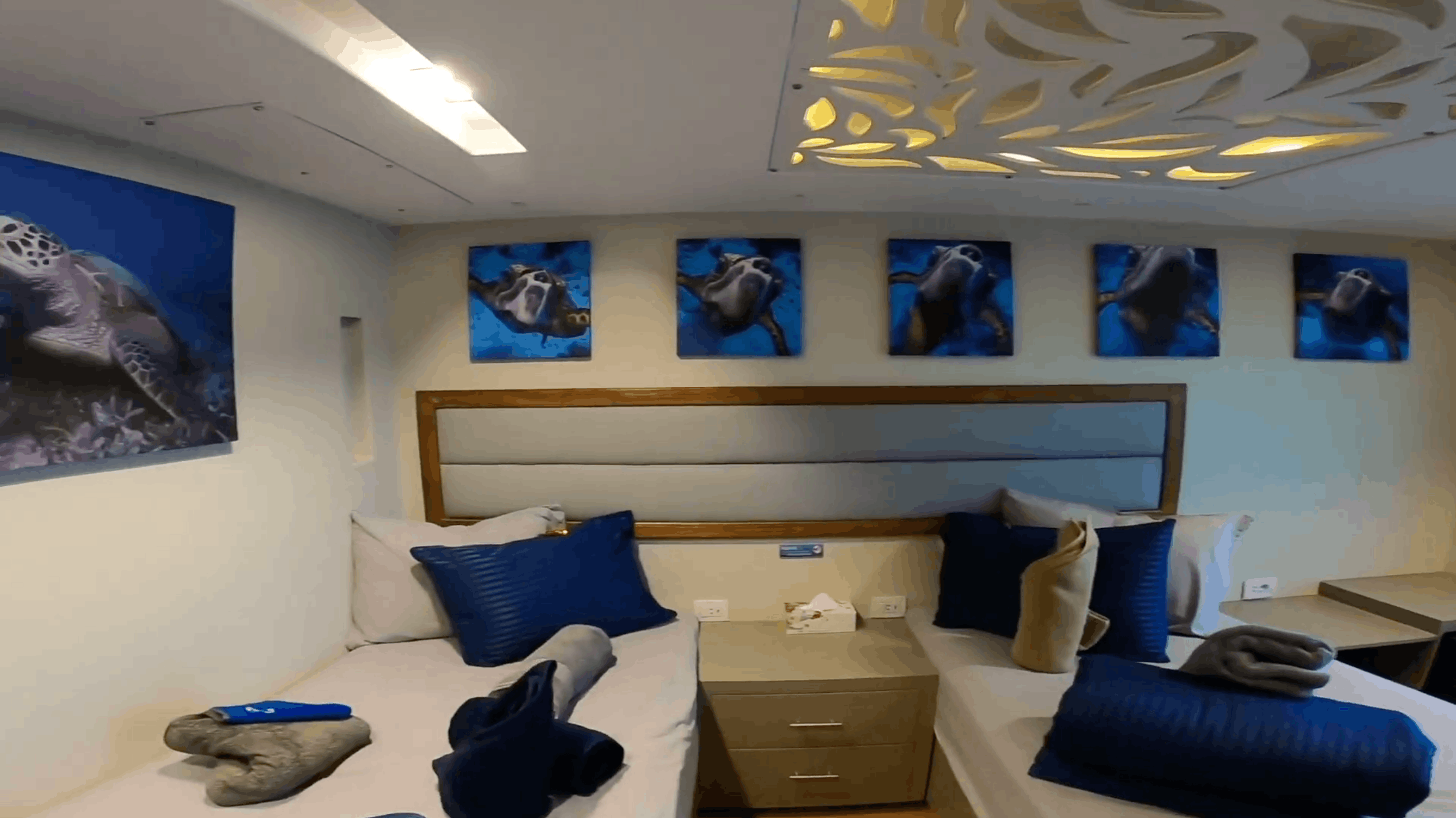
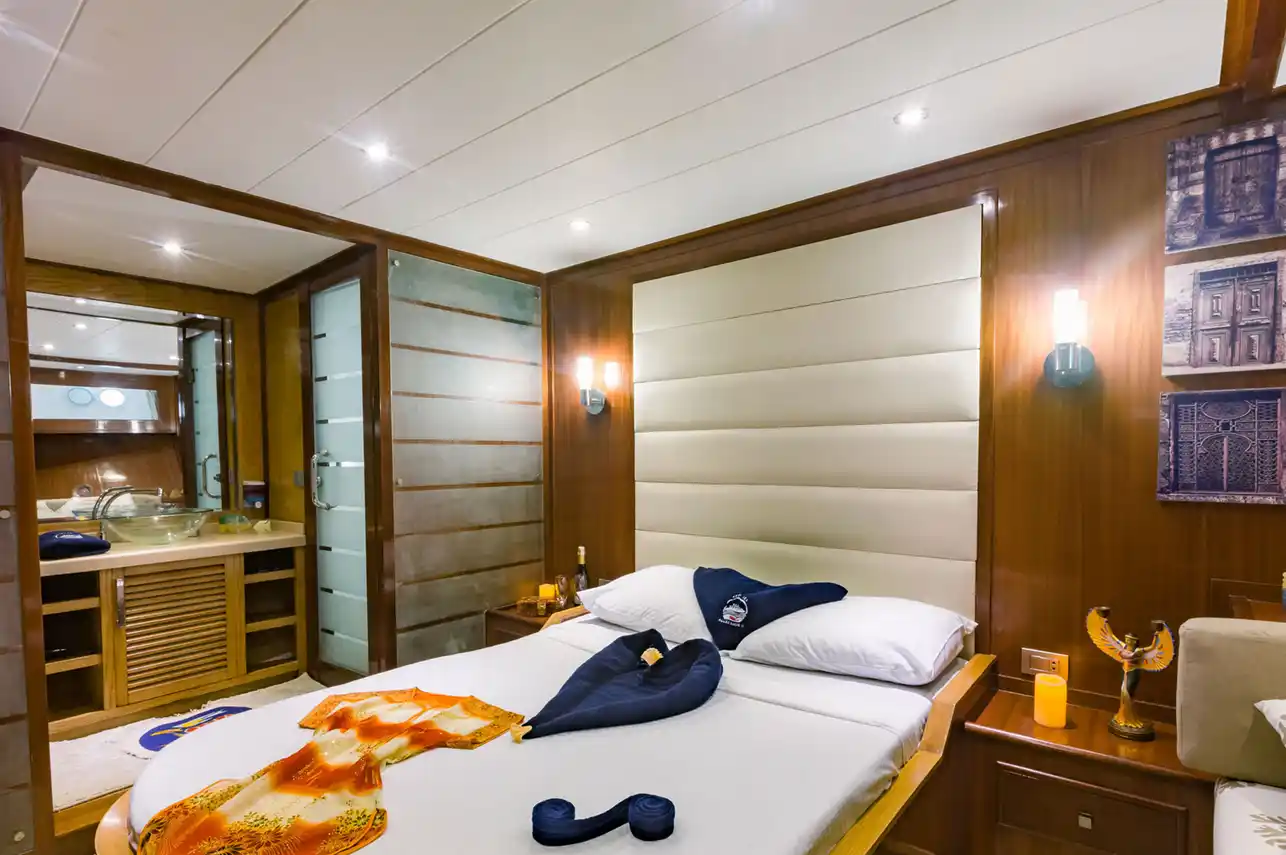
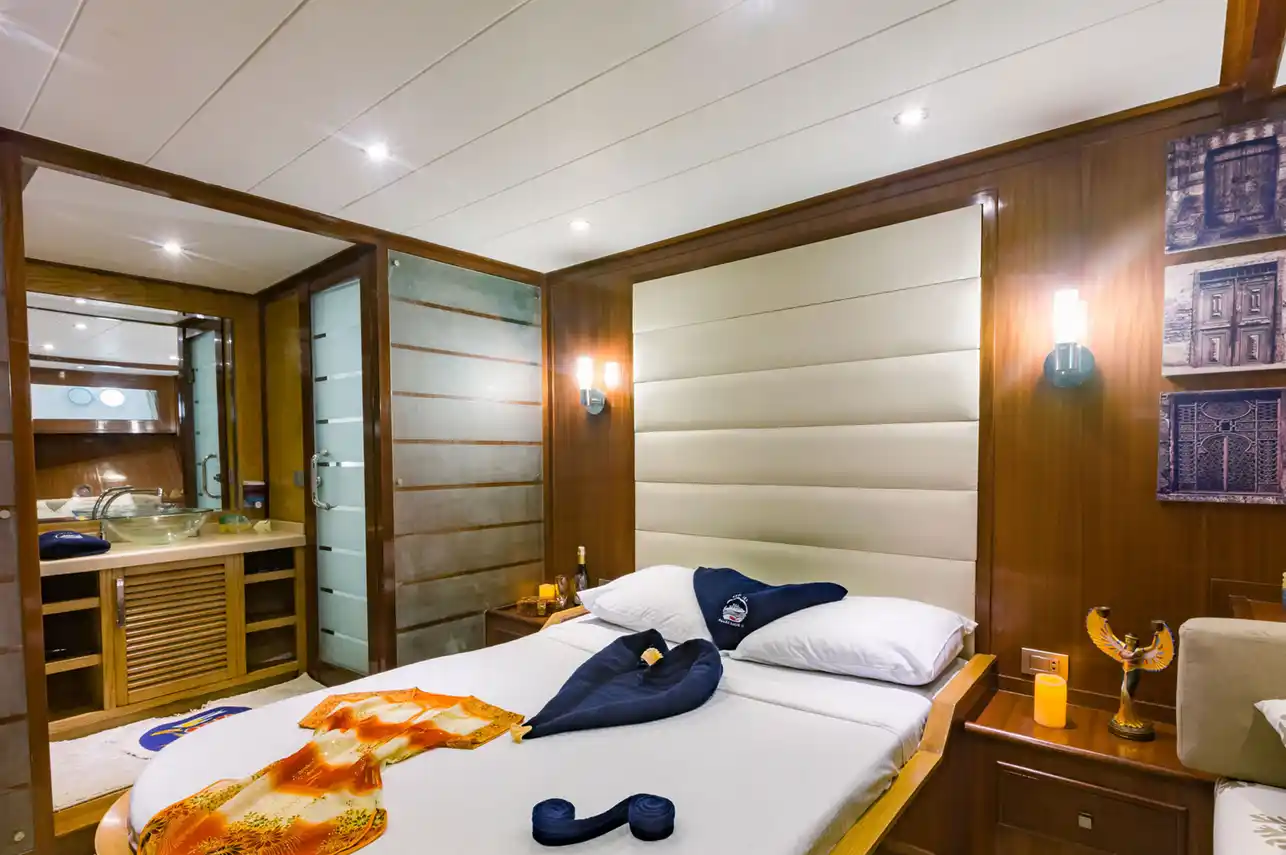
My cabin had a personal refrigerator, more storage than I needed, and a full bathroom with a shower that looks out over the ocean.
The crew made the experience.
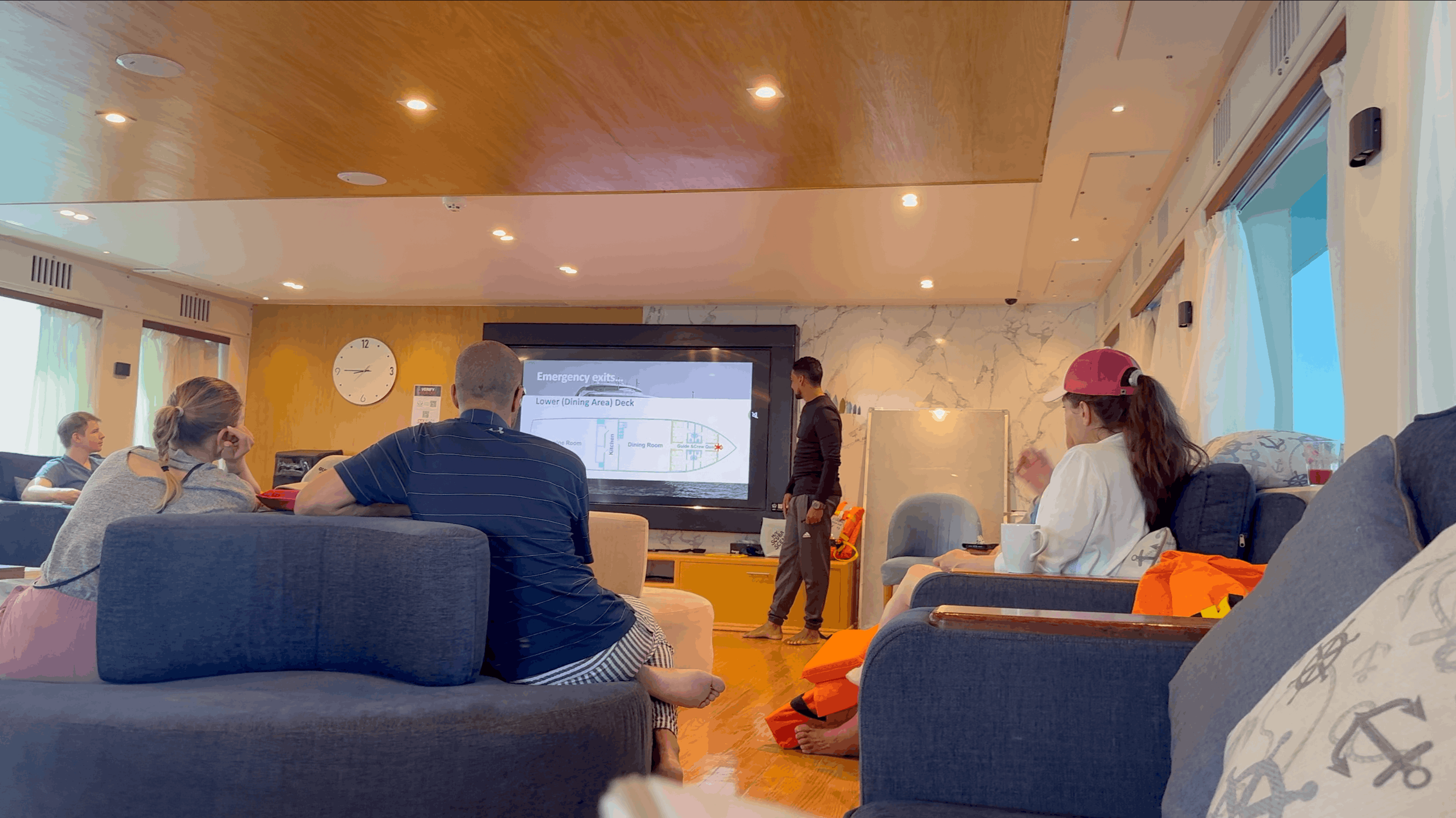
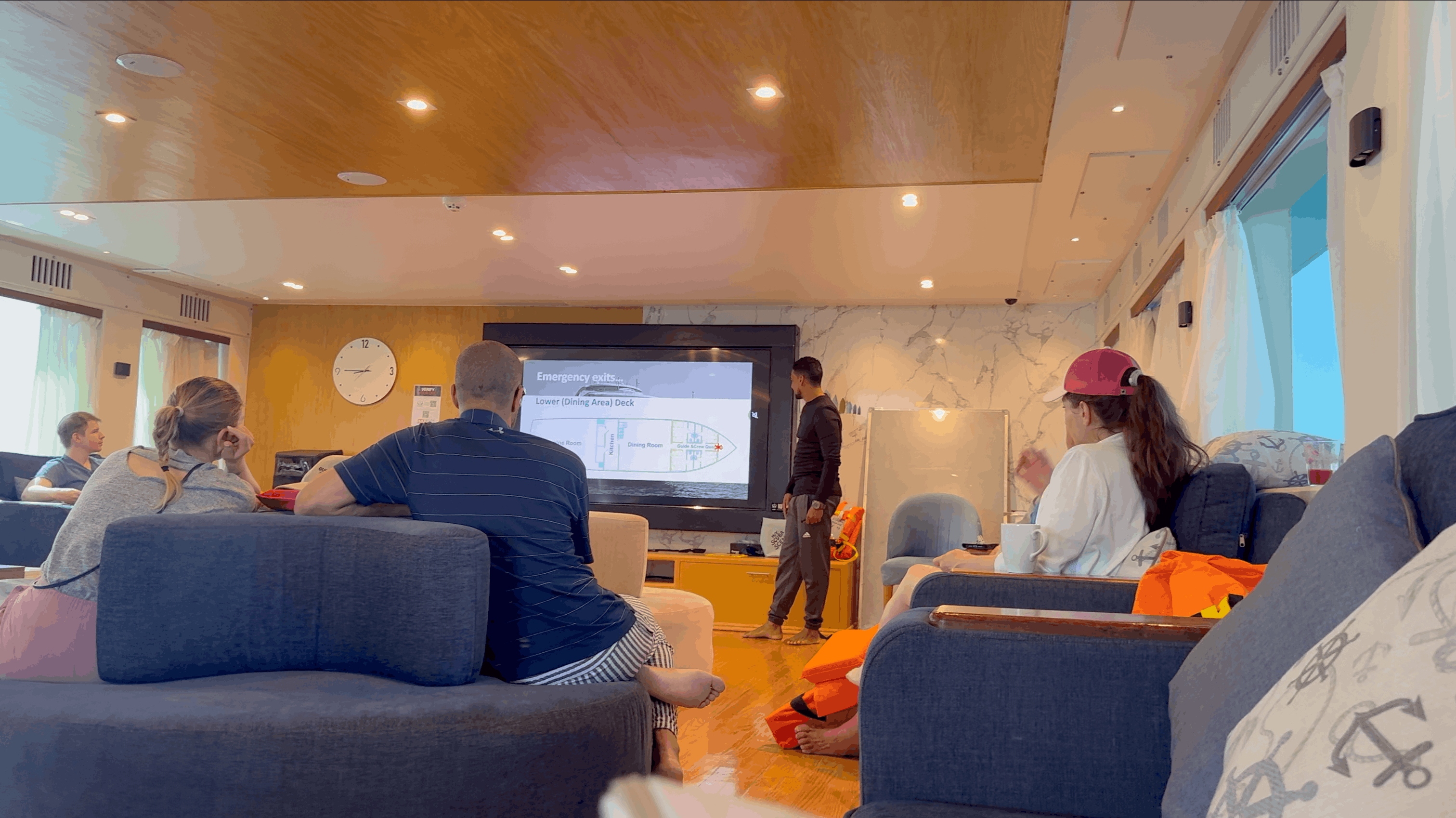
Dive guide Hamo briefed every site before we hit the water, covering the history, the route, and what to look for.
The food was some of the best I've eaten anywhere. Buffet breakfast and lunch, plated dinner every night, different desserts every evening including crème brûlée. The kitchen handled every dietary restriction without any issues.
The diving covered 9 unique sites including Big Brother Island, the SS Thistlegorm, Dolphin House, and Jackfish Alley. On most days we got 3 to 4 dives in.
The one honest downside is the WiFi, which drops out completely at remote sites like Brothers Islands.
Newest Boat: Alsuraya
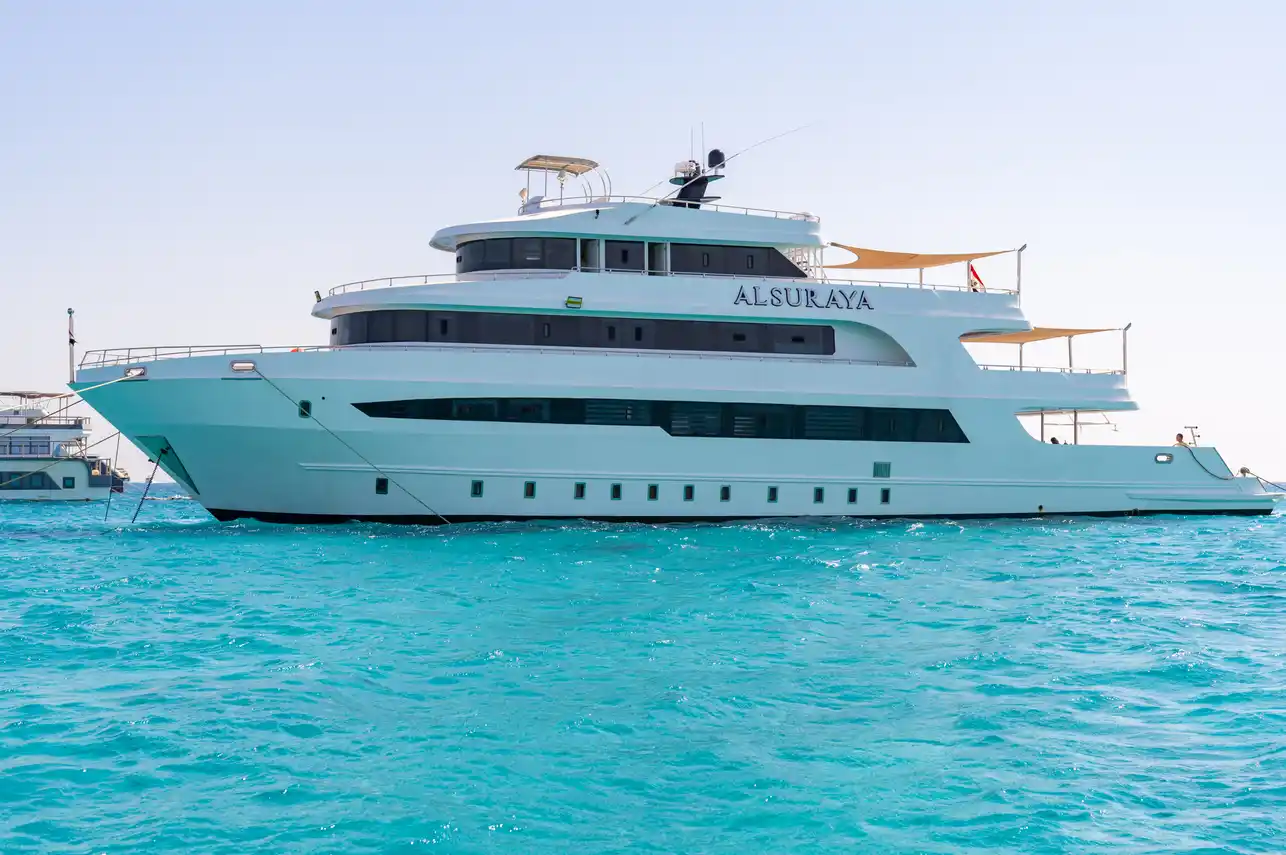
Built in 2024, Alsuraya is the newest boat on this list, a 37-metre steel motor yacht, 121 feet (37 m), carrying 24 guests with 13 crew aboard. It runs both north and south itineraries, North, Brothers, Daedalus, Elphinstone, Zabargad, and St. John's, covering similar ground to the Scuba Scene rather than specializing in one region.
Asking around, the quality of the food on board gets complimented constantly, and diving is run with well-organized briefings, preparation, and transfers, the dive guide is called out by name in more than one review as a highlight of the trip. I haven't been on it myself, but from everything I found online, it seems like a great luxury option.
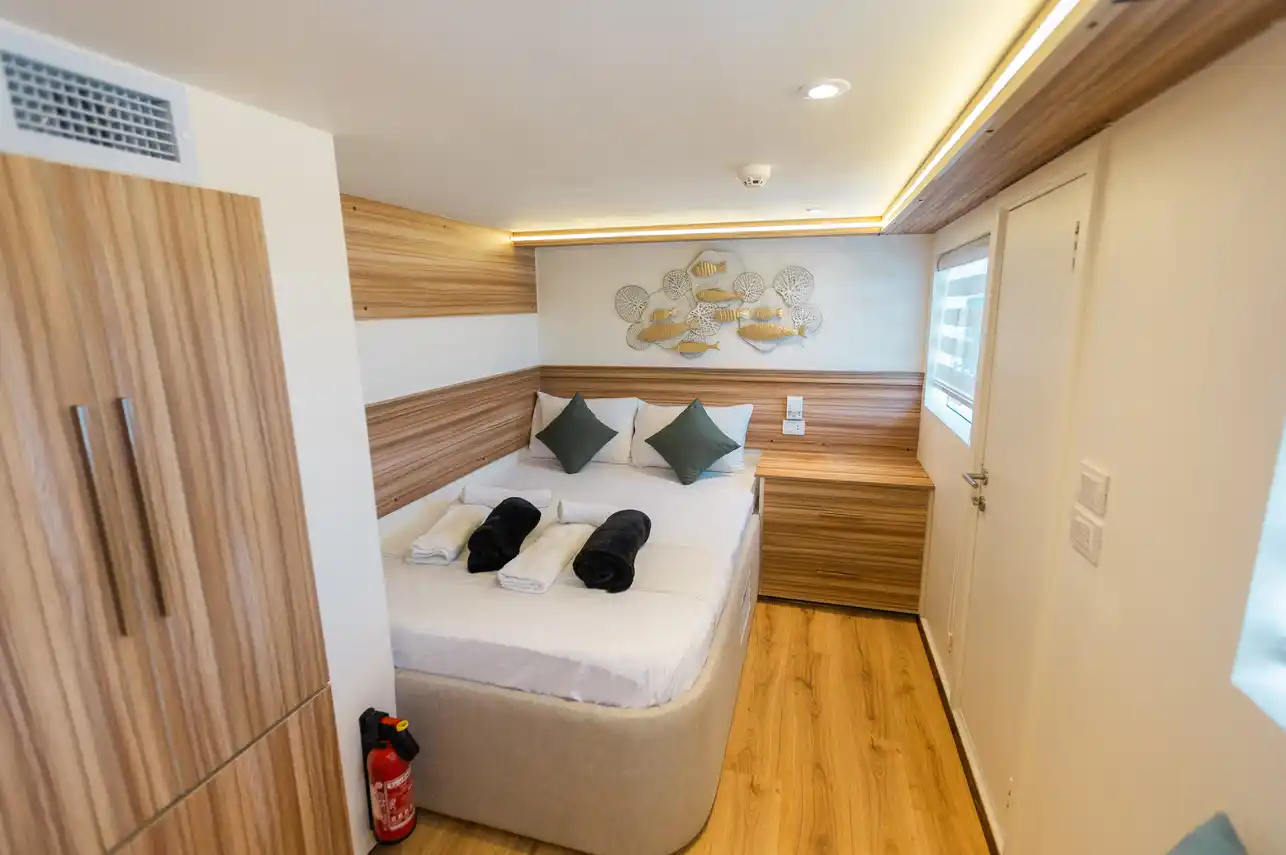
Cabin
Best Budget Option: Ghani
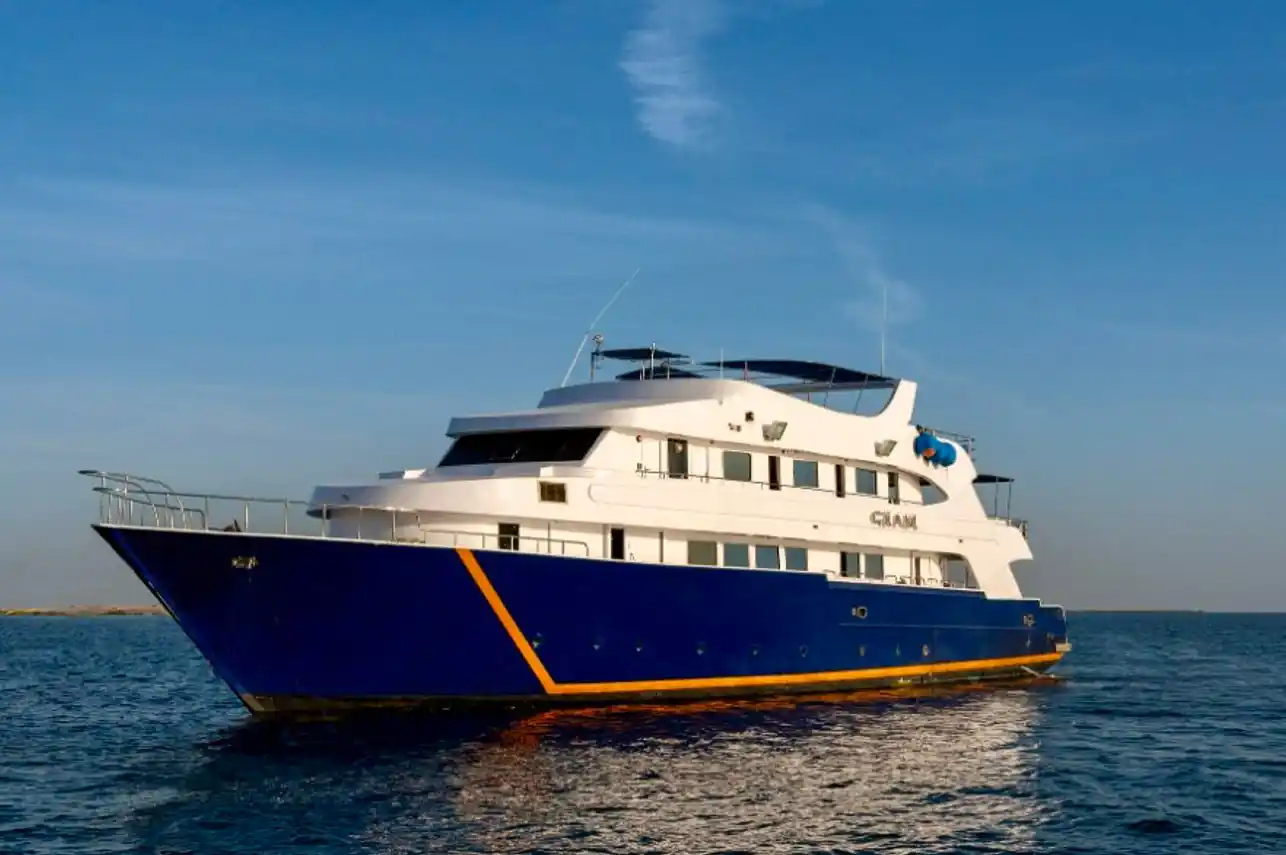
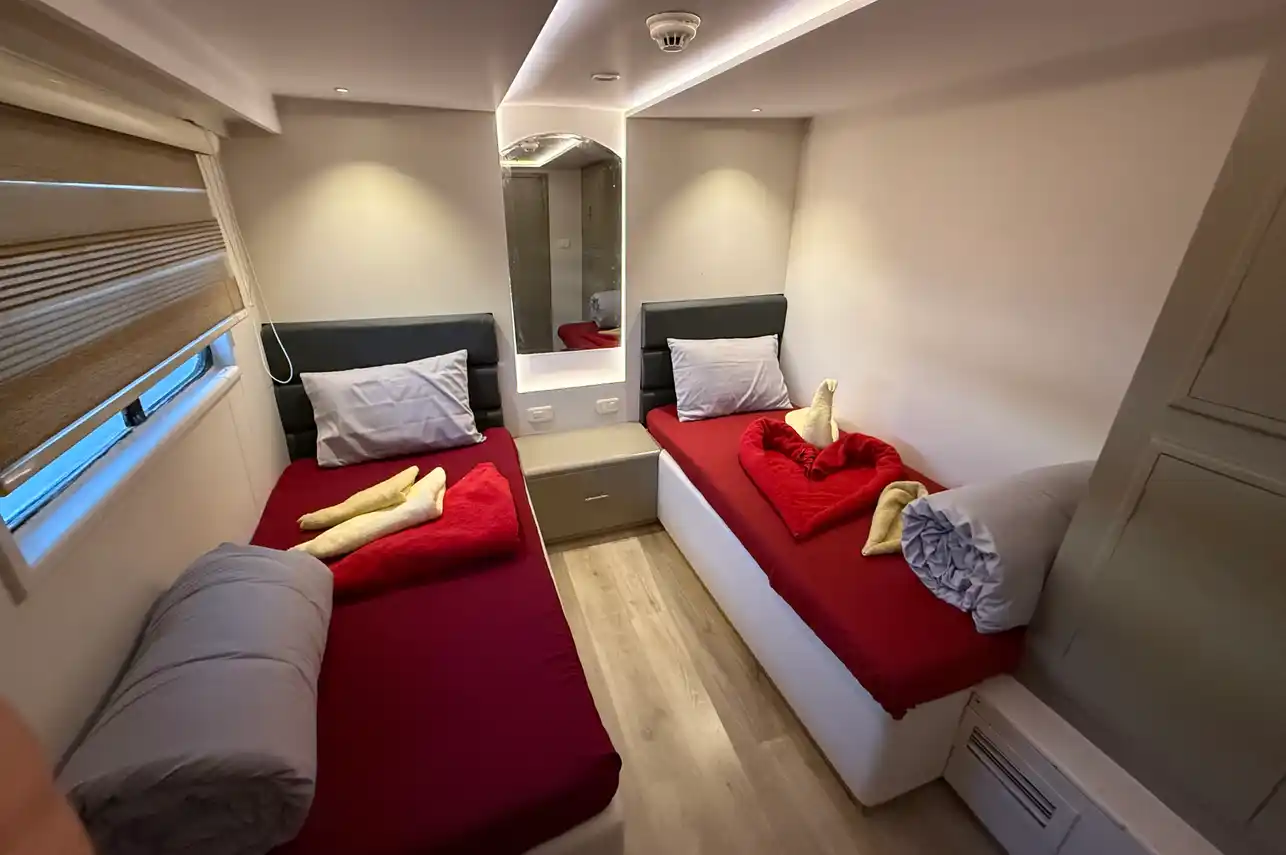
Ghani is All Star's sister ship to the Scuba Scene, launched in January 2026 to run the same routes in a smaller, more intimate setting, up to 24 guests across 12 ensuite cabins, some below deck.
It runs the same Brothers, Daedalus, and Elphinstone itinerary as its sister ship, and All Star says it holds to the same safety and service standards. I haven't sailed it myself, but if Ghani delivers even close to what I got on the Scuba Scene, it's a strong budget-friendly way into that same operation.
Cabin
Best Itinerary Variety: MY Blue Storm
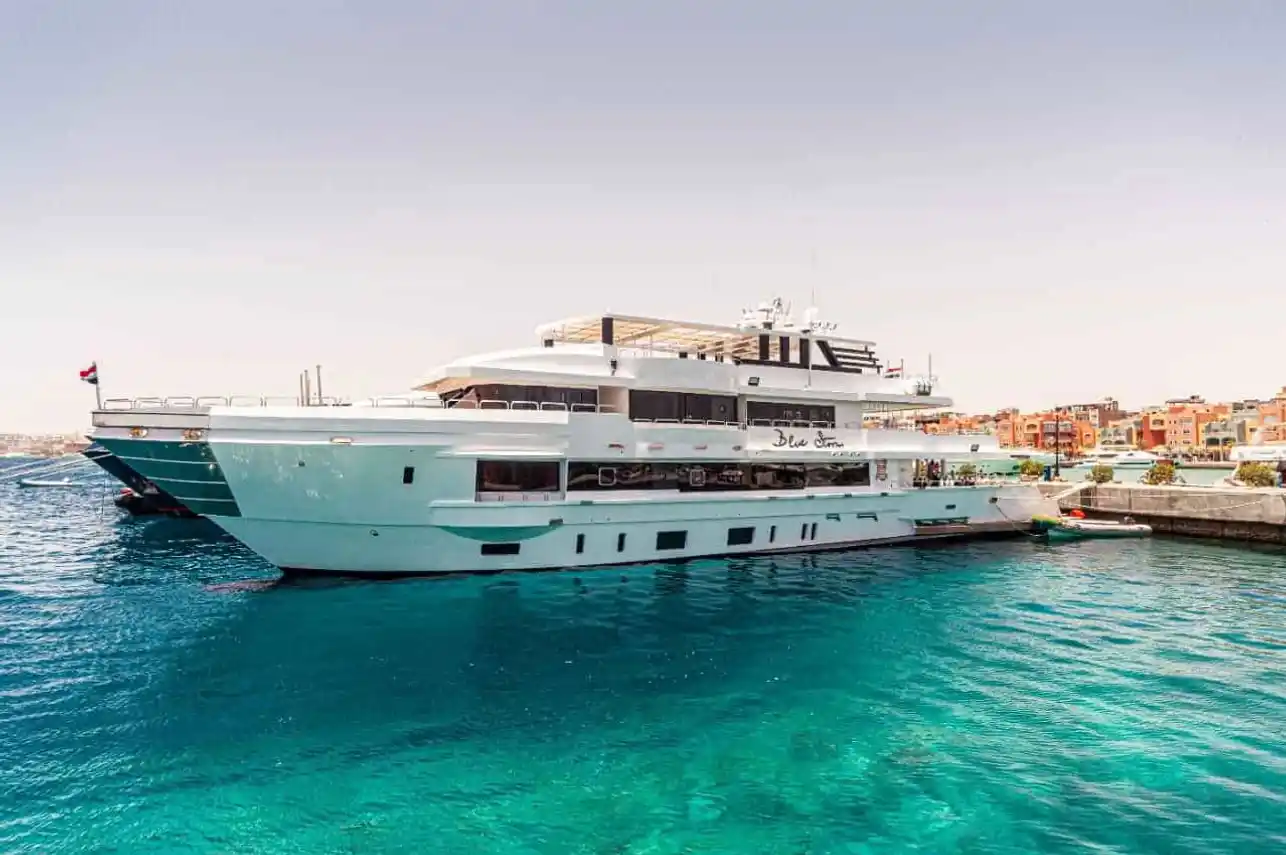
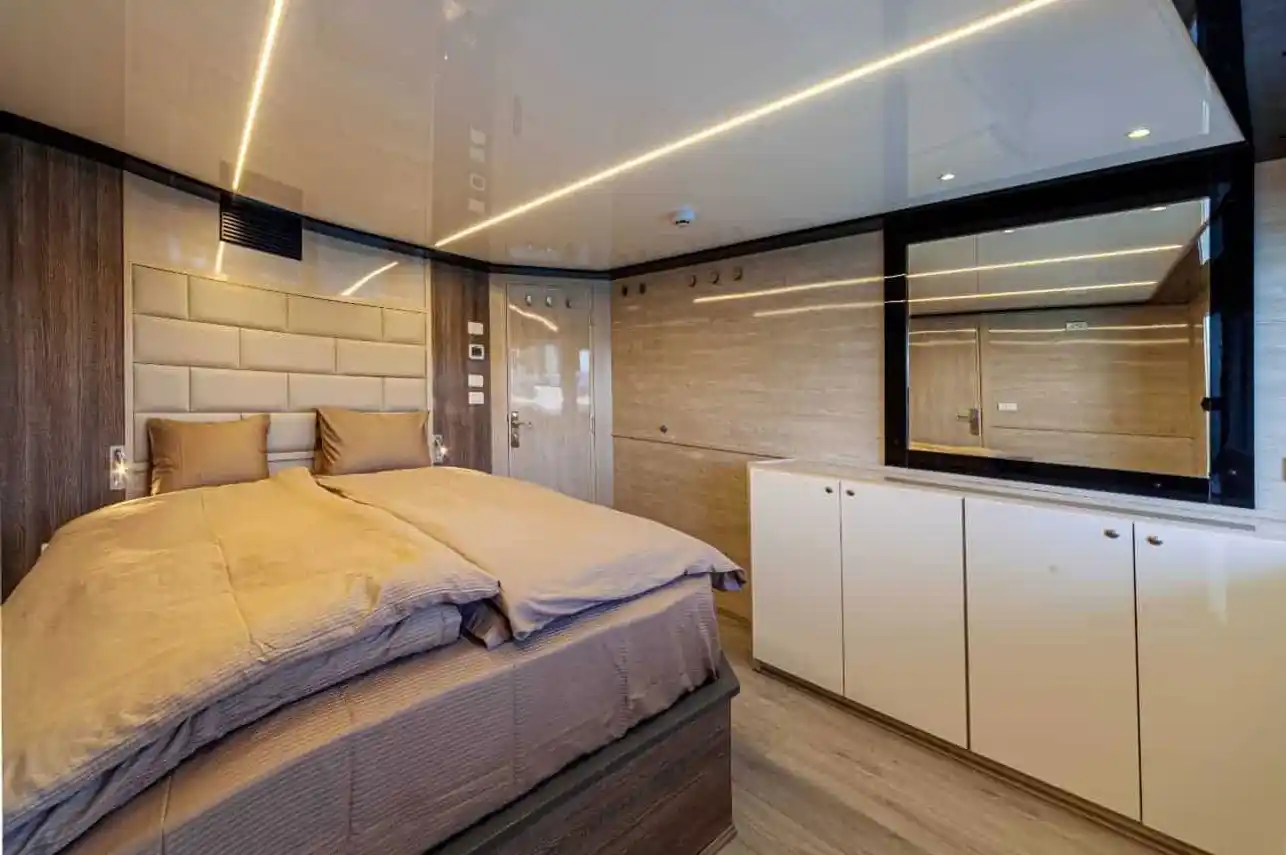
Blue Storm is a newer boat, built in 2020 and launched in 2021, a 40-metre liveaboard with 11 double cabins, all ensuite, all with air conditioning and private bathrooms, for up to 24 guests.
It runs 7-day trips out of Hurghada and Port Ghalib across the North & Wrecks, North & Tiran, Brothers, St. John's, and Daedalus & Elphinstone routes, 3 to 4 dives a day with free nitrox included. I haven't sailed it myself, but it comes up consistently as one of the newer, nicer boats in the Red Sea fleet.
Cabin
Best In-Cabin Comfort: Red Sea Aggressor II
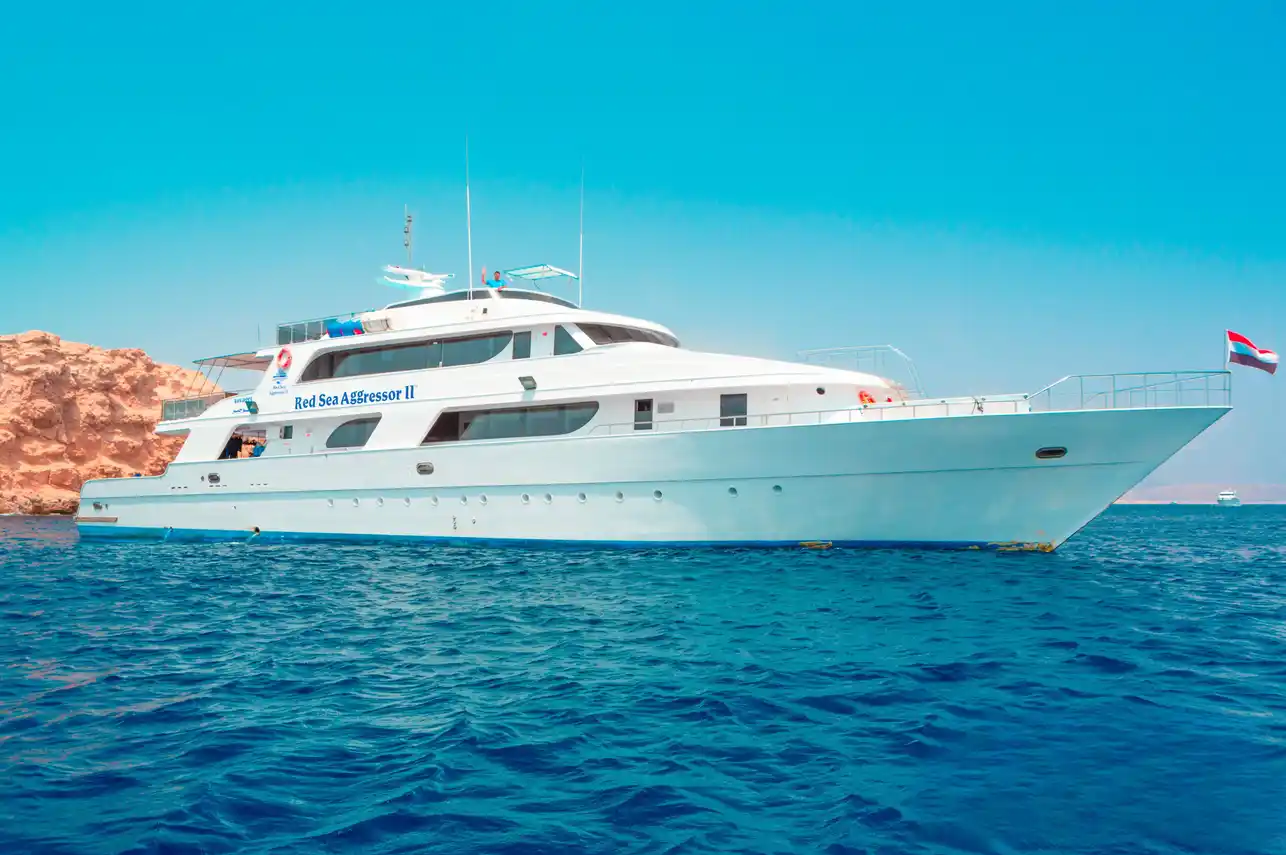
Red Sea Aggressor II is a 138-foot yacht with 11 cabins, two master staterooms with queen beds, eight deluxe staterooms with twin beds, and one queen suite, each with its own climate control and a 32" TV loaded with movies. The dive deck is set up with individual gear stations and two tenders for reaching sites.
It runs year-round, 7-night Saturday-to-Saturday trips out of El Foley Marina in Hurghada. I haven't sailed it myself, but the Aggressor name carries a strong reputation across the fleet, and this one keeps coming up as a solid, well-organized boat.
Cabin
Best for the Deep South: Red Sea Aggressor V
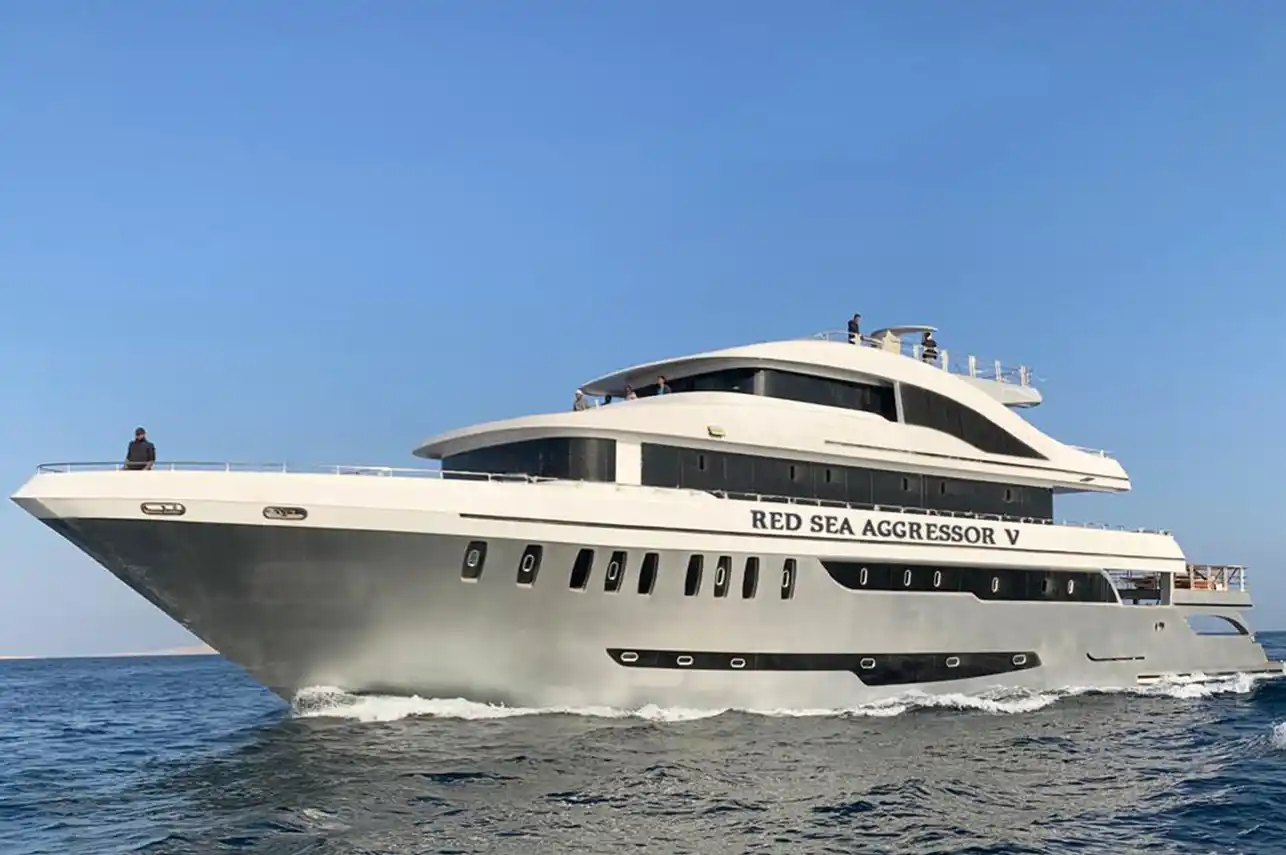
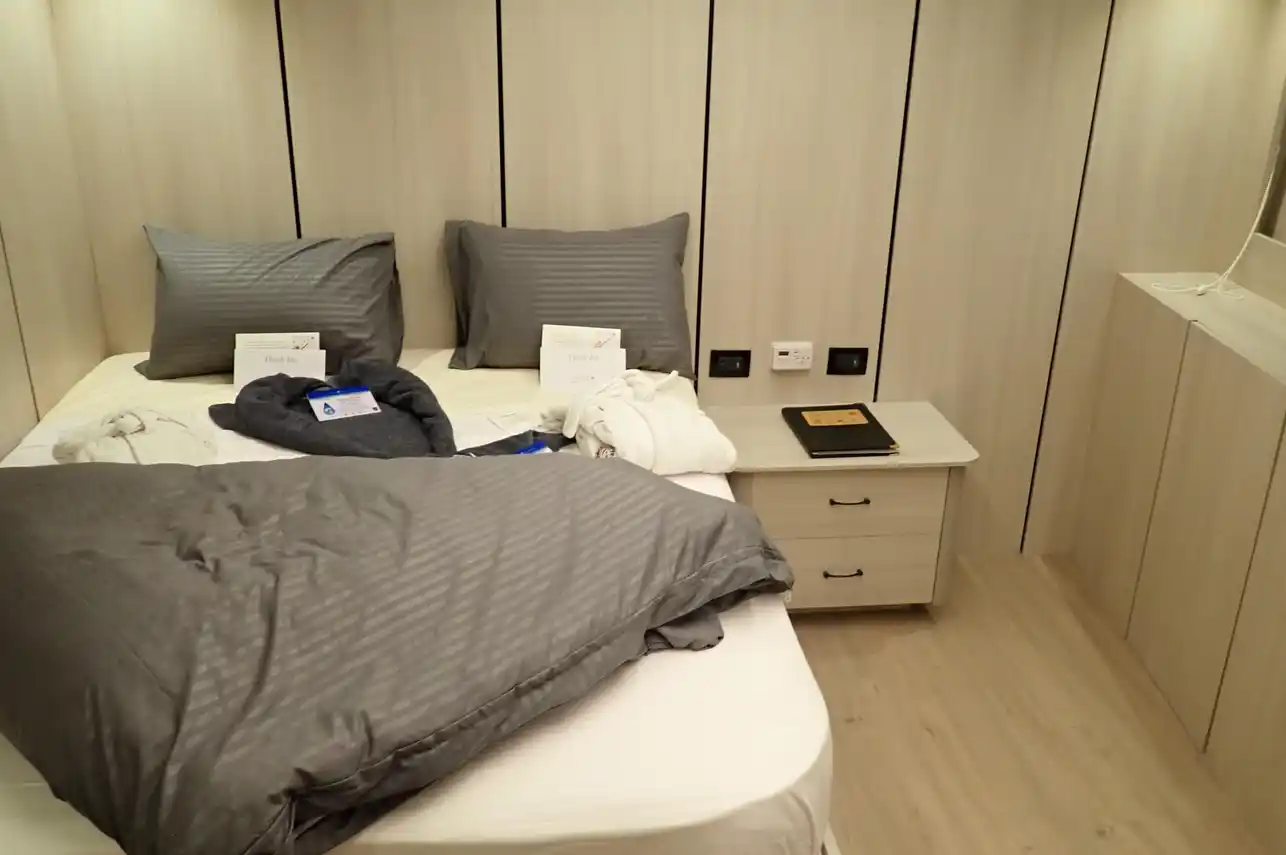
Red Sea Aggressor V runs the remote Deep South exclusively, Elba Reef, Rocky and Zabargad Islands, well past where most Red Sea liveaboards go. It's 4 master staterooms with queen beds and portholes, none of them next to the engine room, so the boat stays quiet at night.
I haven't sailed it myself, but reviews consistently single out the crew, professional, warm, and going out of their way for guests, as the best part of the trip.
Cabin
Regions
North vs. South Red Sea
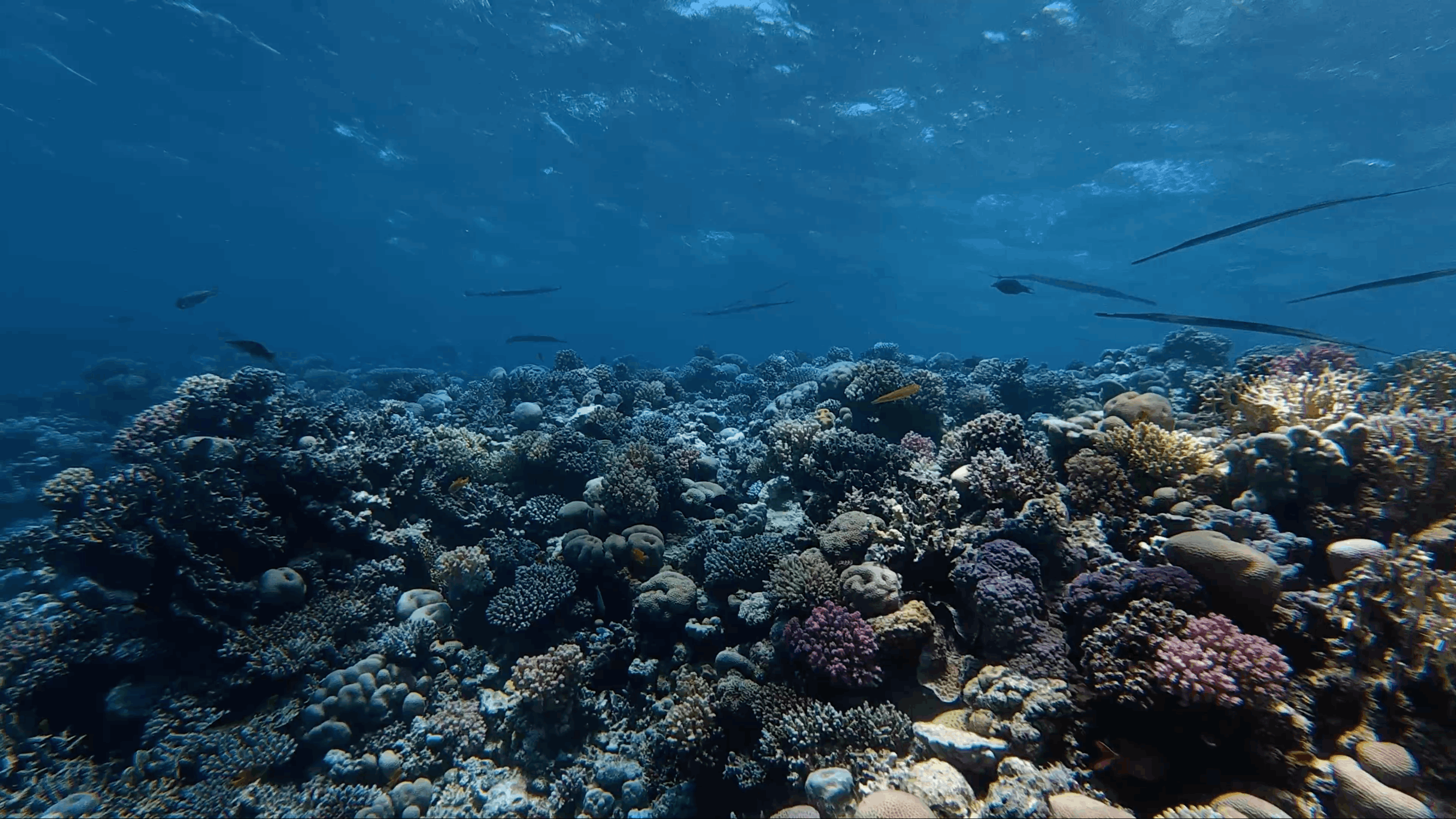
The Red Sea splits into two very different diving experiences depending on which direction you go from Hurghada or Sharm el-Sheikh.
The North is famous for wrecks and reef diving. The Thistlegorm is the centerpiece, but sites like Sha'ab Abu Nuhas and Ras Muhammad add coral reef variety. Currents are generally manageable and this region suits divers of most experience levels.
The South is for divers who want big animals at sites like Brothers Islands, Daedalus Reef, and Elphinstone.
Here you have a high chance of diving with oceanic whitetip sharks, hammerheads, and thresher sharks. The diving is more exposed and currents can be strong so an advanced and deep diving certification is needed.
Most liveaboards specialize in one region or the other, however, the All Star Scuba Scene runs both.
Dive Sites You'll Visit
Here's what to expect at the specific sites that come up again and again across these itineraries. Most of these I've dived myself and pulled straight from my dive logs. A few of the most famous ones I haven't gotten to yet, and I'll say so plainly where that's the case.
North
SS Thistlegorm
The centerpiece of most northern itineraries, a WWII British cargo wreck loaded with motorcycles, trucks, and rail cars.
Jackfish Alley
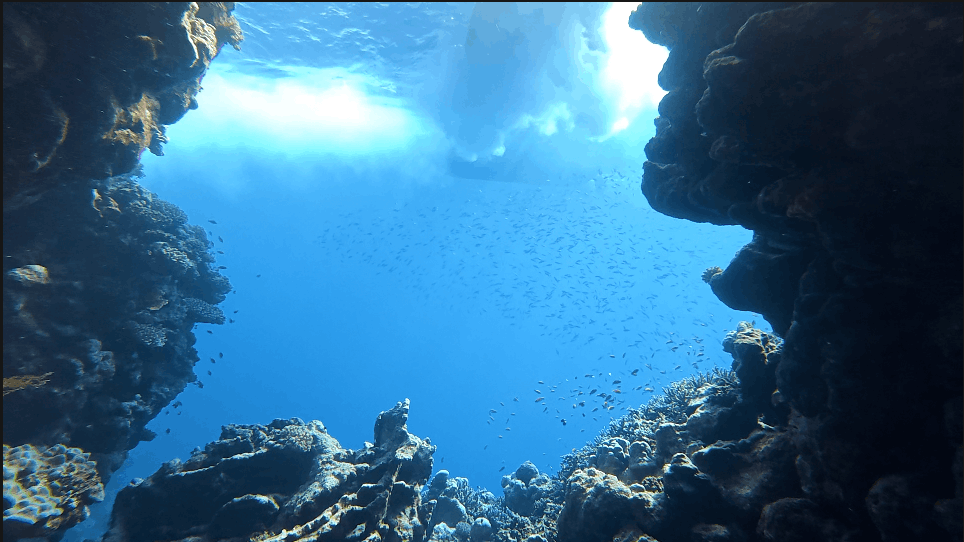
Max Depth: 84 ft (26 m) · Visibility: 100 ft (30 m) · Water Temp: 77°F / 25°C
Jackfish Alley is a porous wall with two penetrable caves, each with its own entrance and exit, backed by a coral garden descending from 33 to 59 ft (10.1-18 m). I saw schools of reef fish, pufferfish, moray eels, and jackfish here, with the outer dropoff pulling in larger animals on stronger current days.
Shark & Yolanda Reef
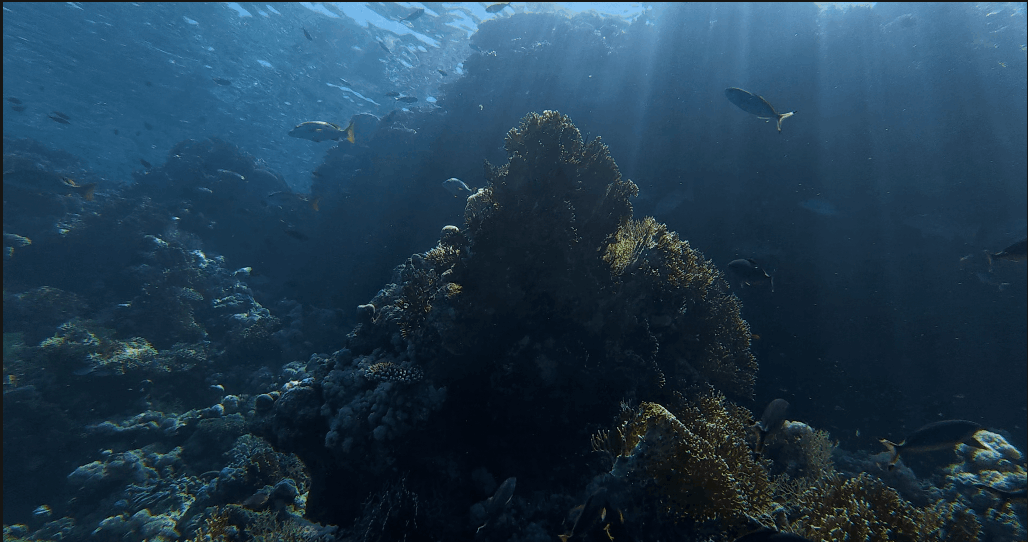
Shark & Yolanda Reef, inside Ras Muhammad National Park, combines a drift dive, a pristine reef wall dropping over 800 meters (2625 ft), and the wreck of the Yolanda resting on a shallow plateau. I saw turtles, large barracuda, blue-spotted stingray, and batfish schools. It's easily one of the best reef dives I've done anywhere. Advanced Open Water is now required to protect the site.
Umm Gamar

Max Depth: 85 ft (26 m) · Visibility: 100 ft (30 m) · Water Temp: 77°F / 25°C
Umm Gamar is a horseshoe-shaped reef about 10 miles (16 km) offshore from Hurghada, with a dramatic outer wall past 100 ft (30 m) and a shallow coral plateau around 20 to 30 ft (6.1 to 9.1 m). One of the clearest reefs I've dived, with clownfish, Napoleon wrasse, turtles, and moray eels throughout.
Gubal Island
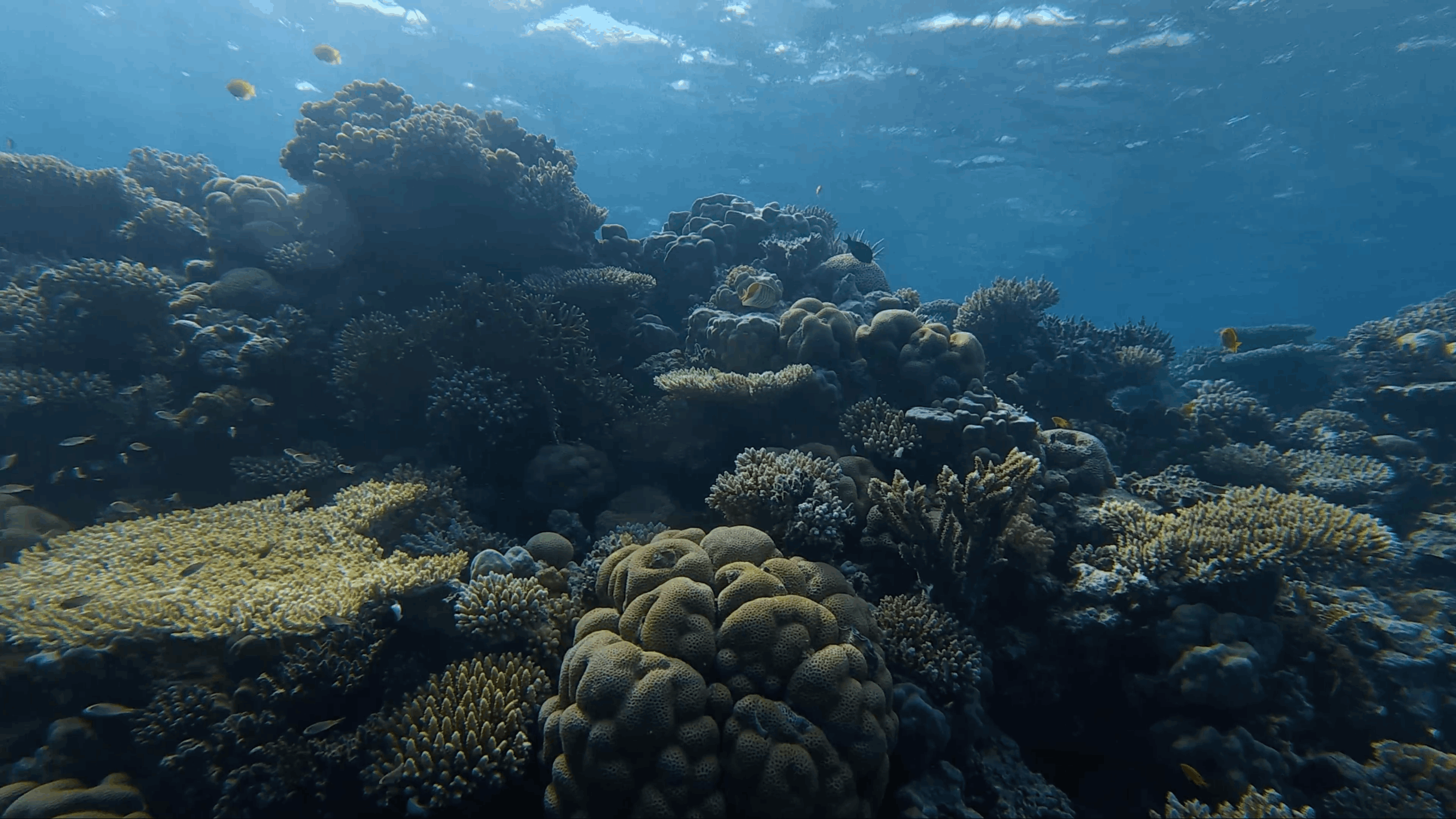
Max Depth: 44 ft (13 m) · Visibility: 100 ft (30 m) · Water Temp: 75°F / 24°C
Gubal Island packs several distinct areas into one site, including Shark Point for reef shark sightings, Gubal Garden's shallow dense coral, and a shallow barge wreck covered in life.
Dolphin House (Shaab El Erg)
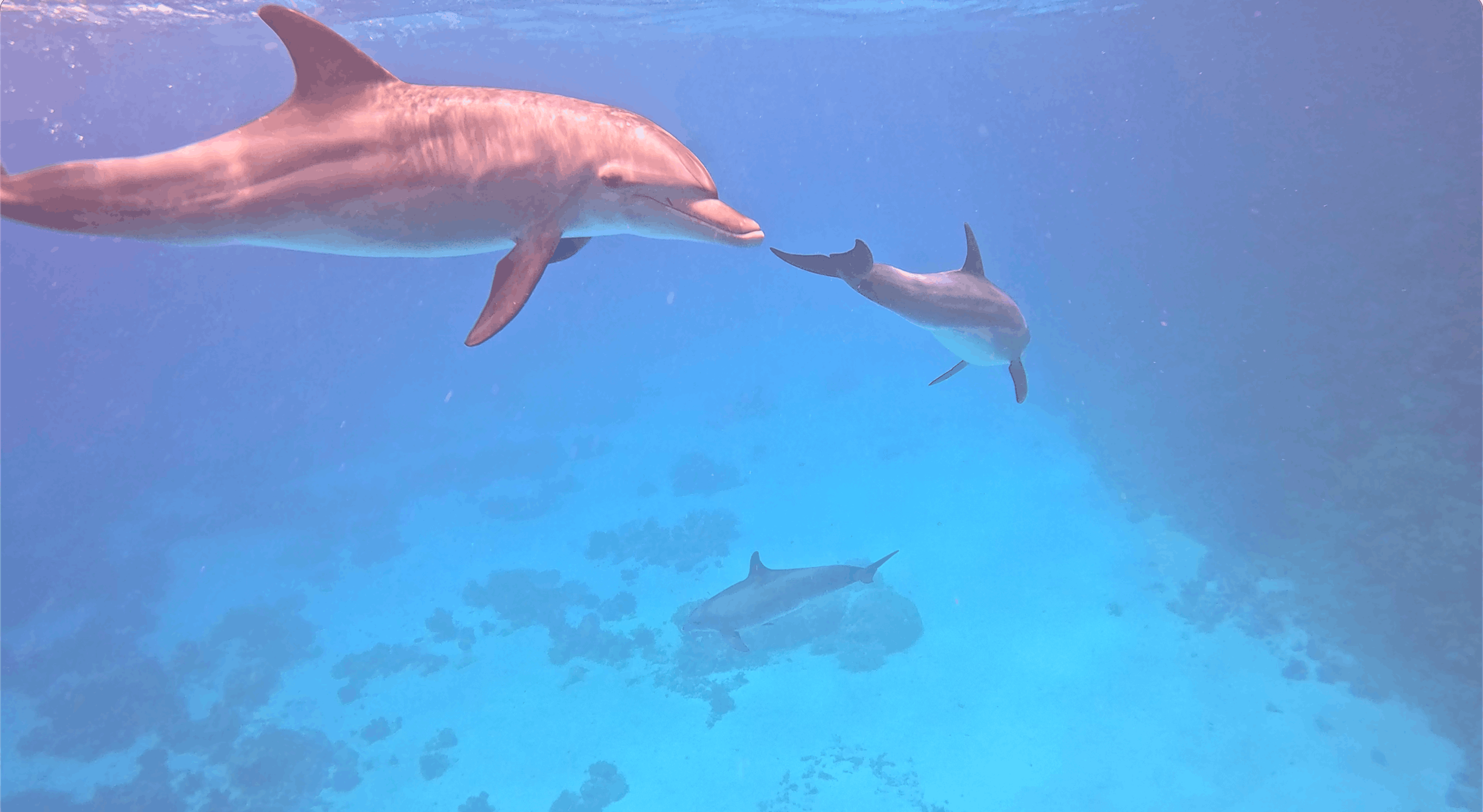
Max Depth: 49 ft (15 m) · Visibility: 100 ft (30 m) · Water Temp: 75°F / 24°C
Dolphin House is named for its resident pod of wild bottlenose dolphins, not guaranteed but this is one of the most reliable places in Egypt to see them in the water. David Attenborough and the BBC once reserved the site for two weeks to film them.
Gota Abu Ramada
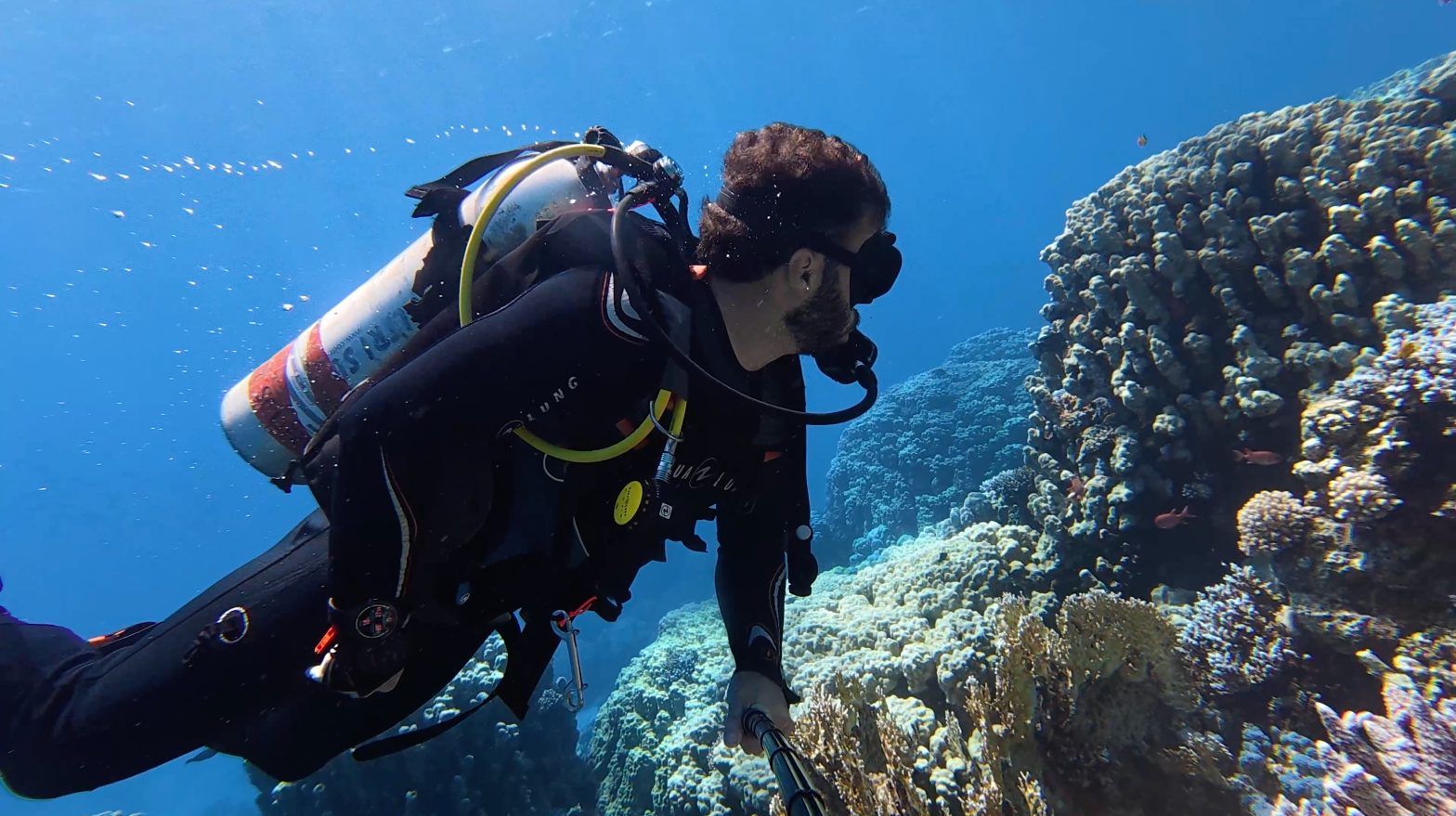
Max Depth: 38 ft (12 m) · Visibility: Excellent · Water Temp: 75°F / 24°C
Gota Abu Ramada earns its nickname, "The Aquarium," from divers and guides for good reason, coral mounds rising from a sandy bottom, clouds of anthias, and moray eels tucked into the reef. Some of the most beautiful coral gardens I've seen anywhere.
Siyul Island
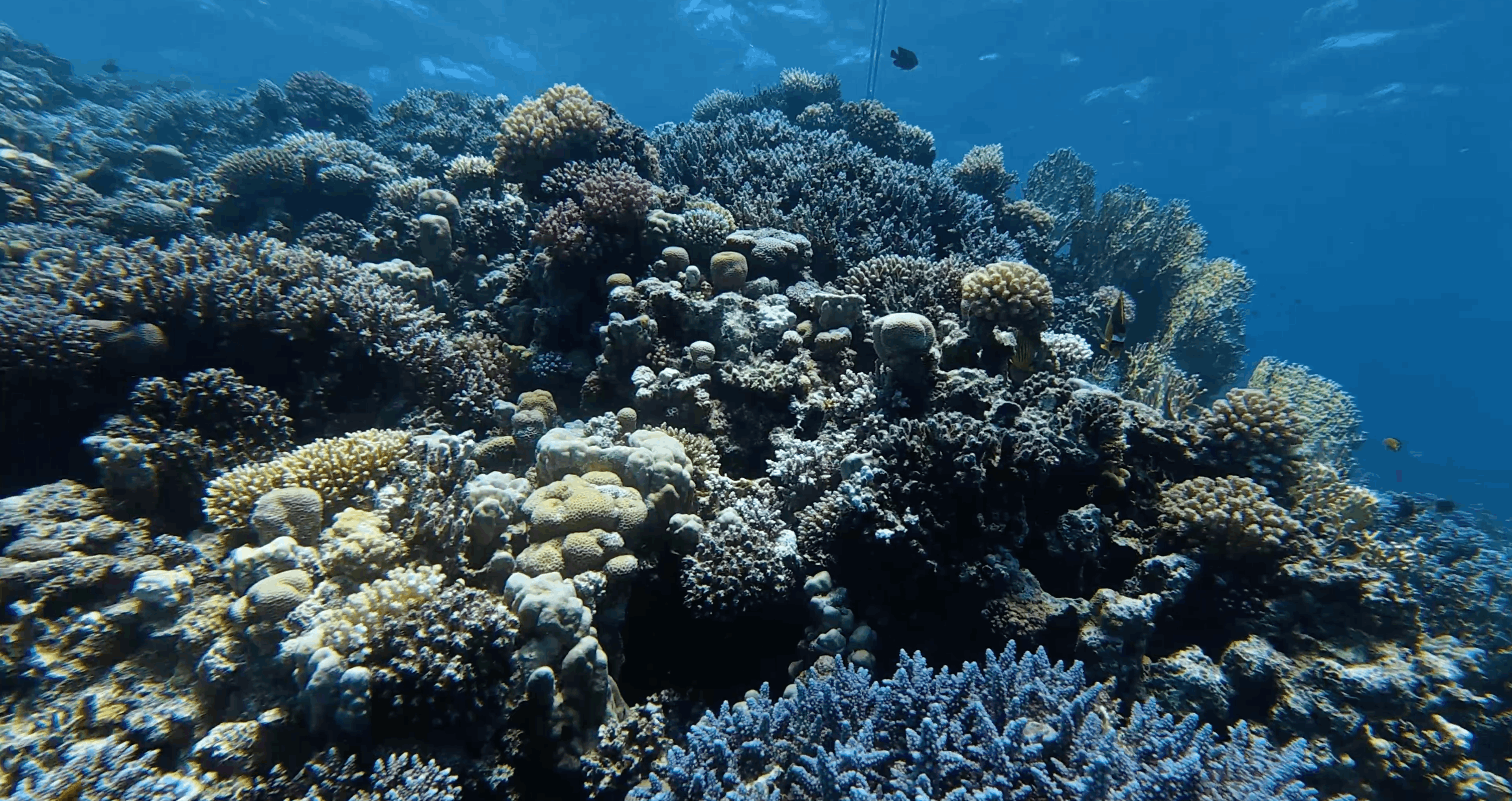
Max Depth: 81 ft (25 m) · Visibility: 100 ft (30 m) · Water Temp: 75°F / 24°C
Siyul Island has coral gardens and reef walls on the north side, in the Gubal Strait about 30 to 60 minutes by boat from Hurghada. I saw fusiliers, parrotfish grazing on coral, emperor angelfish, and anemonefish pairs sheltering in their anemones.
A few more that come up constantly on northern itineraries. I haven't personally dived these yet, but here's what to expect based on how divers and guides consistently describe them.
Abu Nuhas Wrecks
Abu Nuhas is a single reef that's claimed more ships than any other in the Red Sea, and it's usually the busiest wreck stop on a North itinerary. Four wrecks sit on it: the Giannis D (stern around 24m/79ft, engine room near 13m/43ft), the Carnatic (22m/72ft, one of the oldest wrecks in the Red Sea, sunk in 1869), the Chrisoula K (bow in just 3m/10ft of water, stern down at 26m/85ft), and the Kimon M (32m/105ft at the stern). Divers often just call it "Ghost Reef" for how many ships it's taken down.
SS Dunraven
The Dunraven lies capsized near Beacon Rock at Sha'ab Mahmoud, broken into two sections between about 15 and 30m (49-98ft). It's shallow enough to be accessible to less experienced divers, and it's one of the Red Sea's classic wrecks, the subject of a 1979 BBC documentary after its rediscovery in 1977.
SS Rosalie Moller
The Rosalie Moller sits near Abu Nuhas at around 50-55m (164-180ft), a technical-level wreck for advanced and tech-certified divers. It was sunk by the same German bombing run that hit the Thistlegorm, just two days later, and divers who've done it describe low visibility from silt, usually 10-20m (33-66ft).
South
Big Brother Island
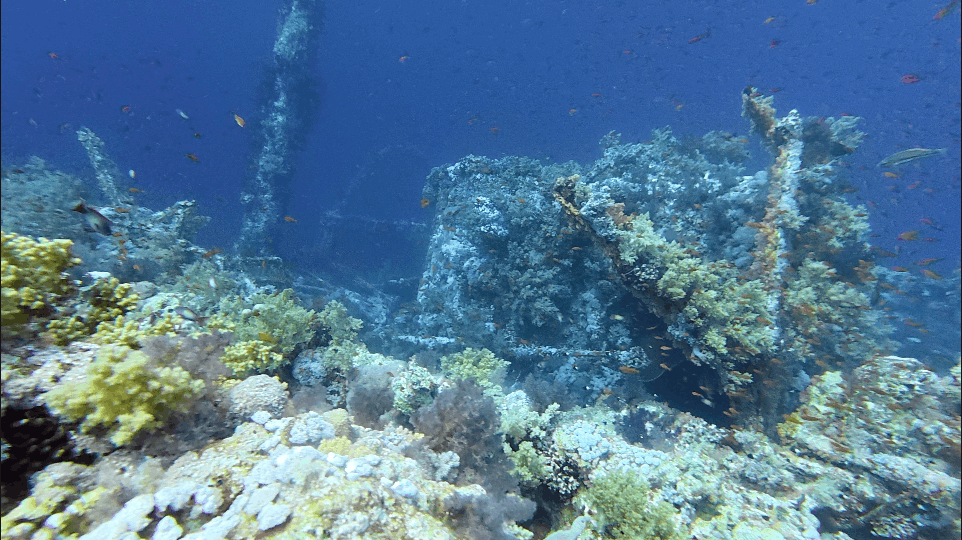
Max Depth: 108 ft (33 m) · Visibility: 80 ft (24 m) · Water Temp: 75°F / 24°C
Big Brother Island is a dramatic reef wall hosting two historic wrecks, the Numidia and the Aida, beneath a Victorian-era lighthouse. World-class shark encounters here, grey reef, oceanic whitetip, hammerhead, and thresher sharks all possible on the same wall.
Small Brother Island
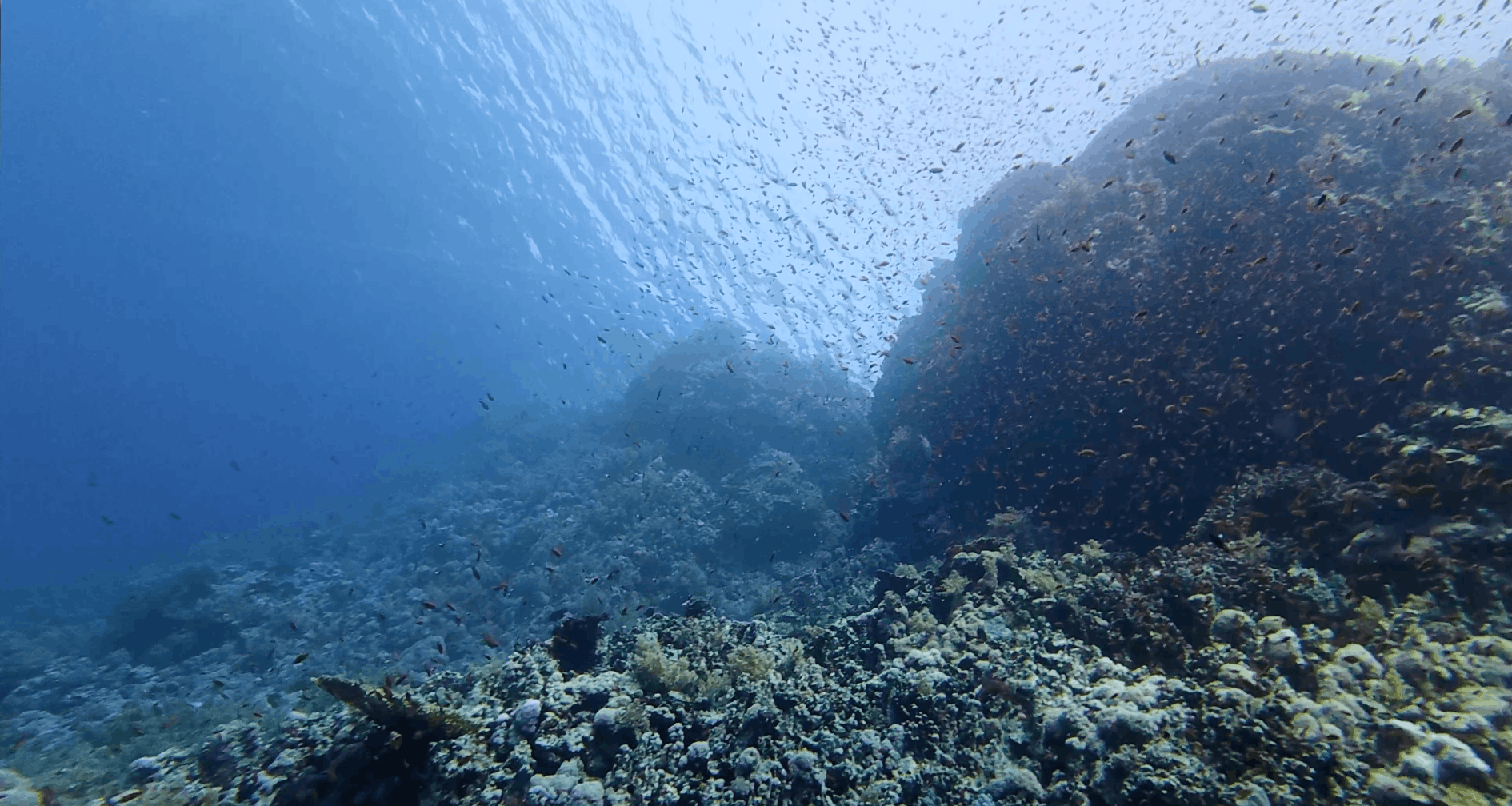
Max Depth: 113 ft (34 m) · Visibility: 80 ft (24 m) · Water Temp: 75°F / 24°C
Small Brother Island offers wall diving on both sides with a cleaning station pelagics typically visit. The site has a reputation for silky, thresher, grey reef, and hammerhead sharks, though I didn't see any on my dive, anthias clouding the walls instead. Requires liveaboard access and a minimum 50 logged dives.
Same story heading south. These are staples of any Brothers, Daedalus, and Elphinstone-style itinerary that I haven't personally dived yet.
Elphinstone Reef
Off Marsa Alam, Elphinstone is one of the most talked-about sites in the entire Red Sea, with walls dropping to around 70m (230ft). Divers go for oceanic whitetip sharks, most reliable October through December, and hammerheads reported off the north point at depth.
Daedalus Reef (Abu Kizan)
A remote reef marked by a lighthouse first built in 1863 and rebuilt in 1931, reachable only by liveaboard. The wall drops from around 30-40m before falling further, and hammerheads are commonly reported around 40m (130ft) off the north tip.
Zabargad Island
Near the Sudanese border, Zabargad's wall runs to about 15m before sloping down to 30m and dropping off into blue water. Divers commonly report turtles and moray eels here, plus a sunken Russian vessel resting at 24-25m (79-82ft).
St. John's Reef
A cluster of reefs in the far south, known for shallow, sunlit caverns and swim-throughs, often under 8-10m, alongside deeper reef ledges like Habili Gaffar running 20-35m (66-115ft).
Red Sea Diving Season
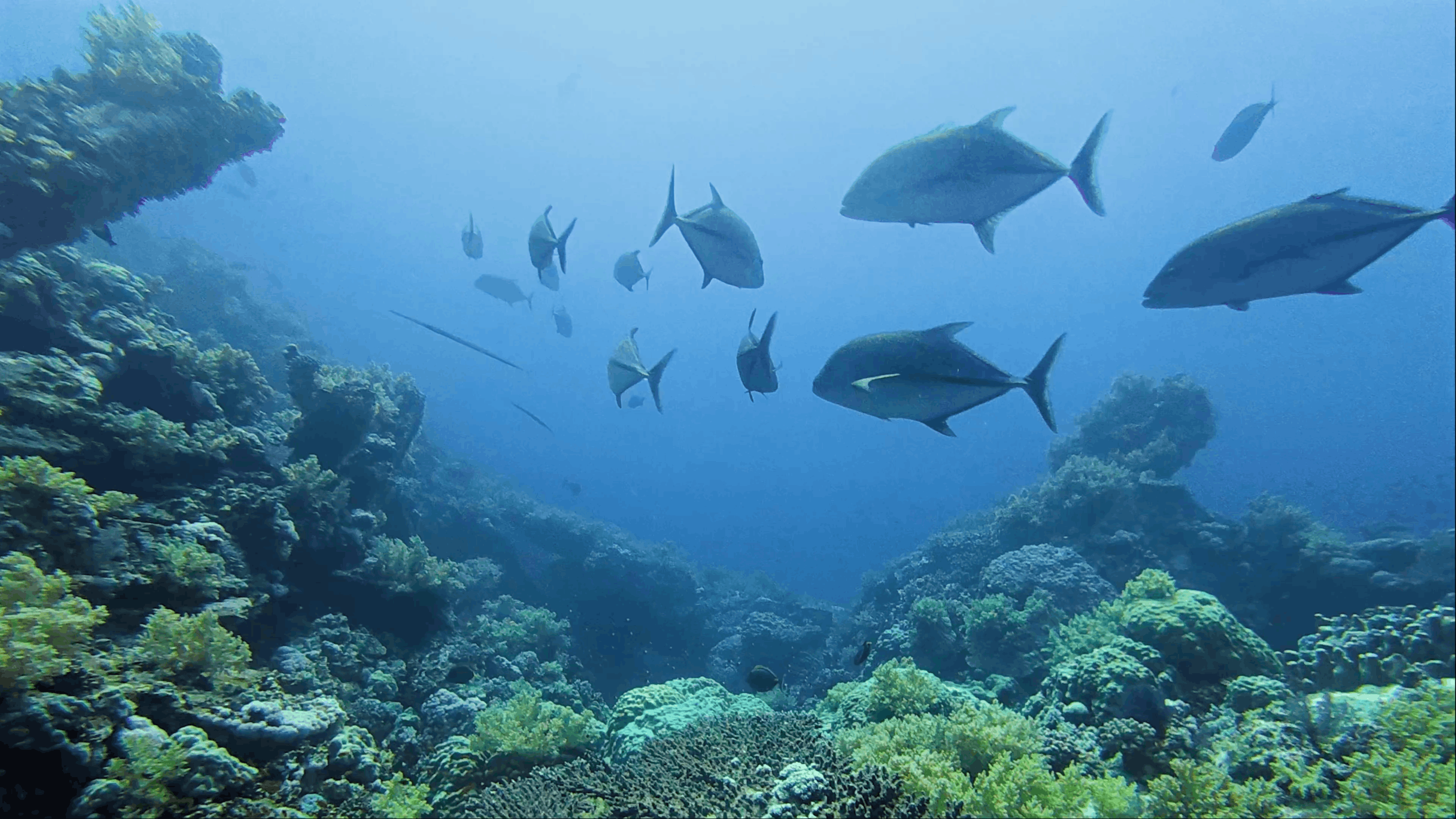
The Red Sea is diveable year-round.
October to May is when I went, and is the most popular window. Air and water temps are comfortable, visibility is strong, and most liveaboards run full itineraries. Water temps sit around 22-26°C (72-79°F). A 3mm wetsuit is usually enough.
June to September is summer. Air temps push above 40°C on the surface. Water temps climb to 28-30°C (82-86°F) and a short wetsuit is more than enough. This is the best time to see hammerheads and threshers at the southern sites.
December to February brings cooler water and occasional rougher conditions on exposed southern sites. Still very diveable, and liveaboard prices tend to drop.
What to Expect on a Red Sea Liveaboard
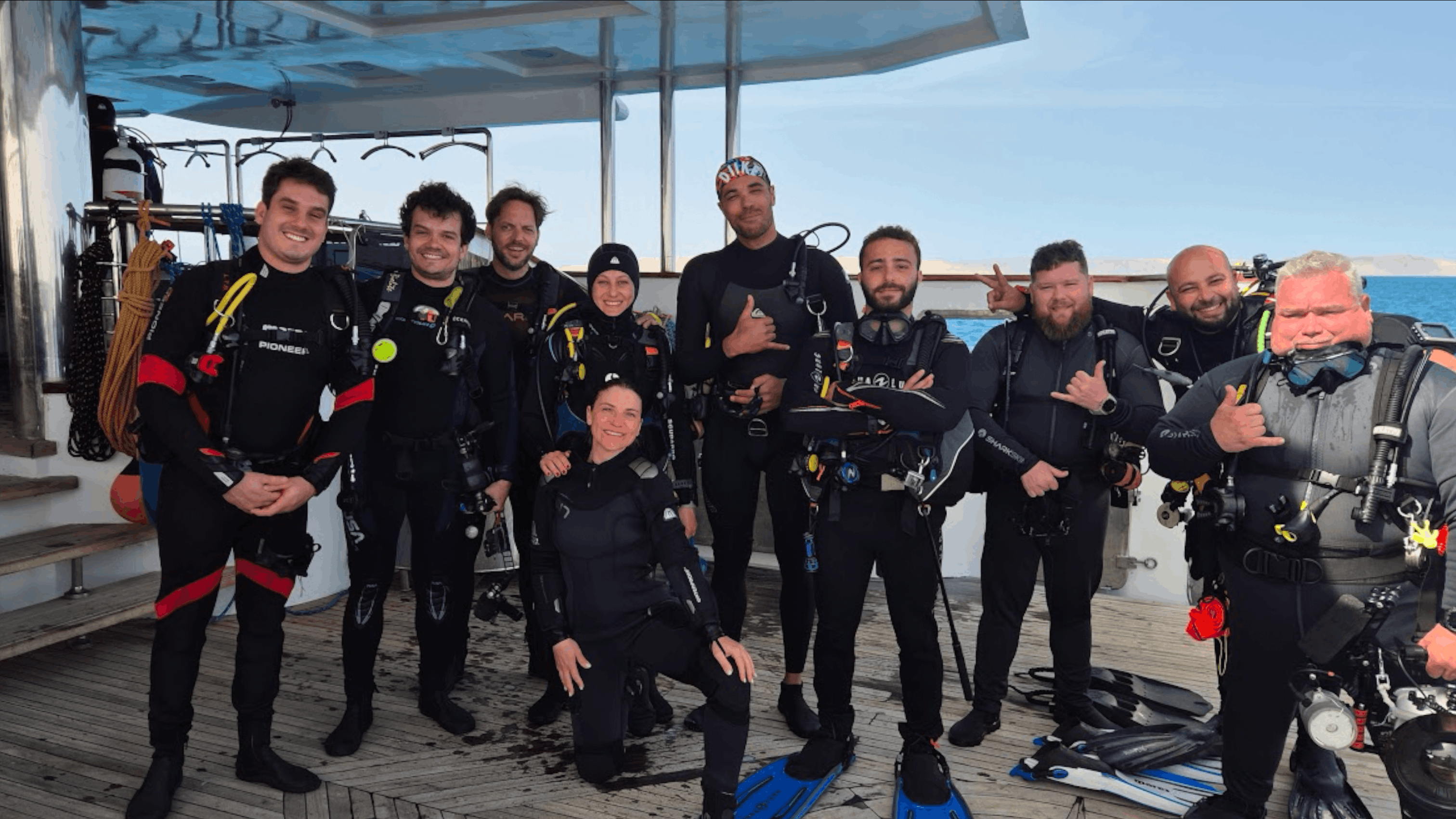
Most Red Sea liveaboards run 7-night itineraries departing Friday or Saturday from Hurghada or Sharm el-Sheikh.
You'll do between 3 and 4 dives per day, including night dives.
A typical day runs: early morning dive before breakfast, second dive mid-morning, surface interval and lunch, afternoon dive, late afternoon dive, dinner, night dive. By day four most divers are exhausted in the best possible way.
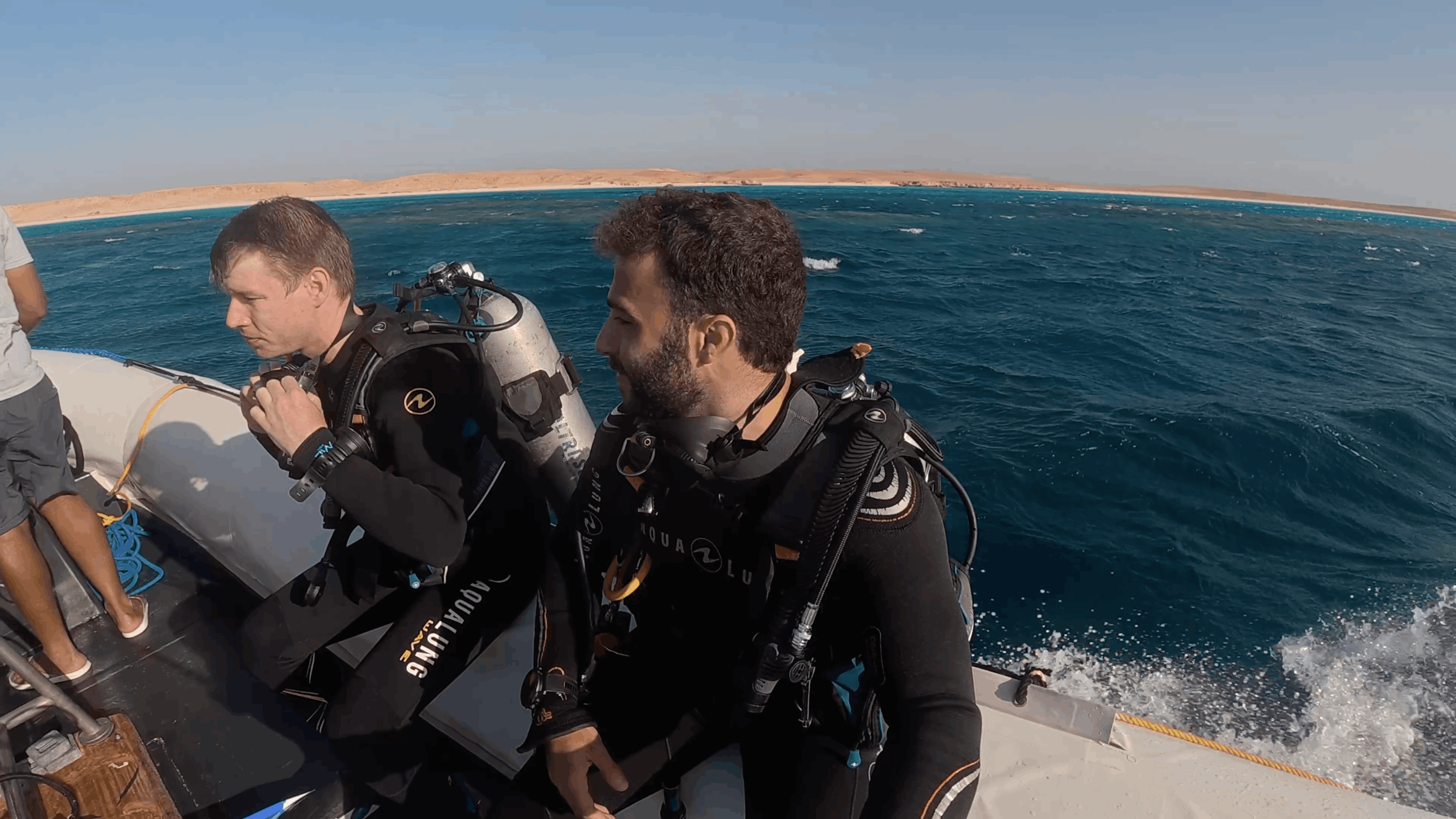
Dive guides lead each dive and brief the group on what to expect at each site.
Meals
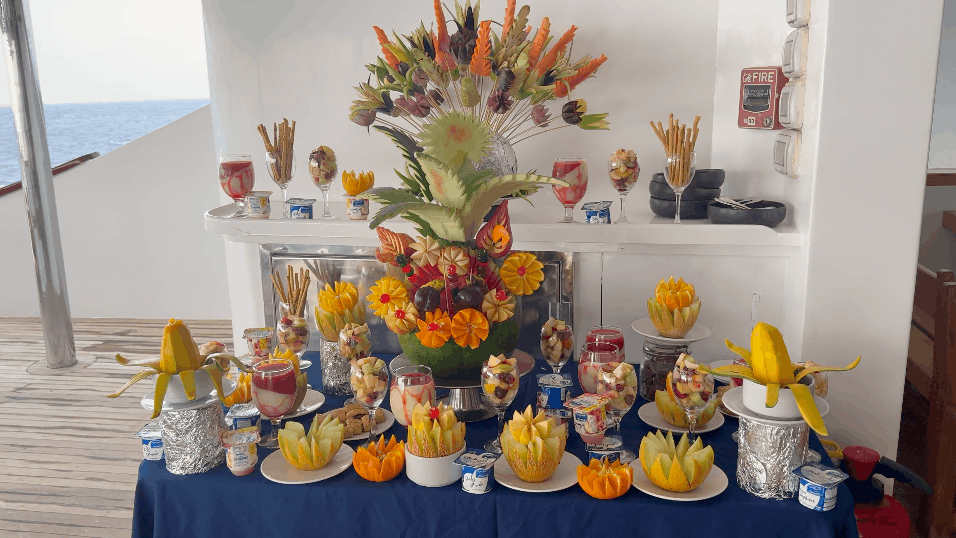
All meals are included in the trip price.
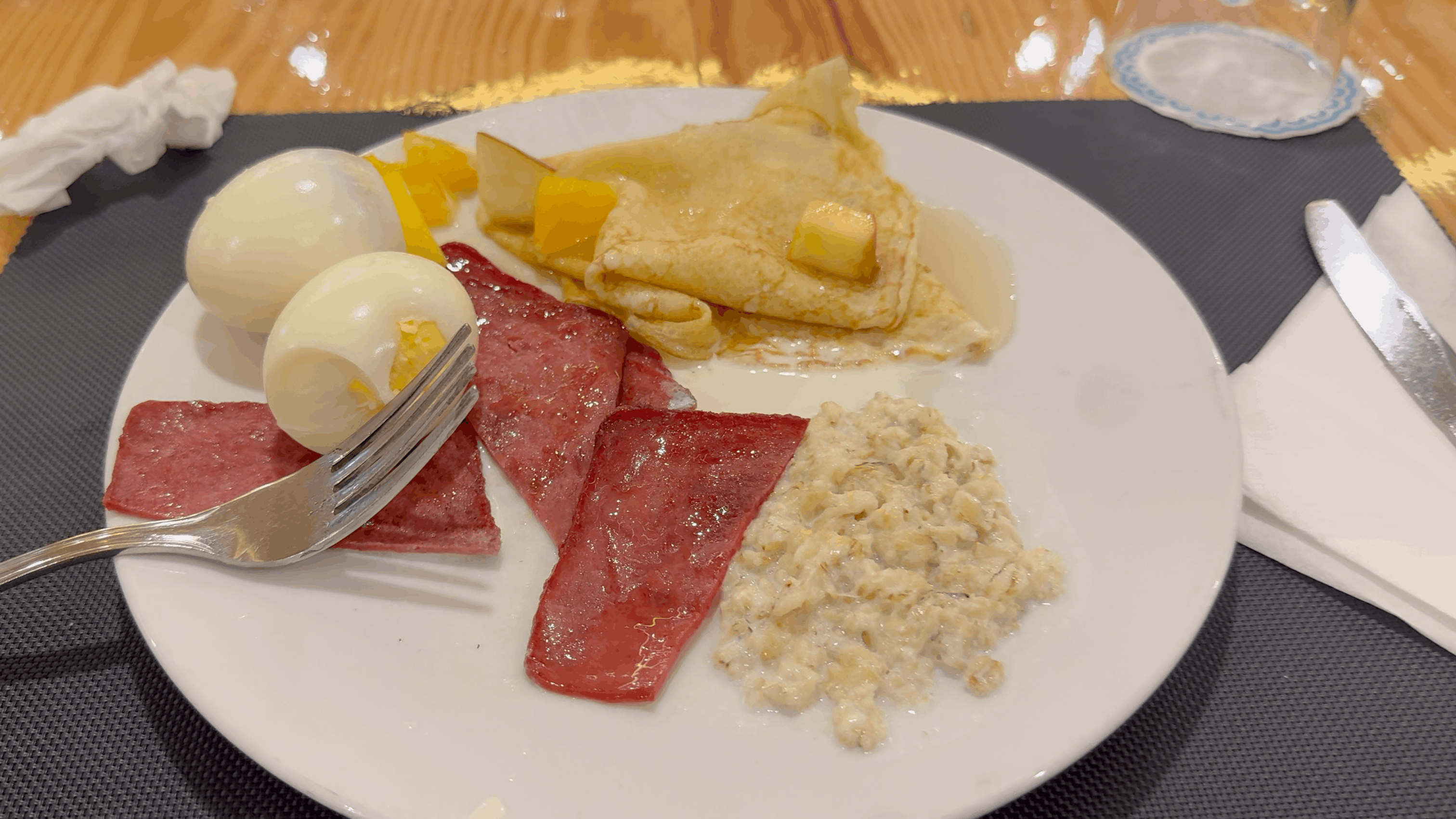
Expect a buffet breakfast and lunch, a plated dinner, and snacks and drinks (tea, coffee, soft drinks, water) available throughout the day between dives.
Most boats can handle dietary restrictions if you flag them when booking.
Alcohol usually isn't included, and some boats don't serve it at all, so check with the specific operator if that matters to you.
Tips & Gratuity
Tipping the crew is standard practice on Red Sea liveaboards and isn't included in the trip price.
Most operators expect somewhere in the range of $10-15 per guest per day, so budget around $100-150 for a 7-night trip.
Bring cash in USD or EUR since card payment usually isn't an option onboard, and most boats collect tips as a shared pool for the crew rather than tipping individuals directly.
Let's Dive Together
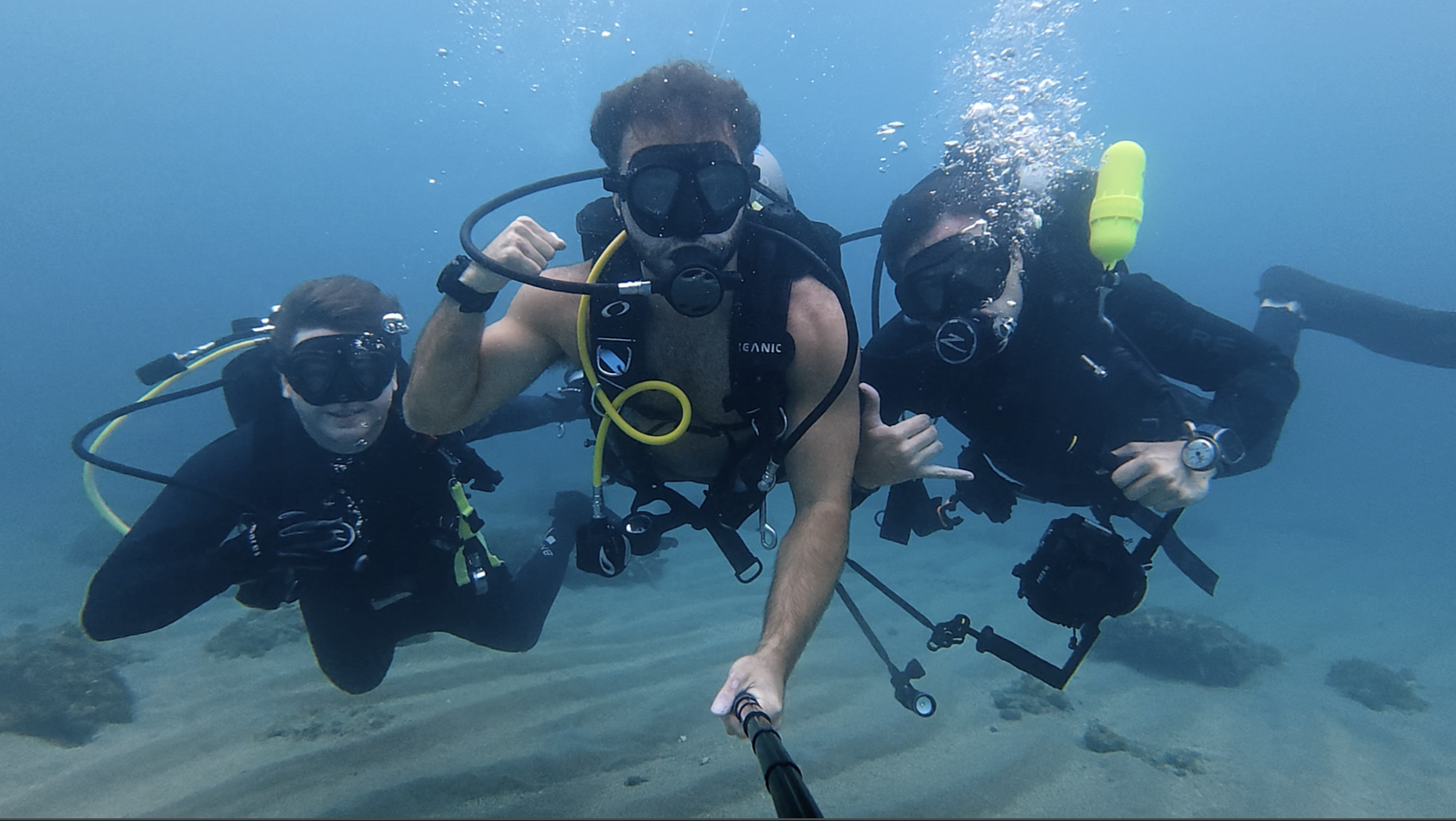
👋 It's Divemaster Austin
I'm inviting you to Dive Club, my global scuba diving community.
What you’ll find inside:
🤿 Dive meetups & group trips
🌍 Top dive sites shared by community members
⚙️ Gear tips & technique discussions
🤝 Diver's who’ve already linked up IRL
See you there!

.webp)
.webp)