

.webp)
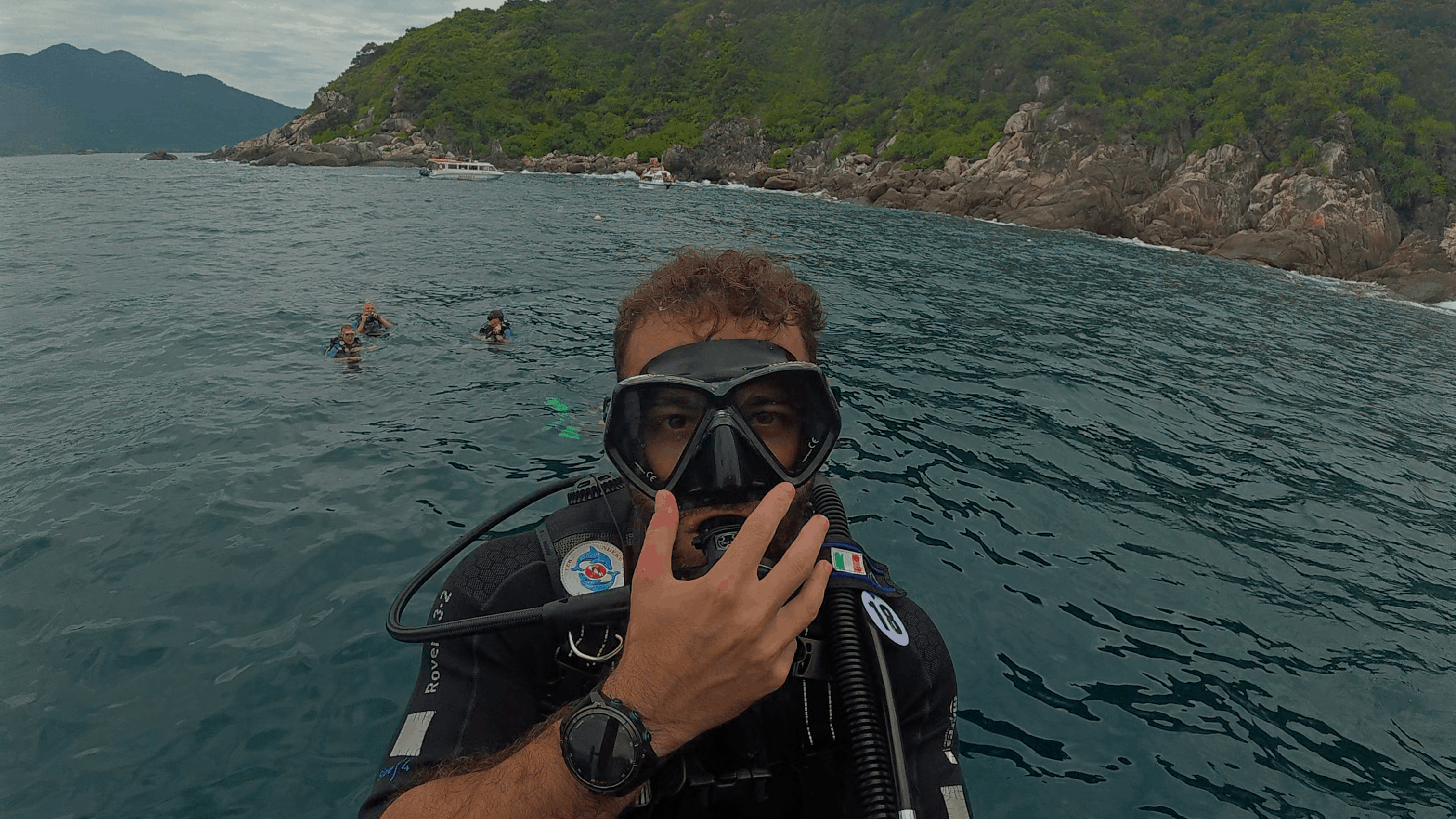
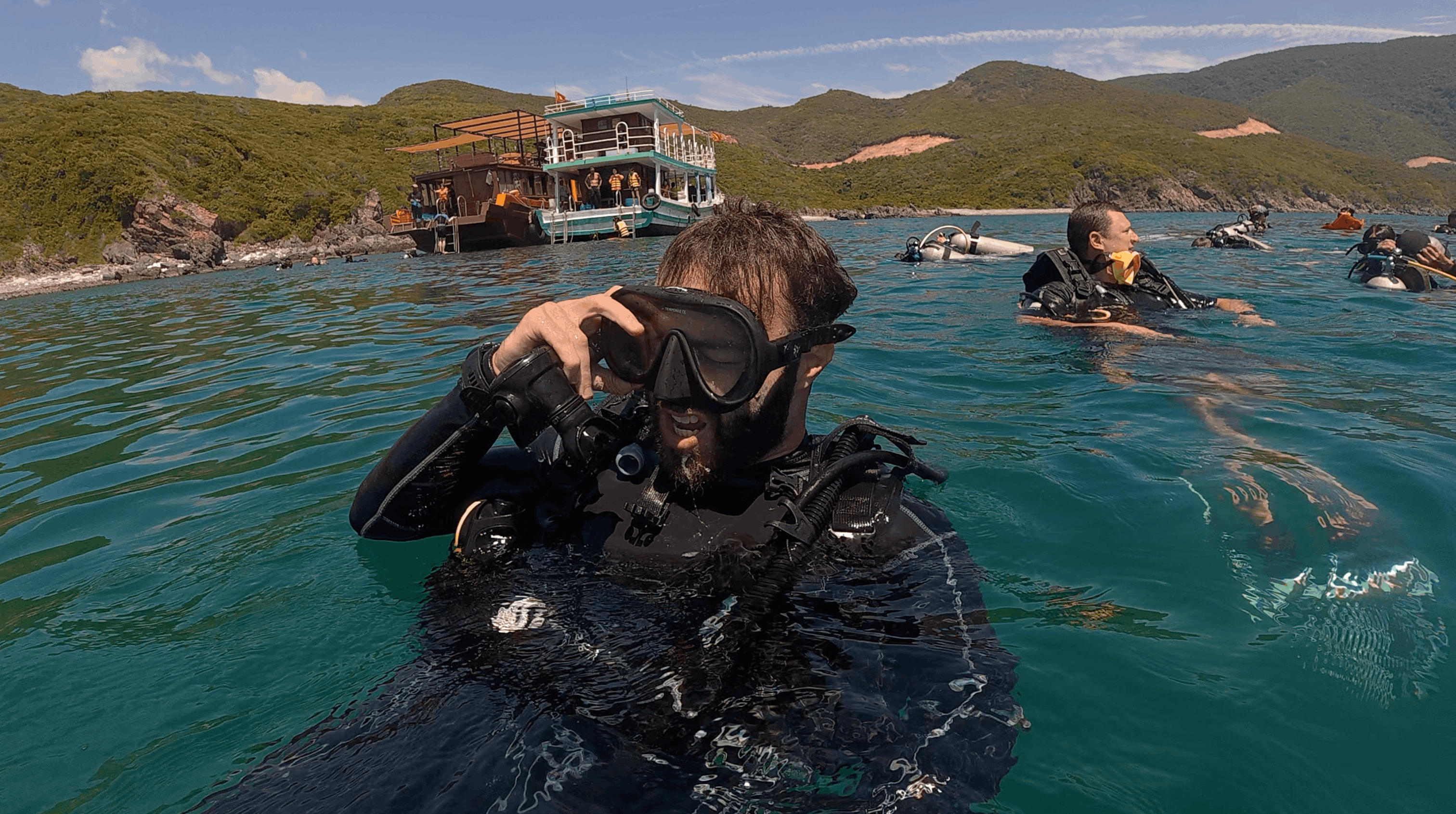
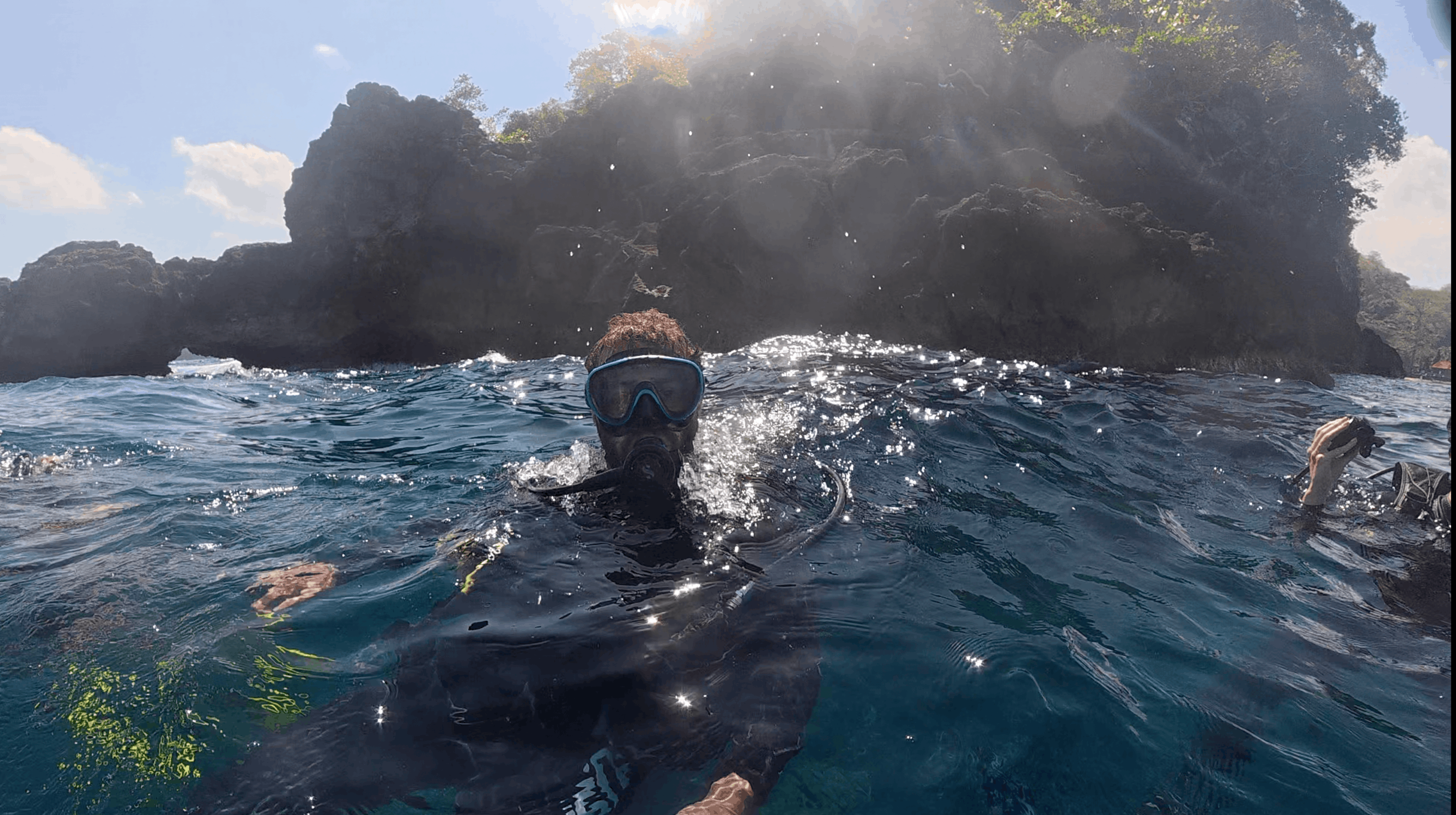
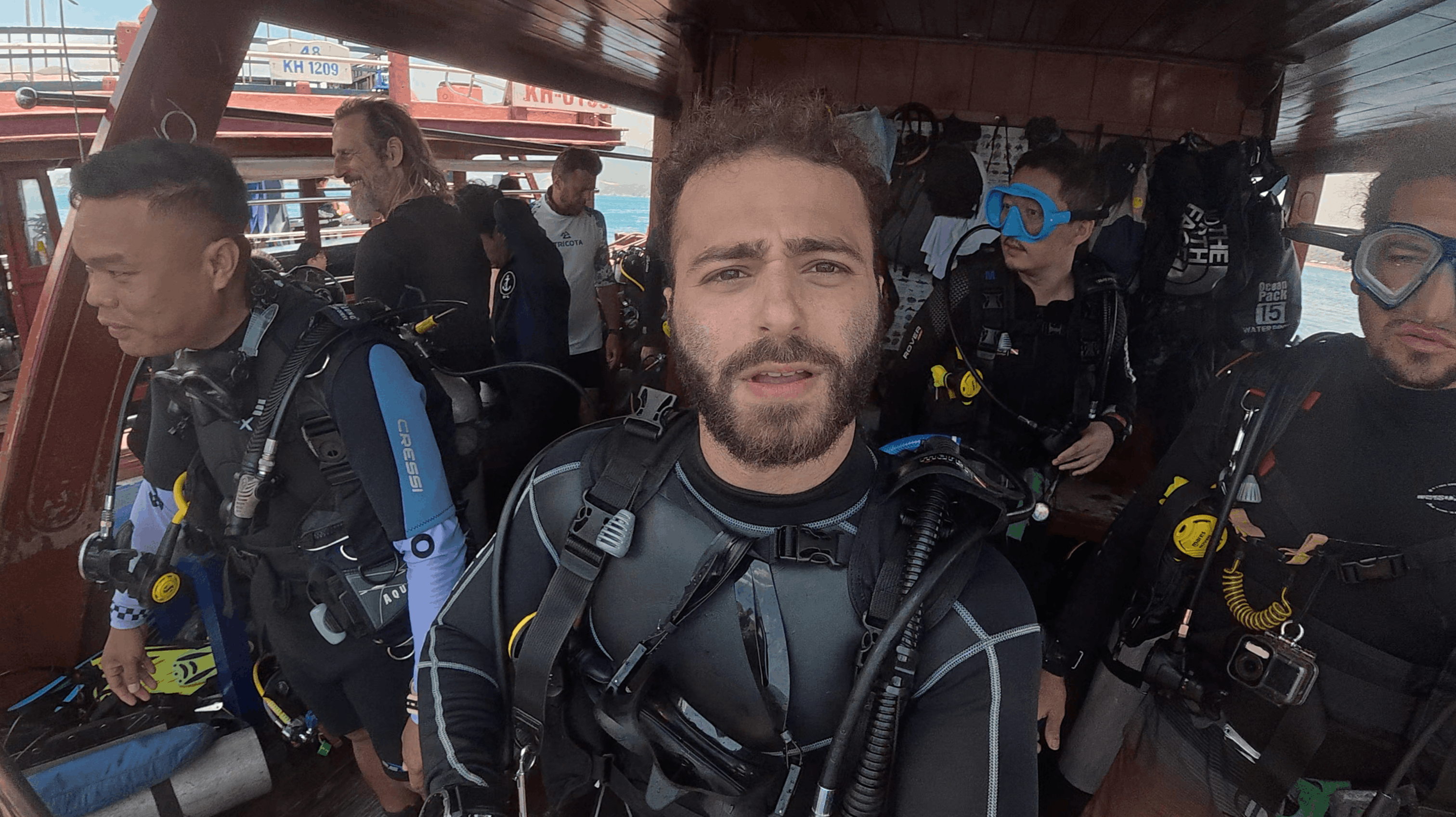
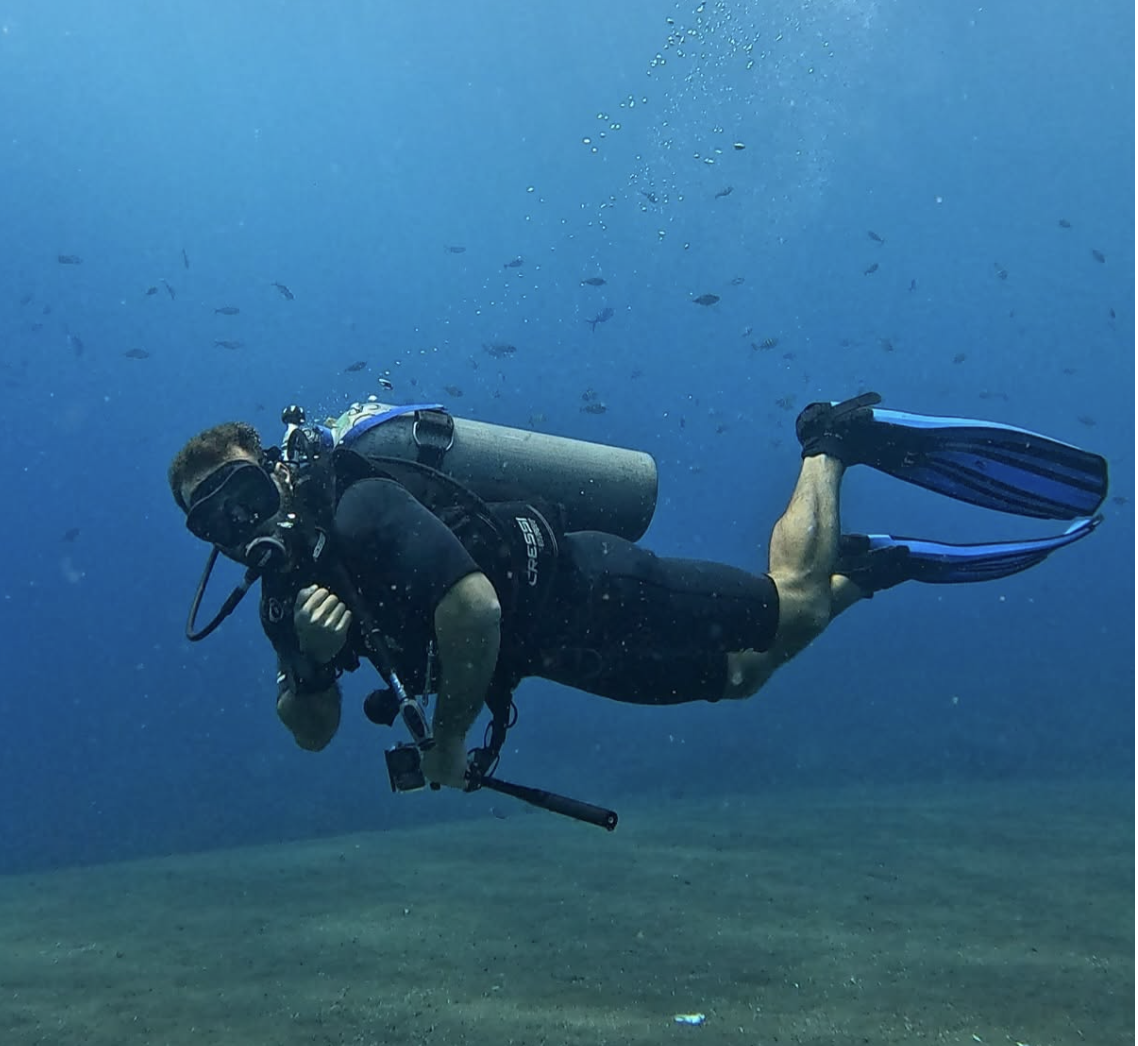
In August 2026 I dove three sites across two regions of Vietnam, Nha Trang in the south and the Cham Islands off Hoi An.
Vietnam is not a coral reef destination the way Indonesia or the Philippines are.
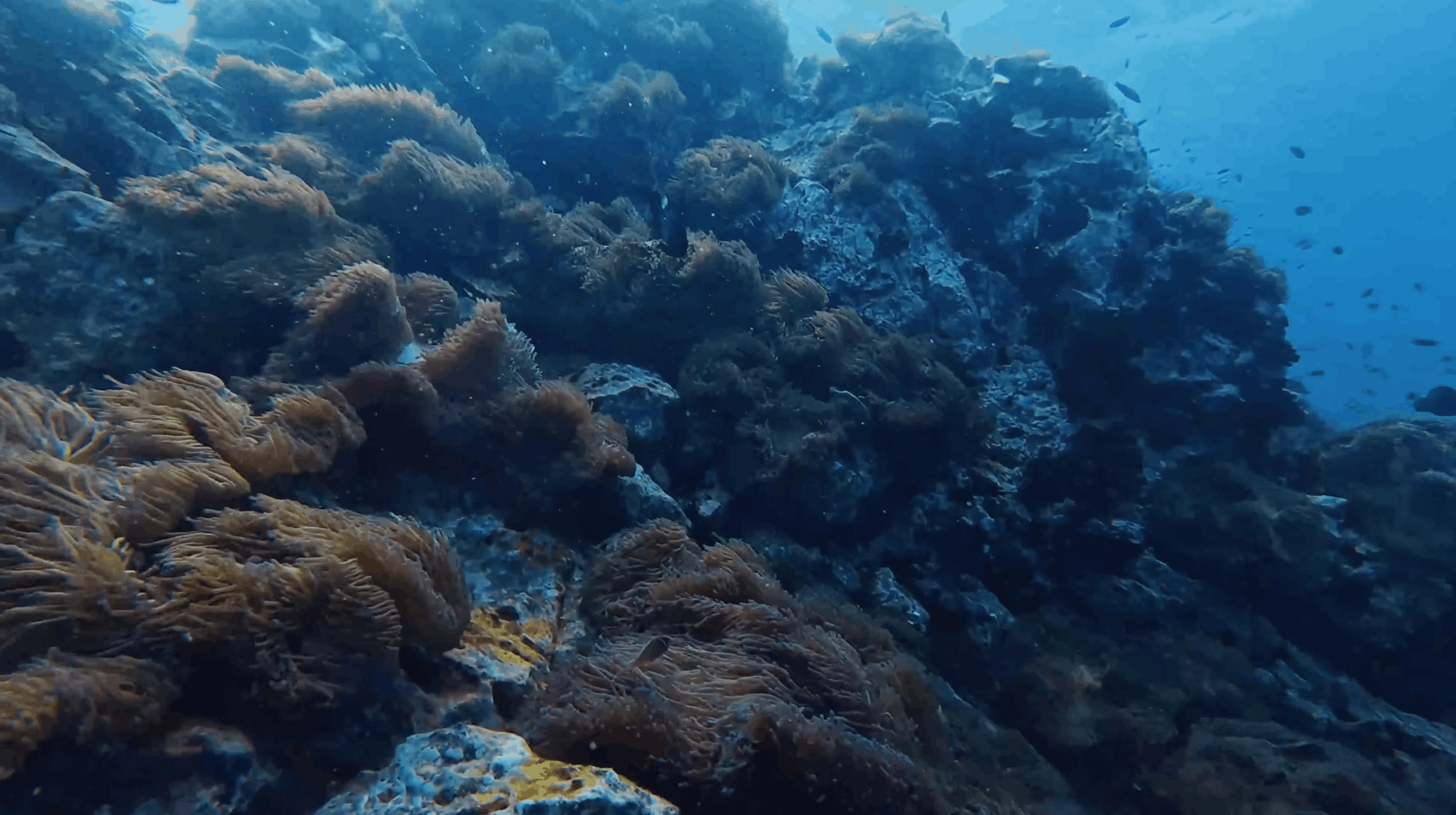
The bottom here is rock. Boulders, walls and gaps to swim through, with coral growing on top of the structure rather than building it.
The two areas Vietnam is best known for were both off the table for me. Hon Mun has been closed to diving since 2022, and Phu Quoc was in the wrong half of its season.
Best Time to Dive Vietnam
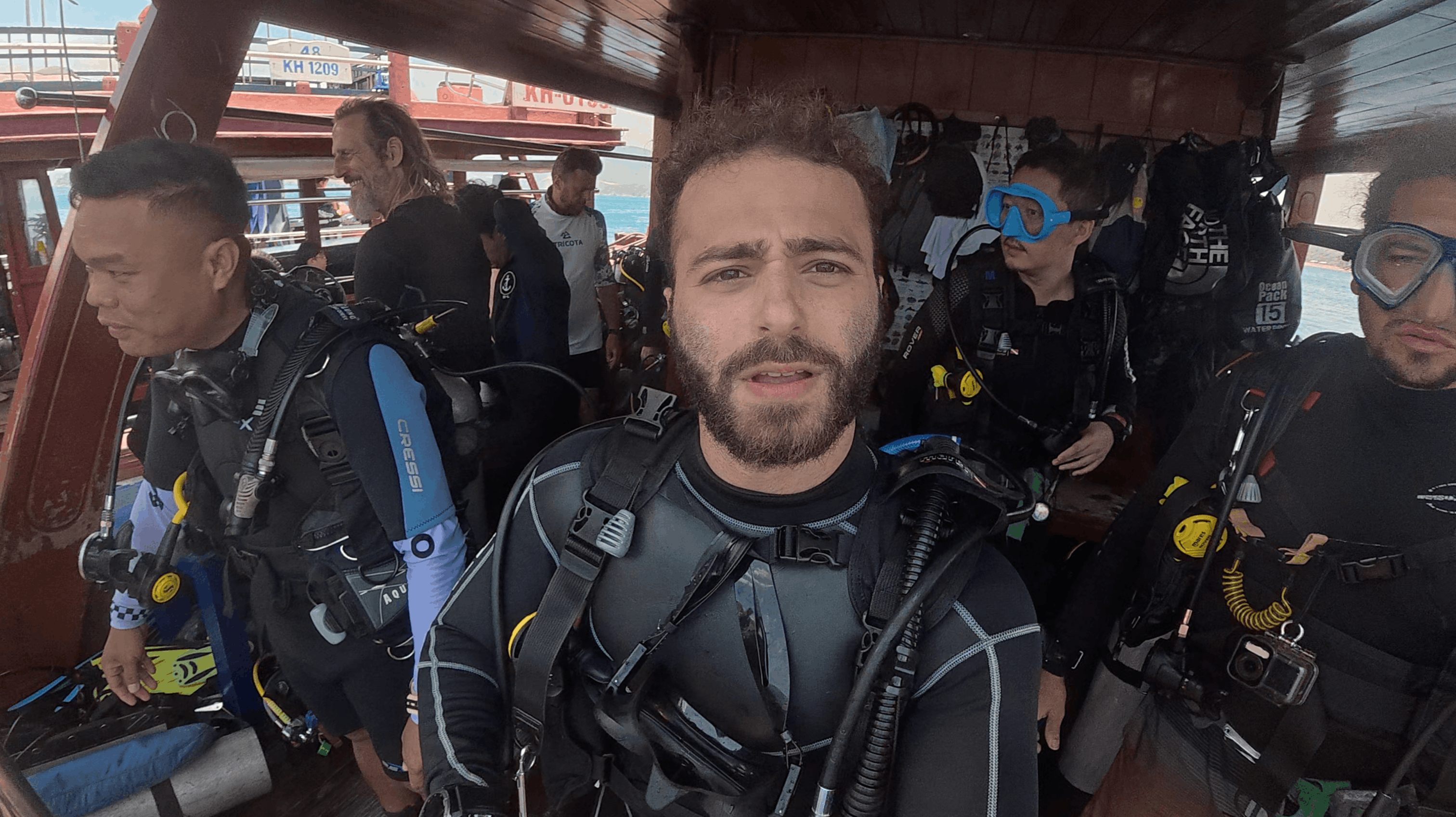
Vietnam does not have one dive season. It has two, on two different coasts, and they run close to opposite each other.
Nha Trang and Whale Island: roughly March to October. The seas are calmest and the visibility is best in that window, and the northeast monsoon shuts it down from about November to January.
Cham Islands: my guide Pierre at Cham Island Diving Center told me March to August has the calmest seas, with June to August the sweet spot. Once you get into September it starts to get way more unreliable with the winds and currents, as typhoon season starts, and from October to February diving is completely closed because of the risk of typhoons.
Phu Quoc, out in the Gulf of Thailand: roughly November to May, with November through January the clearest. That is the exact stretch when the central coast is unusable.
Con Dao, offshore in the south: March to September, which lines up with the central coast rather than with Phu Quoc.
March and April are the months that work almost everywhere, which is what I would target if I were planning this trip again from scratch.
I went in August. That is the right half of the year for Nha Trang and the Cham Islands and the wrong half for Phu Quoc.
Being in season did not save me from the weather. Storms came through in the days before every dive I did, and I never had more than 20 ft (6 m) of visibility anywhere in the country.
Nha Trang Diving Club told me the bay goes up to 49 to 66 ft (15 to 20 m) once the water settles, so what I got was not a normal August.
The Best Dive Sites in Vietnam
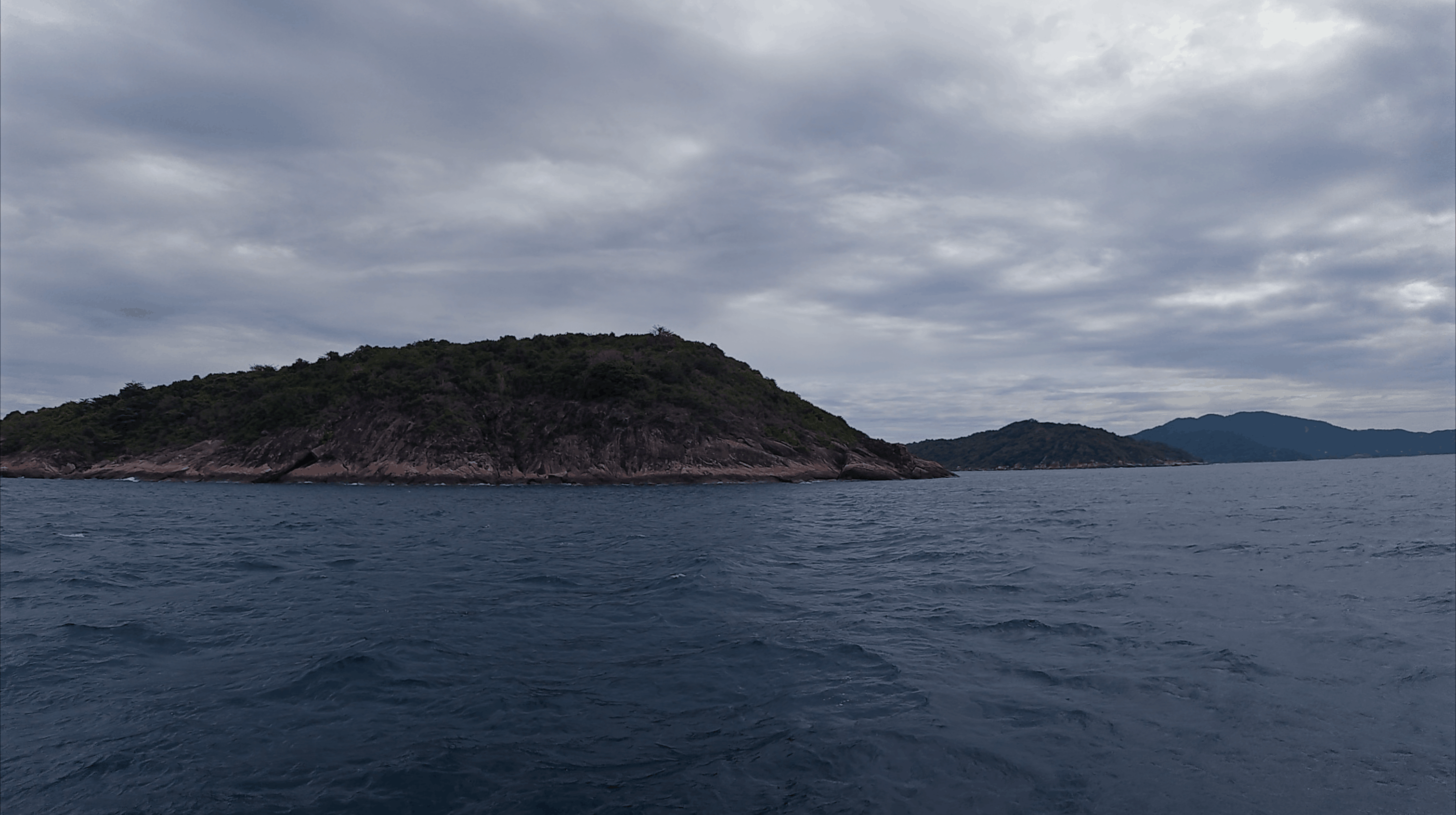
Three sites, two regions, and one of them is clearly better than the other two.
Each region has its own full guide: diving the Cham Islands out of Hoi An, and diving Nha Trang further south.
Best Dive in Vietnam: Hon Dai
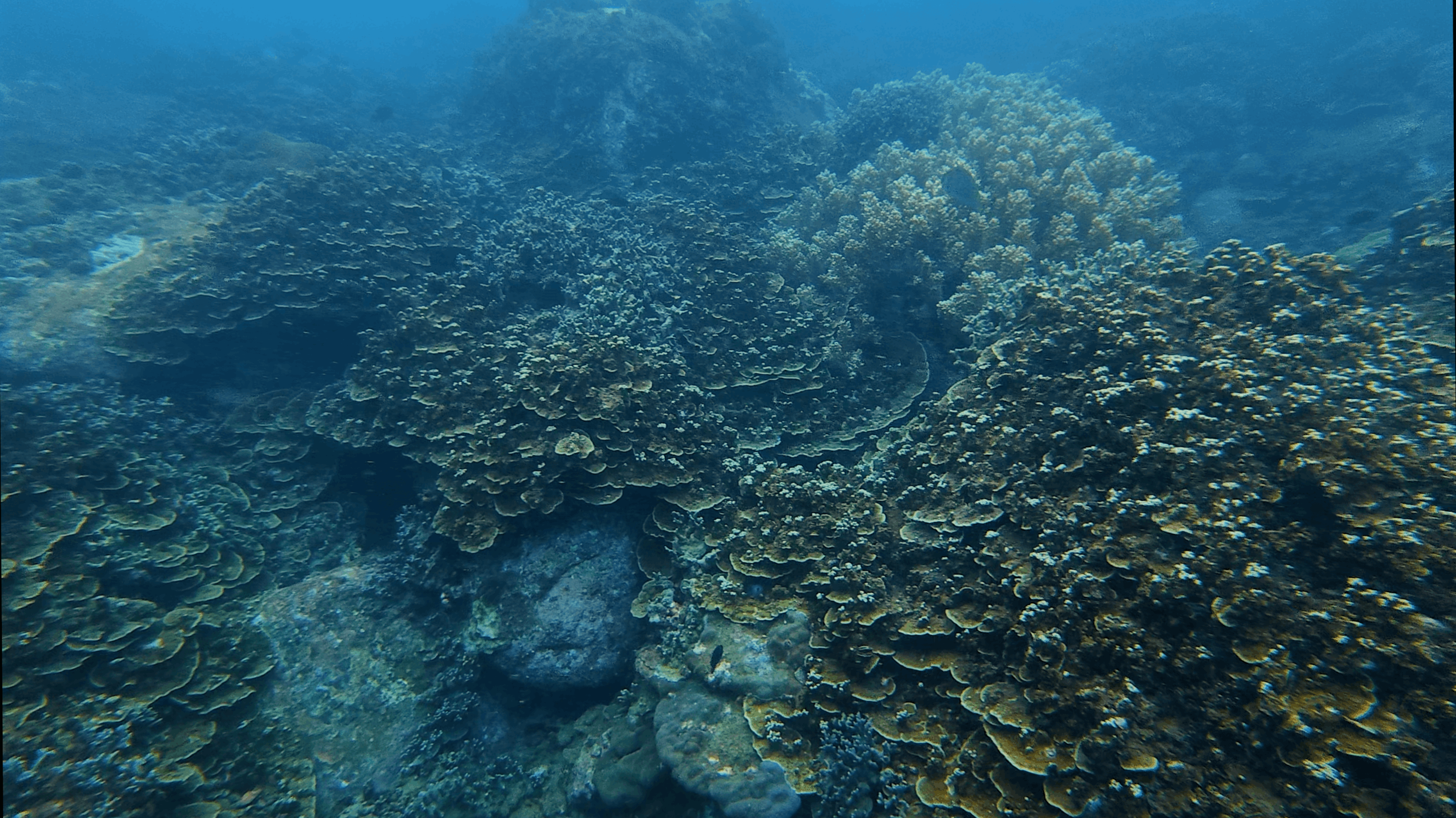
Hon Dai sits off Cu Lao Cham, a UNESCO listed marine park off the coast from Hoi An. I was staying in Da Nang, so the day started with a 40 minute drive down the coast to meet the shop.
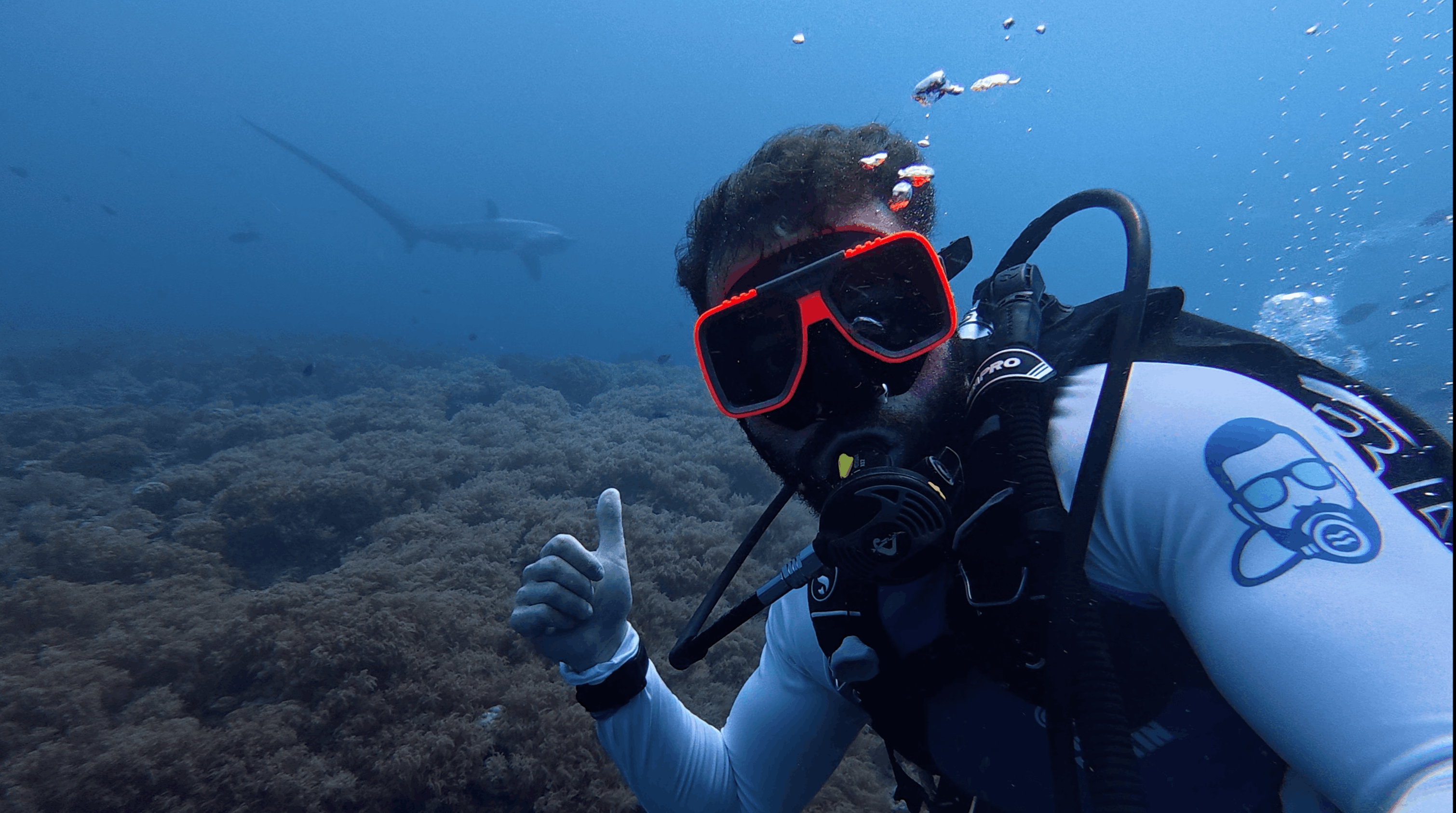
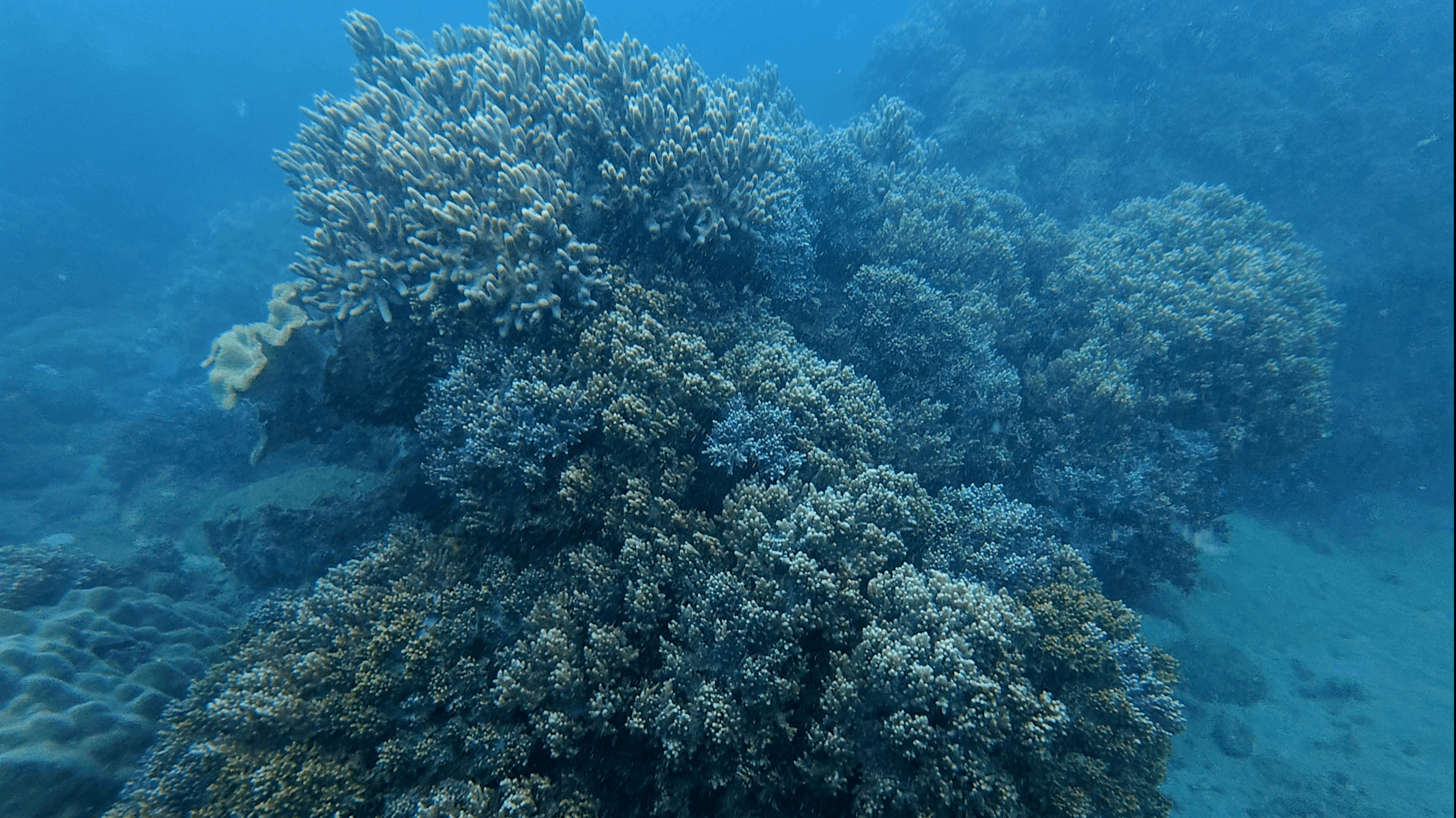
The coral is the reason this dive beats everything else in the country. Not the visibility, which was as bad as Nha Trang, and not the depth, which tops out at 49 ft (14.9 m).
Plate and table coral run across the island walls, staghorn stands up off the reef, and there are boulder corals stacked on the far side of the site. It is the only place in Vietnam where the reef itself, rather than the rock underneath it, is the structure.
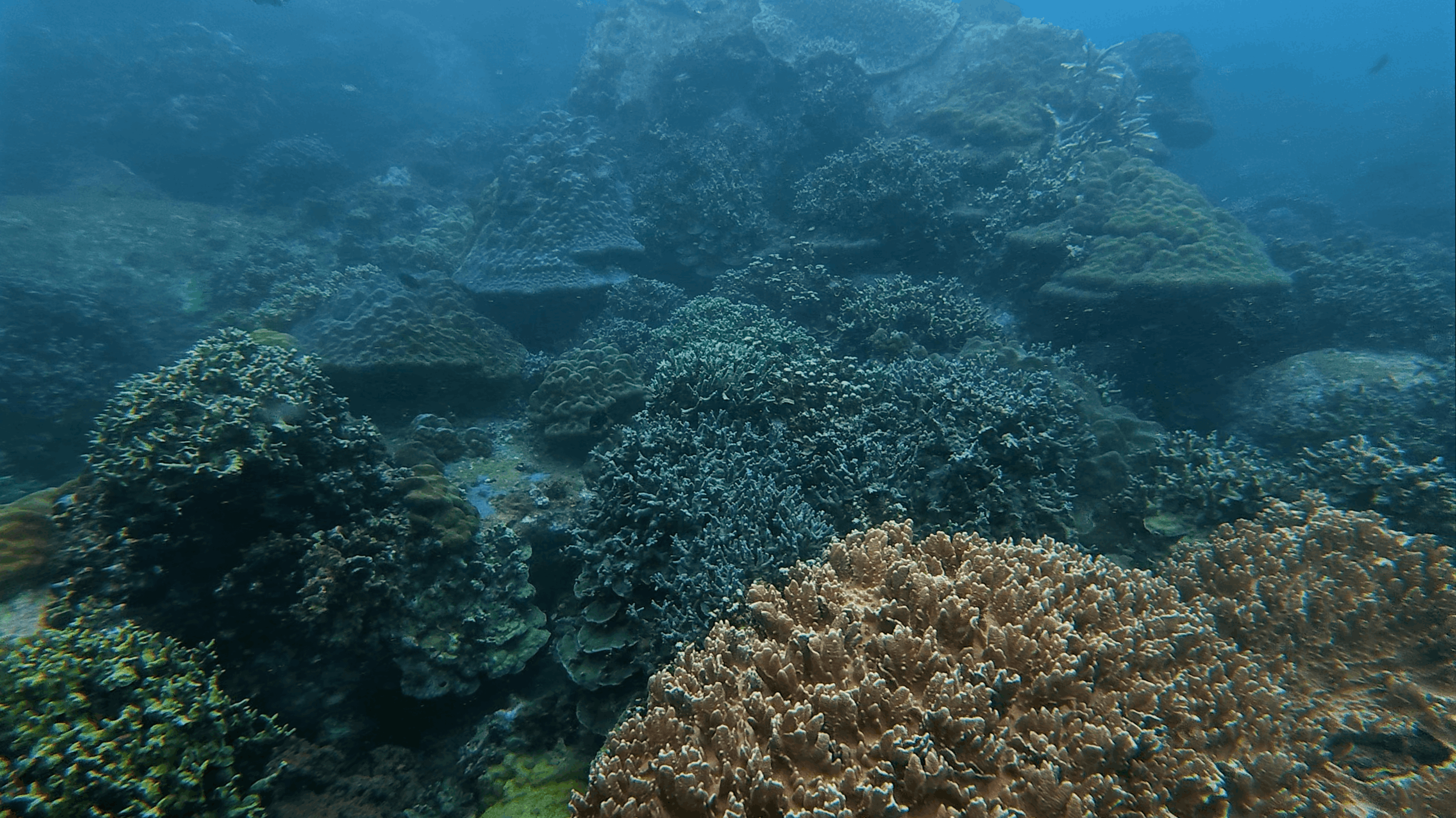
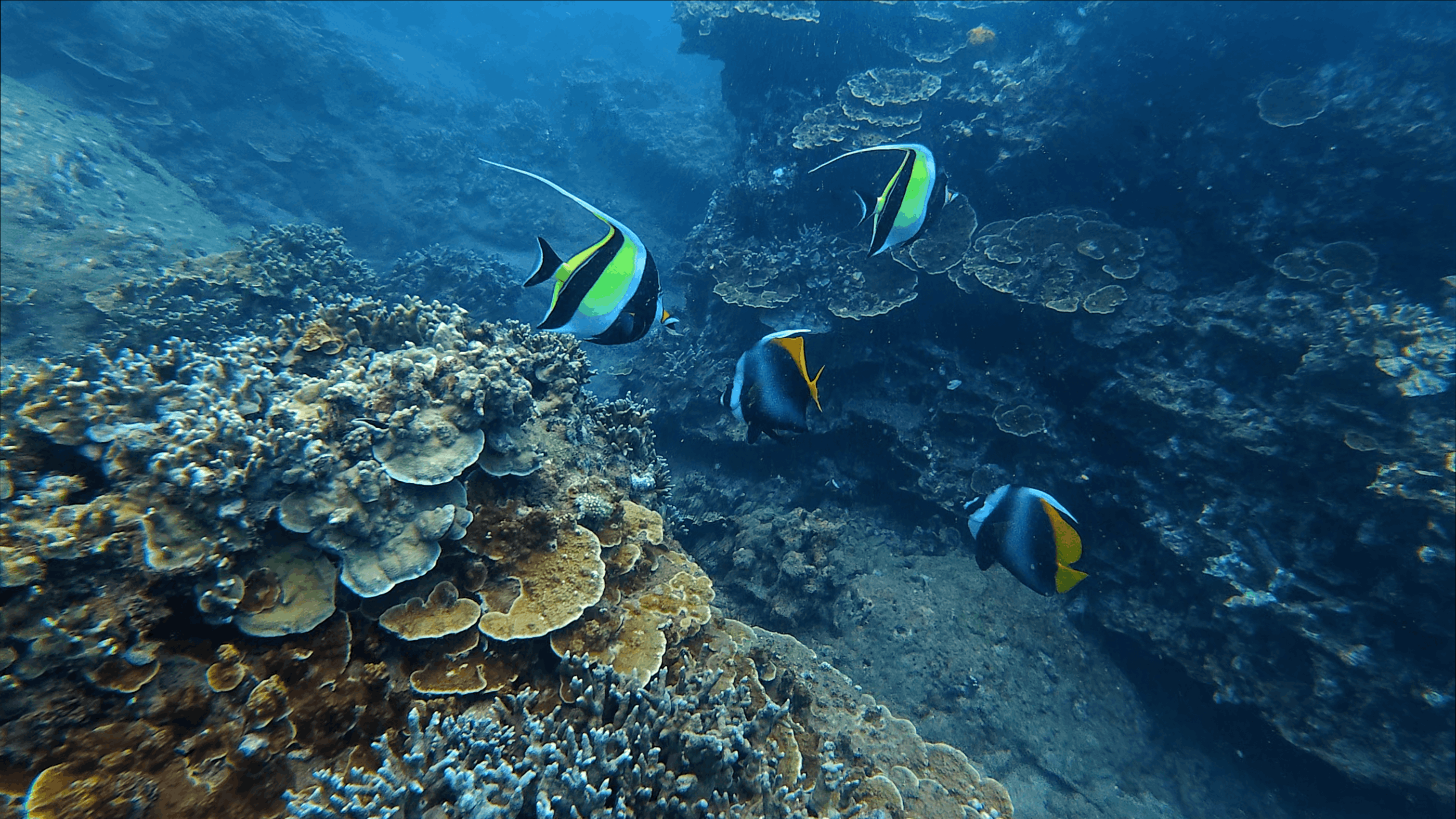
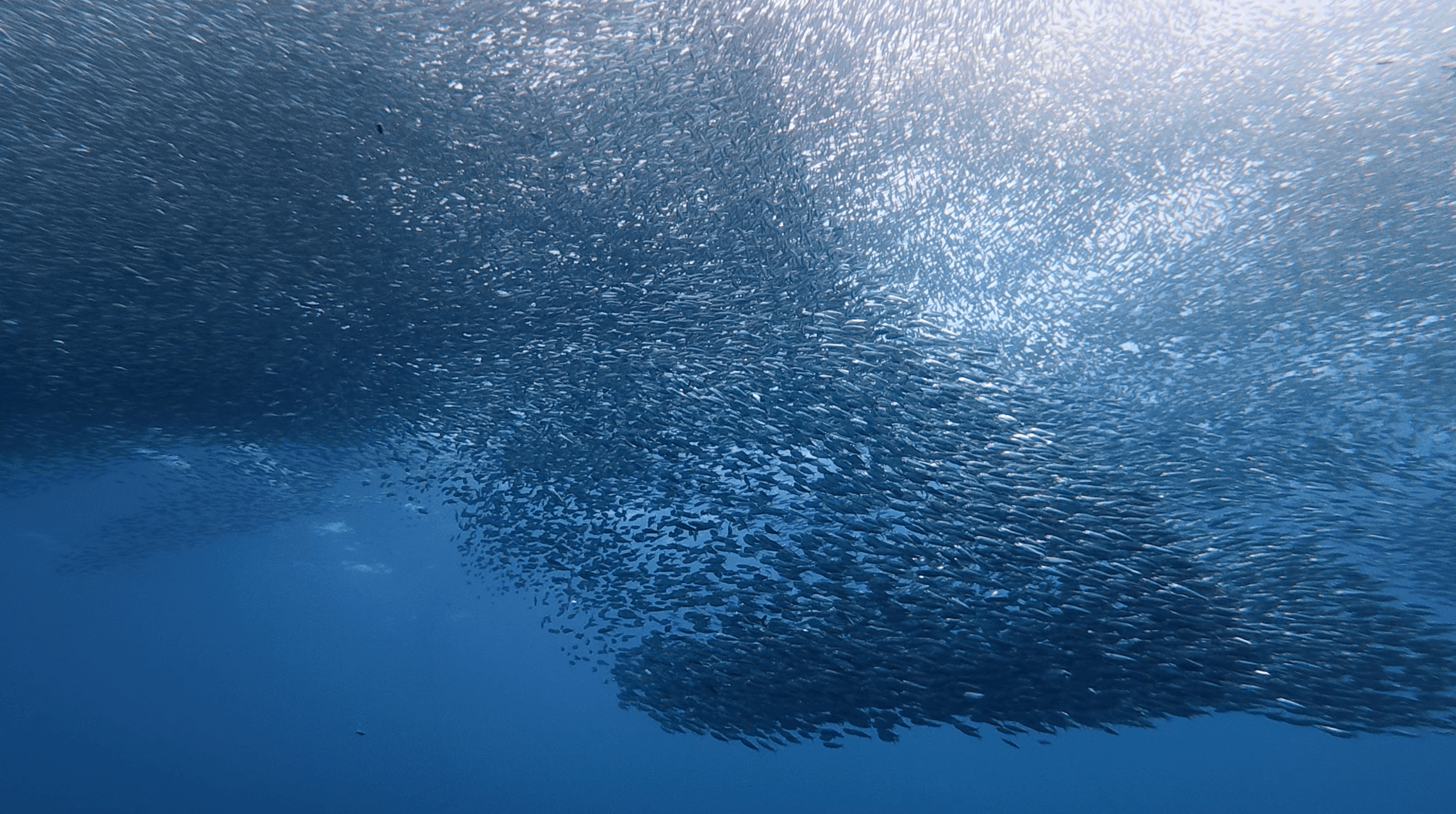
Barracuda held in the blue above the reef, a large white spotted pufferfish came past me, and there were banded coral shrimp tucked into the crevices.
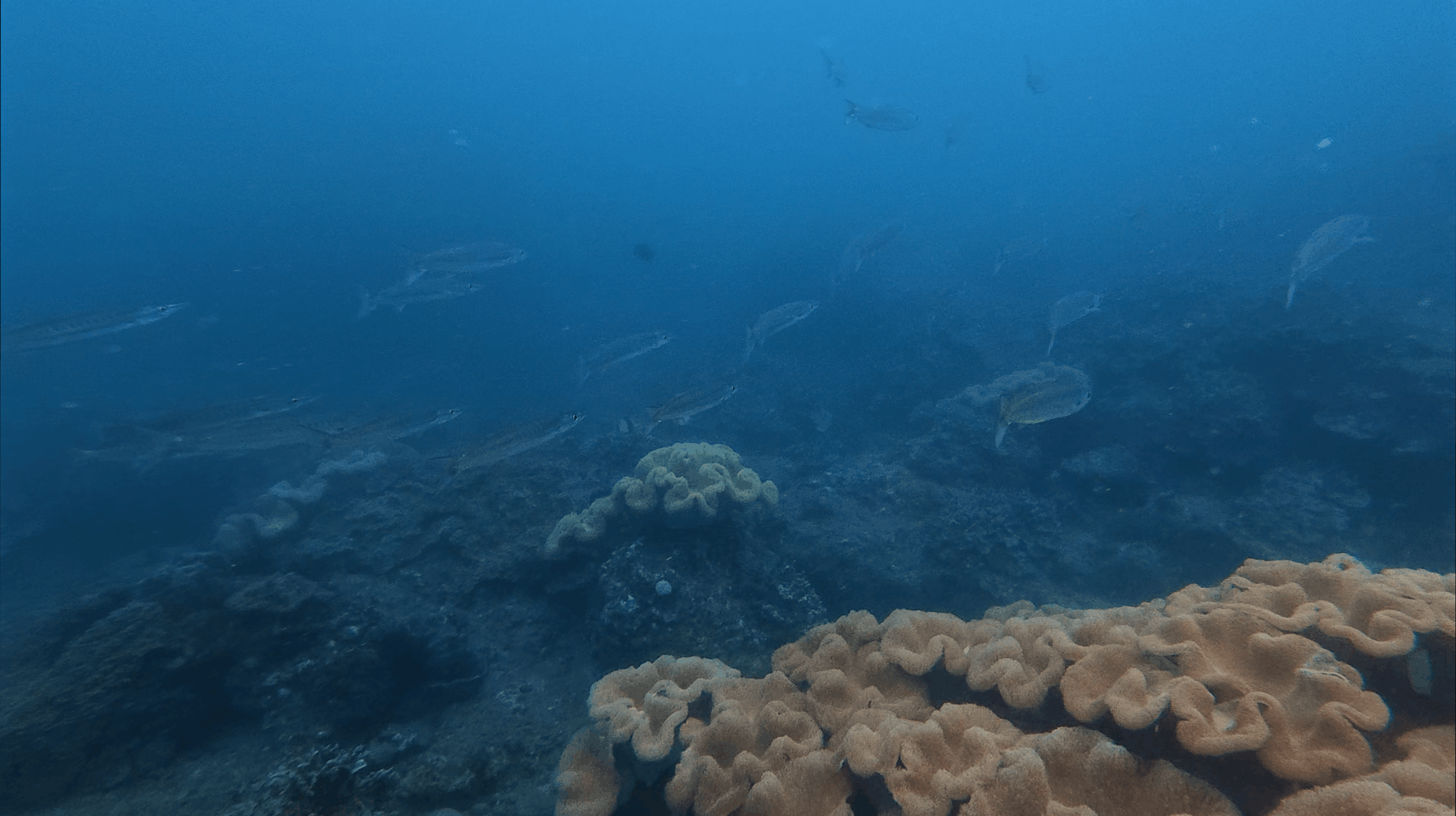
Visibility was 16 to 20 ft (5 to 6 m), knocked down by recent storms and by dredging at the river mouth nearby. Keeping up with the guide and filming at the same time was genuinely hard.
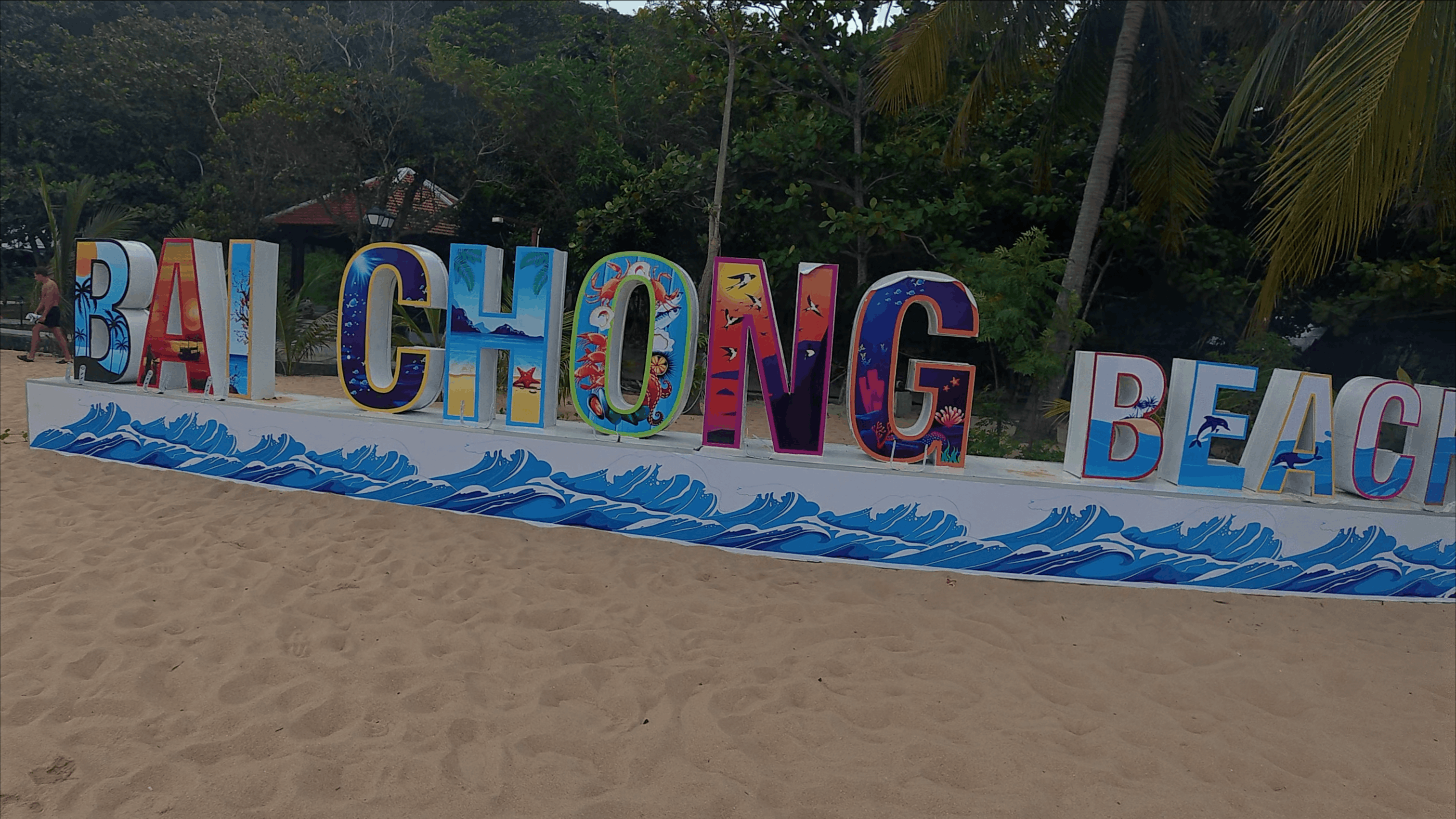
The day ran $100 and included gear, a guide and lunch on Bai Chong beach. There are monkeys all over the island.
Best Swim-Throughs: Madonna Rock
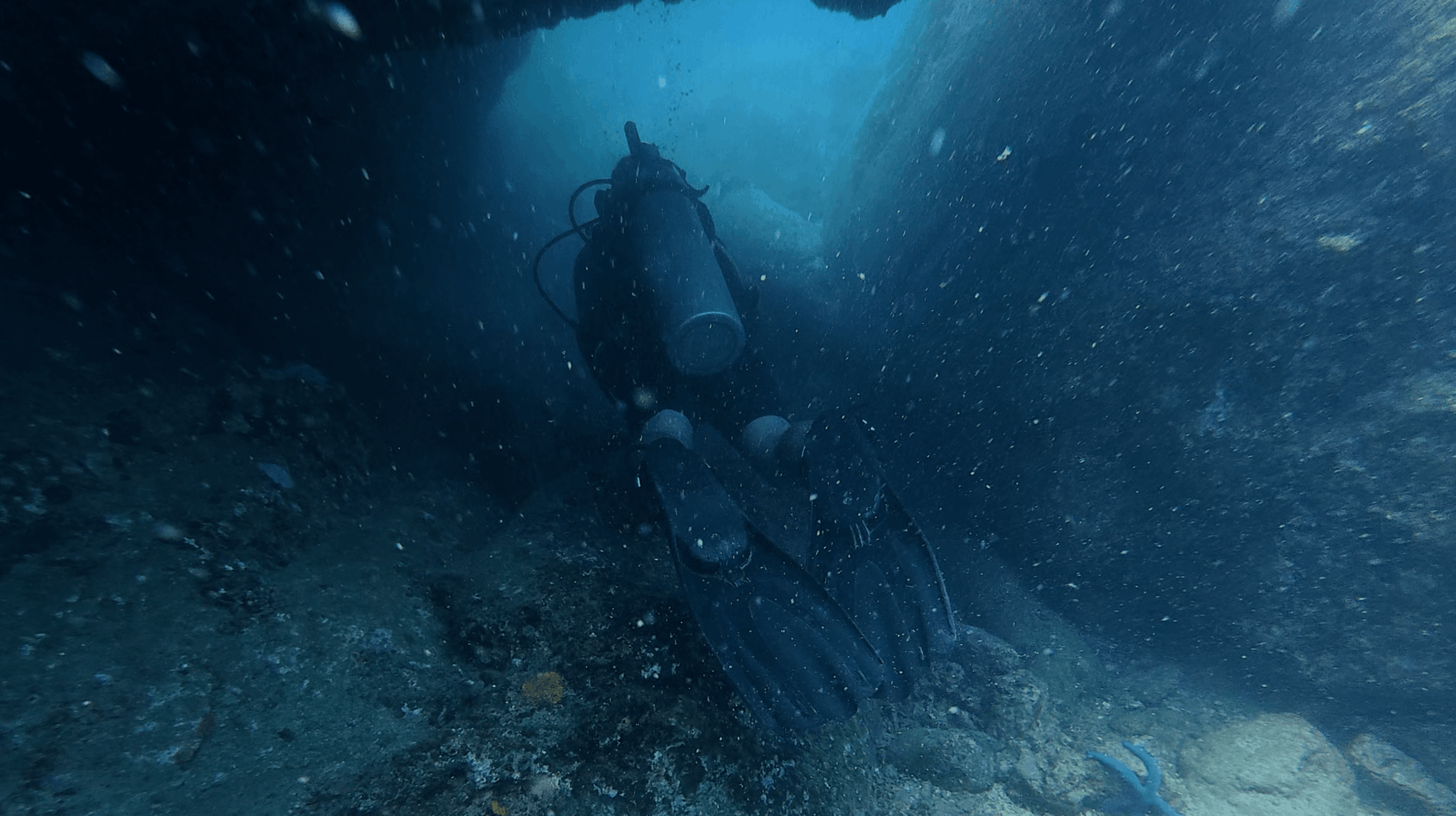
Madonna Rock sits on the outskirts of Hon Mun, and it is the best dive available in Nha Trang while the marine park stays shut.
This is the site that shows you what Vietnamese diving actually is. Boulders, walls and narrow passages, with several caves you can swim straight through.
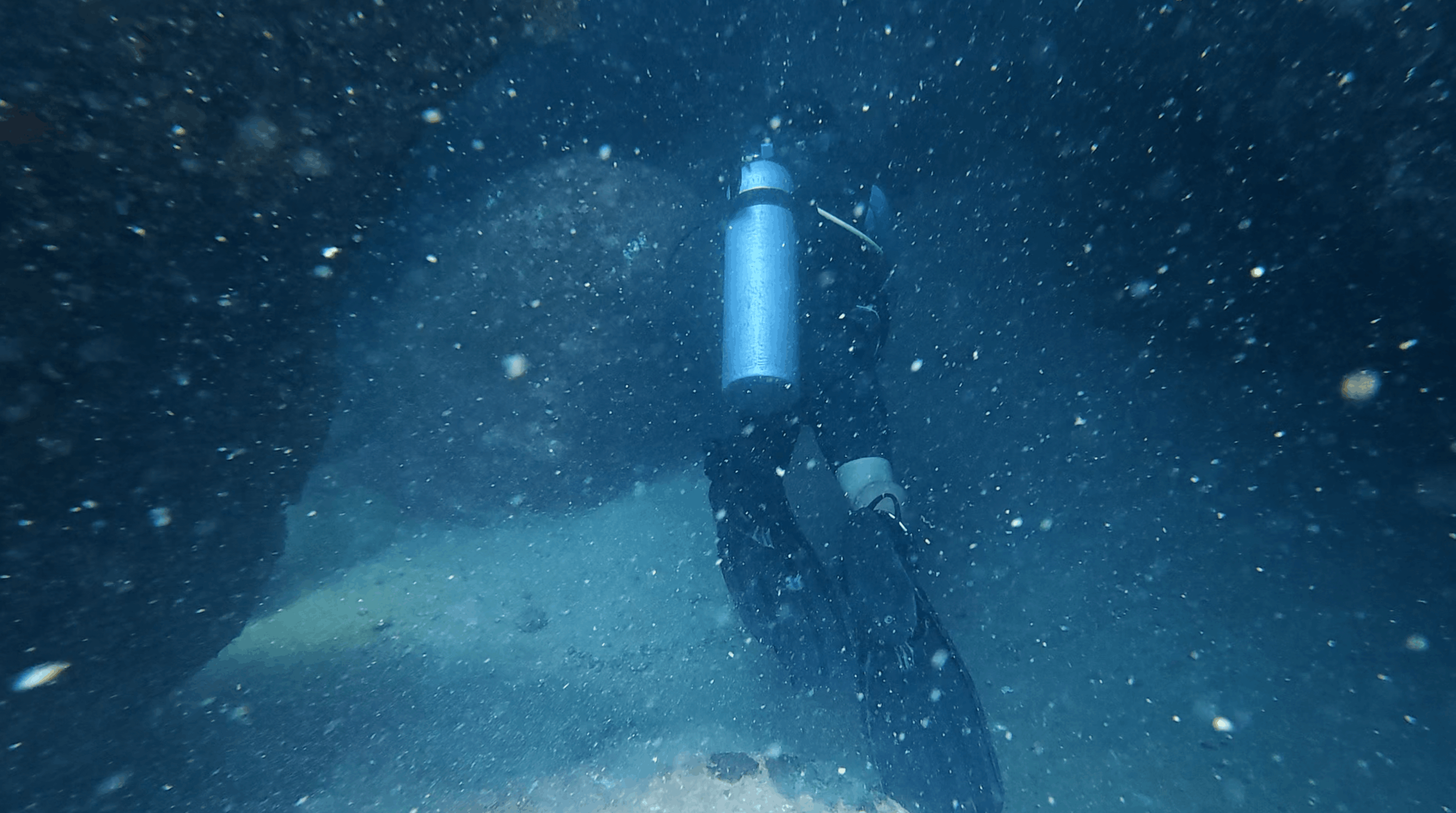
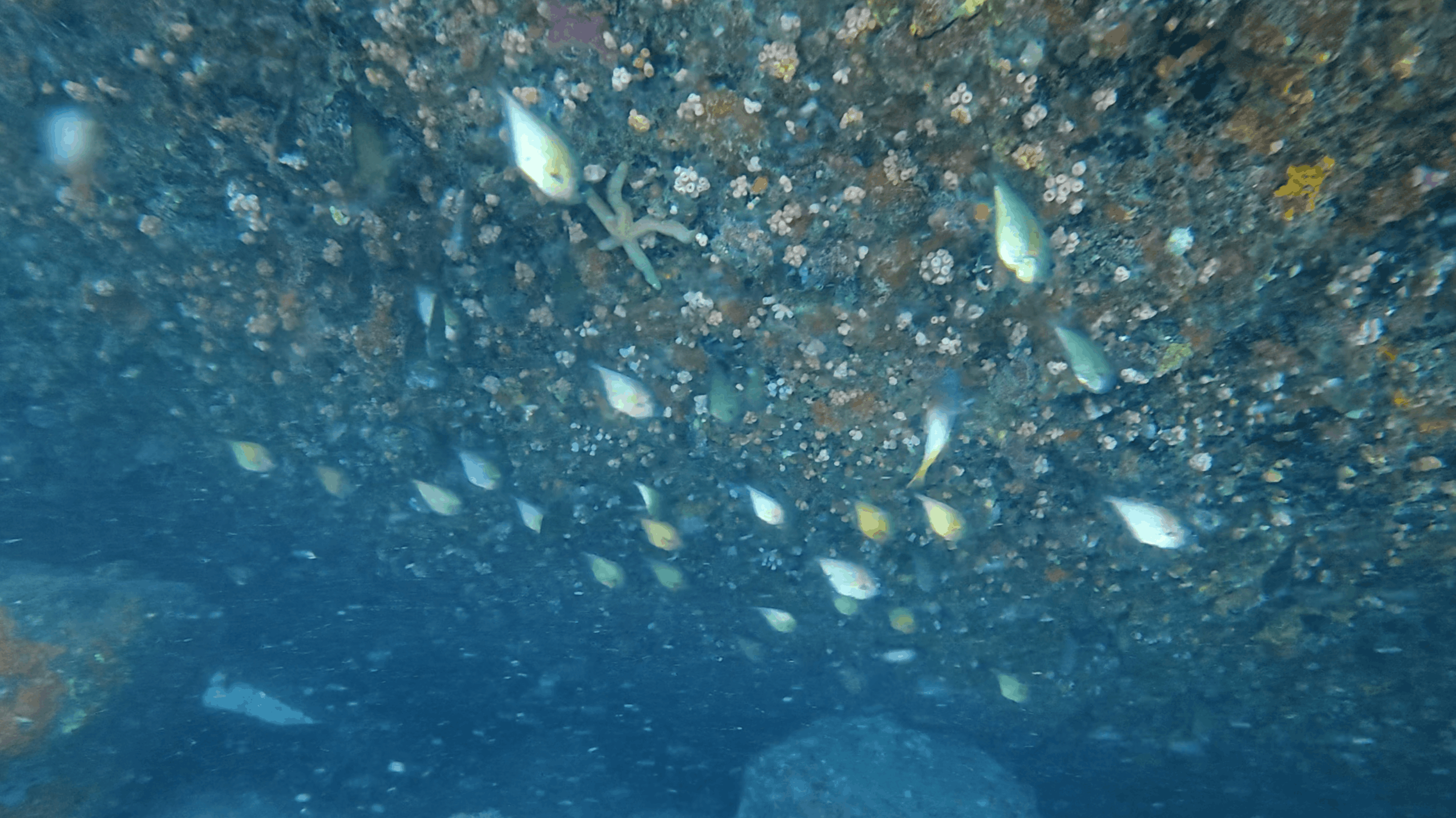
Barracuda schooled in the blue off the slope, and the macro here was the best of the trip. Nudibranchs everywhere, a yellow boxfish wedged into a crevice, hawkfish sitting up on the coral heads and a pair of lizardfish resting on the rock.
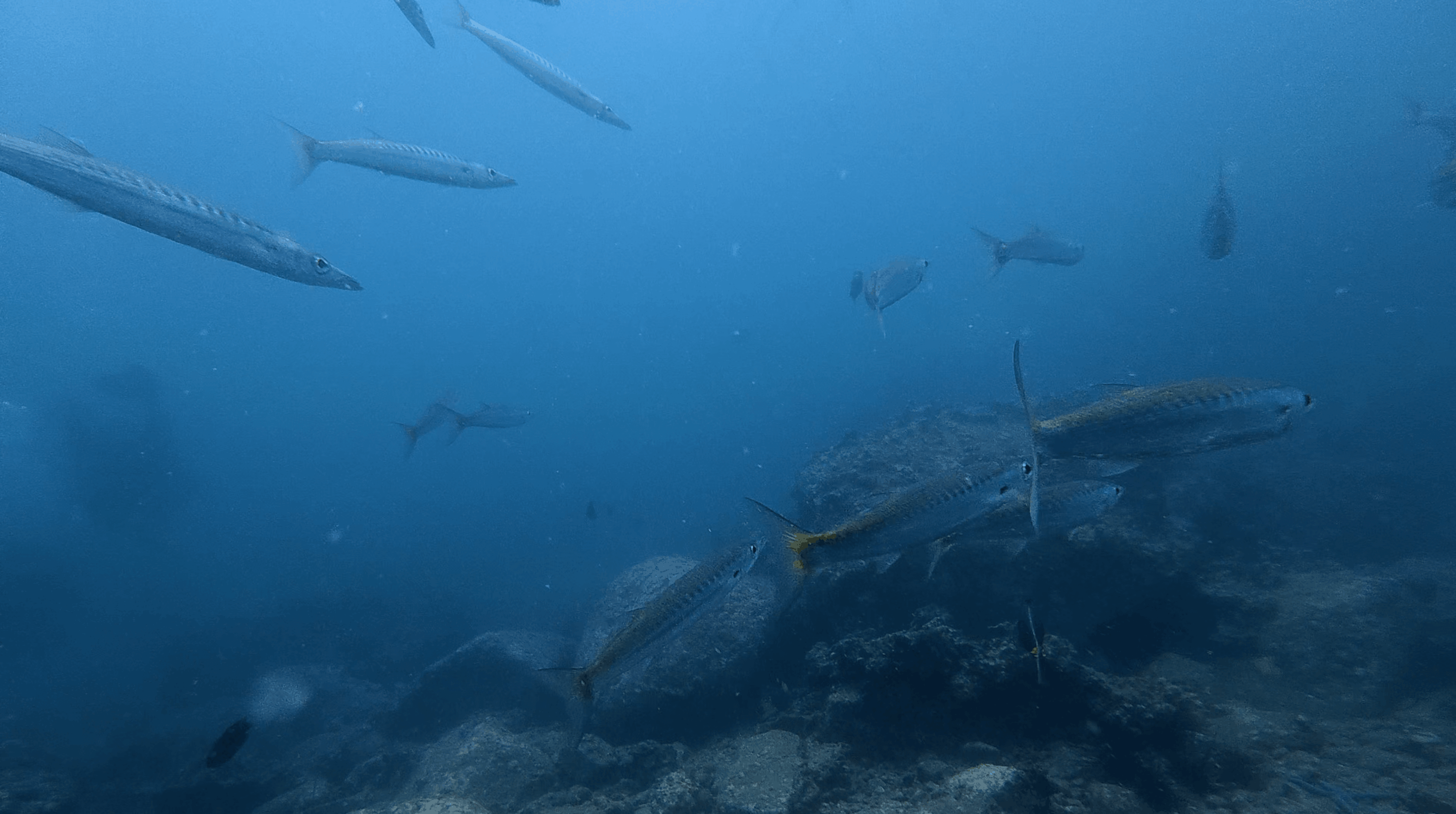
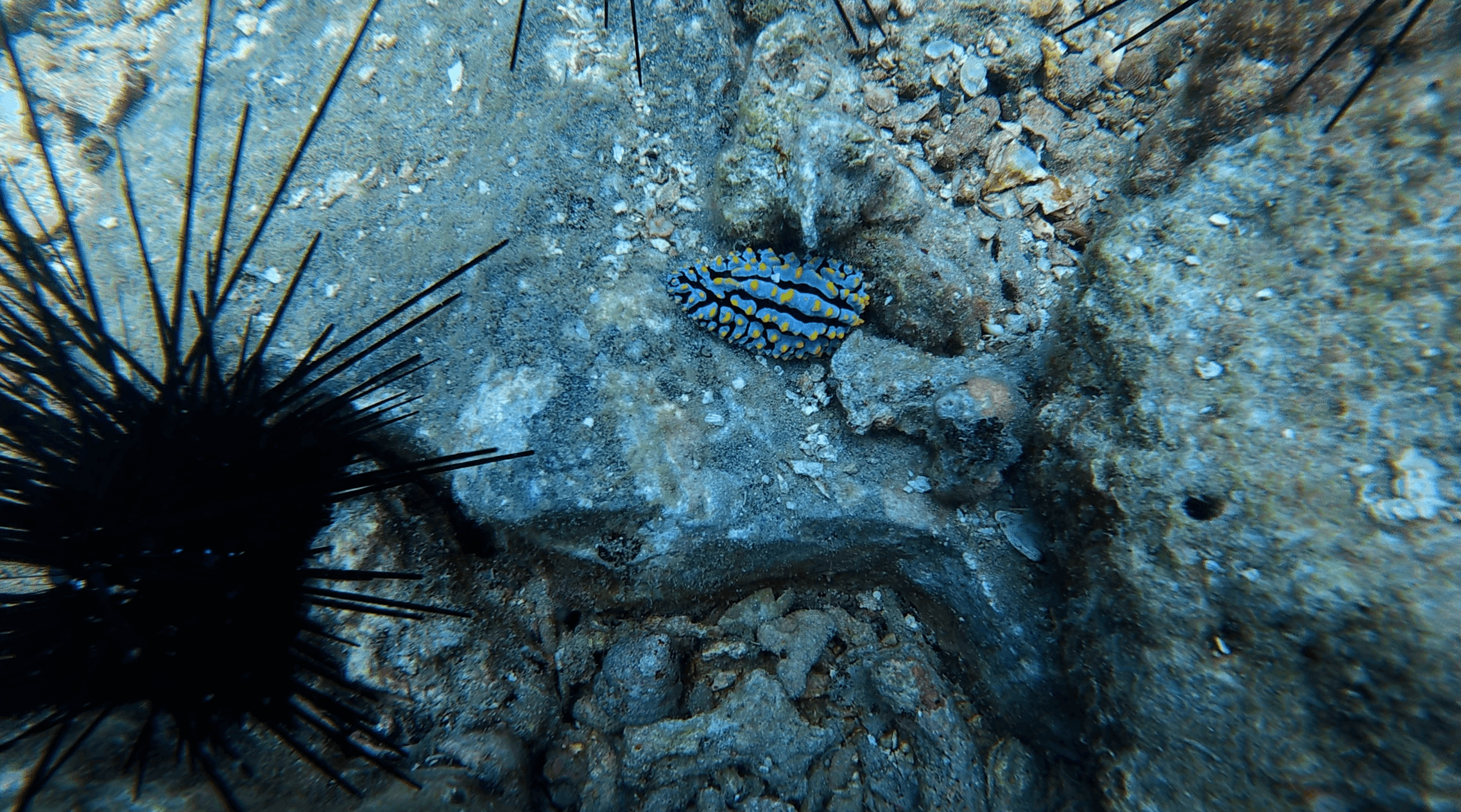
The urchin density is the thing nobody warns you about. Long spined urchins are wedged into every gap in the rock across both Nha Trang sites, and they are worth watching on a shallow dive with a swell running.
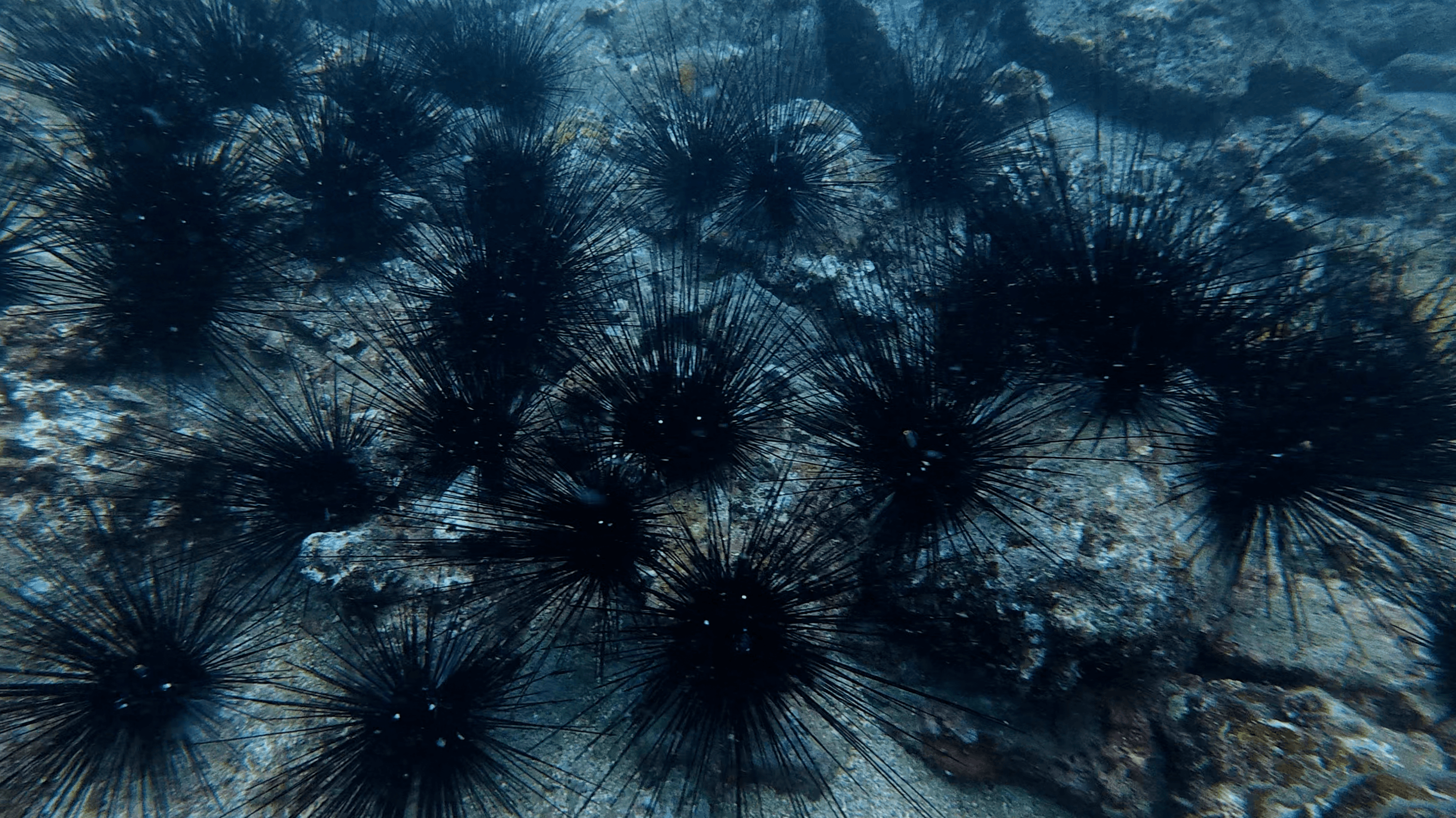
Visibility was 20 ft (6 m), better than Dam Bay the same day and still well short of what the site can do.
Best Beginner Dive: Dam Bay
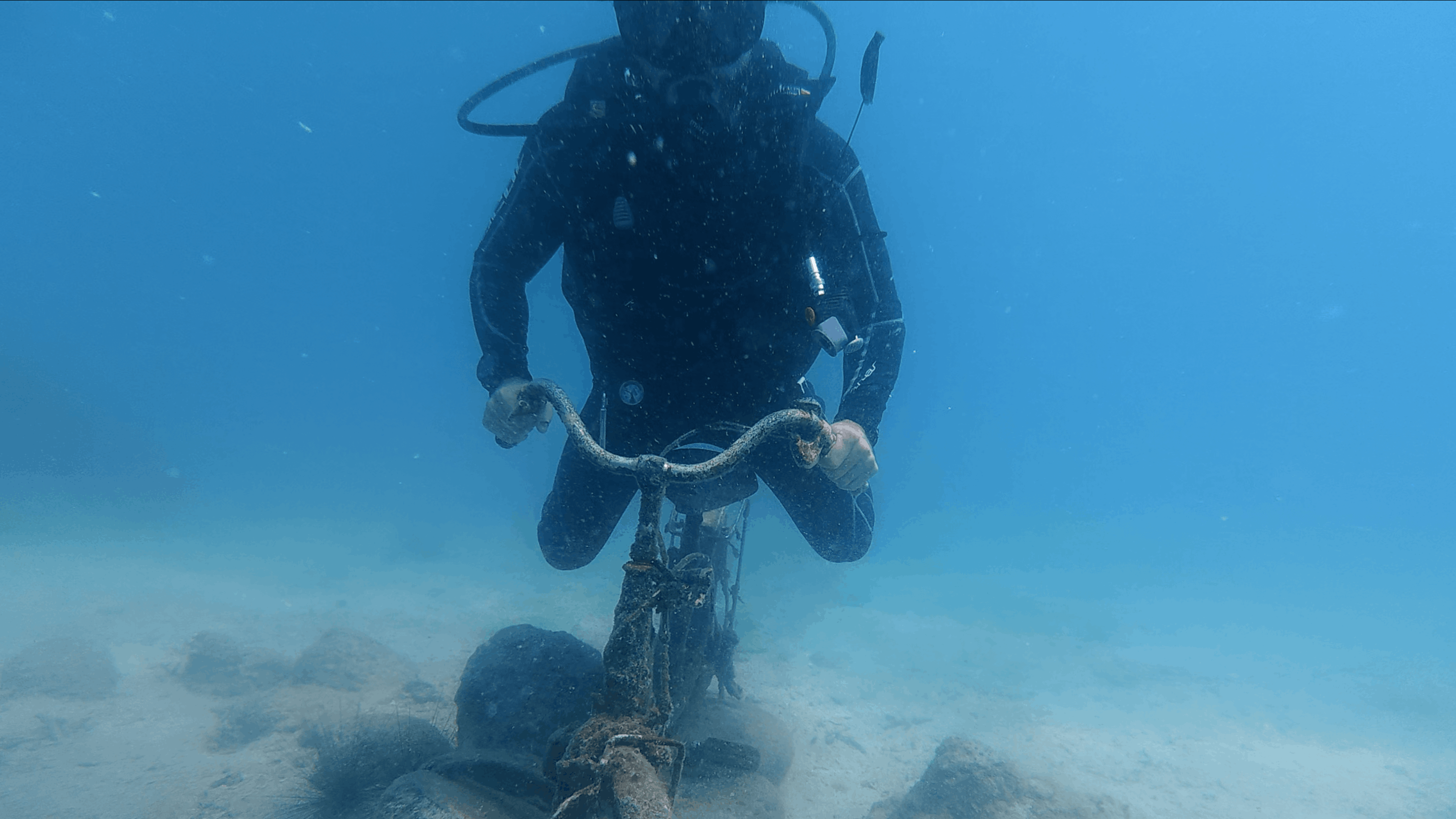
Dam Bay sits on Hon Tre, the big island off the Nha Trang coast, and it was the first dive of the same day trip as Madonna Rock.
It is shallow the whole way through at 23 ft (7 m) max and 12 ft (3.7 m) average, on a rocky bottom running out into sand with coral scattered across it.
This is a training site, and it is busy. Snorkel boats and day trippers were in the water with us for most of the dive.
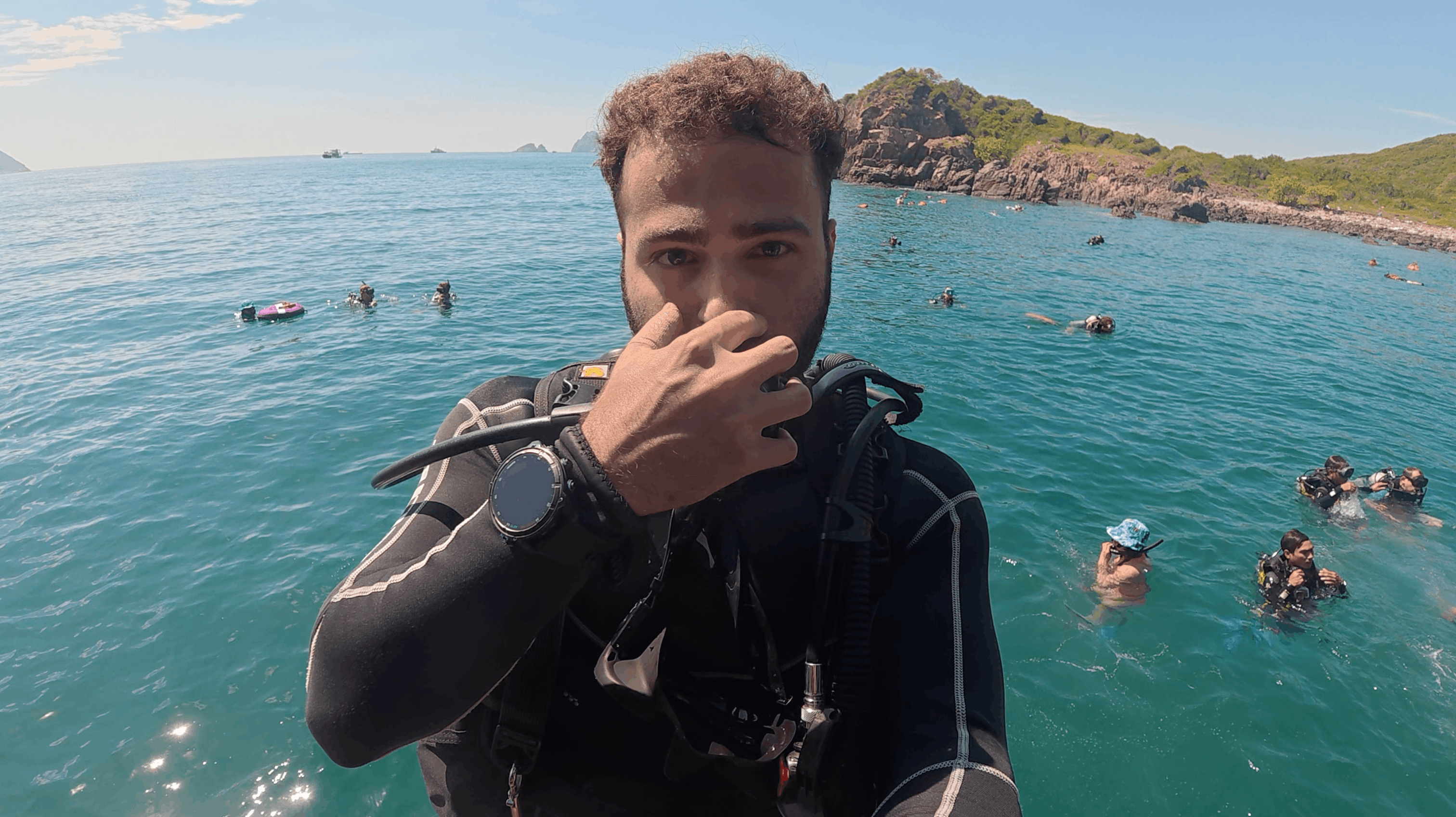
There is a rusted bicycle sitting upright on the sand, which is the thing everyone photographs here.
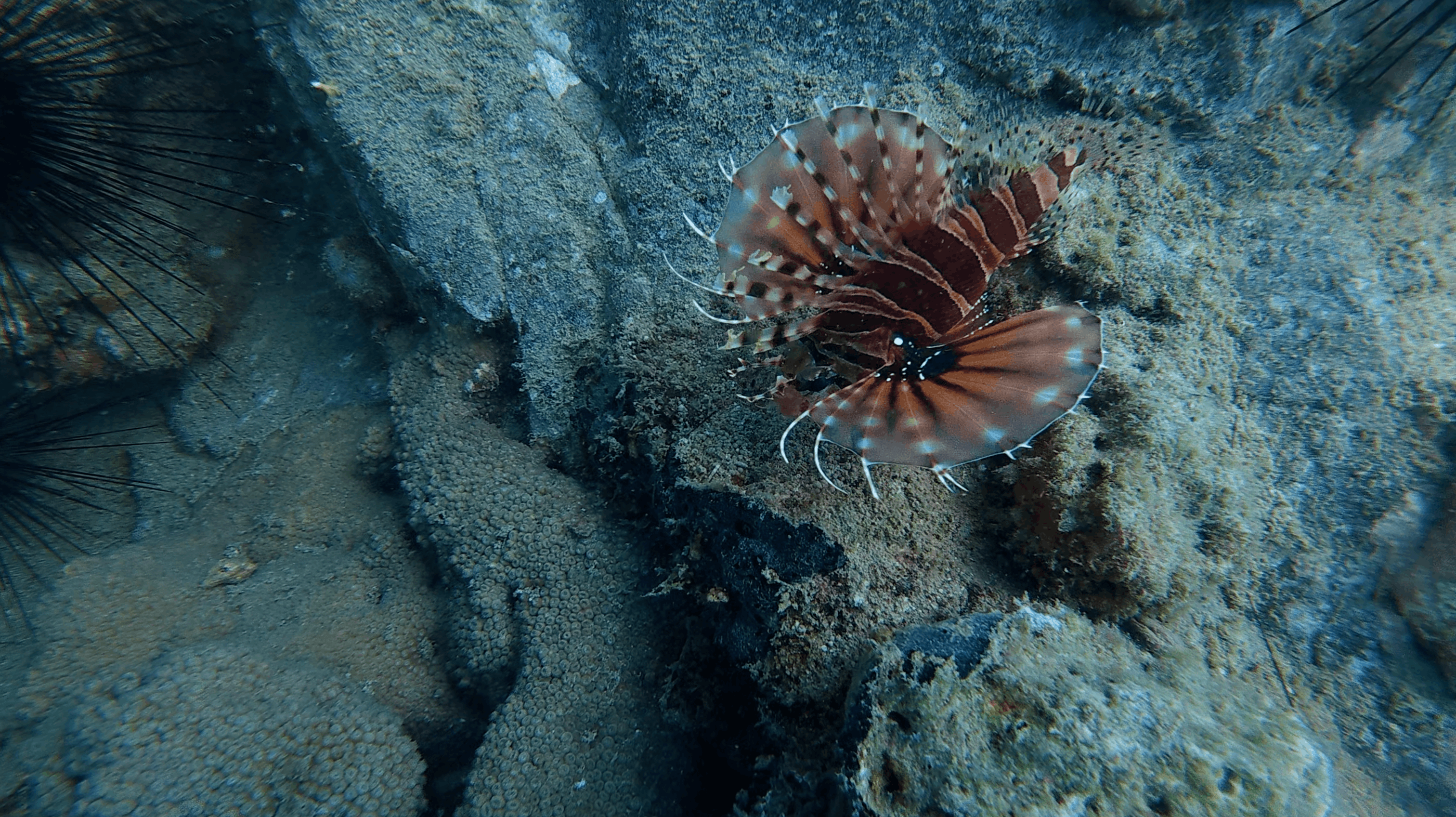
Marine life held up better than the 16 ft (5 m) of visibility deserved. A lionfish fanned out against the rock, a maroon clownfish pair in an anemone, a line of juvenile trumpetfish hanging nose down over the sand, and boulder and branching coral across the top of the reef.
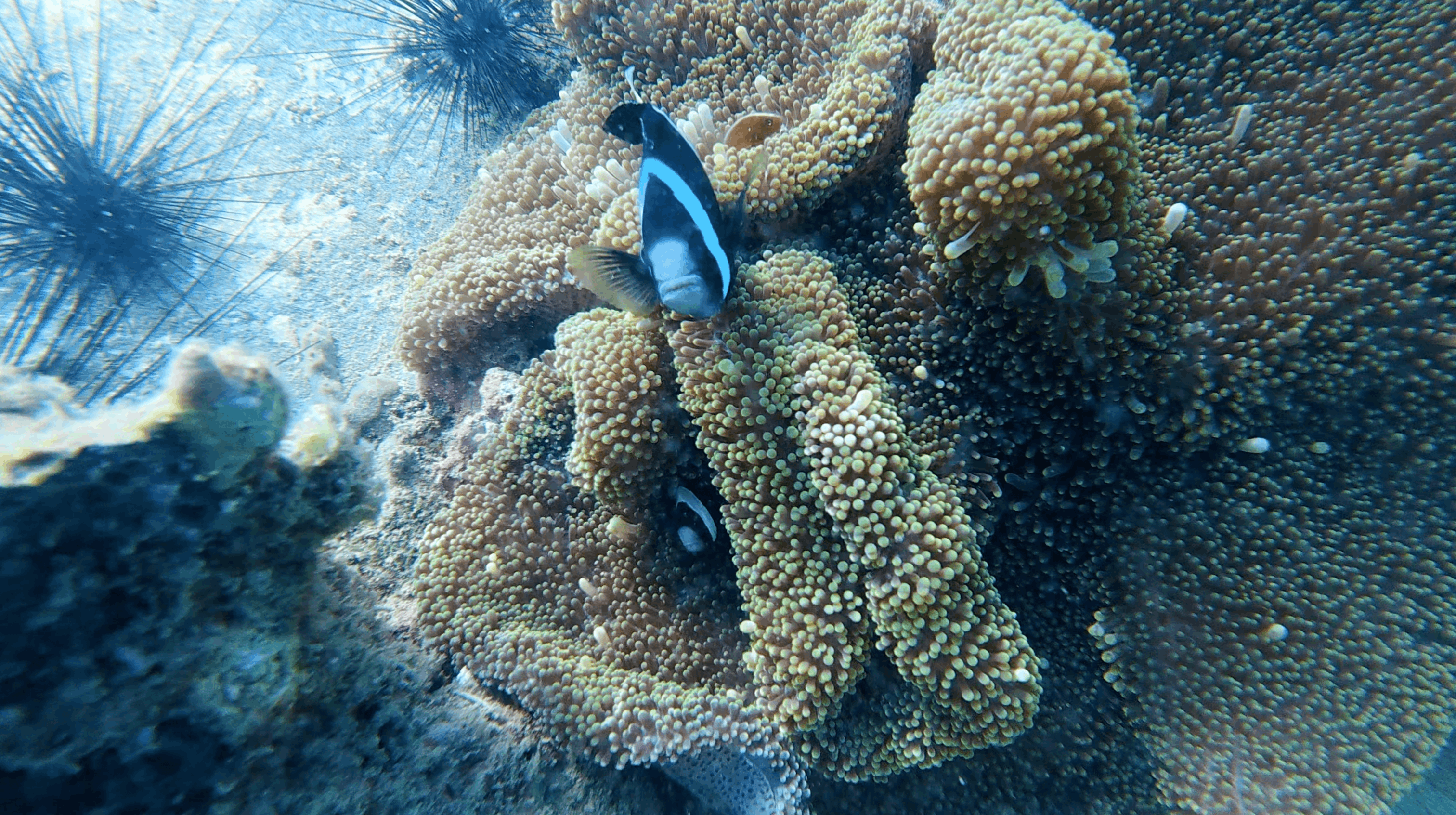
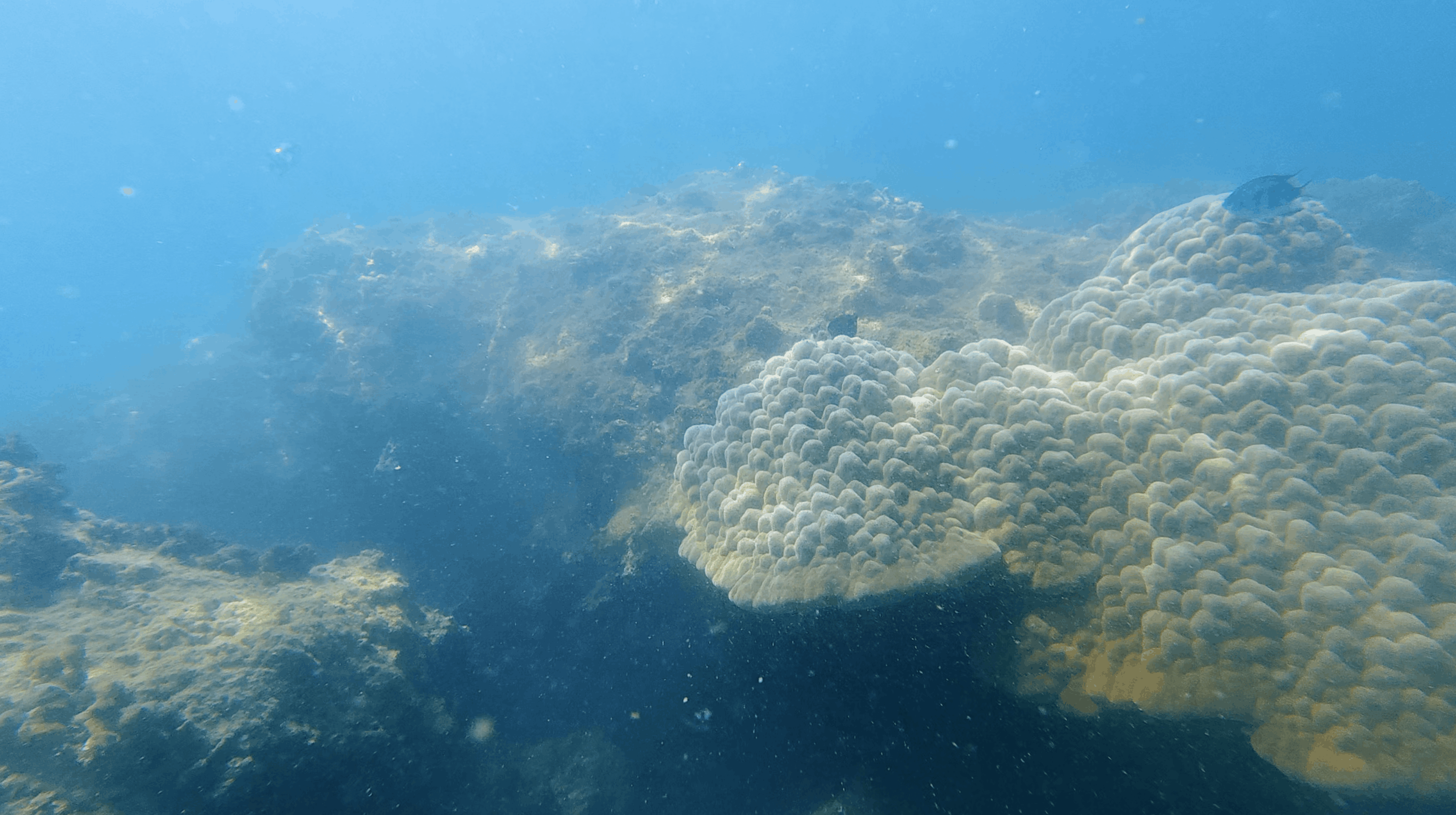
If you are certified and have a choice, ask for Madonna Rock. Dam Bay is where the discover scuba and open water students go.
Sites I Didn't Dive
Vietnam has three dive regions I did not get into, and each one was blocked for a different reason. One is closed by the city, one was out of season, and one is a separate trip on its own.
I have not been in the water at any of them, so nothing below is ranked against the sites above.
Closed to Diving: Hon Mun
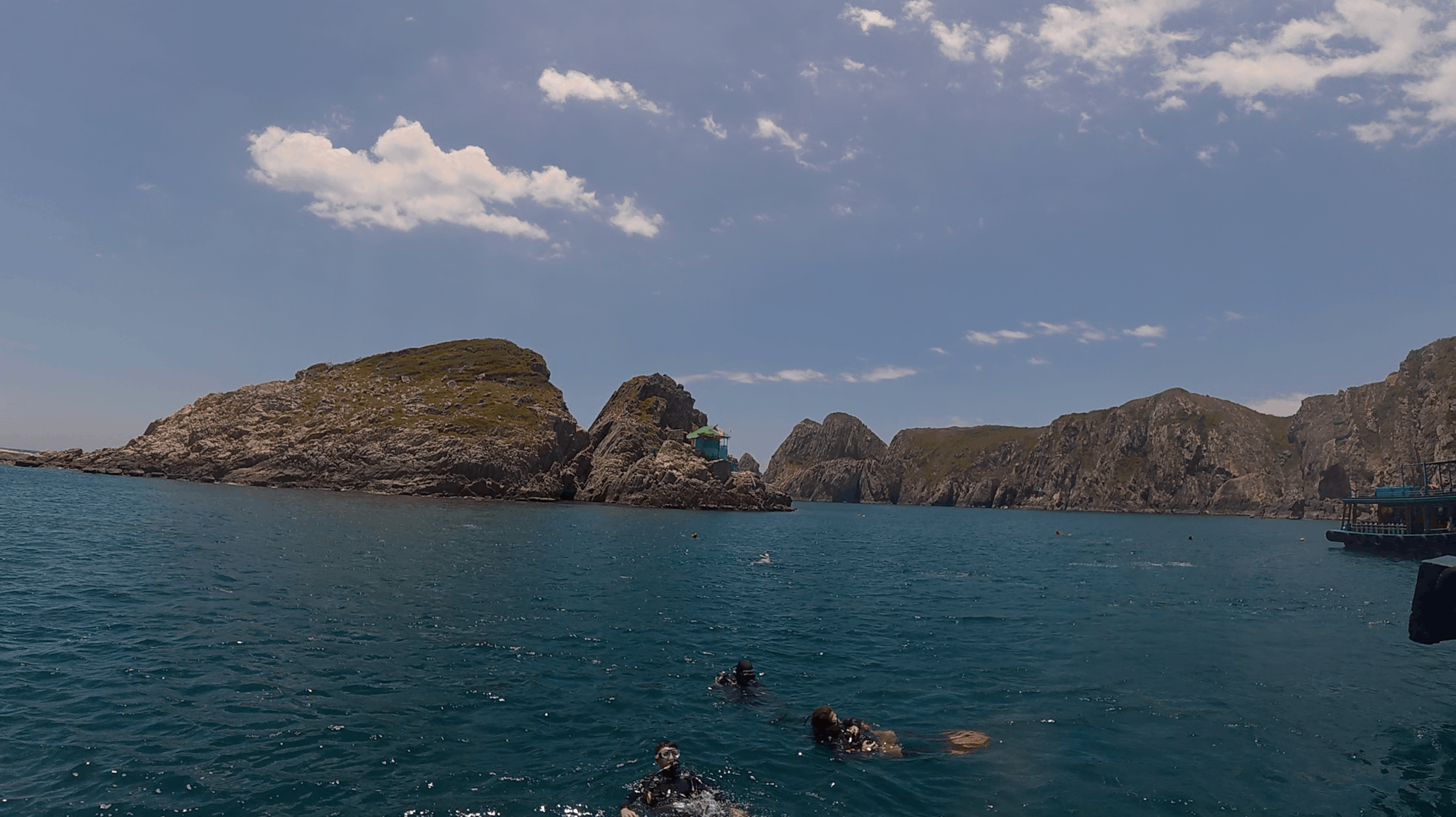
Hon Mun is Vietnam's first marine protected area and the reason Nha Trang has a diving reputation at all. It is also the reason that reputation is out of date.
Typhoon Damrey came through in November 2017 and destroyed an estimated 70 to 80 percent of the coral across Nha Trang Bay. More storms at the end of 2021 tore up another stretch, with up to 70 percent of the reef on Hon Mun's southwest side reported washed ashore.
In late June 2022 the city shut Hon Mun to diving, swimming and boat tours so it could recover. Coral cover across the bay had fallen from around 60 percent in 2020 to roughly 50 percent.
It was still closed when I was there in August 2026. Madonna Rock, on the outskirts of the protected area, is what the Nha Trang shops run instead.
Gulf of Thailand: Phu Quoc
Phu Quoc is the dive area most people picture when they think of Vietnam, and I did not dive it. I was in the country in August, which is monsoon season on that side of the map.
Everything below comes from operator listings and Vietnam's national tourism board rather than from my own dives.
Phu Quoc is not even on the same sea as the rest of my trip. It sits off the southwest corner of the country in the Gulf of Thailand, closer to Cambodia than to Ho Chi Minh City, while Nha Trang and the Cham Islands face the South China Sea.
That is why the seasons invert. The southwest monsoon that blows Phu Quoc out from roughly May to October is the same weather pattern that leaves the central coast calm and diveable, and the northeast monsoon that shuts Nha Trang down from November is when Phu Quoc has its clearest water. Operators there put the season at November to May, with November through January the best of it.
Most of the diving happens in the An Thoi archipelago, a cluster of small islands off the south end of Phu Quoc. Hon Thom, Hon Gam Ghi and the May Rut islands are the names that come up repeatedly, and May Rut Ngoai has a coral park that operators credit with more than 250 species of hard and soft coral. In the northern season the boats run out to Hon Doi Moi instead, also called Turtle Island.
The diving itself is a different shape to anything I did. Phu Quoc is coral garden over shallow sand, with most sites under 40 ft (12 m). There are no granite boulder fields, no walls and no swim-throughs like the caves at Madonna Rock. It is coral, macro and fish life on a flat bottom, which is exactly why it works as a beginner and training island.
Reported visibility in the dry season runs up to 98 ft (30 m). That is three to five times what I had at any site on the central coast in August.
Still on My List: Con Dao
Con Dao is the area Vietnamese divers put above everywhere else in the country, and it is the one I most regret missing.
It is an archipelago of 16 islands roughly 50 miles (80 km) off the southern mainland, reached by flight or by ferry, and the whole thing is a national park. Operators there list more than 20 dive sites.
Bay Canh is the largest sea turtle nesting site in Vietnam, with green turtles coming ashore between April and September. The seagrass meadows around the islands also hold a small dugong population, somewhere around 8 to 12 animals, which makes Con Dao one of the last places in the country you could realistically see one.
The dive season runs March to September, so it overlaps with the central coast rather than with Phu Quoc. That is the trip I would build next.
Dive Operators in Vietnam
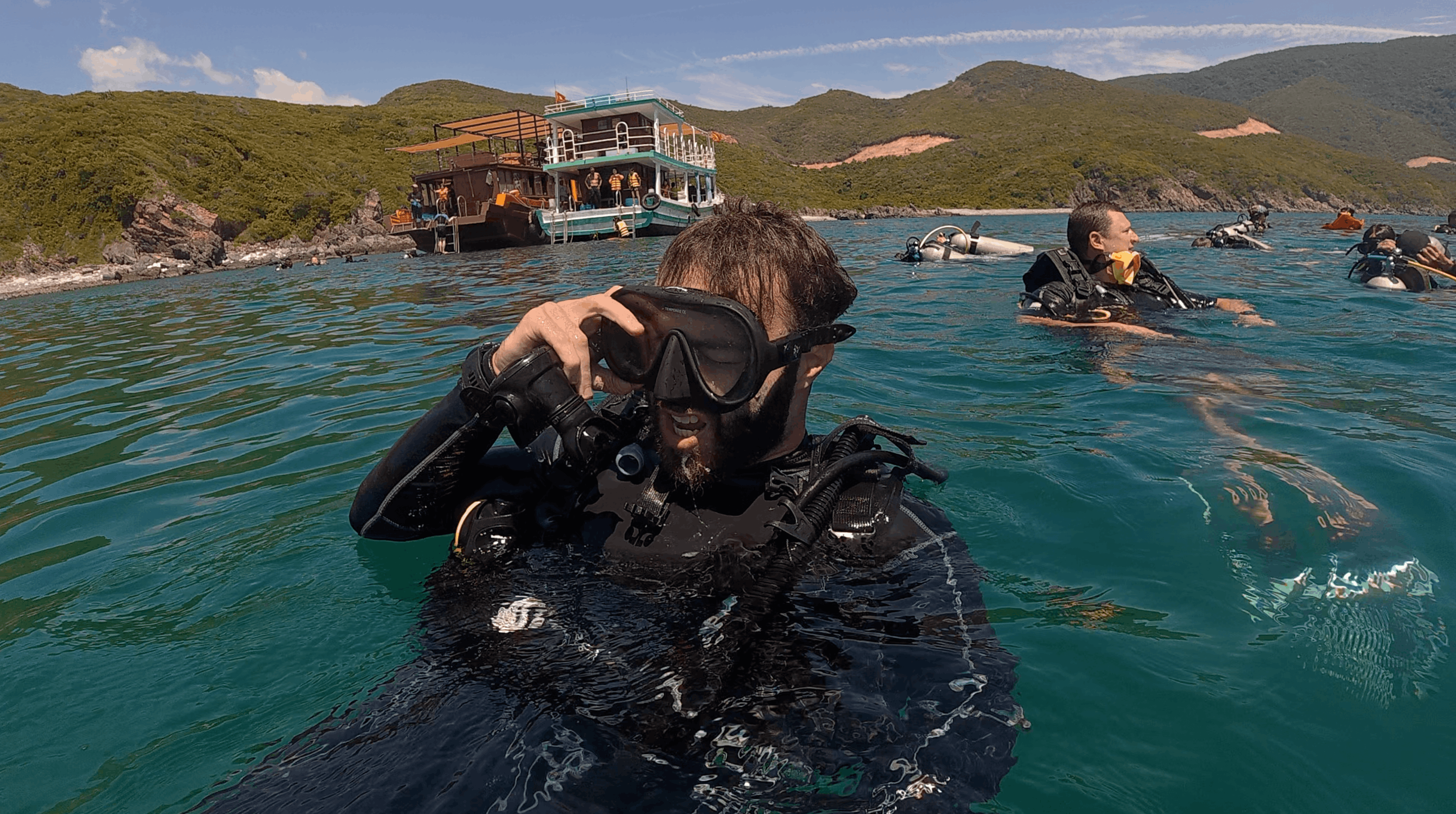
I used a different shop in each region, and both ran the day the same way.
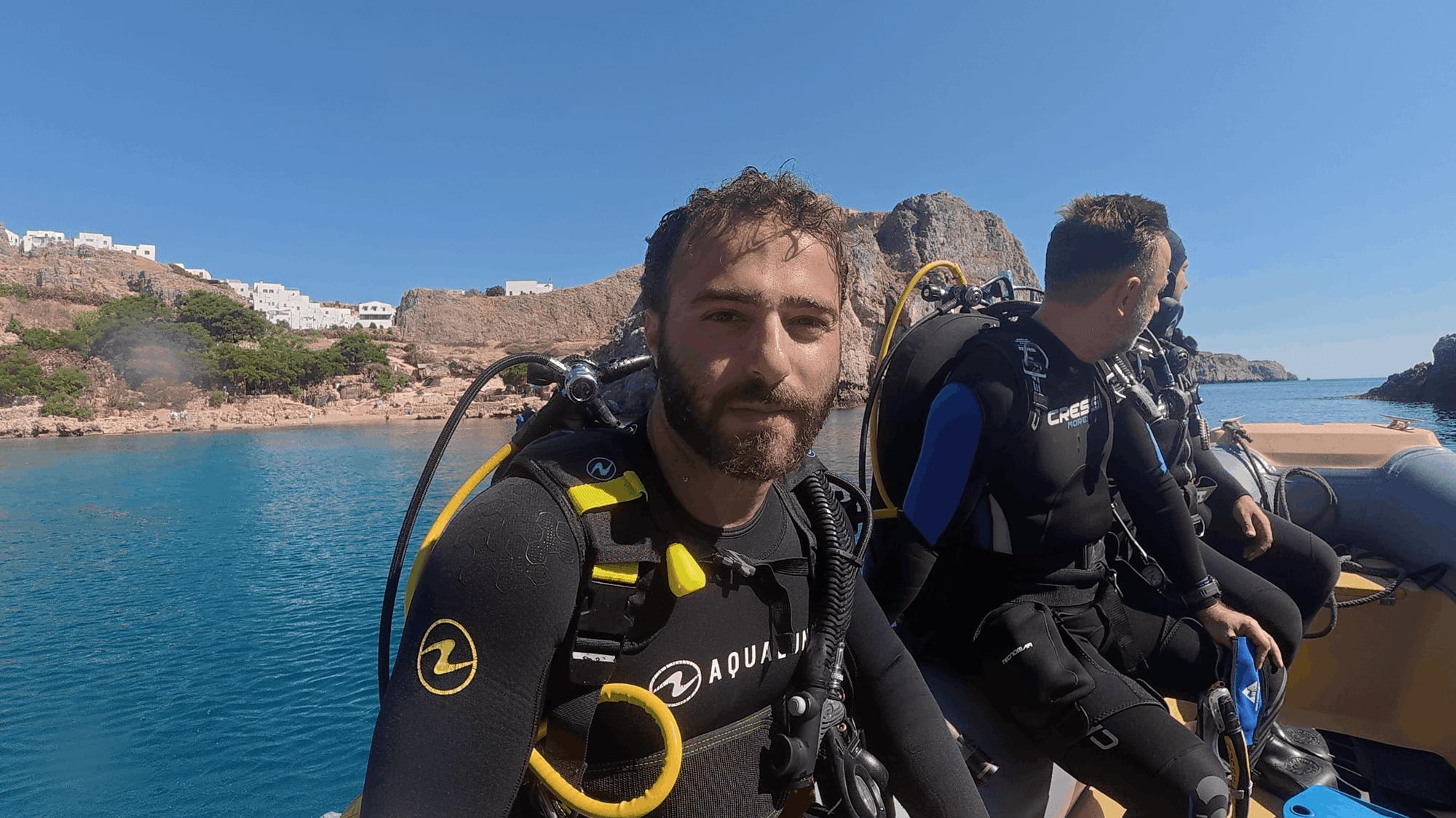
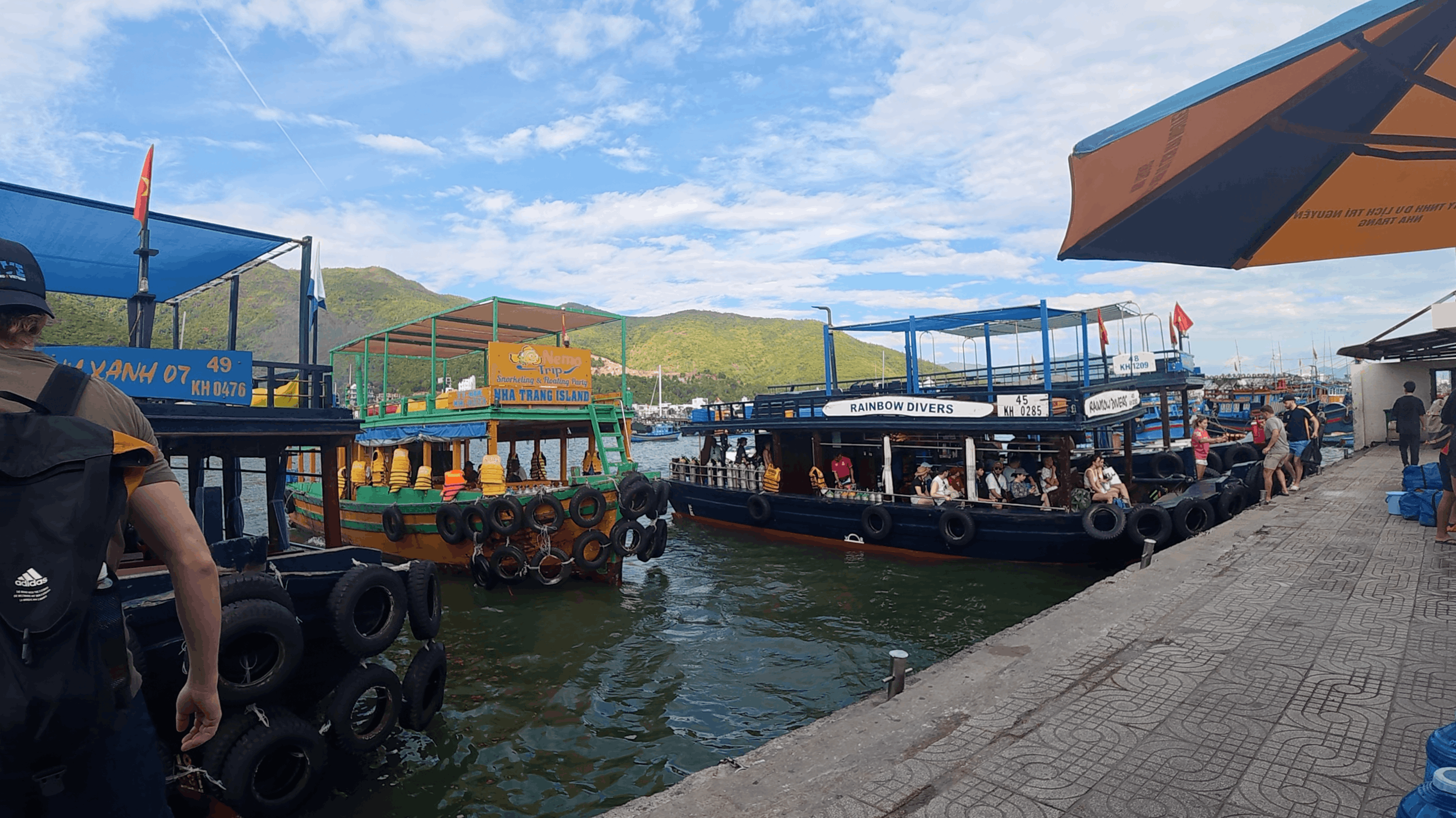
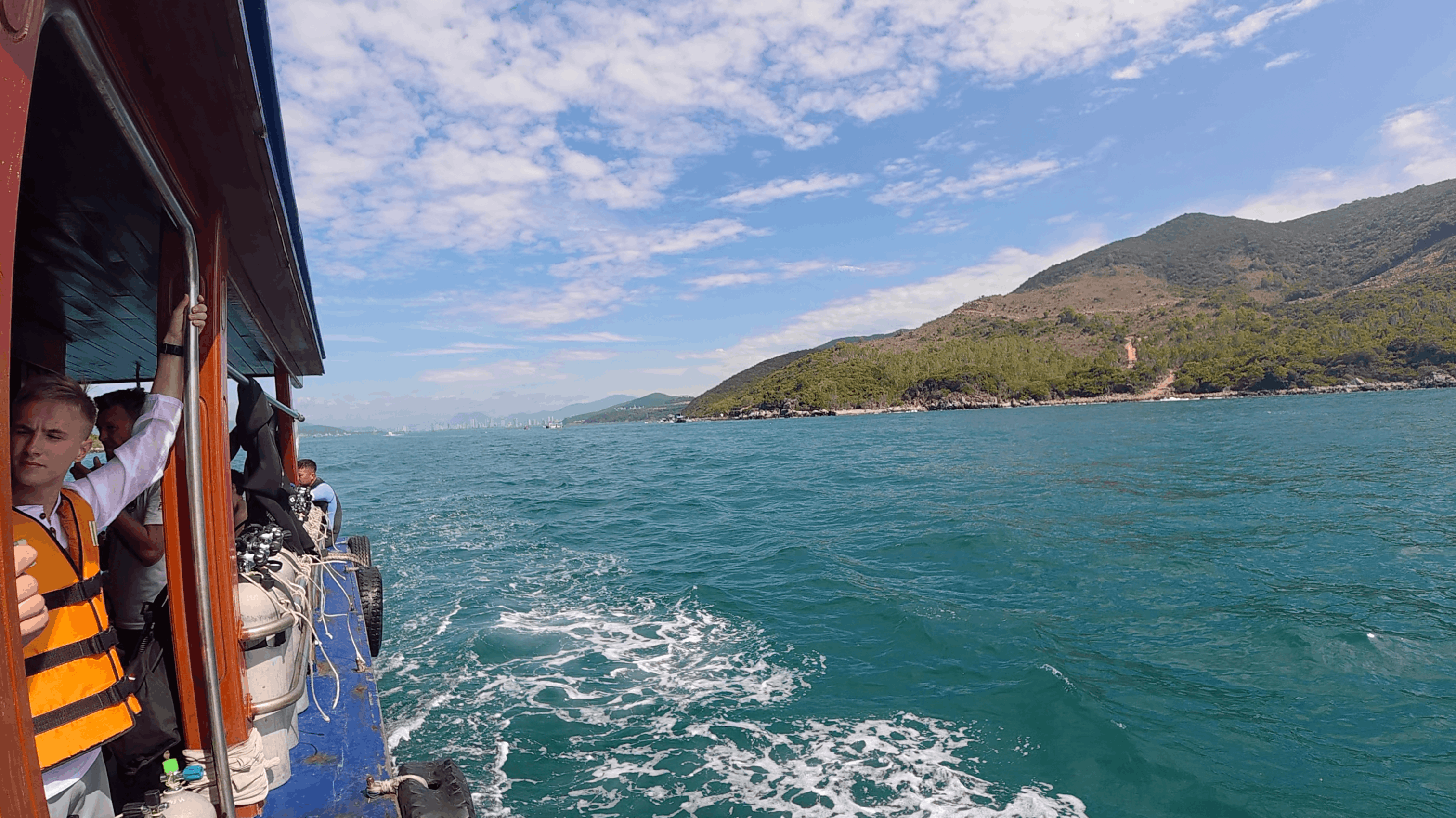
Nha Trang Diving Club picked me up at my hotel and drove me out to the marina, then ran Dam Bay and Madonna Rock as a two dive day. They were straight with me about the conditions before I booked, and told me the storms had wrecked the visibility, which turned out to be exactly right.
Cham Island Diving Center runs out of Hoi An to Cu Lao Cham. That is the one to book if you are anywhere near Da Nang or Hoi An.
Their guide Pierre is the absolute man. He has an incredible sense of humor and is very knowledgeable about the diving in the area, so request him if you go.
I give credit to both shops. When I first reached out to each of them, their first message said the diving conditions had been really bad recently. Very few shops alert their customers to that beforehand.
What Diving Vietnam Costs
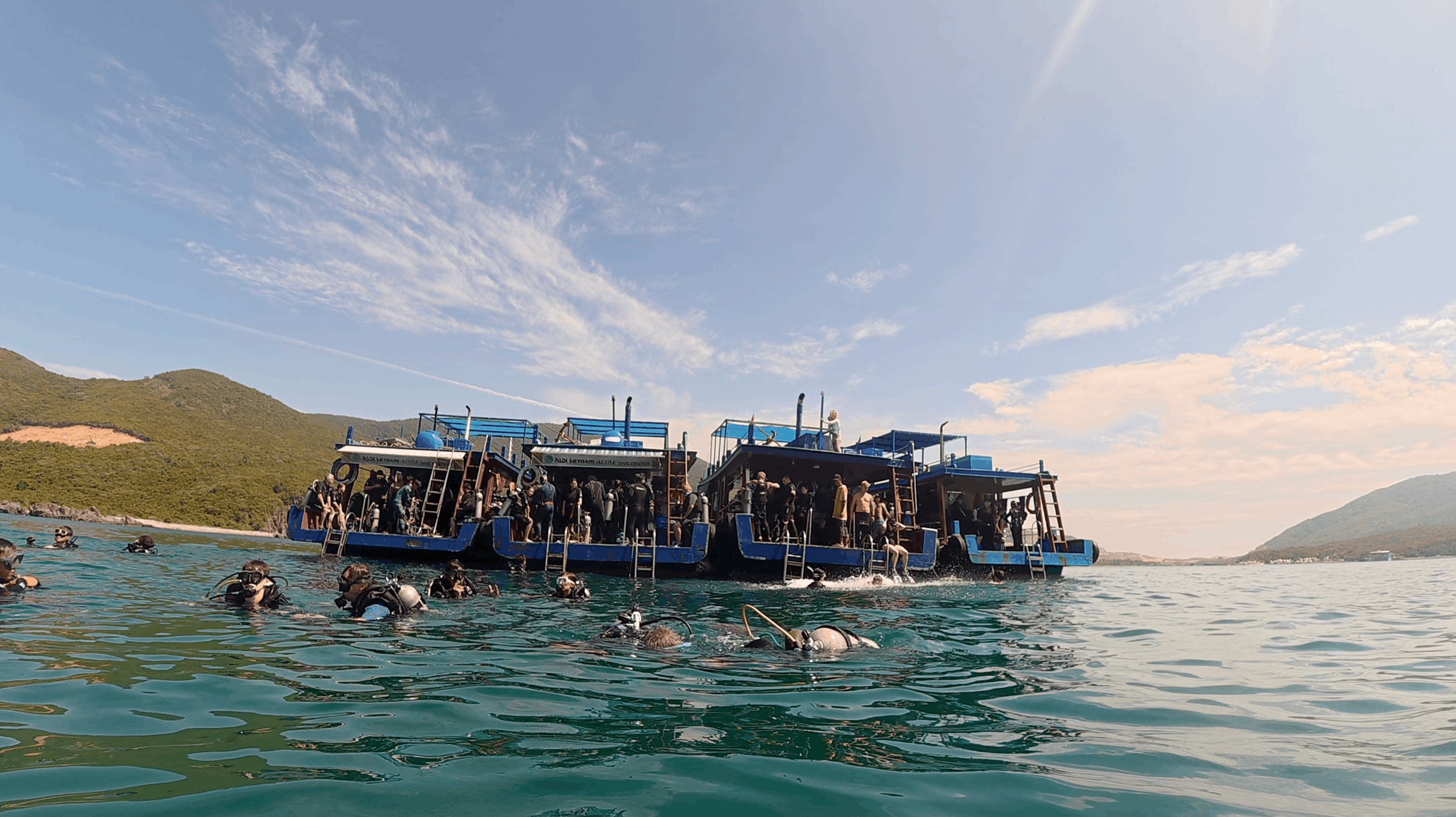
These are the rates I actually paid in August 2026.
- Nha Trang, two dive day with Nha Trang Diving Club: $75, including gear, guide, lunch and hotel pickup
- Cham Islands, full day with Cham Island Diving Center: $100, including gear, guide and lunch on Bai Chong beach
That is $175 for the whole trip.
Both days are full days rather than quick morning trips. Nha Trang is a 1 to 1.5 hour boat ride each way from the marina, and the Cham Islands day starts with a drive to Hoi An before you get on a boat.
Water Conditions and What to Wear
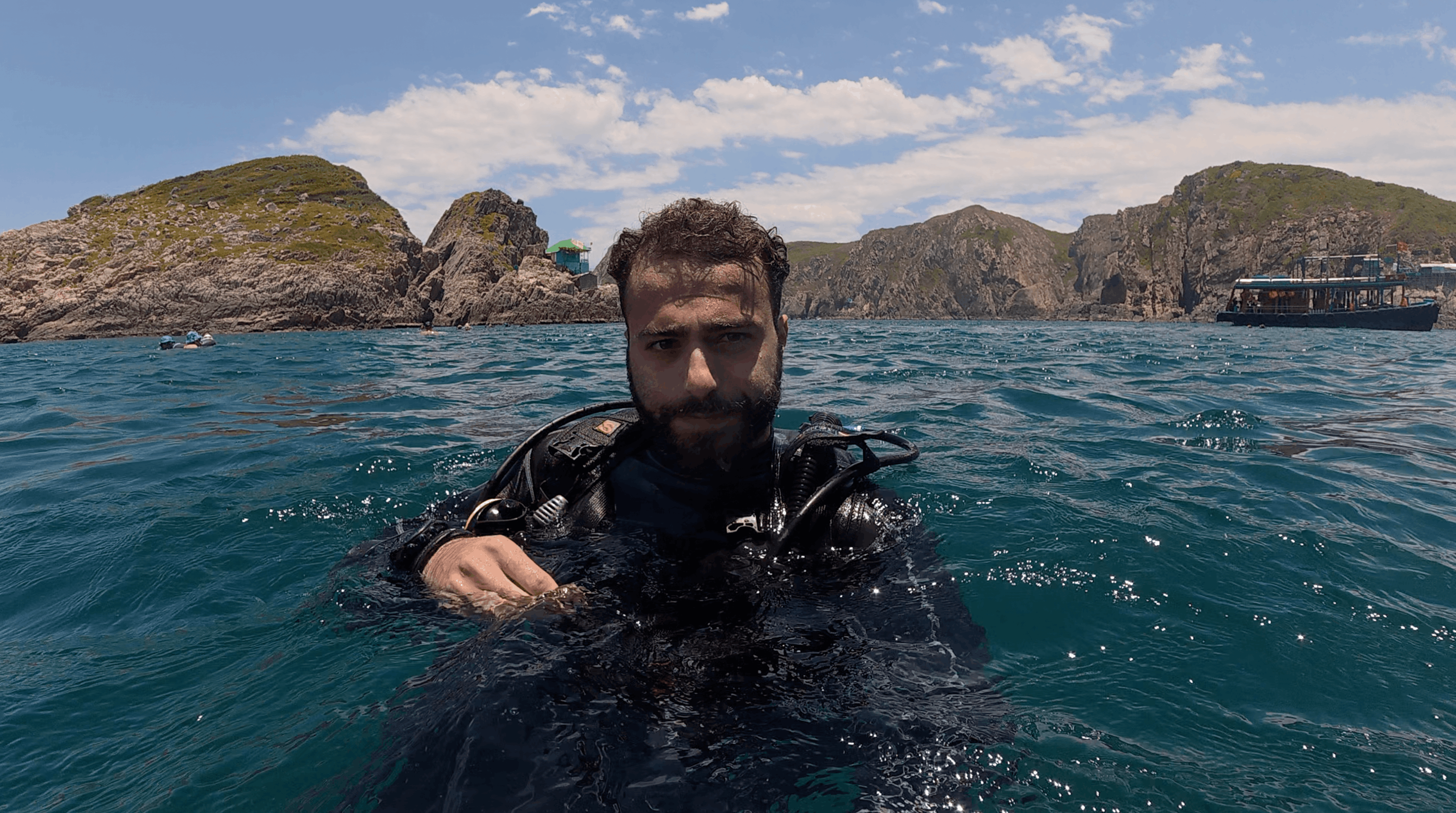
Water temperature split by region. Nha Trang sat at 78.8°F (26°C) on both dives, and the Cham Islands were 86°F (30°C), the warmest water I dove in the country.
A 3mm is the right call for Nha Trang. At 86°F in the Cham Islands a shorty or a rash guard is plenty.
Visibility was the story everywhere. 16 ft (5 m) at Dam Bay, 20 ft (6 m) at Madonna Rock, and 16 to 20 ft (5 to 6 m) at Hon Dai. Storms in the days before each dive, plus dredging at the river mouth near Cu Lao Cham.
These are also shallow dives by default. My deepest point anywhere in Vietnam was 49 ft (14.9 m).
Where to Stay in Vietnam
The diving splits across two bases and they are about 330 miles (530 km) apart, so this is not one trip unless you are already moving up or down the coast.
For the Cham Islands, stay in Da Nang or Hoi An. I was in Da Nang, which put me 40 minutes by car from the dive shop, and Hoi An itself would cut that out entirely.
For the bay sites, stay in Nha Trang city. The shop does hotel pickup, so anywhere central works.
Getting to Vietnam
Each dive region has its own airport, which is the easiest way to think about routing this.
Da Nang International (DAD) is the airport for the Cham Islands, Hoi An and Da Nang itself. Cam Ranh International (CXR) serves Nha Trang and sits about 40 minutes south of the city. Phu Quoc has its own international airport (PQC) on the opposite side of the country.
Vietnam is long and the domestic flights between these are cheap, which matters more than it sounds when your dive regions are on opposite monsoons.
One thing to watch out for with the visa. When I applied, I said I only needed 18 days, thinking they would stamp me for the full 3 months an American can get. They don't. The amount you state is the maximum you get, unless you re-enter the country or go through a more complicated extension.
Quick answers on diving Vietnam, from my trip.
Is Vietnam worth diving?
It is worth diving if you are already in the country, and it is not worth flying in for on its own. The bottom is rock rather than reef, the sites are shallow, and I never had more than 20 feet (6 m) of visibility. Hon Dai in the Cham Islands was the exception and had genuinely good hard coral cover.
When is the best time to dive Vietnam?
It depends which coast you are on. Nha Trang and the Cham Islands run roughly March to October, Phu Quoc runs November to May, and Con Dao runs March to September. March and April are the months that work almost everywhere.
Why can't you dive Phu Quoc in August?
Phu Quoc sits in the Gulf of Thailand on the southwest side of the country, so it gets the southwest monsoon from roughly May to October. That is the same weather that leaves the central coast calm. Its season is November to May, which is when Nha Trang shuts down.
Can you dive Hon Mun in Nha Trang?
No. The city closed Hon Mun to diving, swimming and boat tours in late June 2022 after storm damage destroyed most of the coral, and it was still closed in August 2026. Shops run Madonna Rock on the outskirts of the protected area instead.
How much does diving in Vietnam cost?
I paid $75 for a two dive day in Nha Trang and $100 for a full day in the Cham Islands. Both included gear, a guide and lunch.
What is the best dive site in Vietnam?
Of the three I dived, Hon Dai in the Cham Islands. The coral cover there is the healthiest in the country and it is the only site where the reef itself is the structure. Con Dao is the area Vietnamese divers rank highest overall, and I have not been there.
Let's Dive Together
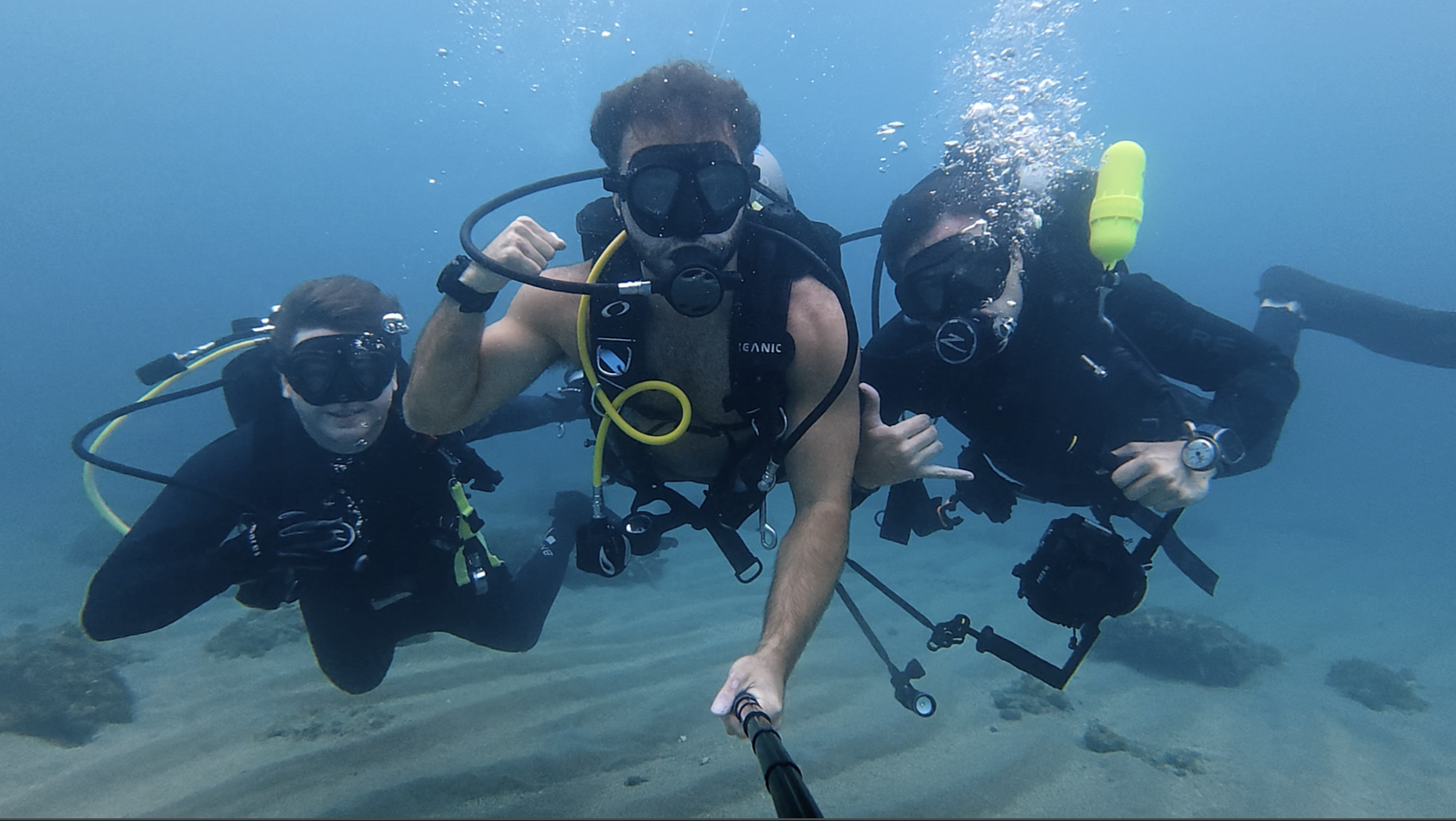
👋 It's Divemaster Austin
I'm inviting you to Dive Club, my global scuba diving community.
What you’ll find inside:
🤿 Dive meetups & group trips
🌍 Top dive sites shared by community members
⚙️ Gear tips & technique discussions
🤝 Diver's who’ve already linked up IRL
See you there!

.webp)
.webp)