-p-2000.png)


.webp)
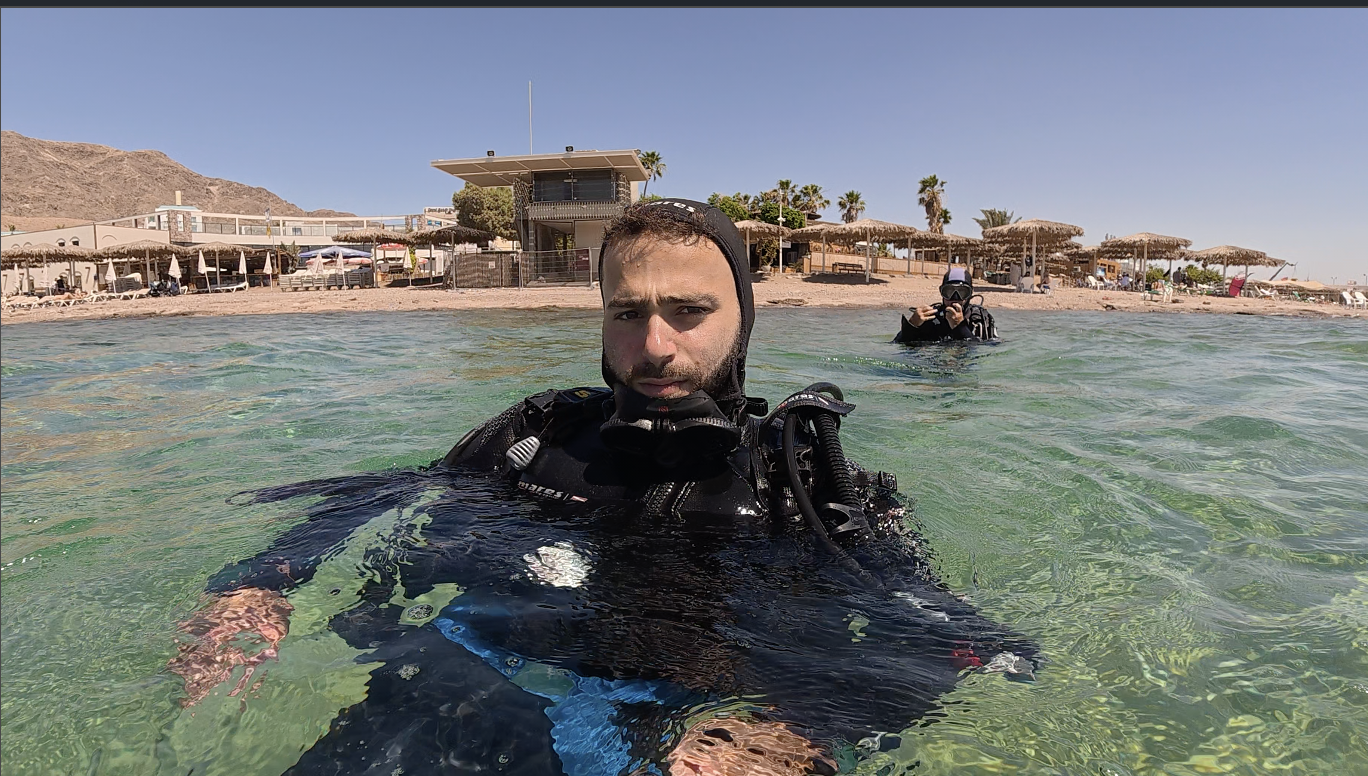
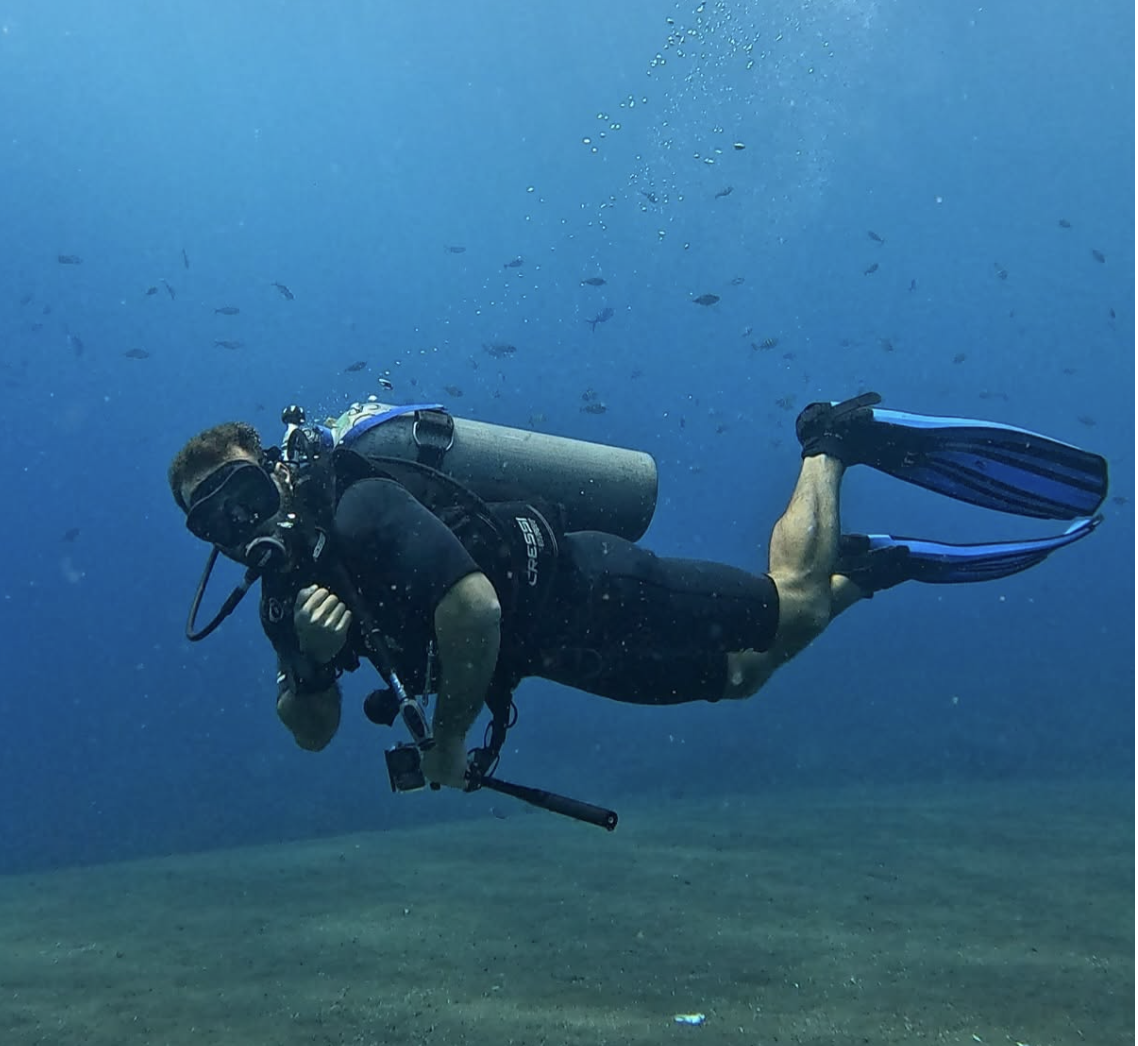
In June of 2026, I spent three weeks diving in Greece.
With over 6,000 islands in the country, filming every single one wasn't realistic.
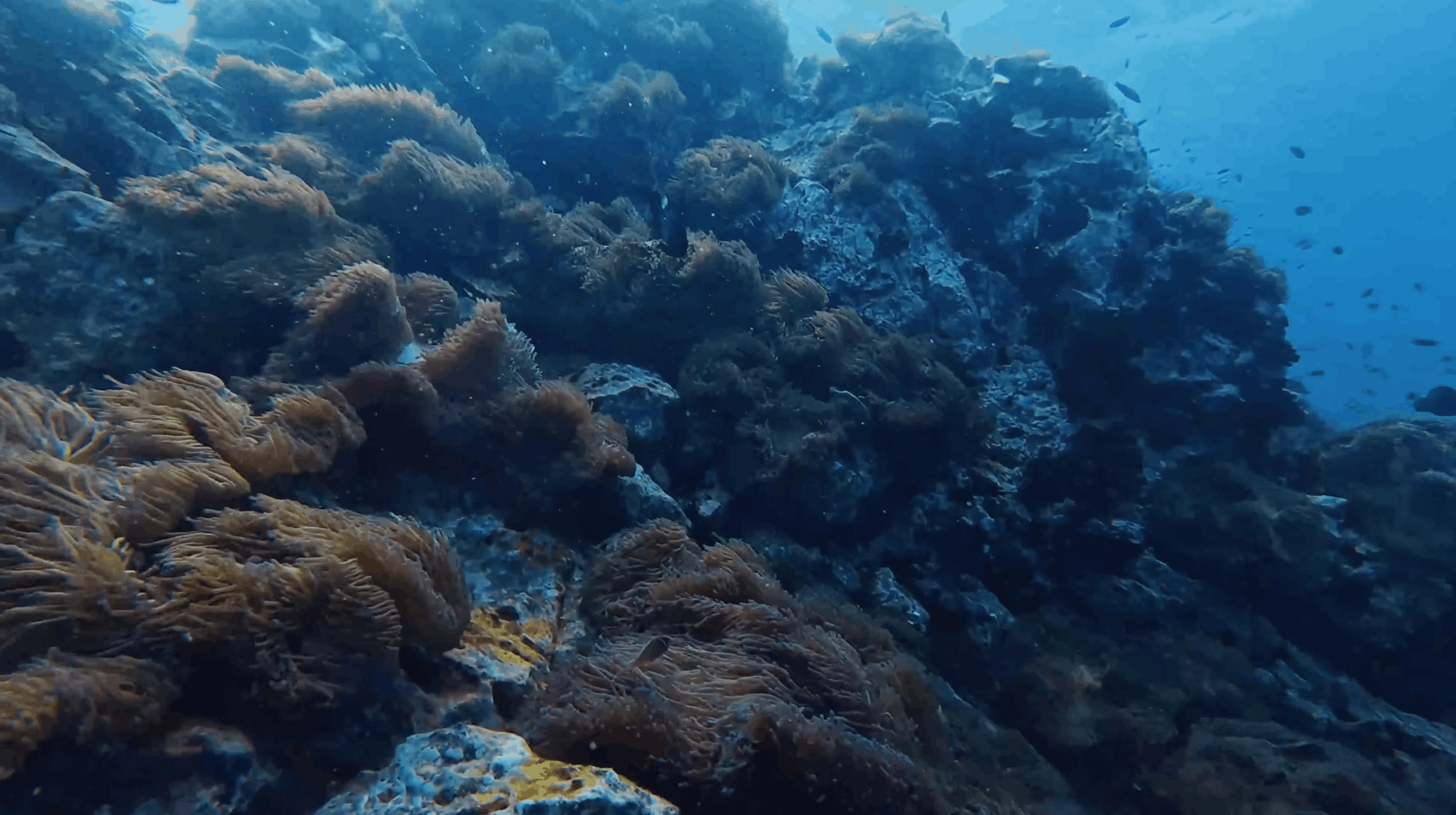
I believe I gathered enough diversity in my diving site and footage to put together this guide to what scuba diving in Greece actually looks like!
Overview of Greece
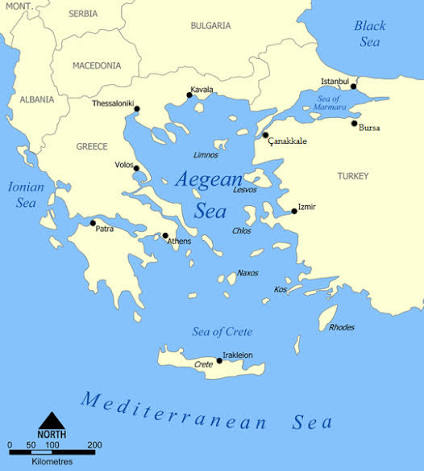
I didn't dive Santorini, Mykonos, Corfu, or the mainland on this trip, but based on conversations with instructors and locals, the diving in those areas looks similar to what I'm about to show you.
My six favorite dive sites on Rhodes and Crete from this trip, in order, were:
- Elephant Cave
- Cleobulus Tomb
- Pentanissos Islet
- The Giannoula K wreck
- The Minnewaska wreck remains
- Lion's Head Inlet
Dive Sites in Rhodes
I based myself in Lindos, Rhodes, and dove most of the island with Lepia Dive Center.
Best Cave Dive: Cleobulus Tomb
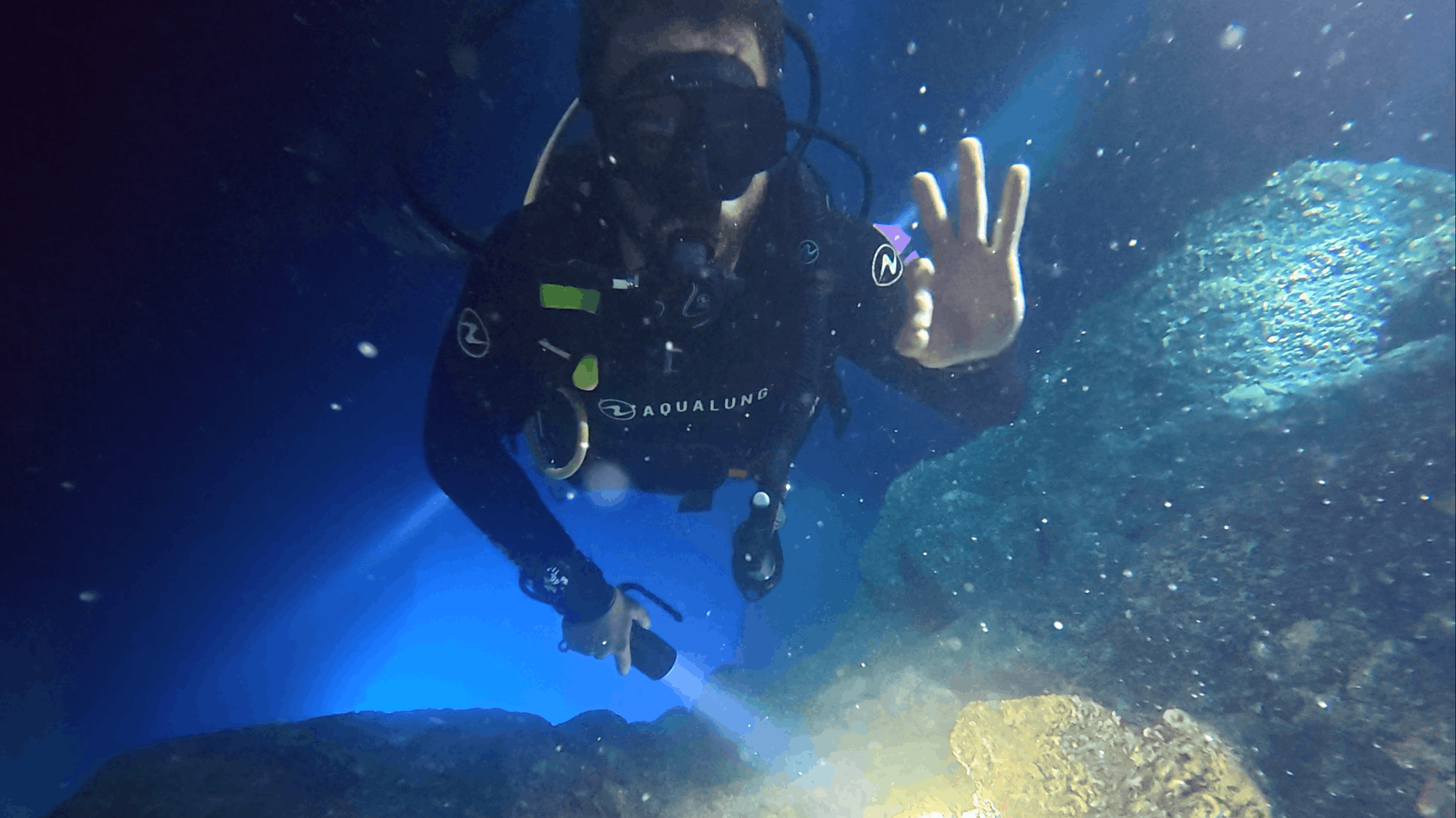
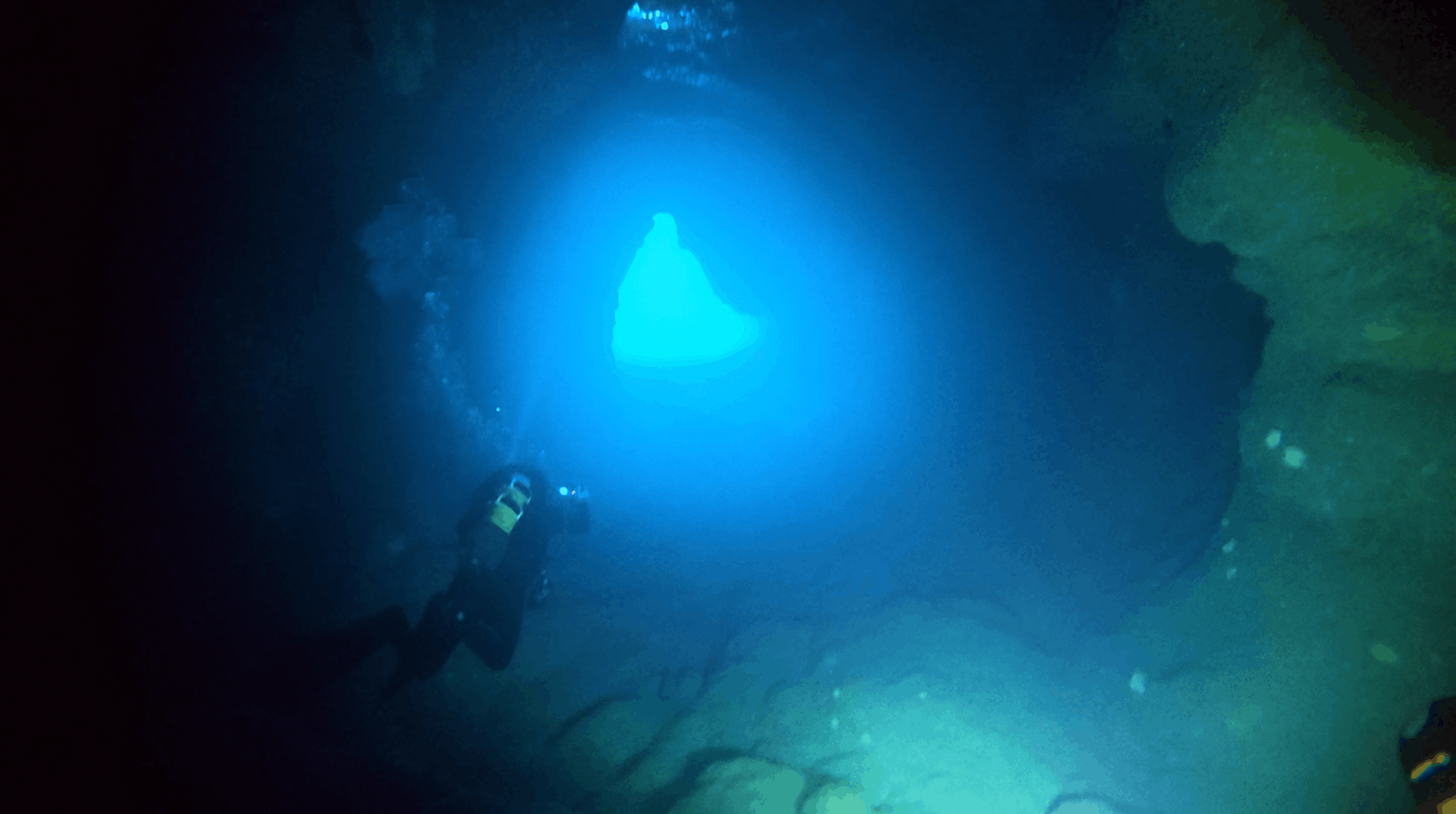
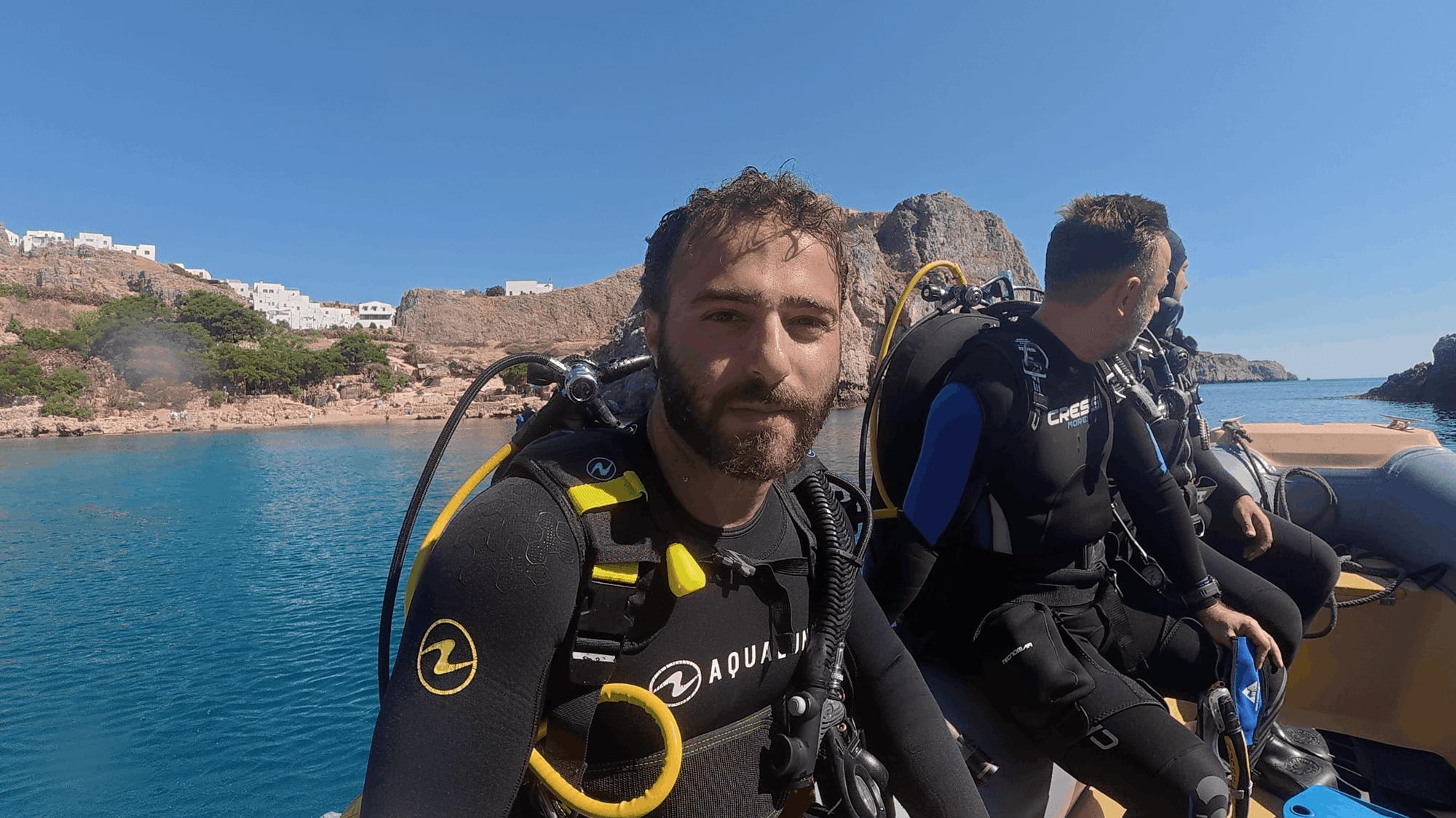
My favorite dive site in Rhodes was Cleobulus tomb. It features two large sea caves beneath the burial site of Cleobulus, one of the Seven Sages of ancient Greece.
Lepia Dive Center told me they only spot one two to three times a season, and had seen one with a pup in this same cave the week before.
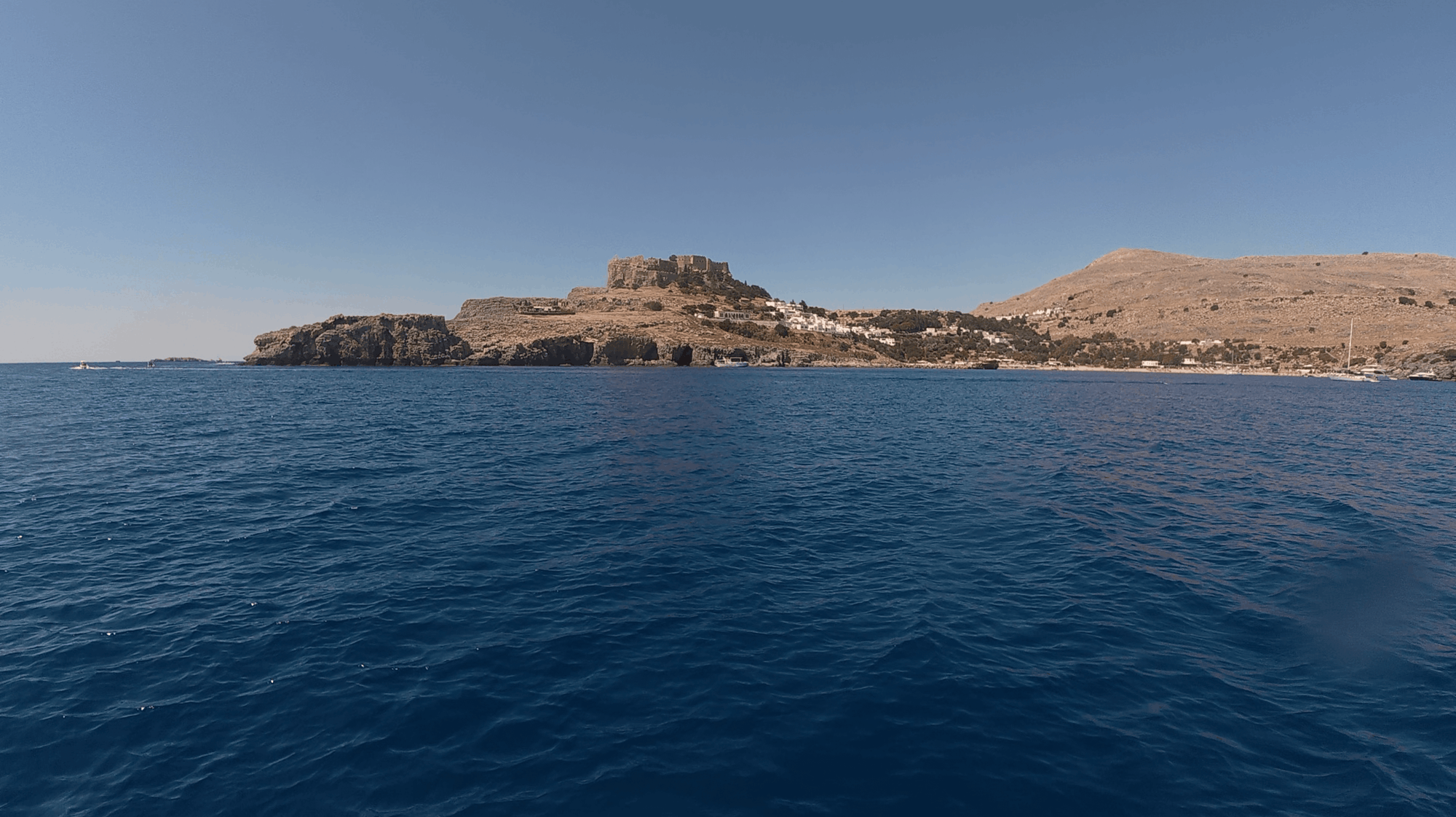
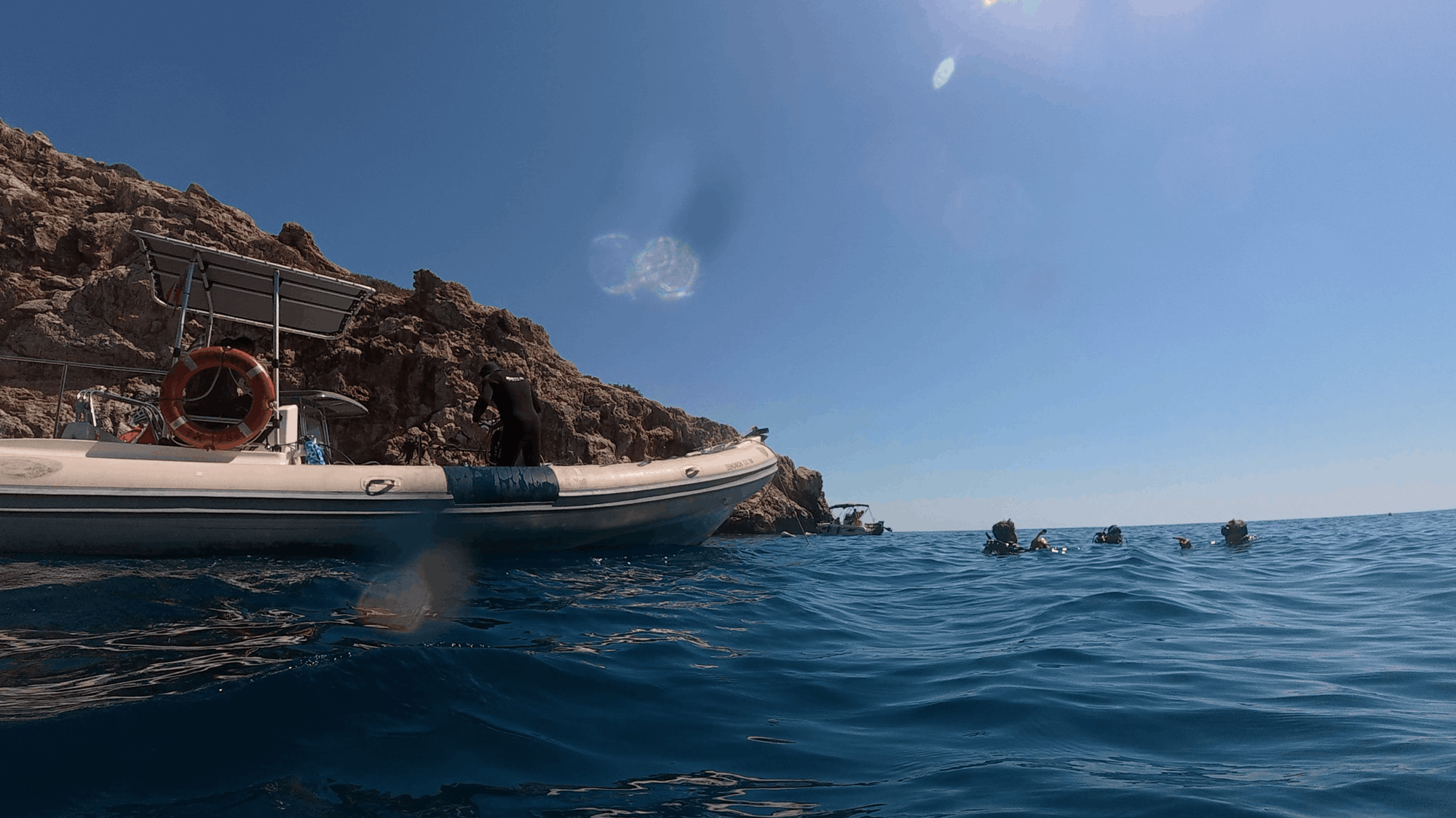
In order to access the site, you take a short rib boat ride from St. Paul's Bay.

Light stays visible throughout, giving the cave a blue glow, and the back of the cave drops off deep enough that Lepia runs tech training there.
Best Wall Dive: Pentanissos Islet
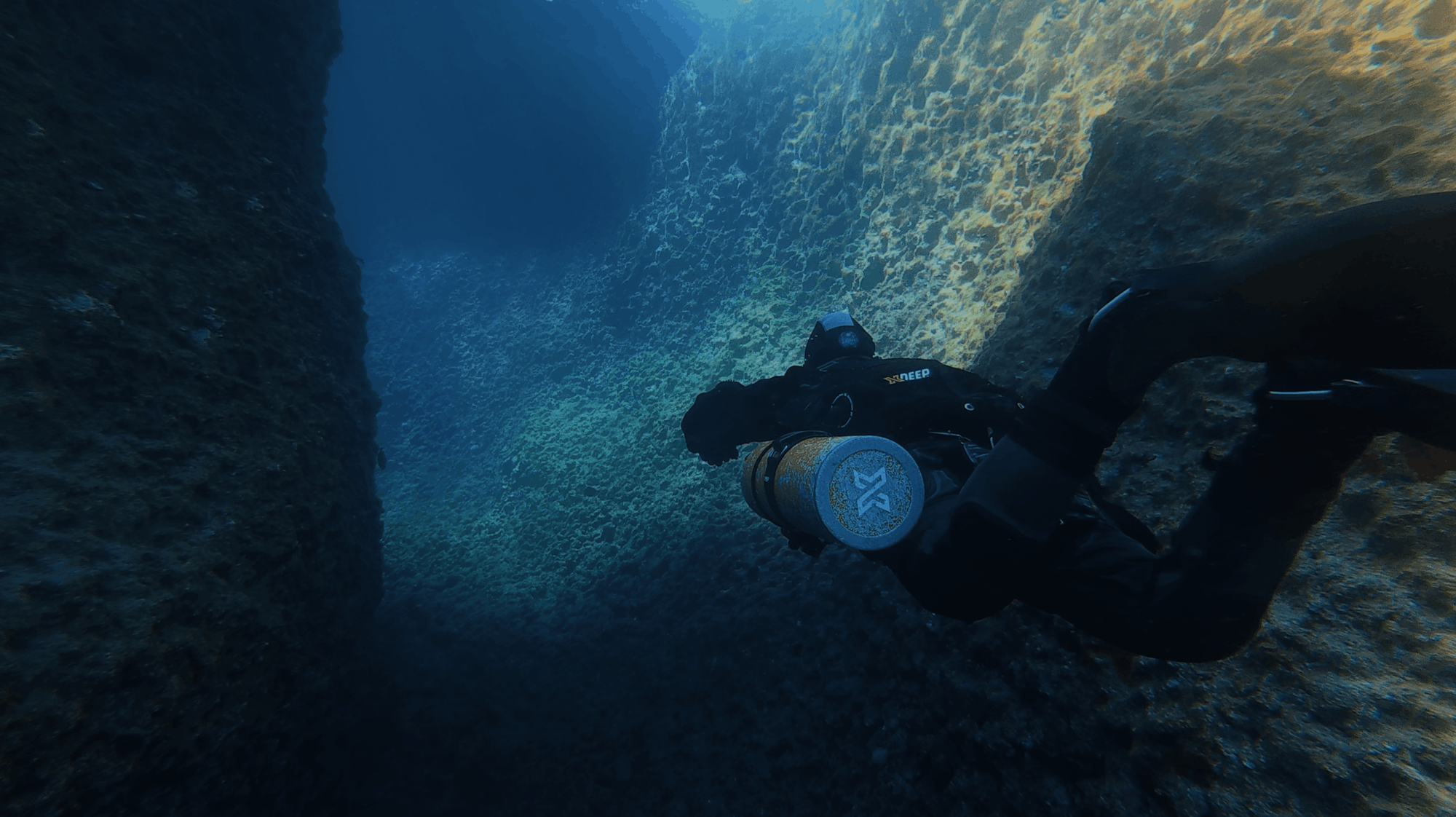
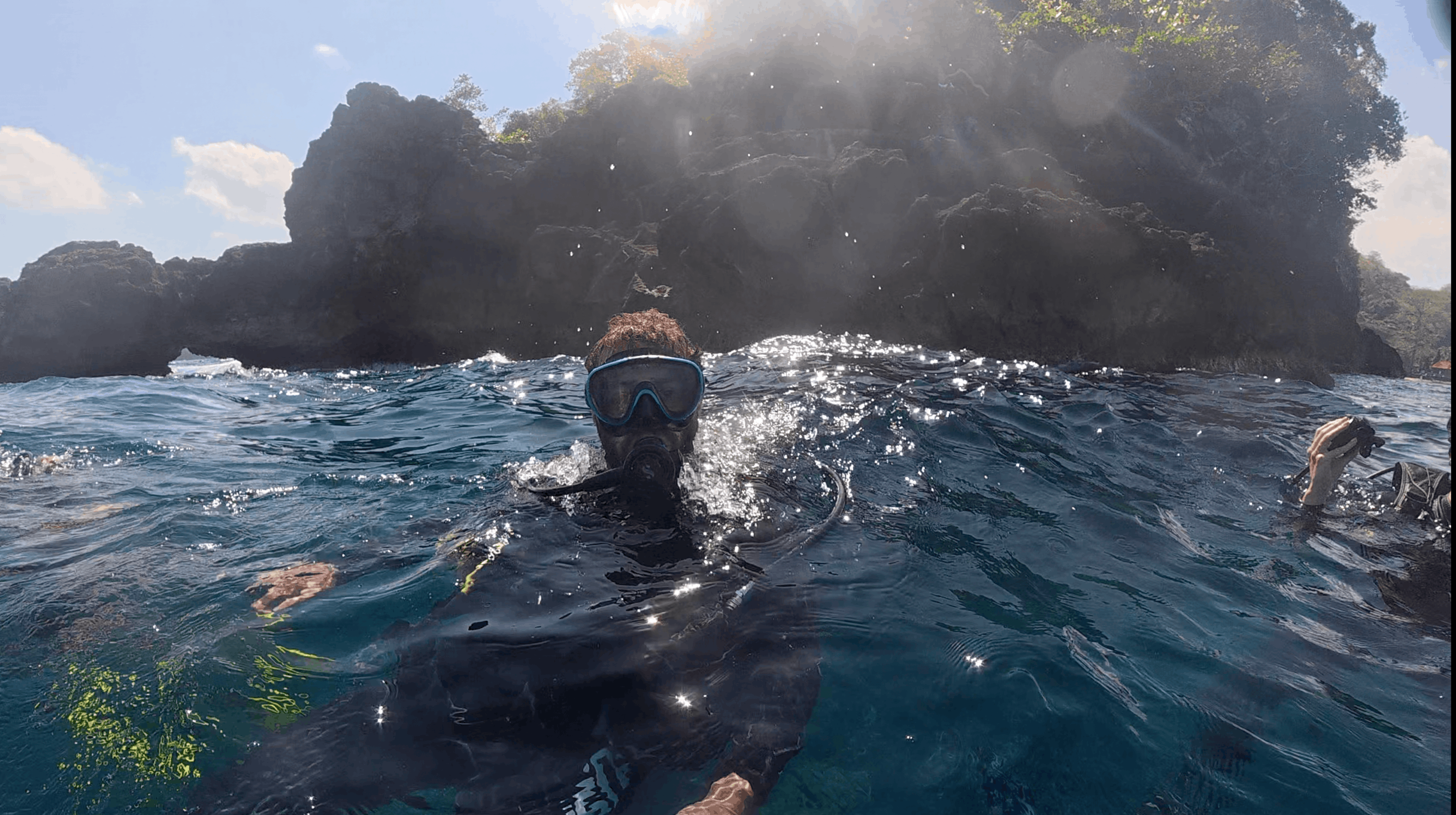
Pentanissos Islet was my first dive in Greece, right off the ferry from Turkey.
.png)
The dive features two caverns on the edge of the Lindos Basin, the second-deepest point in the Mediterranean, with a sharp wall drop-off.
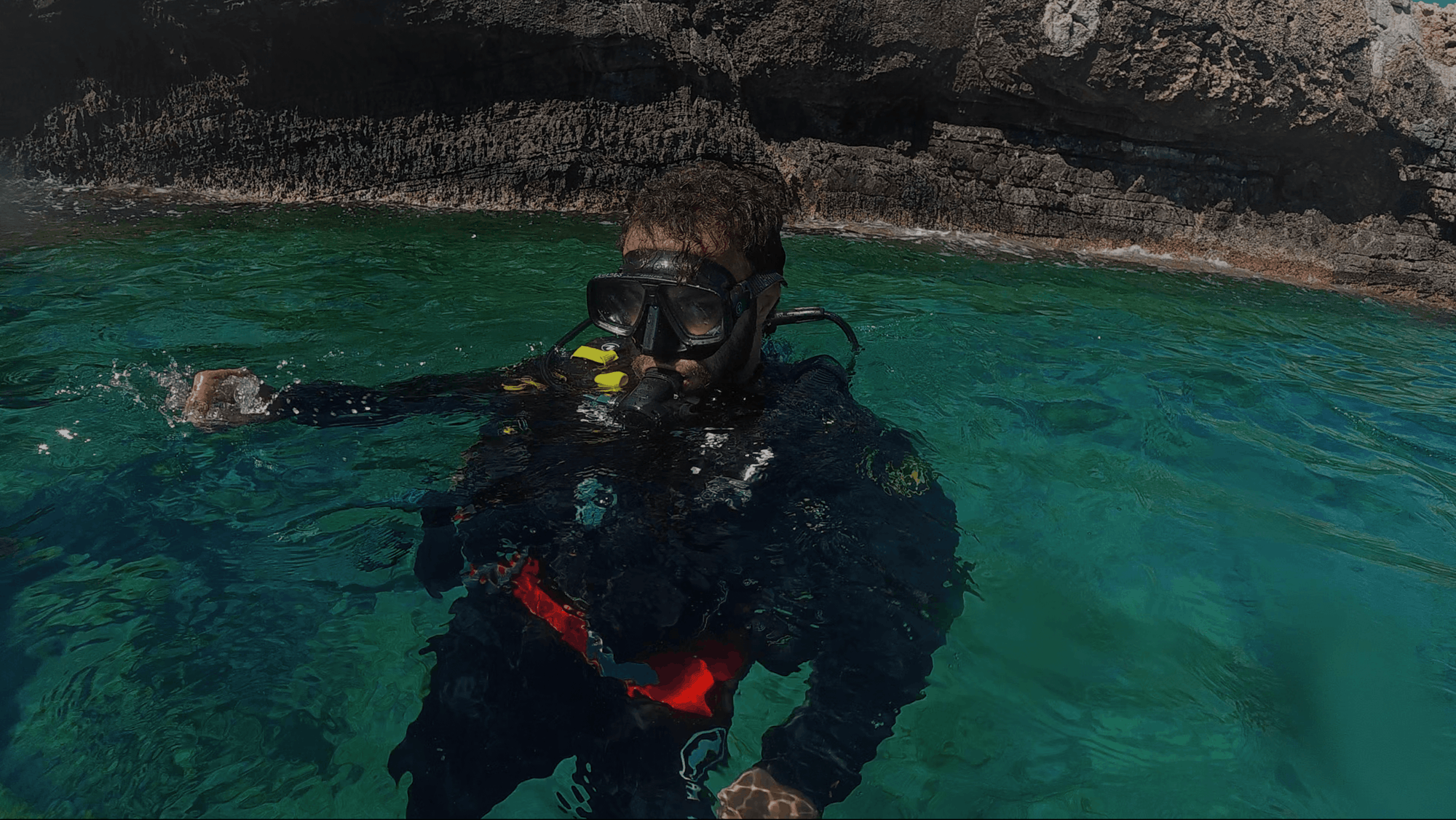

Best Wreck Dive: Giannoula K
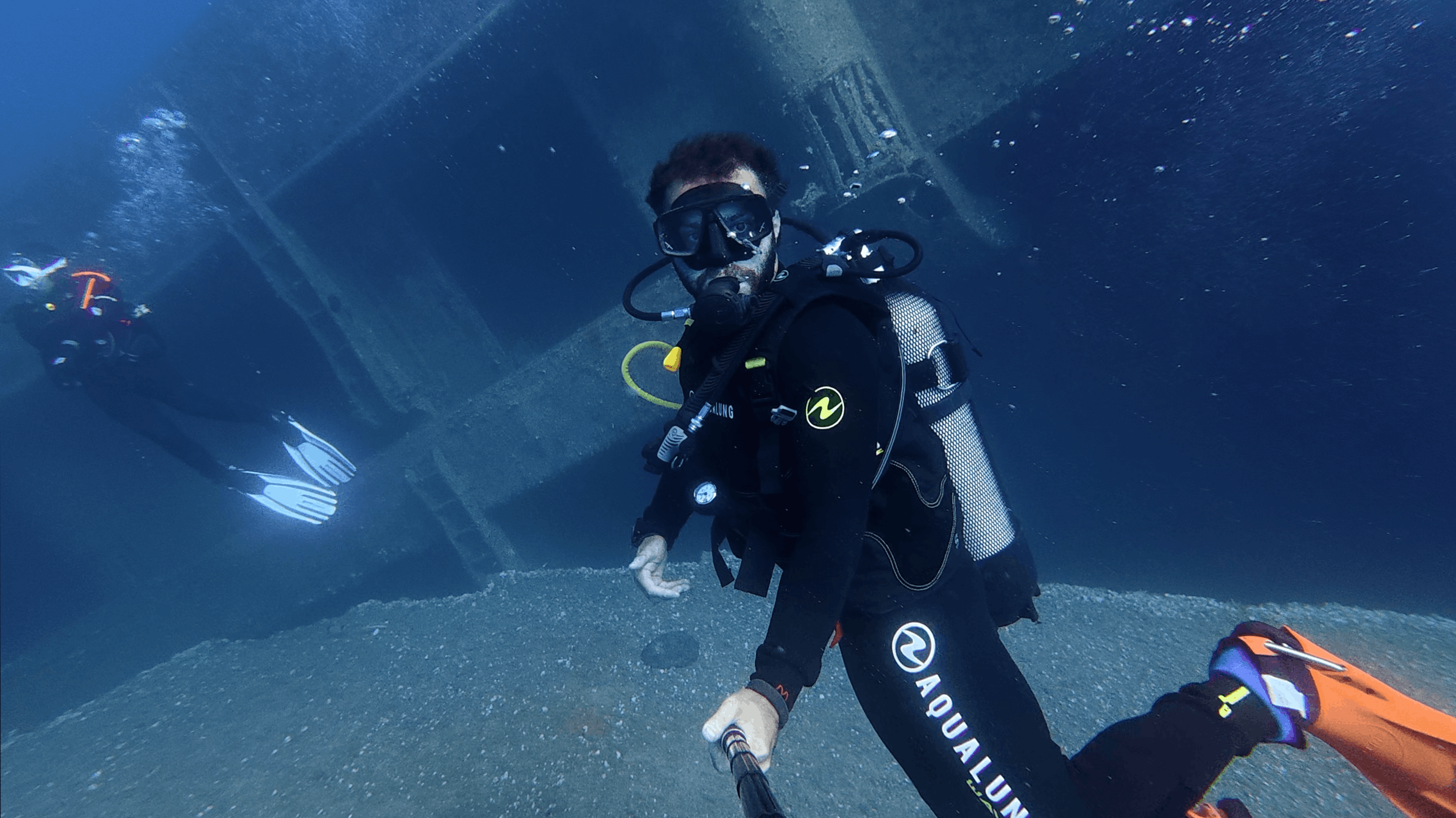
Built in the Netherlands in 1953 to haul iron ore, the Giannoula K ran aground during severe weather in 1981; the crew abandoned ship and it sat unmanned for a couple of days before salvage.
It's 110 meters (361 ft) long and sits mostly intact at the bottom of Plimiri Bay, mast once nearly breaking the surface before it snapped off in 1995.
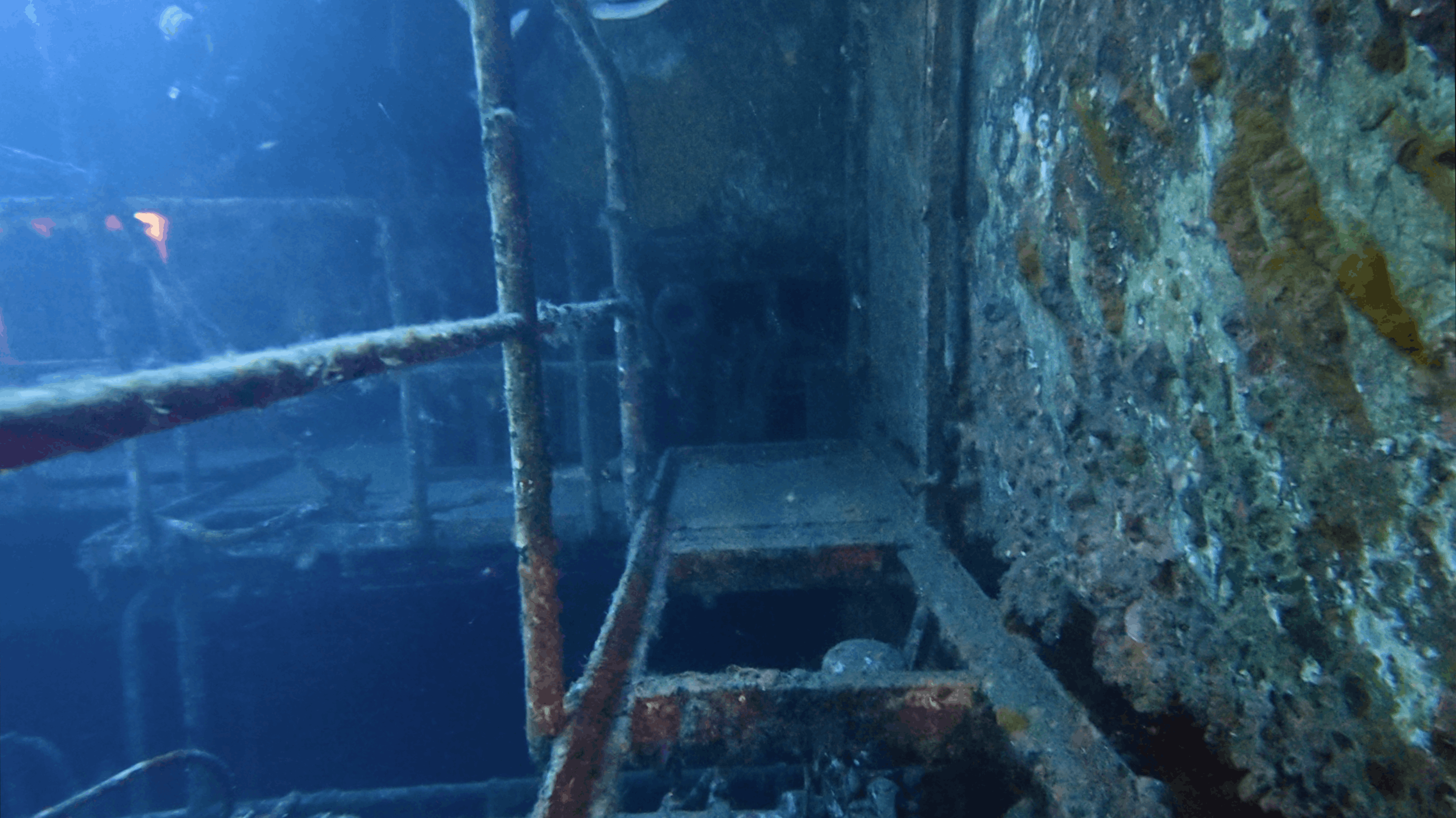
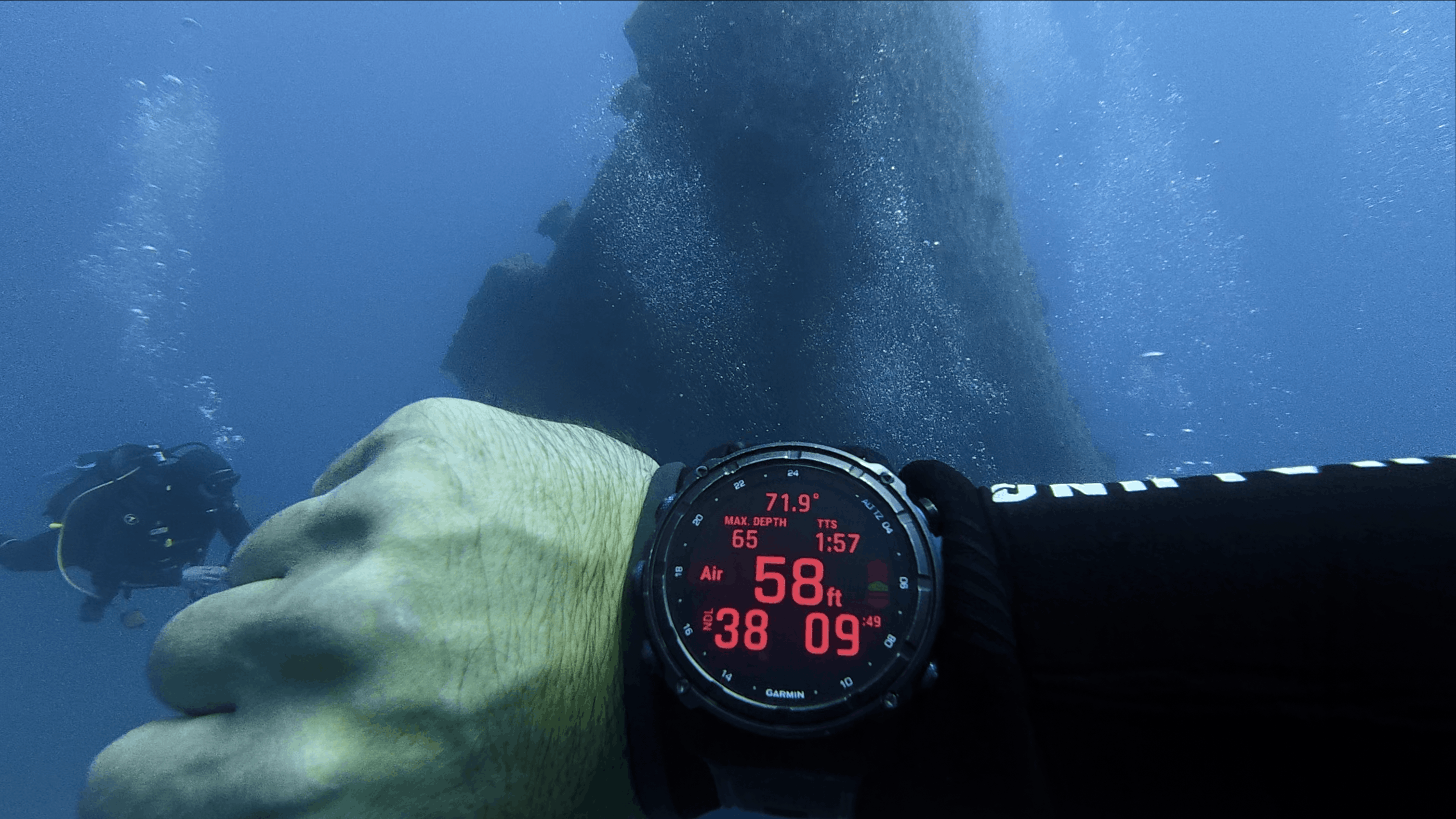
We ran it as two dives, the perimeter first, then a penetration into the engine room. Better fish life and a few nudibranchs than I expected for the Mediterranean.
Lepia Dive Center runs this out of Plimiri, a bit further from Lindos, but they'll drive you.
Typical Mediterranean Dive: Lion's Head Inlet
Named for a rock formation at the mouth of the inlet that resembles a lion's head if you squint.
Not a remarkable dive on its own, but I think it's the most representative of an average Mediterranean dive when it isn't a wreck or a cave.
Rocky terrain, lionfish, damselfish, sea breams, and Mediterranean parrotfish are around but it's not a thriving reef.
Crete
I based myself in Chania to dive Elephant Cave and the Minnewaska remains, both with Chania Dive Center, run by Nicholas.
Best Overall Dive: Elephant Cave
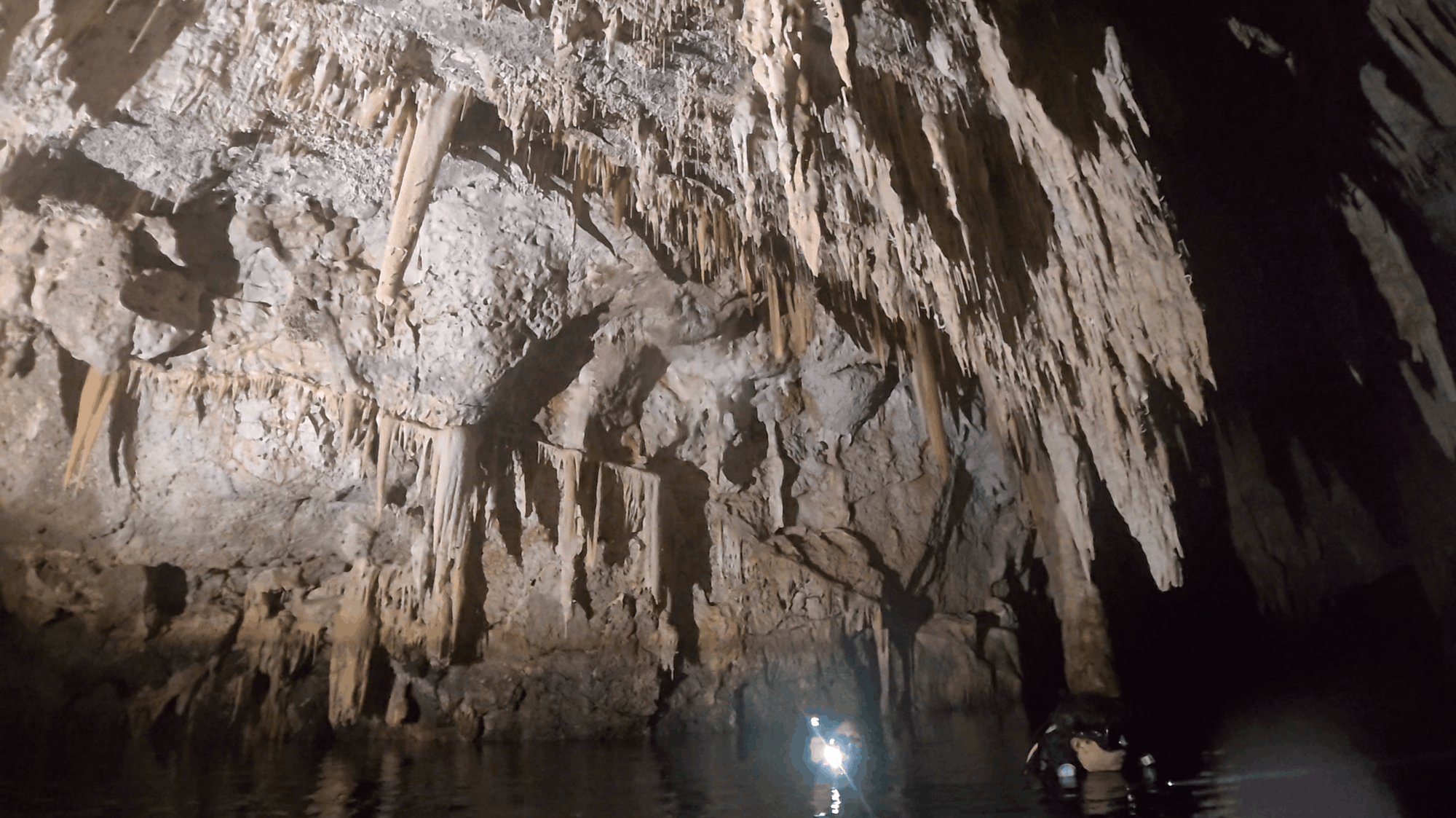
Elephant Cave was my favorite dive in Greece, and it gets its name from the fossilized elephant bones (some around 50,000 years old) discovered inside in 1999.

The find, along with others on Crete, suggests elephants were once endemic to the island, supporting the theory that Crete was once attached to mainland Africa. The bones are believed to belong to a distinct species, the Chanian elephant, named for the city.
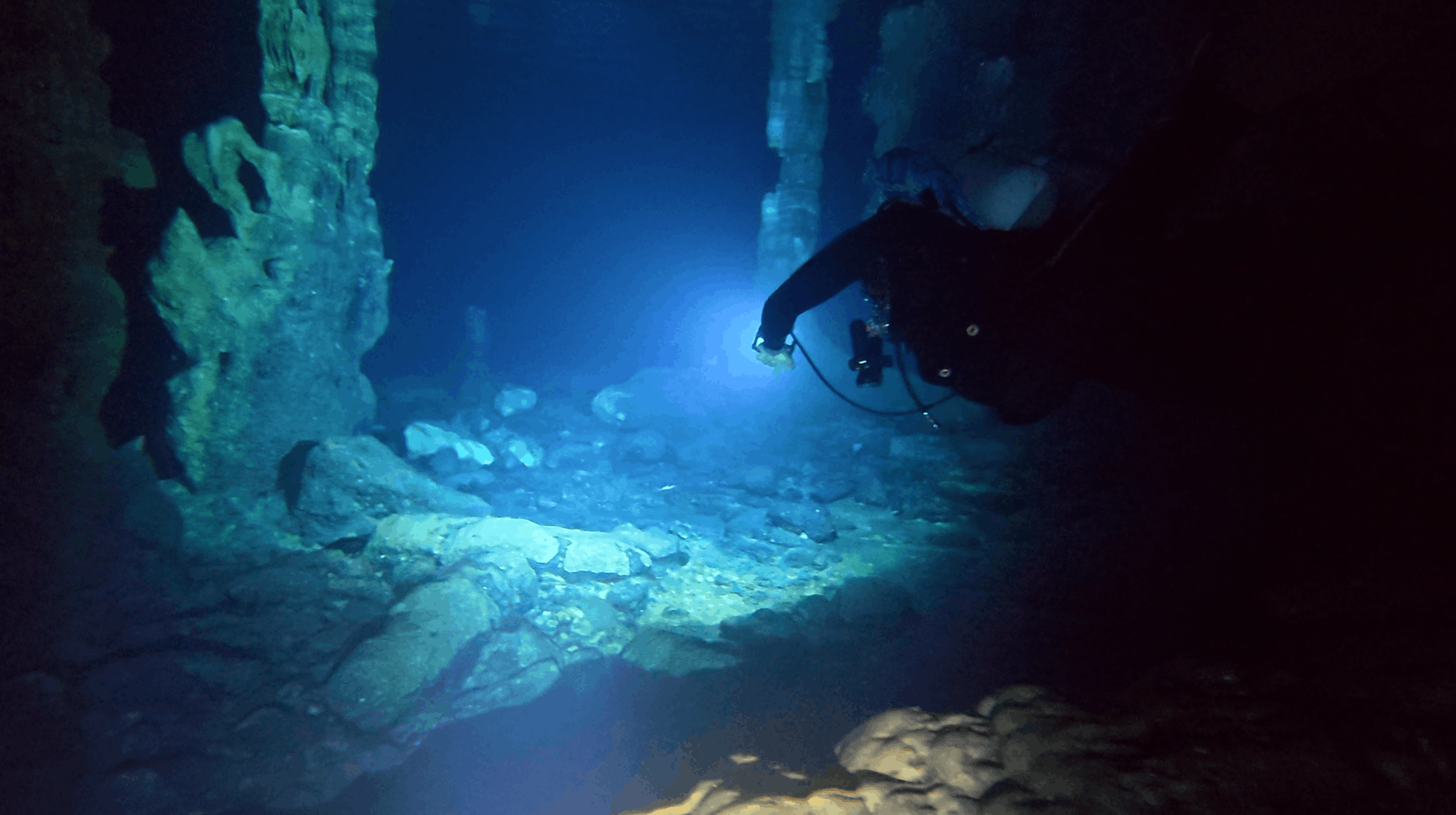
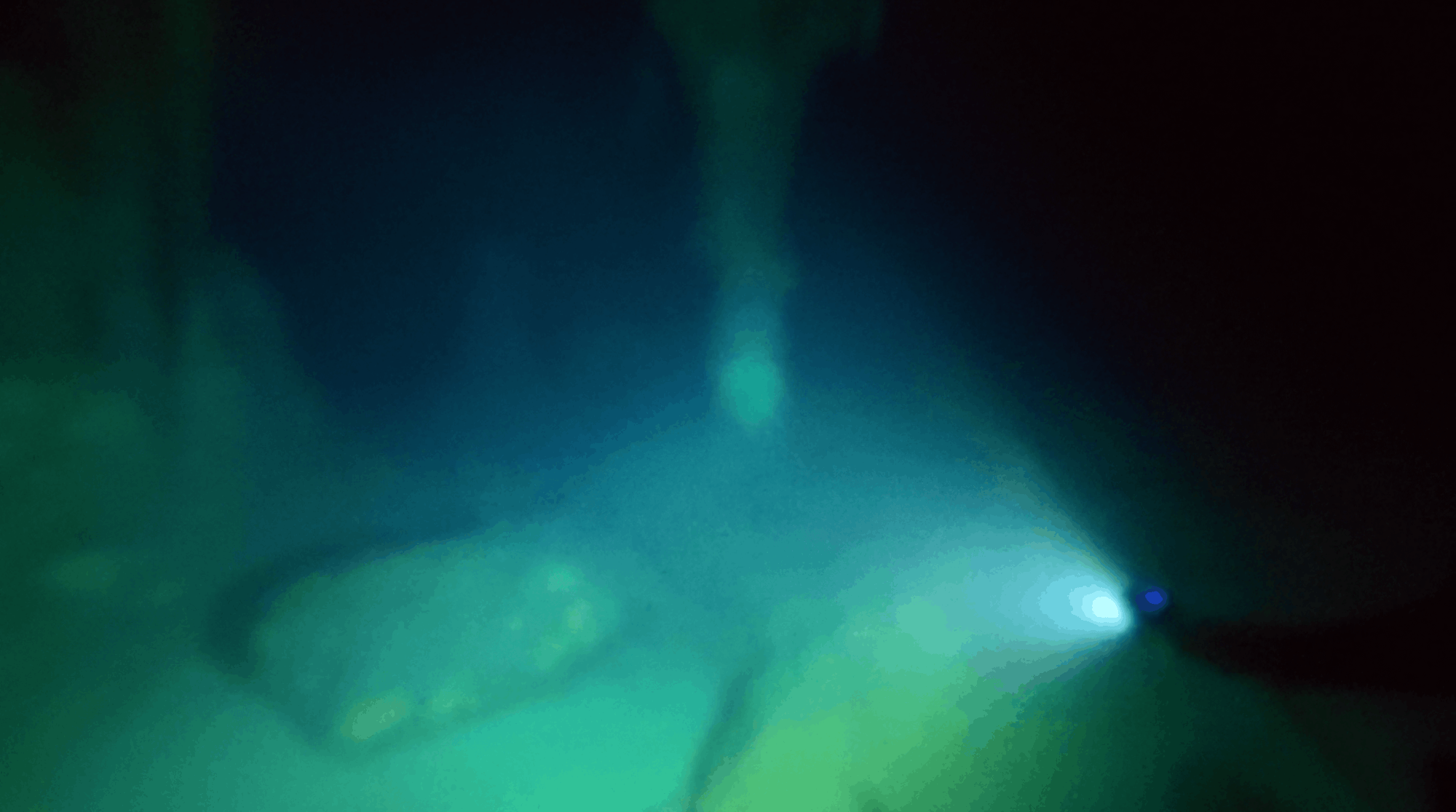
The main chamber holds an air pocket nearly 40 feet (12 m) tall with constant natural light, which is why it's open to Advanced divers instead of requiring cave certification.

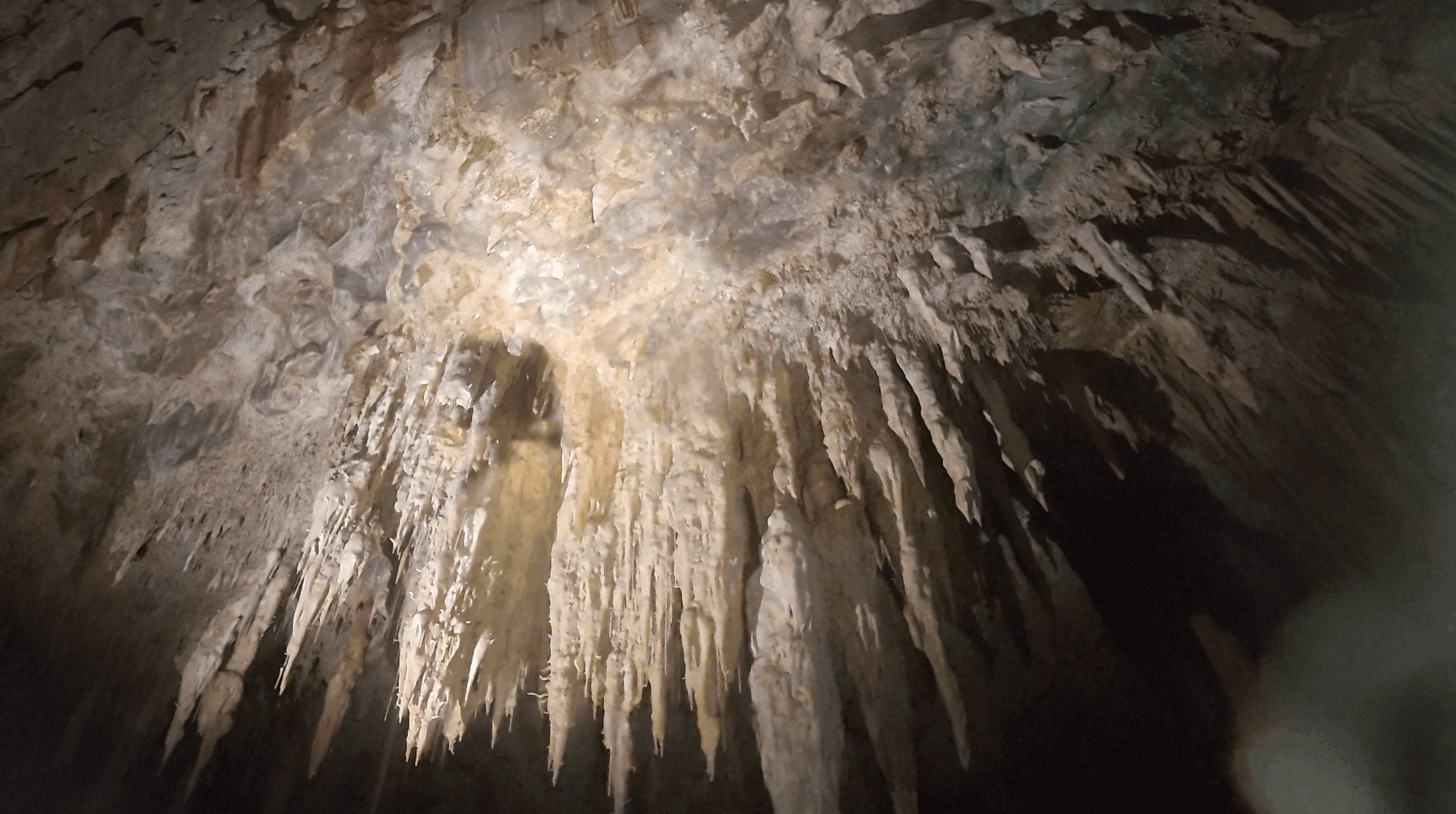
I spent about 30 minutes inside taking in the stalactites, stalagmites, and dendrites, easily one of the most memorable dives of my life. Nicholas, owner of Chania Dive Center, ran the trip.
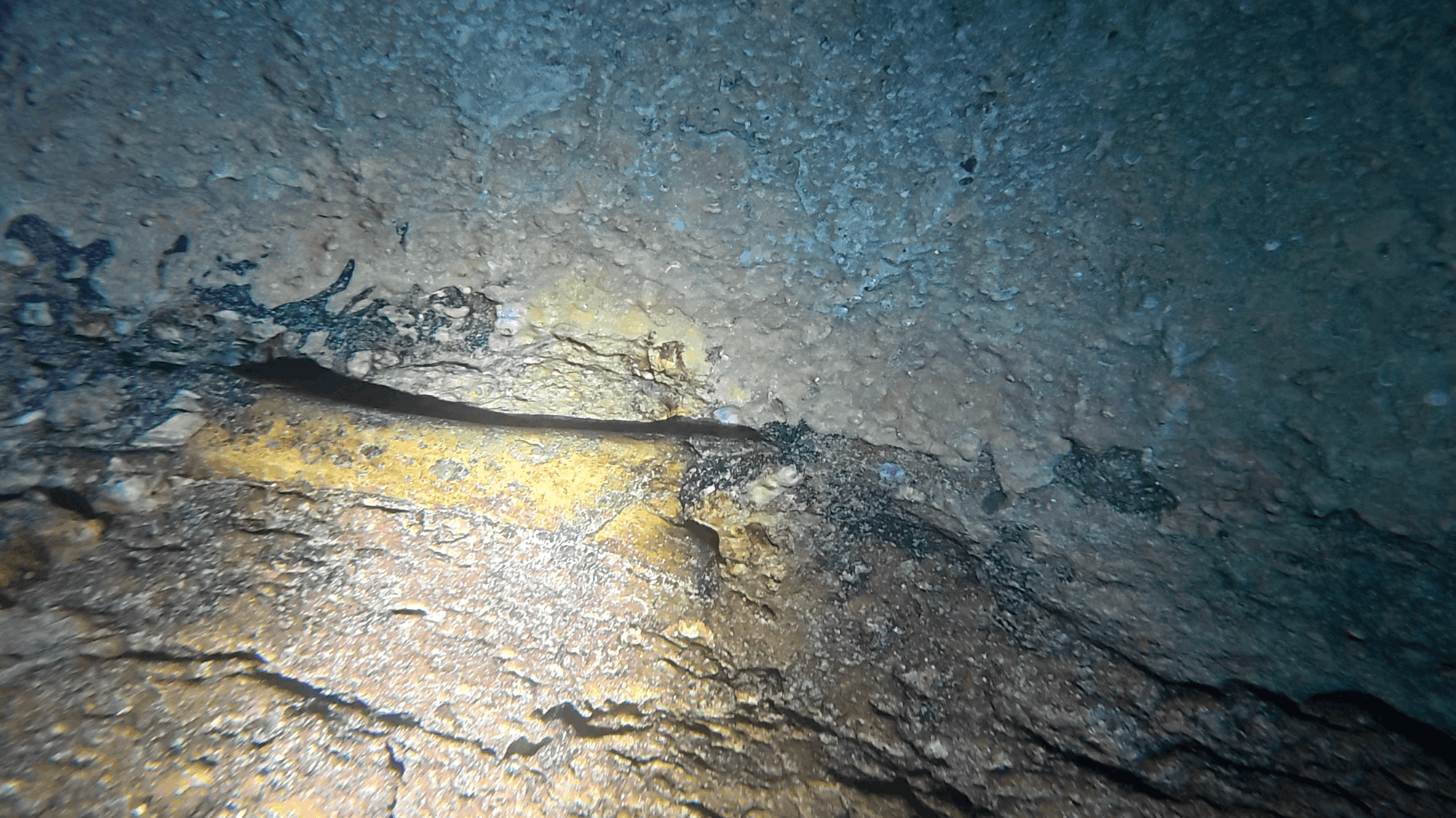
Historic Wreck: Minnewaska Remains
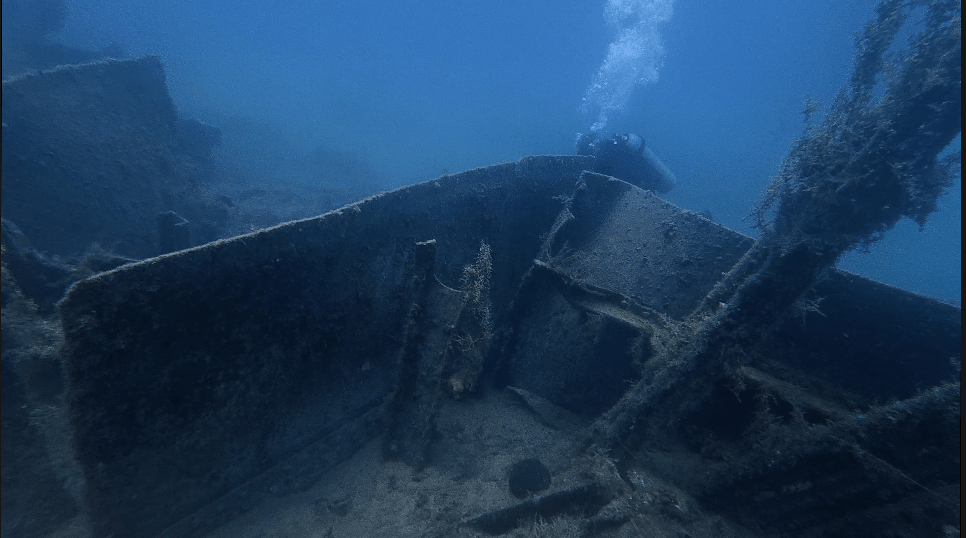
Same day and same marina as Elephant Cave, I dove the remains of the Minnewaska. A WWI troop transport built at the same Irish shipyard as the Titanic, it struck a German mine in Souda Bay on November 29, 1916.
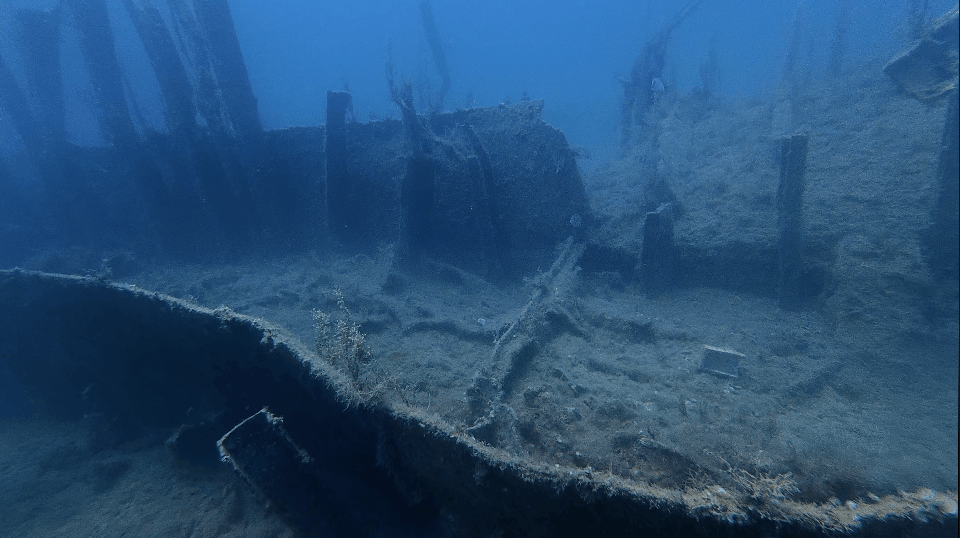
The captain beached it before it went down fully, and everyone on board got off safely. Salvage crews scrapped most of the metal in 1918, so what's left is an outer skeleton scattered across the seabed. It still pulls more marine life than a typical Mediterranean reef dive.
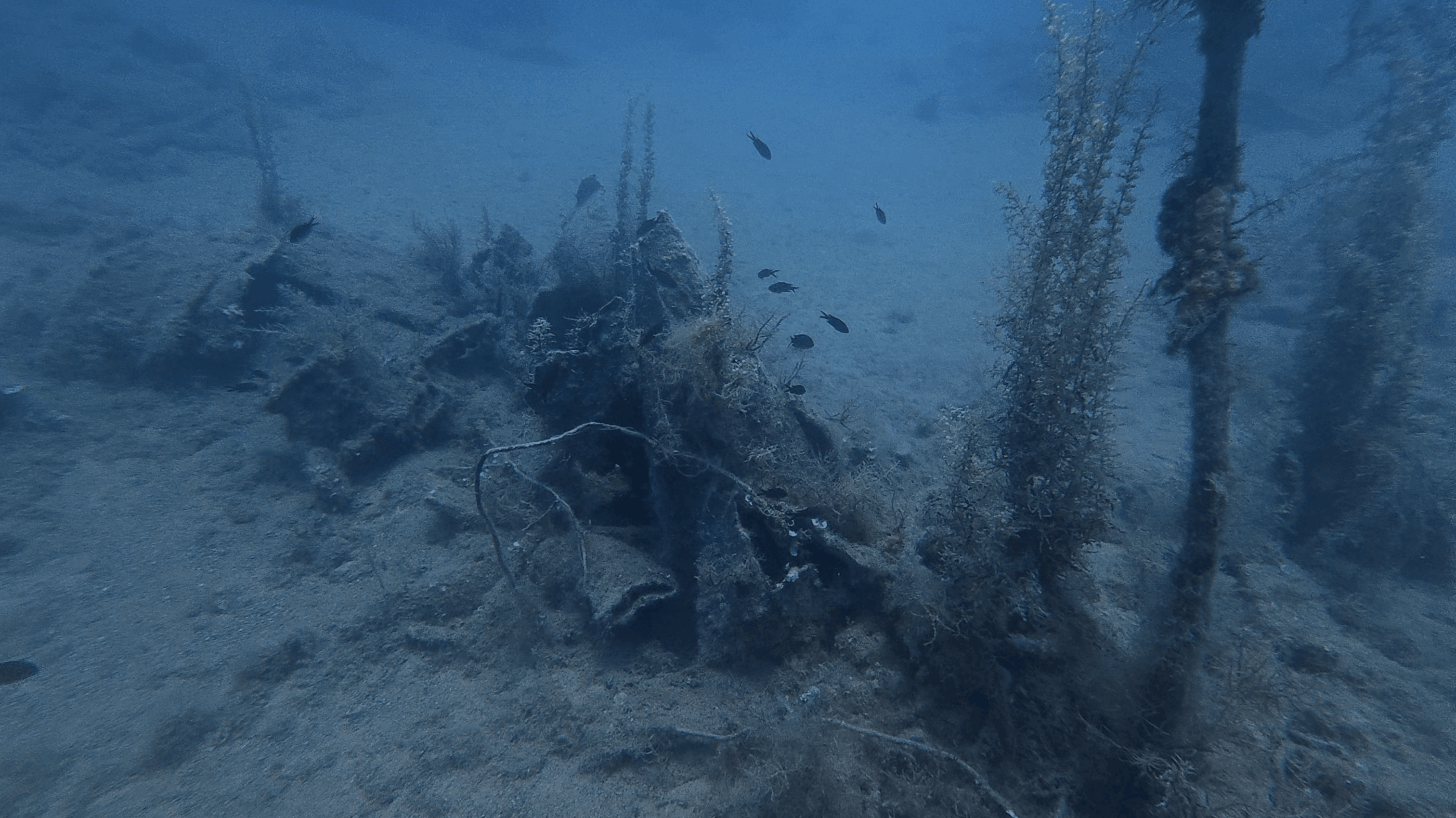
The site sits next to a NATO naval base and airfield, so expect the odd F-16 overhead during your briefing.
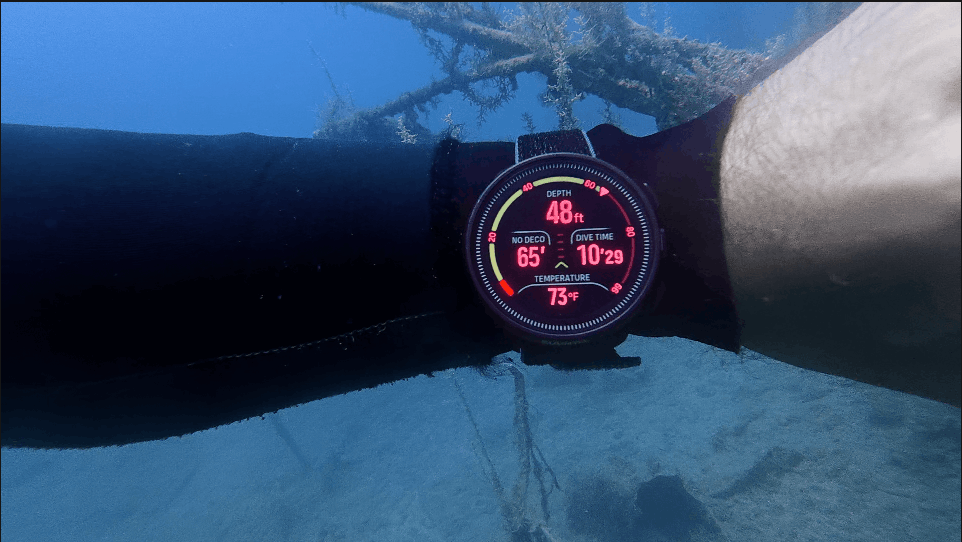
I was sidelined from diving for almost a week in Chania, which is why this guide only covers two sites there. Nicholas pointed me to a few others I didn't get to dive myself: Seal Cave, the recently scuttled (and reportedly pristine) Nestor wreck, and a WWII Messerschmitt fighter plane. His blog has original photos and video of all three.
Areas I Didn't Dive
I don't want to call this a complete guide to scuba diving Greece. I spent this trip on Rhodes and Crete in the Aegean, and never made it to Santorini, Mykonos, Corfu, the mainland, or the Ionian Sea. Based on conversations with local instructors and divers, those areas look broadly similar to what's covered here.
The one place I really wanted to reach was Leros, site of a WWII naval battle and home to a number of deep shipwrecks that mostly require technical training. I couldn't coordinate with the dive center there in time before I left the country. I'd like to go back once I have more tech training to film the deeper wrecks properly.
Why the Mediterranean Feels Empty
Locals and divers in both Greece and Turkey kept bringing up how overfished and barren parts of the Mediterranean have become. The two theories I heard most: it's a heavily fished sea with a huge coastal population fishing daily, and two invasive species from the Red Sea, lionfish and a type of pufferfish, are eating baby fish and eggs before they can mature. Lionfish hunting isn't legal on scuba here (unlike parts of the Caribbean or Florida), only freediving, and the pufferfish's teeth cut through fishing line and it's too small for a speargun, so it goes largely unchecked too.
Diving Conditions & When to Go
Speaking only to the Aegean side, visibility typically runs 15-30 meters (50-100 feet) year-round. May through October is the best window, with the calmest seas and warmest water, generally 22-26°C (71.6-78.8°F).
Beyond the Diving
If you're expecting a top-tier destination on par with the Philippines, Egypt, or the Galapagos, you'll be disappointed. Greece works with what it has, worth mixing into a Mediterranean vacation rather than building an entire trip around it, the way I did.
If you're on Crete, rent a car. I took a day trip to Kourtaliotiko Gorge; you'll want to be a reasonably strong swimmer to reach the waterfalls, but it's a good way to fill a non-diving day.
Let's Dive Together
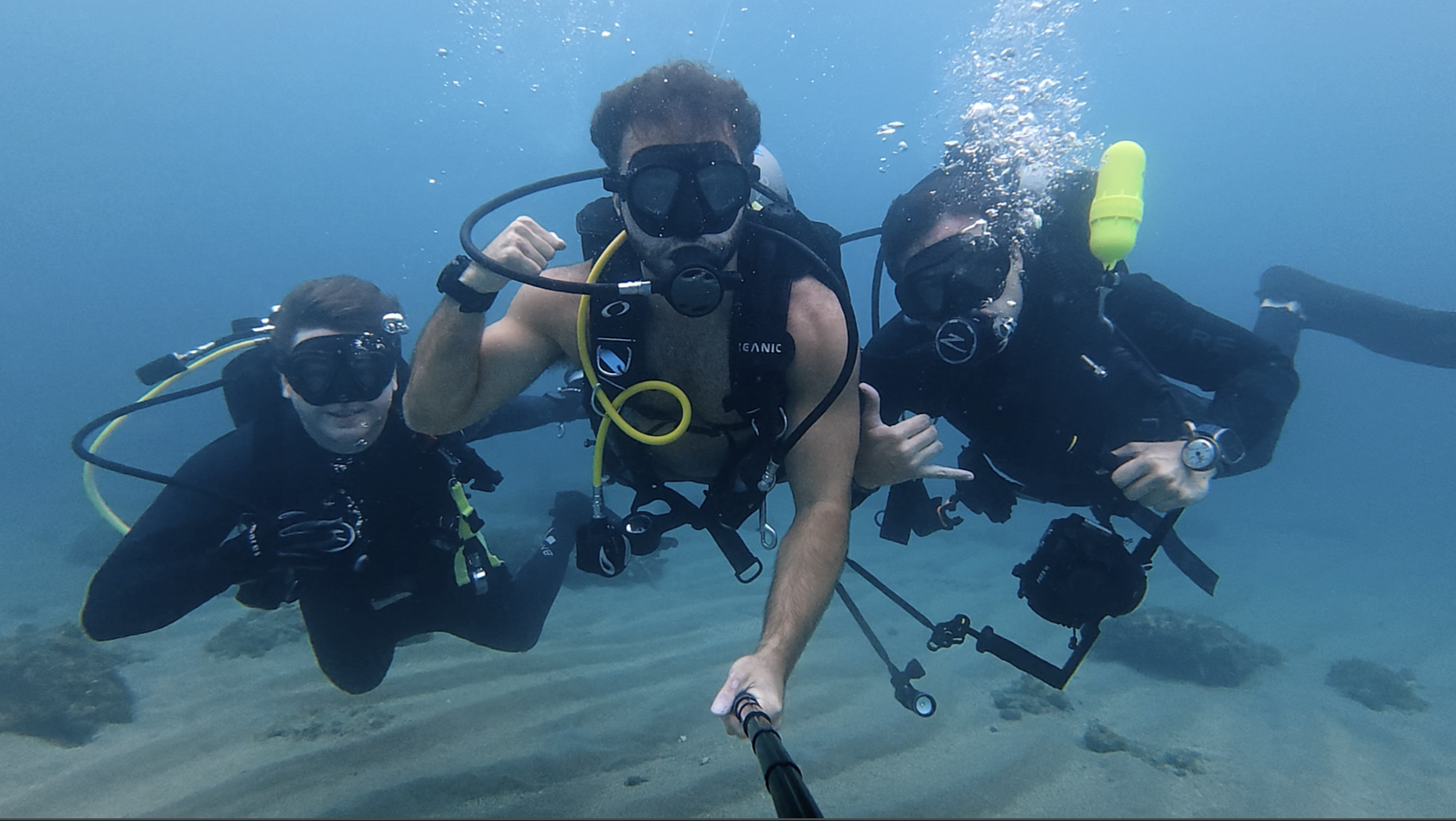
👋 It's Divemaster Austin
I'm inviting you to Dive Club, my global scuba diving community.
What you’ll find inside:
🤿 Dive meetups & group trips
🌍 Top dive sites shared by community members
⚙️ Gear tips & technique discussions
🤝 Diver's who’ve already linked up IRL
See you there!

.webp)
.webp)