


.webp)
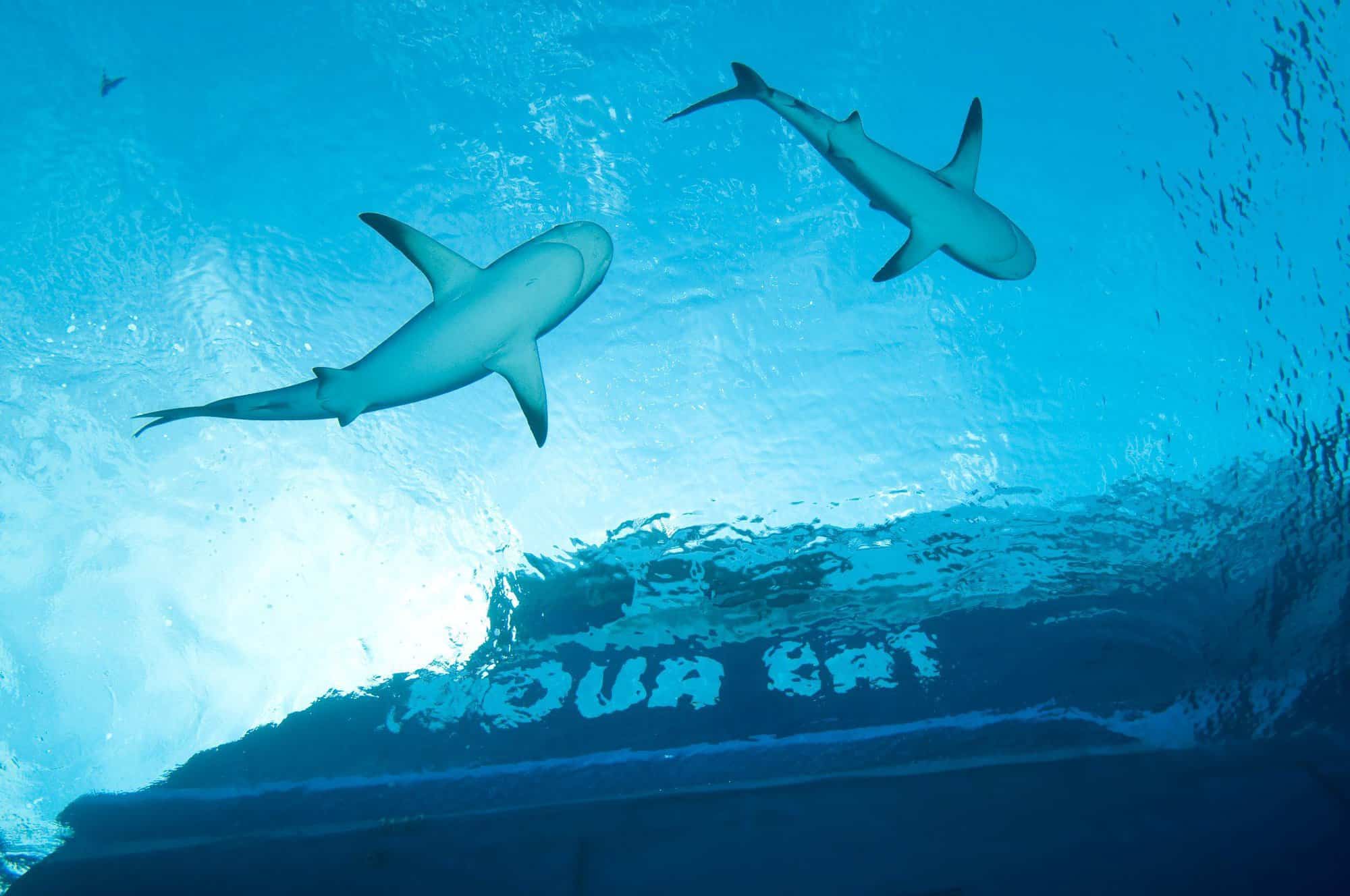
If you've been researching liveaboards in the Bahamas, chances are the Aqua Cat has come up.
Scuba Diving Magazine has voted it the best liveaboard in the world five years running, and it's consistently ranked among the most spacious, comfortable boats in the Caribbean.
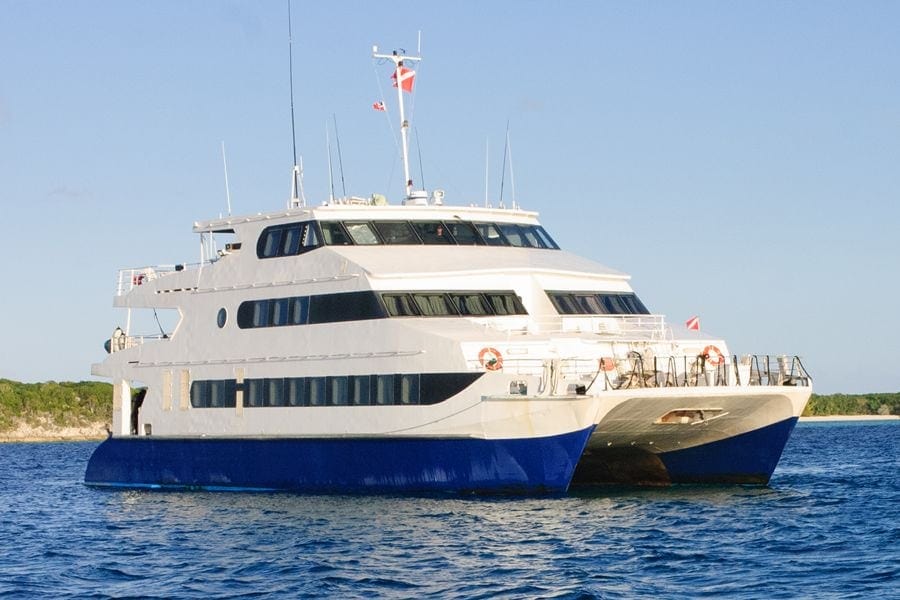
Aqua Cat is an 102-foot catamaran built for up to 30 guests, a 900-square-foot dive deck, free WiFi, and a crew of 11, close to double what most competing boats carry.
I've never sailed the Aqua Cat myself.
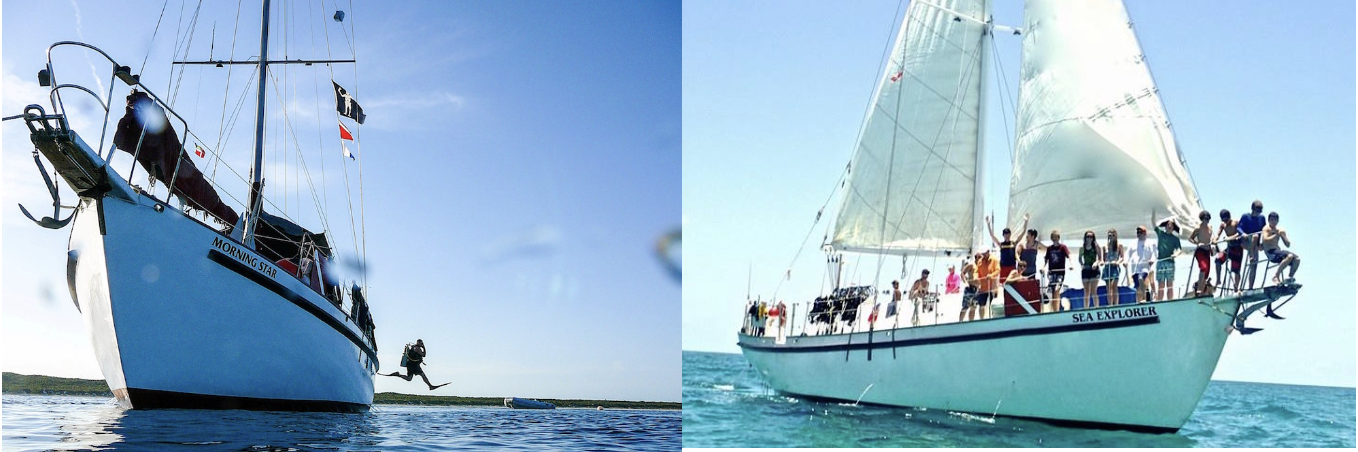
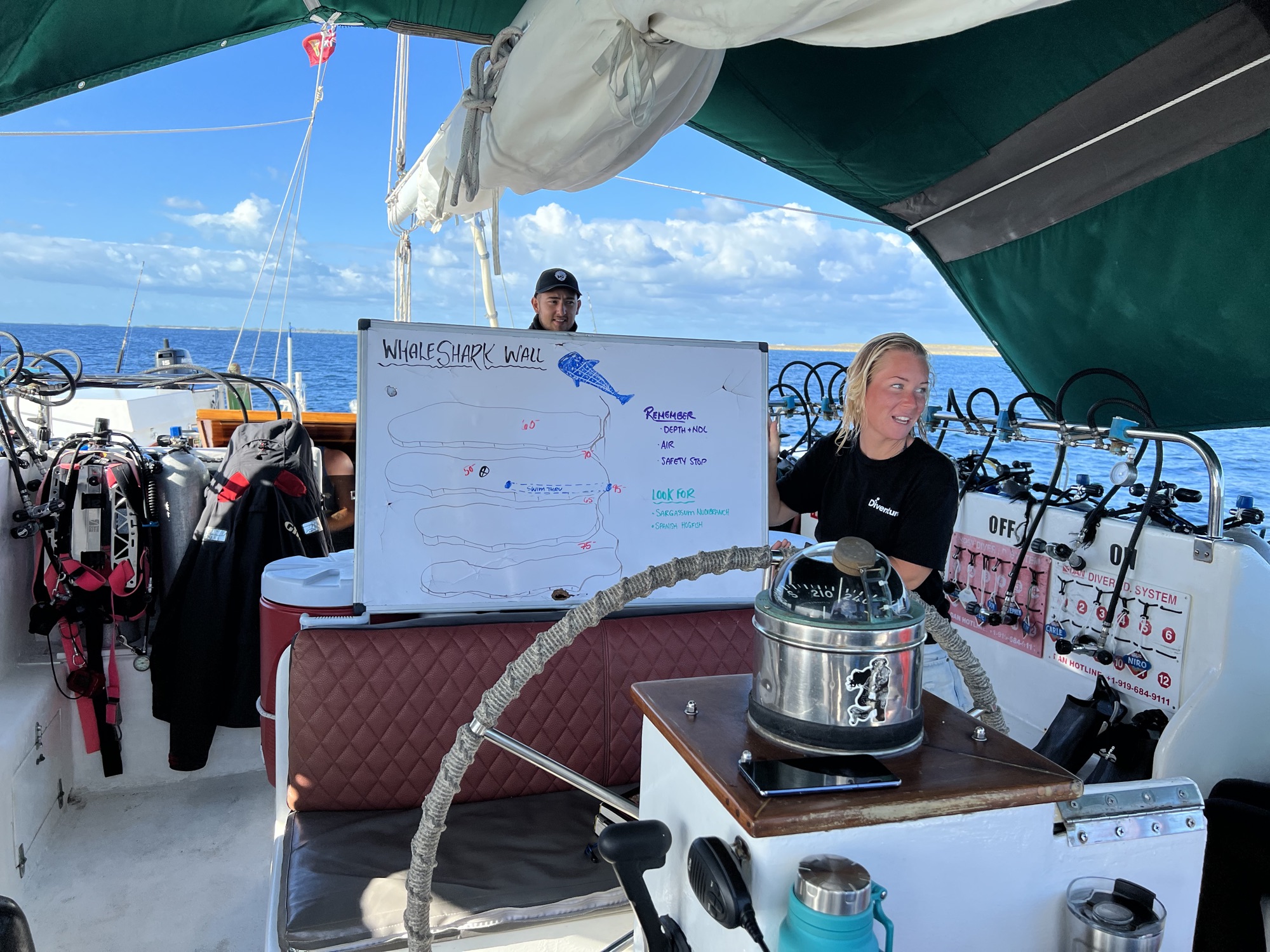
My own Bahamas liveaboard trip was aboard the Sea Explorer, one of Blackbeard's Cruises' two nearly identical sister boats, sailing the same Exuma Cays region and much of the same route Aqua Cat runs.
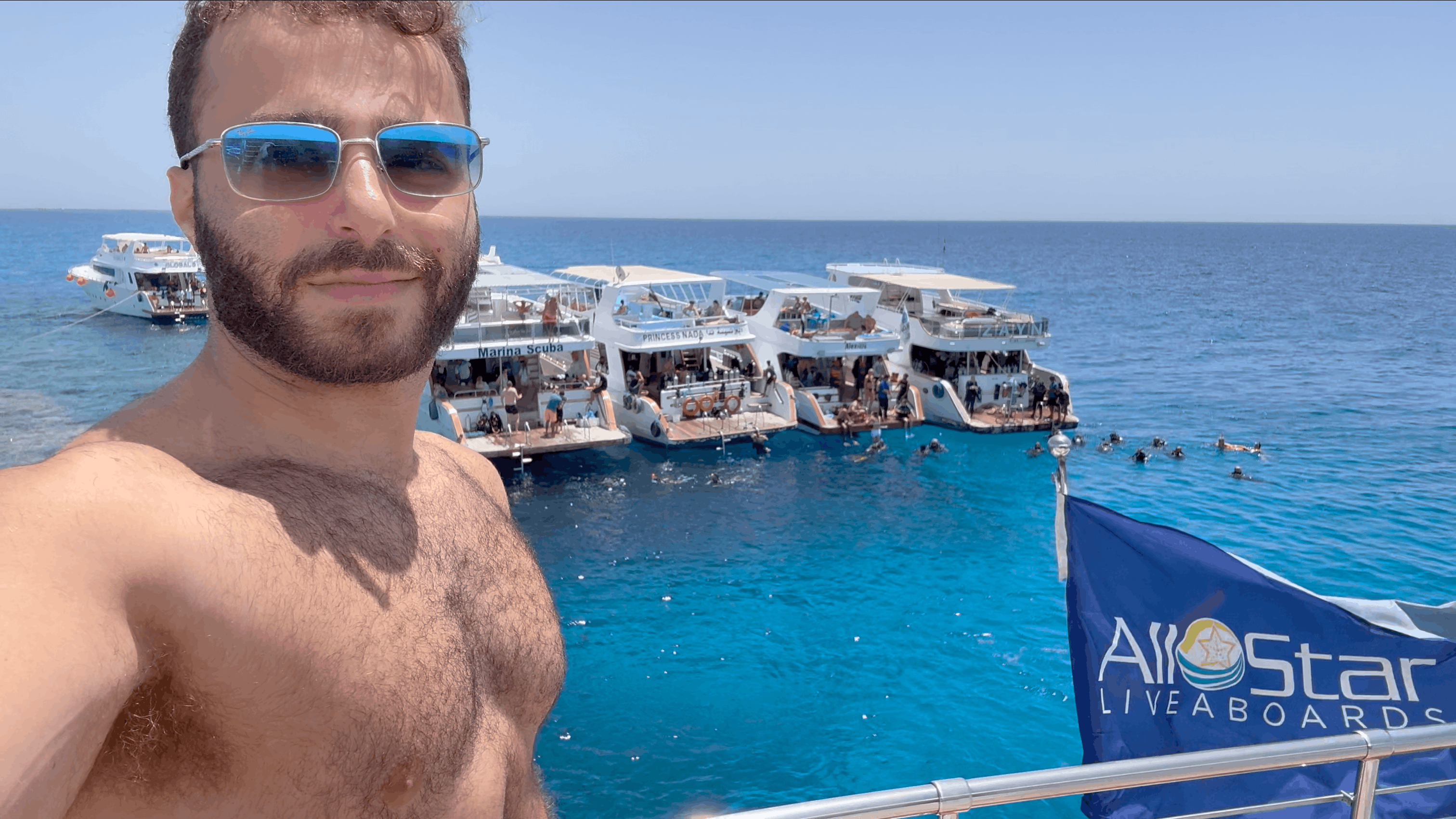
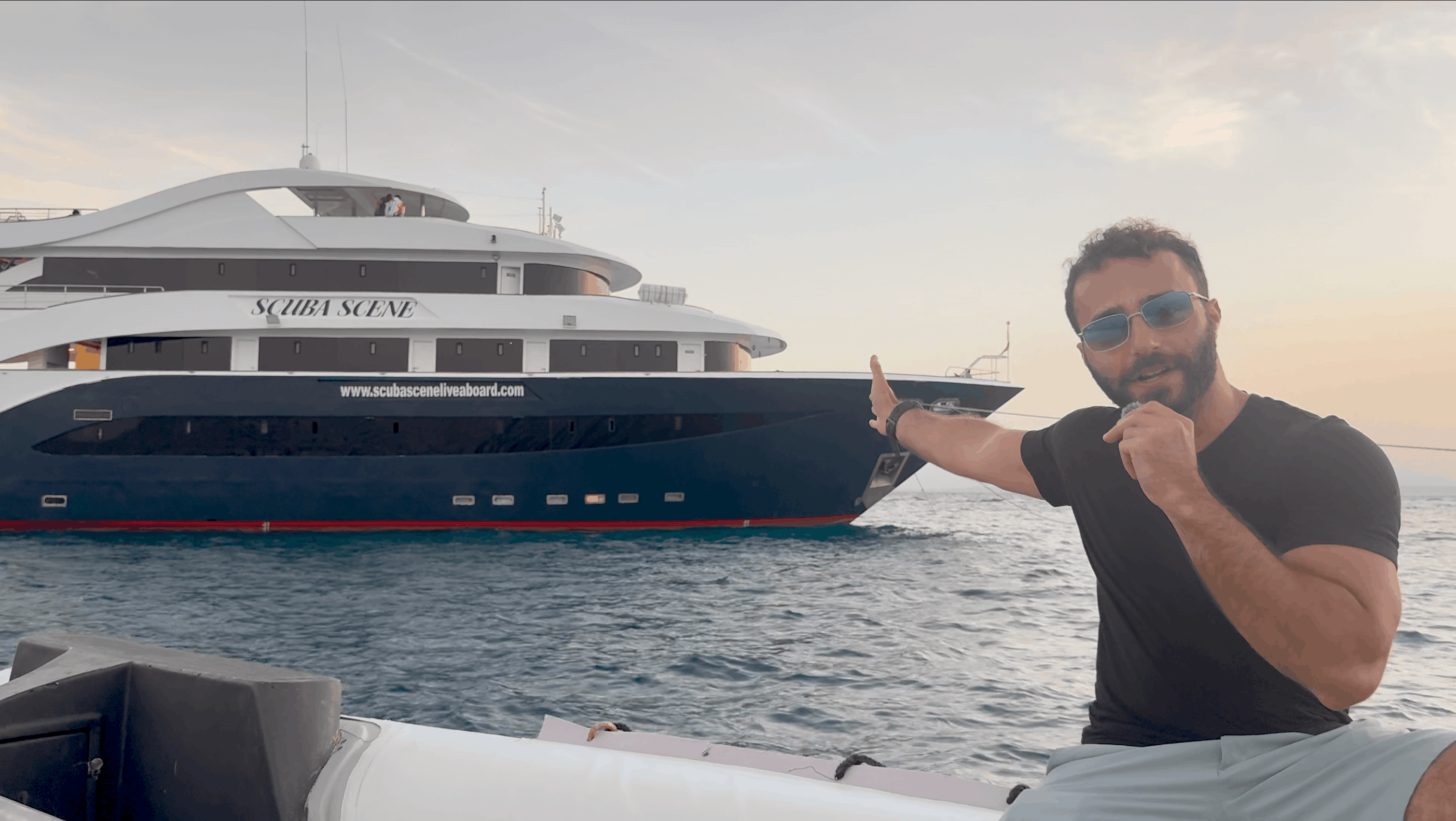
Blackbeard's and Aqua Cat are both part of the All Star Liveaboards fleet, so right after that trip, I sat down with Kevin Purdy, CEO of All Star Liveaboards, to talk through Aqua Cat specifically: what it's built for, how it compares to Blackbeard's, and who it actually makes sense for.
Trip Details
What a Week Looks Like
A standard week runs like this: board Saturday evening in Nassau for check-in and orientation, then depart before first light Sunday for four daytime dives and a night dive. Monday through Wednesday repeat that same four-dives-plus-night-dive rhythm through the Exuma Cays and Eleuthera, with a shore excursion worked in most days.
Thursday brings four more dives and the Captain's Dinner, a plated three-course meal.
Friday tapers to two dives before returning to Nassau for a Farewell Cocktail Party, with disembarkation Saturday morning.
The Boat and Layout
Built in 2001, the Aqua Cat gets a full maintenance refit every year, enough that Kevin says guests returning after a decade away tell him it looks exactly the same as they remember.
The dive deck runs 900 square feet, with two separate camera and charging stations and two private hot-water showers right on deck, so you're not tracking salt water through the boat between dives.
Up to 26 dives a week are possible across more than 200 sites, including a shark dive at Austin Smith or Split Coral, the Blue Hole, and Hammerhead Gulch, where Kevin's team has planted a coral nursery with around 500 fragments they're growing out to replant on the reef.
The Cabins
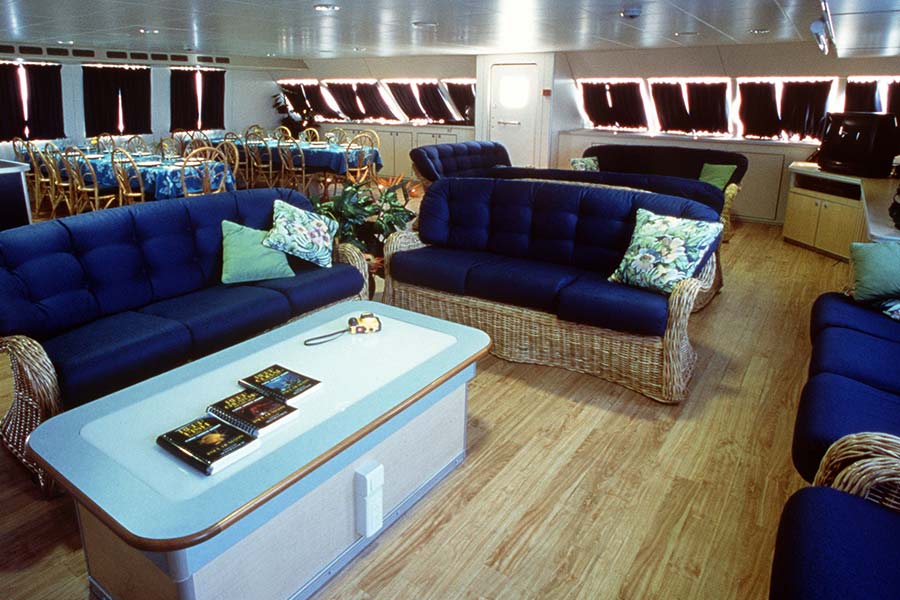
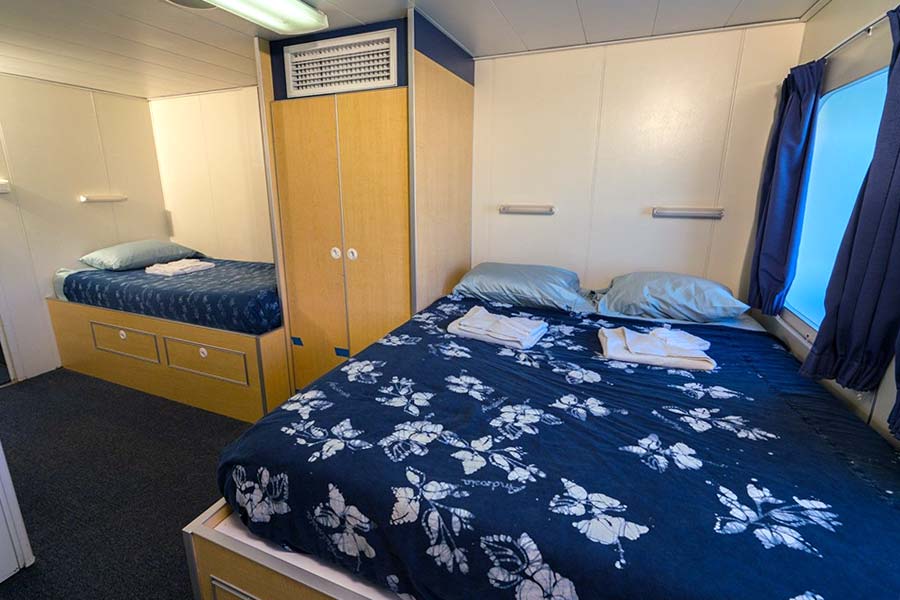
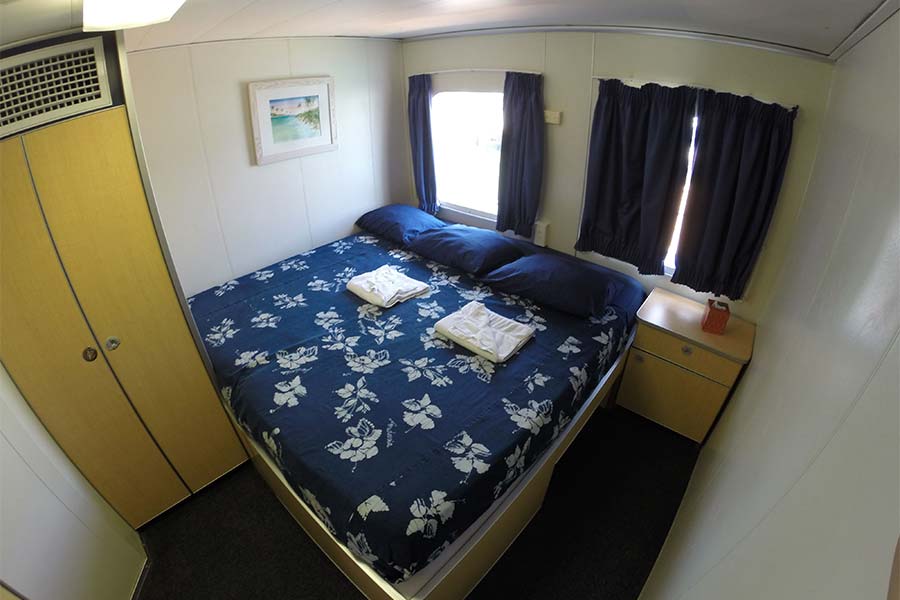
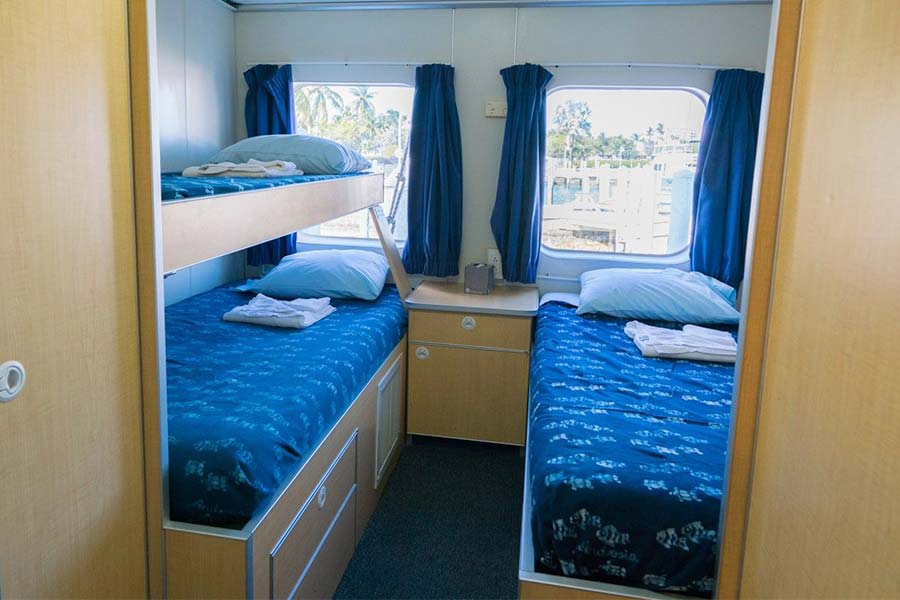
It's an 11-cabin catamaran. Ten of the cabins are ocean view, with two large windows instead of portholes, extra-long twin beds, and an en-suite bathroom in every cabin.
Two of the cabins, 9 and 10, pair a queen with a twin, which works well for families traveling with a kid. There's also a lower-cost interior "skylight" cabin with bunk-style twins and no ocean view, for divers who'd rather save the money and spend less time in the room anyway.
If you're traveling solo, Kevin's team will match you with a same-sex roommate at no extra charge, or you can pay to keep a cabin to yourself.
Safety
Liveaboard safety has been under more scrutiny across the industry following a string of boat fires, and the specs Kevin's team shared reflect that.
Safety Features
- 2 twenty-man life rafts
- Halon fire suppression system in each engine room, plus a fire hose and firefighting suit for crew
- Smoke detectors throughout the boat feeding into a central alarm panel on the bridge, with CCTV coverage of every compartment including the engine room
- Multiple O2 bottles including one H-bottle, and regular emergency drills
- Built to Lloyd's Register standards, with a metal hull, watertight compartments, and 2 to 3 dive instructors on deck watch during every dive
- Crew includes a 500-ton captain, licensed first mate, and engineer
The Crew
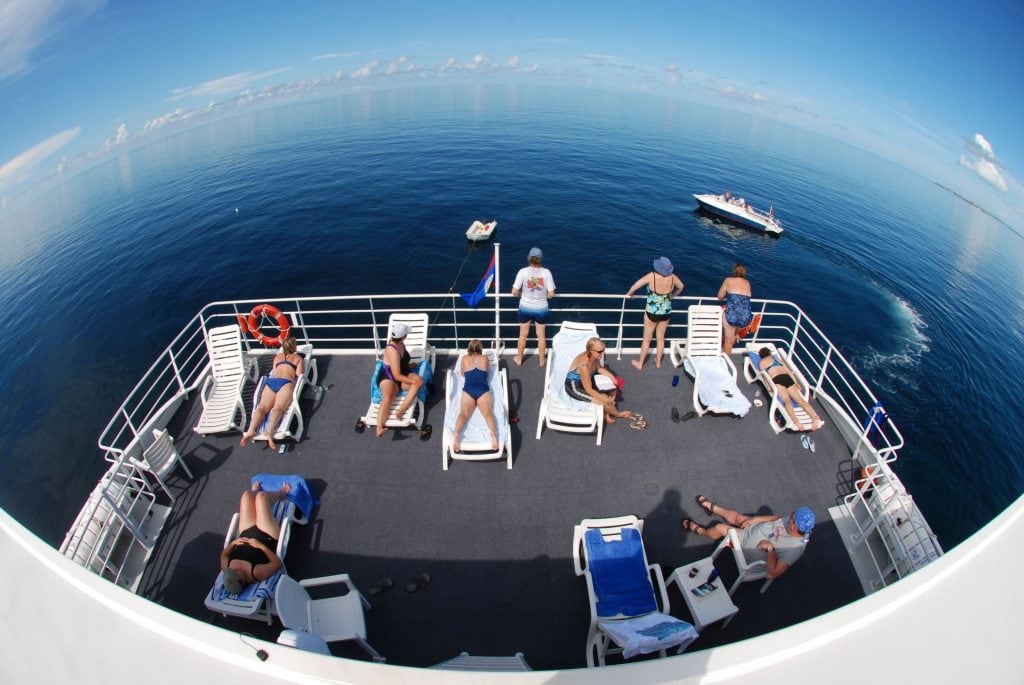
Capacity runs up to 30 guests with a crew of 11, close to double what most competing boats in the region carry. Kevin pointed to that crew ratio as the biggest practical difference between Aqua Cat and boats like Bahamas Aggressor or Explorer Ventures.
Two to three dive instructors keep watch on the deck during every dive, on top of the captain, first mate, and engineer running the boat itself.
The Diving
A standard day runs four dives, three during daylight and one at night, most days of the week, dropping to two on the transit day back to Nassau. Across a full week that adds up to as many as 26 dives over more than 200 possible sites.
The rotation includes a shark dive at Austin Smith or Split Coral, the Blue Hole, and Hammerhead Gulch, where the coral nursery Kevin's team maintains sits alongside the dive site itself.
Dive Sites
The rotation draws from more than 200 sites across the Exuma Cays and Eleuthera. A few that come up constantly on Aqua Cat's route:
Austin Smith
A 90-foot former Bahamian Defense Force cutter that sank in 1995 while under tow to become an artificial reef elsewhere, now sitting intact in 60 feet (18 m) of water. It's one of the shark-feed dive options Kevin mentioned.
The Blue Hole
A submerged sinkhole with dramatic stalactite formations and dense marine life inside the walls.
Hammerhead Gulch
Home to the coral nursery Kevin's team maintains, around 500 fragments being grown out for replanting on the reef.
Dog Rocks, Madison Avenue, Barracuda Shoals, Lobster No Lobster
More sites on the regular rotation, per Kevin. Other named sites in the Exuma Cays that come up in the wider dive community include Up Jumped the Devil, Amberjack Reef, Blacktip Wall, Jeep Reef, Pillar Wall, Parrotfish Reef, the Washing Machine, and Danger Reef, though I can't confirm which of those specifically make it onto Aqua Cat's own rotation.
Food & Drinks
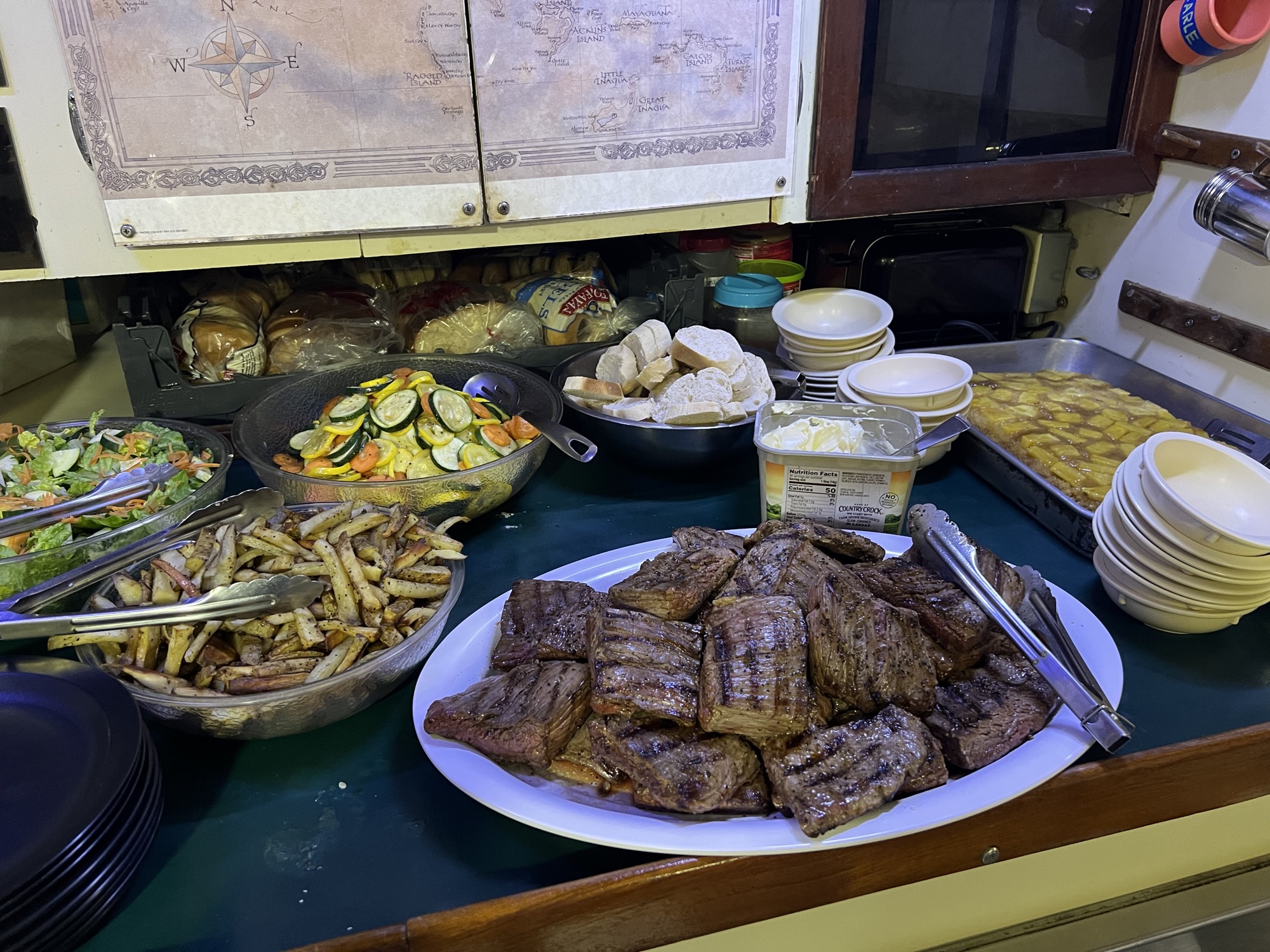
Meals run buffet-style for breakfast and lunch every day, with one exception: Thursday's Captain's Dinner, a plated three-course meal. Alcohol, beer, wine, and cocktails, is included in the trip price rather than run on a tab, which isn't standard across every boat in this region.
Pricing Breakdown
Aqua Cat's published rate starts at $3,395 per person, plus $360 in port fees and taxes, for a minimum total of $3,755 before gratuity or gear rental.
Pricing Breakdown
Best Time to Go
Aqua Cat runs year-round out of Nassau. November through May is the dry season, with better visibility, lower hurricane risk, and the coolest water of the year, which is also when shark activity is best. It's peak tourist season too, so book early and expect higher demand.
June through October is wetter with short storms, but conditions stay diveable and the crowds thin out. August tends to bring the most storm activity, so it's worth avoiding for a liveaboard trip specifically.
Arrival & Boarding
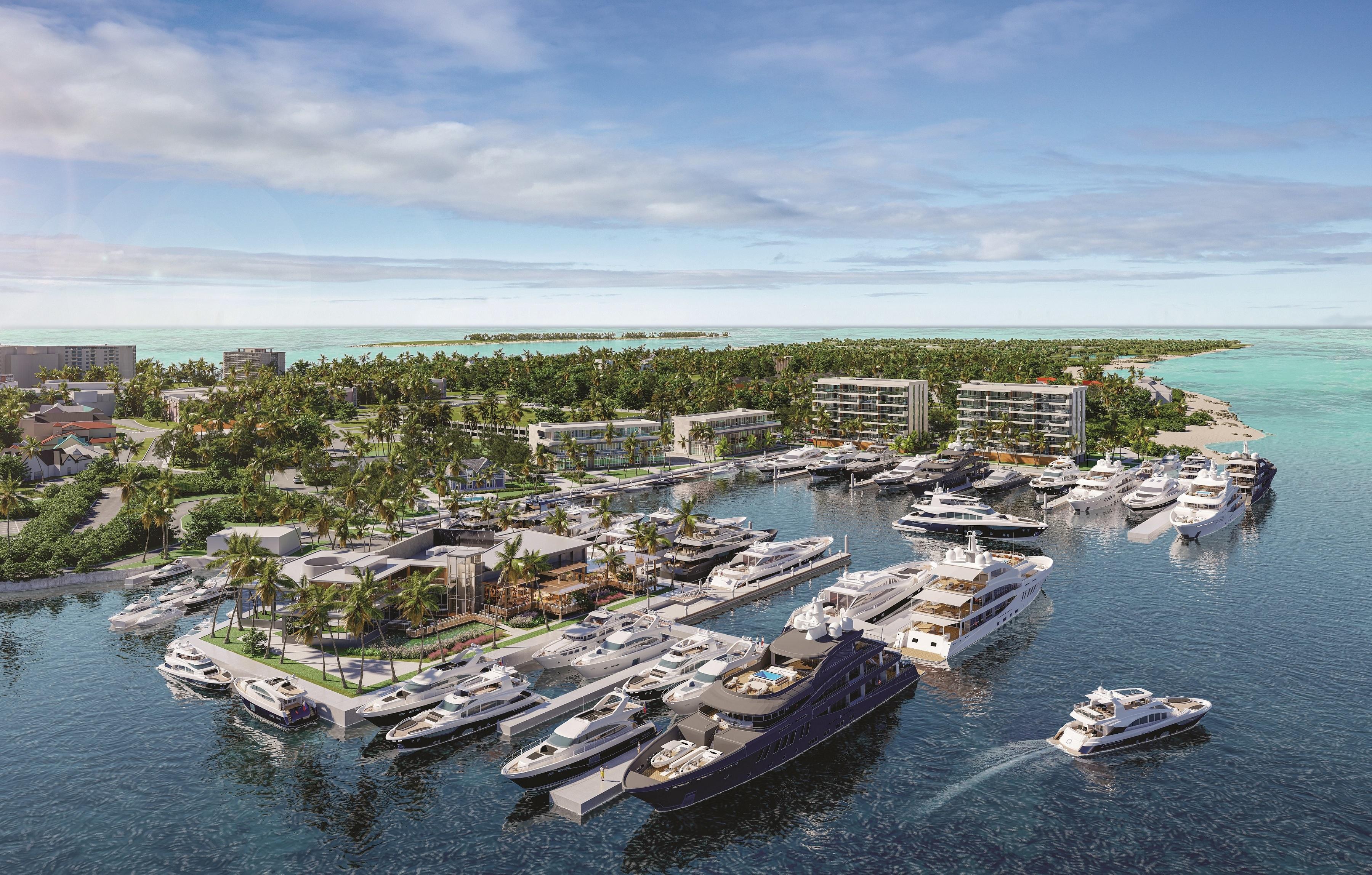
Boarding happens at Hurricane Hole Marina on Paradise Island, Nassau, starting at 5:30pm on Saturday. If you land earlier in the day, you can drop your bags at the boat ahead of the official boarding time. The boat departs Nassau very early Sunday morning, usually before 5:00am, so there's no lingering in port once the trip actually starts.
Before boarding, you'll need to submit a liability release and medical form, plus a trip application, in advance, which the operator says speeds up check-in on arrival day. A safety briefing happens immediately after boarding, and attendance is mandatory.
Let's Dive Together
👋 It's Divemaster Austin
I'm inviting you to Dive Club, my global scuba diving community.
What you’ll find inside:
🤿 Dive meetups & group trips
🌍 Top dive sites shared by community members
⚙️ Gear tips & technique discussions
🤝 Diver's who’ve already linked up IRL
See you there!

.webp)
.webp)